Daily insights for city builders, delivered every morning at 6 AM ET. I’m Brandon Donnelly — a Toronto-based real estate developer and founder of Globizen. I’ve been writing here since 2013.

Tag: sustainability

  • Last-mile electric scooters — will they work?

    I’ve been hearing a lot about Bird recently. Perhaps it has something to do with the $15 million Series A round they raised last month (February 2018) and the $100 million Series B round they announced earlier today.

    A “Bird” is small electric scooters that look like this and can be rented from your phone for short haul trips. They are currently available in Santa Monica, Venice, UCLA, Westwood, and San Diego, and they are intended to be ridden in existing bike lanes.

    What may be particularly interesting to this blog audience is the fact that Bird is calling itself a “last-mile electric vehicle sharing company.” The pitch: 40% of car trips (in the US?) are less than 2 miles long. Let’s replace those using electric scooters.

    One of the first things that came to my mind is that this feels more accessible than cycling. Cycling to work can be a commitment. You have to think about your attire and the sweat factor, among other things.

    Would you agree?

  • The Edge — The World’s Greenest Building

    When I was in grad school, I used to search around online and make lists of real estate developers that I felt were philosophically aligned with my own view of the world. I didn’t want to work for just any developer, I wanted one that cared about design, technology, sustainability, and so on.

    One of the developers on my list was OVG Real Estate in Amsterdam. They describe themselves as “the largest real estate technology company in The Netherlands” and they have recently completed The Edge, which is being called the greenest office building in the world. It received a 98.36% sustainability score from BREEAM-NL.

    The building uses 70% less electricity than the “typical office building” and uses solar panels on its rooftop, as well as on some neighboring university buildings, to produce more energy than it consumes. The building is also a great example of the Internet of Things. Anchor tenant Deloitte created its own mobile app so that employees can control lighting, climate, and so on.

    The building also has an on-site gym. I’m a big fan of mid-day workouts.

    There’s a lot going on with this building, so here’s a video from Bloomberg describing how it functions (click here if you can’t see it below):

    [youtube https://www.youtube.com/watch?v=JSzko-K7dzo?rel=0&w=560&h=315]

    Photos of the building here.

  • Abu Dhabi signs cheapest electricity contract, ever

    The Abu Dhabi Water and Electricity Authority recently completed a 350 MW solar tender. They received a total of 6 bids and the low bidder was Japan’s Marubeni Corp and China’s JinkoSolar Holding Co Ltd. Their bid was USD $24.2 per MWh or 2.42 cents per KWh.

    This is really low.

    According to the U.S. Energy Information Administration, the average cost of a new natural gas-fired plant is 5.6 cents per KWh. More than double the above solar bid.

    In fact, author, blogger and futurist Ramez Naam calls the above bid, “the cheapest contract for electricity ever signed, anywhere on planet earth, using any technology.” (Blog post here.) 

    Huge.

    Now, Abu Dhabi is obviously a very sunny locale. No shortage of bluebird days there. But that doesn’t negate the fact that we are seeing a rapid decline in solar power prices.

    This, along with the growing adoption of electric vehicles is excellent news for us sustainability dorks. Just this morning I was thinking to myself that the car I currently own will likely be the last gasoline-powered car I ever own.

    Hopefully they start making an electric version of the G-Class.

  • Climate change gridlock

    I spent this morning reading an article called: How climate change is rapidly taking the planet apart. Here is an excerpt from the introduction: 

    “According to Naomi Oreskes, a great number of climate change scientists (she interviewed most of the top 200 climate change scientists in the US) suffer from some sort of mood imbalance or mild or serious depression. It is easy to understand why: we see the climate change taking the planet apart right in front of our eyes. We also clearly see, right in front of us, what urgently needs to done to stave off global disaster on an unprecedented scale. We need carbon taxes and the reconversion of industry and energy towards zero CO2 emissions systems. This route is without any doubt technically and economically feasible, but politically it seems to be permanently locked. If we do not unlock it, the future looks bleak, not to say hopeless, for humankind.”

    It’s clearly not a positive article. But it is an important read. We know we need to immediately and drastically reduce CO2 emissions (for all the reasons explained in the article), but we simply aren’t doing that.

    Part of the problem, I think, is that it’s easy to lull ourselves into complacency. We read about it and we notice the erratic weather patterns, but for the most part the status quo isn’t all that bad for most of us. Life just goes on.

    There’s evidence that revenue-neutral carbon pricing could actually increase productivity levels. It would force innovation. But it doesn’t yet appear to be 10x better than what we have today – which is often what you need to get people to accept change.

    So instead we hold largely ineffectual climate change conferences, which allow us to tell ourselves that we are, in fact, doing something. But I don’t think we’re being bold enough. And that’s too bad.

  • This building is shit. Or is it?

    I was looking through my photo archive this past week (which is all on an Apple Time Capsule) and I came across this photo:
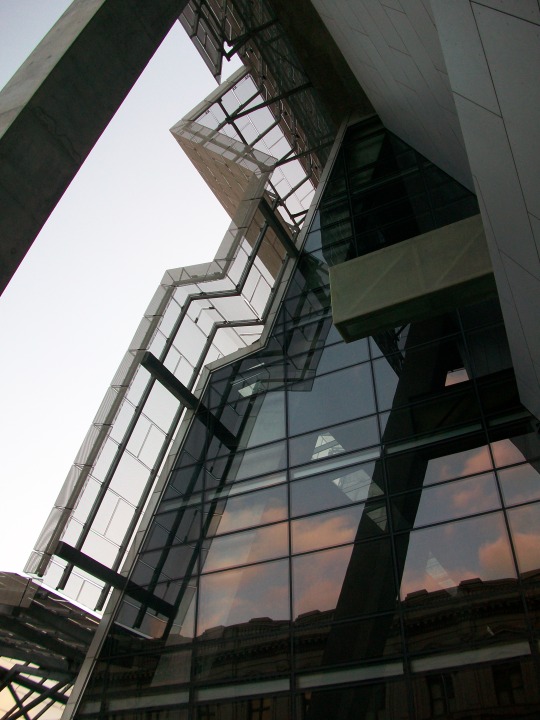
    I took this photo in the winter of 2011 on a snowboarding trip to Lake Tahoe. It’s of the San Francisco Federal Building, which was designed by Morphosis and completed in 2007.

    The reason this photo stands out for me is because as my friends and I were taking photos of this building a man walked by us and said:

    “Why are you taking photos of this shit?

    …you guys must be architects.”

    To me this was a frank reminder that the designs that my architecture friends and I obsess over (at least the contemporary stuff) often go completely unappreciated by a lot of other people – perhaps the majority of people.

    This, of course, raises an interesting debate. 

    If the majority of the public think a building is shit, is it a failure? Should a building’s success be judged more by how its occupants feel about it? Or is it the “expert” opinion that really matters? (Expert is in quotations because I don’t like this term.)

    While important, I don’t think it’s as simple as these questions. Architecture can take years, decades, or even longer to settle in and become fully appreciated. Think about the buildings that your city may have demolished in the past but now regrets. Tastes change.

    With that, below is an excerpt from the architect’s own description of the Federal Building. Keep in mind that this project started construction in 2003 and so design would have started years before that. Hopefully it’s clear just how relevant the ambitions of this project remain some 15 or so years later.

    The re–definition of circulation and vertical movement paths provides opportunities for chance encounters, a critical mass in circulation, and places for employees to gather across the typical confines of cubicles, departments, or floor plates. The democratic layout locates open work areas at the building perimeter and private offices and conference spaces at the central cores. As Gladwell’s article points out, “…one study after another has demonstrated [that] the best ideas in any workplace arise out of casual contact among different groups within the same company.” Skip stop elevators, sky gardens, tea salons, large open stairs, flexible floor plans, and the elimination of corner offices endow the tower with a Jacobsian “sidewalk life” of cross-sectional interactions.

    Many of the same design decisions that create high quality workspace also maximize energy efficiency. The Federal Building is the first office tower in the U.S. to forgo air-conditioning in favor of natural ventilation. As a result of the tower’s narrow profile and strategic integration of structural, mechanical and electrical systems, the building provides natural ventilation to 70% of the work area in lieu of air conditioning, and affords natural light and operable windows to 90% of the workstations. A folded, perforated metal sunscreen shades the full-height glass window wall system and a mutable skin of computer–controlled panels adjusts to daily and seasonal climate fluctuations. With an energy performance that surpasses the GSA’s criteria by more than 50%, the project sets new standards for applications of passive climate control, while physically democratizing the workplace and enhancing employees’ health, comfort, and sense of control over their environment.


  • Toronto exploring road pricing on downtown highways

    Road pricing is on the table in Toronto. (Somebody has to fund the expensive Gardiner Expressway East rebuild.) On March 11, 2016, the City issued a Request for Proposal for: “Options for Establishment of Toll Facilities on F.G. Gardiner Expressway/Don Valley Parkway.”

    As a vocal supporter of road pricing, I am happy to see us headed in this direction. And I bet that today’s post will just be the beginning of my ruminations on this topic.

    Because naturally, it raises a lot of questions:

    Should the pricing be fixed or variable? Similar to how Uber’s surge pricing model is intended to ensure that there are always enough drivers on the road, should our road pricing model strive to eliminate traffic congestion by increasing the price of the road as demand rises beyond road capacity? I like the idea of a “congestion charge” rather than just a road toll. There’s something very efficient about it.

    Who should pay? Should anyone and everyone who uses the road pay? Or should it just be be non-Toronto residents who aren’t already paying property taxes in the city? I would imagine that this latter scenario would be easier for Toronto politicians to get behind, since there will obviously be a segment of people who flat out don’t want road tolls/pricing. But if we stick with the principle that it’s a “congestion charge”, then everyone should pay. It doesn’t matter where you live when you are demand trying to exceed the available supply of road.

    (I’m running a Twitter poll right now with this exact question. At the time of writing this post, “everyone should pay” is winning.)

    Should electric vehicles be exempt from the road tolls or congestion charges in order to help accelerate our transition away from fossil fuels? With Tesla getting ready to announce its mass market Model 3 (price $35,000), I’ve been thinking lately that the car I currently own may very well be the last gasoline car I ever own.

    It’s still early days for road pricing and our mayor doesn’t seem to be a fan. So who knows how far we’ll get with this RFP. But I for one hope that we find the courage to make the difficult decisions and that this new revenue stream is leveraged for the purpose of building more sustainable forms of urban transport in this city. 

    Let’s make a 50 year decision and not an election cycle decision.

  • Advancing green building technologies, one condo suite at a time

    This evening I had a fascinating conversation with Subhi Alsayed of Tower Labs. If you haven’t yet heard of Tower Labs, I would encourage you to check them out. Here’s their mission statement:

    Our mission is to facilitate the adoption of green building products, technologies and practices through pilot and demonstration projects in highrise buildings; and accelerate the evolution to a low-impact, sustainable urban environment.

    What they do is test out new green building technologies in one-off condominium suites. And since they were founded by both MaRS and Tridel (which is one of, if not the largest condo developer in Toronto), they have plenty of opportunities to do just that.

    This is important because the real estate industry is notoriously slow at innovating. I’ve written about this many times before. Whenever you try and introduce something new, there’s always a lot of change management that goes along with it. The construction trades, to use one example, need to get their heads around it. And until they do, they’re going to charge a premium for it.

    So by creating a one-off test case, everybody gets to see how it works, how it is built, and, most importantly, how it actually performs in the real world.

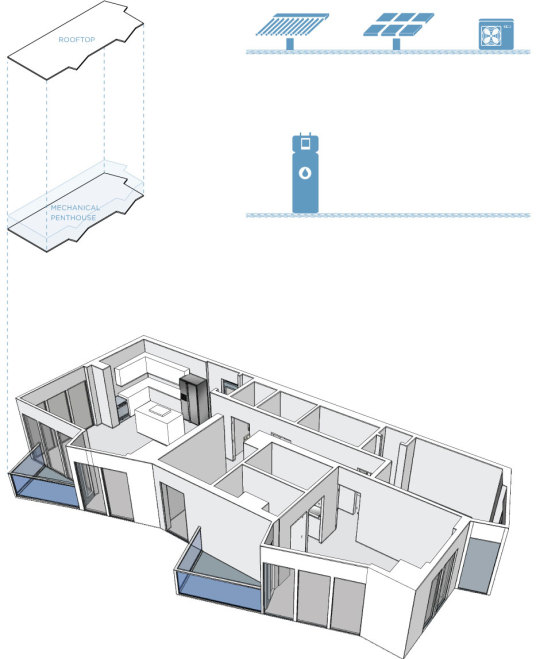
    One of the projects that they’re working on is something called NetZED, which stands for Net Zero Energy Dwelling. As the name suggests, it’s a condominium suite that produces as much energy as it consumes. 

    The way it works is by trading energy. At night when the sun isn’t out and the panels on the roof aren’t able to produce energy, the suite “borrows” electricity from the building. But during the day when the sun is out, the suite powers itself and then returns any borrowed electricity to the building. Click here to learn more about the suite. It’s being built in the Aqualina Condos on Toronto’s waterfront.

    image

    I find all of this incredibly exciting. Not only because they’re working towards a more sustainable future, but also because they’re applying their efforts towards the multi-family building typology (towers). Given that most of the world now lives in cities, this is an important building typology to make even more sustainable.

    Image: Tower Labs

  • Rethinking the tall building

    Back in February of this year (2015), Philip Oldfield, who is an Assistant Professor of Architecture at the University of Nottingham, gave the following talk at the Illinois Institute of Technology. Click here if you can’t see it below.

    [youtube https://www.youtube.com/watch?v=lOfkx39soIs?rel=0]

    If you’re interested in cities and how tall buildings might make them more sustainable, you’ll enjoy it. It’s filled with a number of interesting stats and takeaways, and it’s about an hour long.

  • How urban density affects how you get around

    Yesterday I wrote about urban-suburban divides within cities. And I argued that built form will largely dictate the kinds of transportation choices that people will ultimately make.

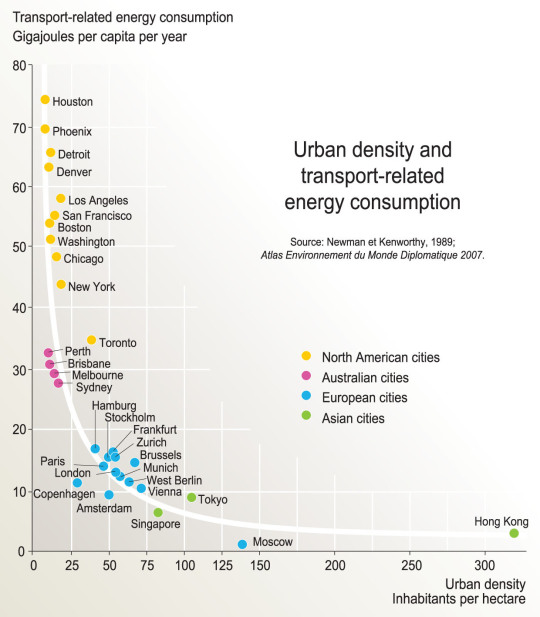
    As a follow-up to that, here is a chart based on the findings of a research report completed by Peter Newman and Jeffrey Kenworthy way back in 1989. On the x-axis is urban density (i.e. built form) and on the y-axis is per capita transport related energy consumption.

    image

    What this chart shows is that as cities become more dense, “automobile dependence” is reduced in favor of, other, more sustainable forms of transport. 

    Here we have Houston at the top left (meaning it has the highest transport-related energy consumption per capita) and Hong Kong all the way on the bottom right. Hong Kong has by far the highest density among the cities looked at in this study, but Moscow seems to have the lowest per capita energy consumption. Still, the trend appears clear.

    Some people think of “density” as a dirty word. But there are lots of benefits to dense urban centers. And density does not necessarily have to mean tall buildings.

    Chart: Globalization Studies in an Urban World (Penn)

  • A history of energy and cars (and how Tesla is changing the world)

    image

    I spent this morning reading a long – but incredibly worthwhile – article by Tim Urban on Wait But Why called, How Tesla Will Change The World. (Are they all this long? It was my first time reading WBW.)

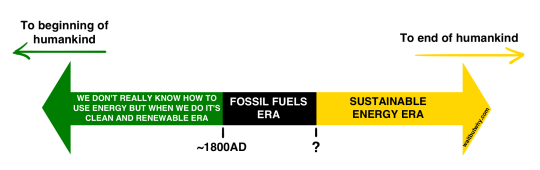
    The article, of course, talks a lot about Tesla, but it’s so much more than that. It talks about (1) the history of energy, (2) the history of cars, and then about (3) Elon Musk and Tesla. If you have the time, I highly recommend you give it a read.

    But since it is long and many of you probably won’t do that, here’s an extract from the third section on Tesla (EV = electric vehicle/car):

    EVs aren’t there yet. Right now, there are legit cons. But as the next few years pass, EVs will get cheaper, battery ranges will get longer and longer, Superchargers will pop up more and more until they’re everywhere, and charging times will just decrease as technology advances. Maybe I’m missing something, and I’m sure a bunch of seething commenters will try to make that very clear to me, but it seems like a given to me: the gas era is over and EVs are the obvious, obvious future.

    The car companies, as I mentioned, aren’t happy about all of this—they’re acting like a kid with a cupcake whose parents are forcing them to eat their vegetables.

    But how about the oil industry?

    Unlike car companies, the oil industry can’t suck it up, get on the EV train, and after an unpleasant hump, continue to thrive. If EVs catch on in a serious way and end up being the ubiquitous type of car, oil companies are ruined. 45% of all the world’s extracted oil is used for transportation, but in the developed world, it’s much higher—in the US, 71% of extracted oil is used for transportation, and most of that is for cars.

    As Tim states at the end of his article, this piece is all really about change and progress. Progress is not inevitable. It doesn’t just happen as time marches on. It happens because of strong willed people who believe in something that many others probably don’t. 

    Because with many changes – regardless of how critical or beneficial they may be to society as a whole – there will almost always be entrenched interests that would rather see things stay exactly the same. But in my view, that shouldn’t get in the way of doing the right thing.

    Image: Wait But Why