Daily insights for city builders, delivered every morning at 6 AM ET. I’m Brandon Donnelly — a Toronto-based real estate developer and founder of Globizen. I’ve been writing here since 2013.

Tag: street design

  • The mighty bollard

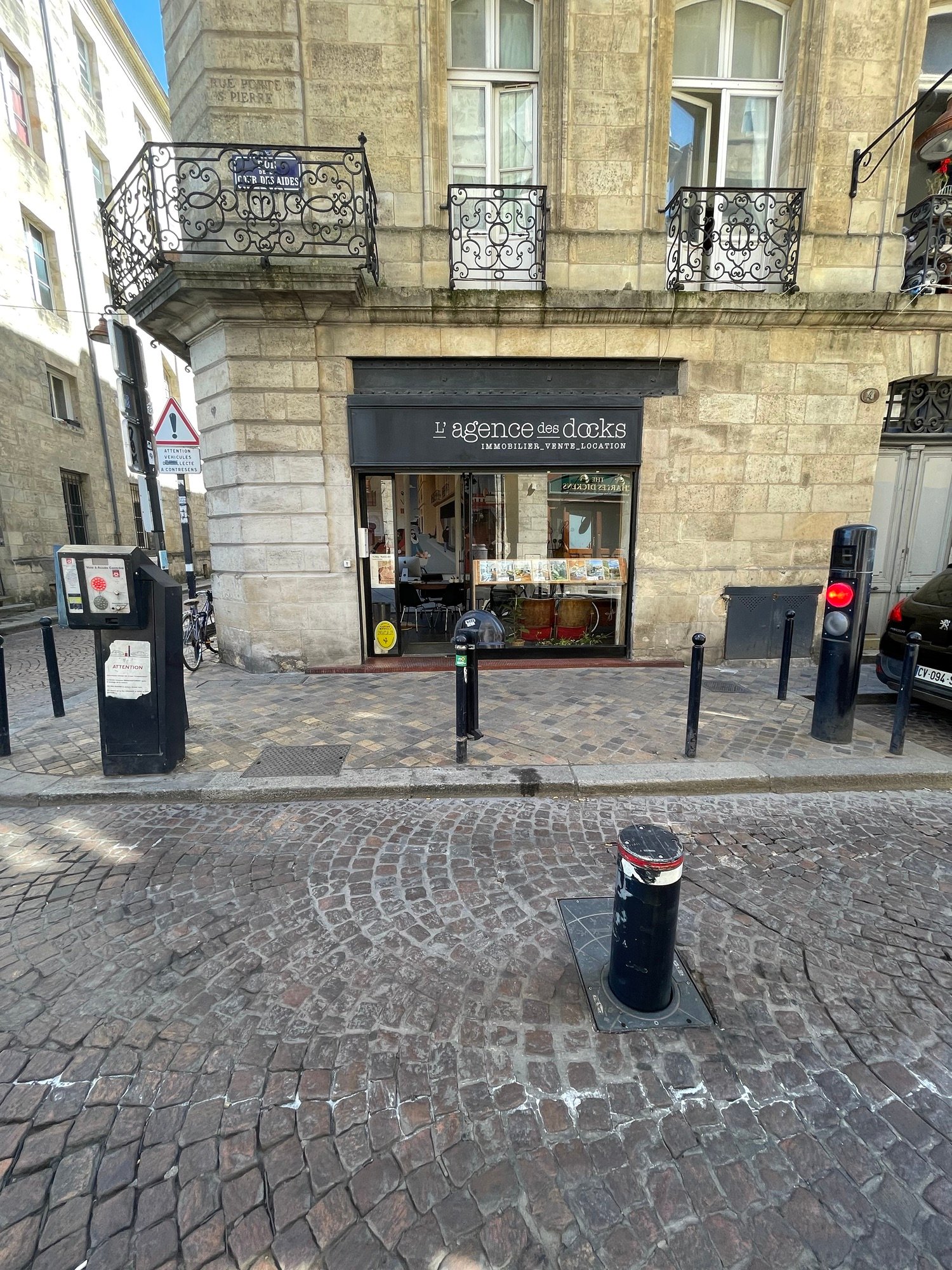
    The mighty — and automatic — bollard is an important city-building tool that isn’t employed nearly enough in North America. It’s typically used to control car access to small pedestrian-only or pedestrian-first streets. But I guess if you don’t have any of these, then you may not feel the need to install such a device. The above photos are from Bordeaux. And if you want to gain access, you need to hit the intercom button and explain why you’re local traffic. Can you think of any streets in your city that could use a system like this? I can think of many in Toronto.

  • Using tactical urbanism to transform an intersection in Salt Lake City

    One of the characteristics of streets is that once you lay them out, they tend to be fairly permanent. This can be a benefit when you get it right, like in the case of Manhattan’s celebrated grid plan. But it can be a real challenge when you get it wrong, or when you’ve designed them around a particular use and you then later decide that you want something different. In my view, one of the greatest city building challenges around is trying to take a place that was designed exclusively for cars and turn it into a place that is designed for pedestrians. That said, the above video by Spin is a great reminder that there are lots of things that can be done, and in some cases they don’t necessarily need to cost a lot of money. In this video, they transform an intersection in Salt Lake City into a safer and more enjoyable place for pedestrians and for people riding bikes and scooters.

  • Optimizing for cars

    Vox recently profiled what they are calling the deadliest road in America — a certain section of US-19 running along the Gulf Coast of Florida. It is generally an 8-lane road — 9 at most intersections — and so as you might expect, it is place that was designed for cars.

    From 2017 to 2022, US-19 saw 34 pedestrian fatalities involving a car for every 100 miles. Indeed, this stat makes it the deadliest highway in the state of Florida for people on foot.

    The other telling stat for me is the road’s crosswalk spacing. This is a place that is lined with restaurants, hotels, and many other commercial uses, and yet the crosswalks are sometimes spaced miles apart.

    This kind of street scale is mind boggling for pedestrians. No one in their right mind is going to go out of their way a mile or two just to cross a road, and so it’s no wonder that people are jaywalking and that too many people are getting hit.

    I know that our tendency is to try and solve these problems with things like flashing lights, speed radars, and orange flags that people can unceremoniously waive as they cross the street. But at the end of the day, this is an urban design problem.

    Spaces that are optimized for cars are, by definition, not optimized for pedestrians. The choice is ours.

  • yongeTOmorrow

    Yonge Street divides Toronto between east and west. It’s an iconic street (though it has its ups and downs). Since 2018, the City has been studying ways to redesign and improve the stretch that cuts through the middle of downtown.

    It is a story that we have seen in many other cities around the world, perhaps most famously in NYC. Here is a street where pedestrians outnumber vehicles and yet we allocate more space to the latter (within a fixed ROW). This study hopes to fix that.

    They’ve narrowed things down to four Alternative Designs (downloadable, here). All of them prioritize pedestrians, but in different ways. As of right now the preferred option is Alternative #4. It looks like this:

    The section around Dundas Square (from Dundas Sq up to Edward Street) is fully pedestrianized with only emergency vehicles having access during the day. This segment has the highest pedestrian volumes. The other blocks allow for a combination of one-way and two-way vehicular traffic.

    Vehicular access is obviously still important for things like loading, but it’s pretty clear that the future of Yonge Street is pedestrian priority. We should probably be doing this right now. If you’d like to voice your own opinion, you can do that here until Friday, December 6, 2019.

  • #BestStreetInTheWorld

    The below Twitter thread, initiated by Brent Toderian, is a great collection of some of the “best streets in the world.”

    I would encourage you to click through and have a scroll. The one thing that you’ll likely notice about almost all of the contributions is that the streets tend to be fairly dense/urban and they tend to be oriented around the pedestrian. No surprise there.

    My only qualm with some, but not all, of these streets is that — while beautiful from an urban design standpoint — many of them can feel quite touristy and/or commercially generic. They are the street you go to when you’re visiting the place, but they are perhaps lacking in urban authenticity.

    I don’t mean to take anything away from the beautifully designed streets in the above thread. In fact, some of them aren’t at all commercial and are simply magical places to be — period, full stop. See, for example, La Condensa (neighborhood) in Mexico City.

    My argument is simply that the natural cycle of cities and neighborhoods sometimes means that the best streets for new ideas and small businesses are maybe not the most beautiful ones. Part of this is a function of rents and part of this is function of the fact that the best cities are constantly reinventing themselves.

  • London is piloting its first ever 3D zebra crossing

    London is currently running a 12-month pilot on its first ever 3D zebra crossing. The objective is to improve pedestrian safety by making the crossing more visible to drivers. A 3D zebra crossing stands out by appearing to float above the road.

    Here’s a photo (image credit to Gusti Productions):

    While this is the first of its kind in the UK, similar crossings have already been installed in Iceland, India, Taiwan, and other countries. According to the trials in India, they do appear to have a meaningful impact on vehicular speeds. They also feel like public art.

    If this first one proves to be successful, the plan is to roll out these 3D crossings across the entire borough of Westminster. Assuming they do actually work, I’m surprised there hasn’t been more noise around them here in Toronto.

    A London-based software company is also working to completely rethink the zebra crossing for today’s smartphone world. Their system imagines LEDs embedded into the street so that a crosswalk can be triggered basically anywhere.

    Perhaps this is something that might work with the street paving that Sidewalk Toronto is piloting.

  • We want what we want

    This past Sunday night I was out for a bike ride with a few friends all around downtown Toronto. According to Strava, we did almost 22 km. Click here to see our route. During the ride, one of my friends said something to me that stood out. He said that when he’s on a bike he wants all cars off the road; but when he’s in a car, he wants all bikes off the road.

    Now, this may seem like a fairly banal statement, but I think it demonstrates a number of things about people and the way we interact with cities. First, we’re all probably pretty selfish. We want what we want at a specific moment in time and we easily forget what it’s like to be on the other side of a situation.

    Second, I think it reinforces what I wrote a month ago in a post called: Every street can’t be everything to everyone. If we want to improve the user experience for a variety of different use cases (driving, biking, walking and so on), we should decide when and where we’re going to optimize for each. 

    The reason my friend said what he said was because we were riding on a road with no bike lanes. We were swerving in and around cars. And when the street is shared like this it naturally becomes a competition of who can be the most aggressive and dominate the road–bikes or cars. But as exciting as that might be, it’s probably not an ideal way to build our cities.