Daily insights for city builders, delivered every morning at 6 AM ET. I’m Brandon Donnelly — a Toronto-based real estate developer and founder of Globizen. I’ve been writing here since 2013.

Tag: startups

  • Trying out the Oculus Rift virtual reality headset

    image

    This week on Architect This City is turning out to have a big focus on technology. And it’s not going to stop today, because this evening I had the chance to try the Oculus Rift virtual reality headset for the first time (many thanks to Dave Payne of Invent Dev for the demo). As a reminder, Oculus is the company that Facebook recently acquired for $2 billion.

    Now virtual reality certainly isn’t a new idea and lots of people have been promising – for a long time – that it was going to revolutionize the world. Which may be why I had somewhat low expectations going into this. But I have to say that I was blown away. Despite being a bit choppy (to get good visuals it ran at around 15 frames per second), I was shocked at how immersive the experience was.

    Here’s a picture of Rick exploring the (virtual) space behind him:

    image

    It was actually really strange watching somebody move around as they explored another world. The demo that Dave showed us was of an apartment suite. You could walk around the living room. Turn around and see the front door. Walk up to the window and admire the view outside. It was incredible, but somewhat scary at the same time.

    Obviously there are ton of potential use cases for this. I’m imagining a buyer touring a condo suite and picking their finishes before it’s even built. I’m imagining an architect designing a building in 1:1 scale by waving their hands around in a virtual world. I’m imagining “traveling” to a beach to treat seasonal affective disorder. And the list goes on.

    This isn’t going to happen overnight. I actually got a bit nauseous because of how choppy the video got at times. But I can certainly see the potential. Virtual reality is coming. It’s clearly the future of gaming. And I’m sure it’ll get applied to many other areas of the economy. I guess that’s why Facebook bought these guys for $2 billion.

    If you have an interest or need in the 3D visualization space, I would encourage you to reach out to Dave at Invent Dev. He’s super passionate about the work that he’s doing and is looking to collaborate with more people in the design and real estate spaces. Thanks again Dave.

  • Taxis just got 40% cheaper in Toronto

    UberX officially launched in Toronto today. Which means that Toronto’s taxi and limousine industry is about to get a lot more grouchy. For those of you who may not be familiar, uberX is Uber’s low-cost car service. Just like the regular version, you hail a car using your mobile phone. But this option will cost you 40% less than a regular taxi!

    Here are sample rates from the Financial District to Yonge & Eglinton (midtown):

    And from the Financial District to Pearson International Airport:

    image

    This is pretty exciting. Because as much as I think it’s great to use Hailo or Uber to hail and then pay for a car, the big problem in my mind has always been that cabs in Toronto are just far too expensive. The meter starts at $4.25 and shoots up faster than you can take a selfie in the backseat.

    But obviously there’s an entrenched industry here that is not going to be happy about a startup eating into their fares. So I wouldn’t be surprised if we see a lot more backlash here in Toronto – as has been the case in many other cities. However I don’t think that’s a viable long term solution for the incumbents.

    Uber is thought to be worth $18.2 billion right now. It’s probably not going to go away.

    So instead of protesting and trying to ban it, we should be figuring out how to adjust to this changing reality. For the incumbents, this might mean lowering fares or figuring out a better way to differentiate themselves. A 40% discount is a pretty compelling value proposition. For me personally, I don’t know why I would ever pay more for a regular taxi, unless there was no other option.

    On a side note, it’s worth pointing out that an uberX trip from downtown to Pearson is estimated to cost around $33 – roughly the same as what some people think the Union Pearson Express train will cost. That’s further evidence that charging a lot and targeting business travelers may not be the best strategy.

  • Toronto’s “Instagram for doctors” raises $4 million

    image

    Earlier this week it was announced that Fred Wilson and his firm Union Square Ventures have just led a $4M Series A round of venture funding in the Toronto-based startup Figure1. Figure1 is essentially “Instagram for doctors.” Here’s how it works (via WSJ):

    Today, more than 125,000 health-care professionals use Figure 1 to view or share free medical imagery, including photos of patients with personally identifiable details blurred out or excluded; x-rays; charts; and still images taken from MRI or CAT scans, for example.

    The app’s users include board-certified doctors, registered nurses, medical and nursing students, physicians’ assistants, and others who use the app and share images for teaching and studying purposes, or even to request community feedback about a possible diagnosis.

    With this round, USV is now up to 3 investments in the Toronto/Waterloo region (I think of us as one center). The other 2 are Kik (out of Waterloo) and Wattpad, which is actually headquartered here in the St. Lawrence Market.

    What’s exciting to me about all of this is that it’s further evidence of a growing and thriving Toronto/Waterloo startup ecosystem. And while to some it may not seem like a big deal for yet another mobile app to receive funding, it’s actually great news.

    Because as these companies grow and become successful, they’ll not only create new jobs in the region, but also create a tremendous amount of wealth and expertise. And when this wealth and expertise gets reinvested into future startups, you end up with a powerful snowball effect. That’s how startup ecosystems are built.

    It’s also great to see companies staying put, because the pull towards more established startup hubs can be significant. When my friend Evgeny raised a Series A round from Andreessen Horowitz last year, he told me that they asked him to move 500px down to California. As is the case with a lot of VCs, they like their portfolio companies to be nearby.

    But ultimately 500px decided to stay headquartered here in downtown Toronto. And they did that for a few reasons: There’s lots of great engineering talent here and it usually comes at a discount relative to California (5-15%). He also finds that employees here are more loyal. There’s less turnover. In California, everyone is looking for that next best startup to join. Here 500px gets to be that big fish in a small pond.

    Anyways, a big congratulations to the Figure1 team. I hope they continue crushing it and that they stay put in Toronto. If you’re a healthcare professional, you can click here to download the app.

  • Your thoughts on the real estate marketplace, please

    If you know me at all, then you’ll know that I’m a big proponent of introducing more technology into the real estate space. I think the industry is one that has been incredibly slow to embrace technology, but that it’s only a matter of time before it does.

    Two months ago I wrote a post talking about how entrepreneur and venture capitalist Keith Rabois is working on a home buying startup codenamed Homerun — now called Opendoor. Here’s how he recently described the state of affairs:

    “My friend [PayPal and Palantir cofounder] Peter Thiel suggested that I come up with an idea to innovate in residential real estate,” Rabois told VentureBeat in April. “It’s the largest part of the economy unaffected by the Internet. And that was definitely true then, and even with things like Trulia and Zillow, it’s fundamentally true today. But the process of [selling a home] hasn’t been transformed by technology.”

    What Opendoor is trying to do is really interesting, but I have a different idea. It’s called Unlyst. And today I’d like to ask the ATC community for a small favor. I’ve created a short home buying and selling survey (embedded below) that will take you at most 2 minutes to complete.

    If you could please take the time to do that, I would greatly appreciate it. I’ve made the results public as well, so you’ll be able to see how buyers and sellers currently feel about the real estate marketplace. If you can’t see the survey below, please click here. Thanks for your help!

    [googleapps domain=”docs” dir=”forms/d/1bKvHYdSUfYH3AGX7LcLIK0_-i7nt7WIdTmHeaJ8P7pY/viewform” query=”embedded=true” width=”760″ height=”500″ /]

  • Without trust, you have nothing

    I was reading Fred Wilson’s AVC.com blog this morning (as I do every morning), and I thought his post on trust was a really important one. He was talking about it in the context of building successful web applications, but I don’t think it’s only applicable to internet businesses.

    As marketer Seth Godin wrote on his blog earlier this year, the most important questions are not:

    Is my price low enough?

    Is it reliable enough?

    Do I offer enough features?

    Am I on the right social media channels?

    Is the website cool enough?

    Am I promising enough?

    No, the most important question in marketing something to someone who hasn’t purchased it before is,

    “Do they trust me enough to believe my promises?”

    Without that, you have nothing.

    I thought this was such an awesome, yet simple, post that I actually circulated it to a bunch of people in the office after I read it. Because whether you’re marketing widgets, marketing private cloud storage, marketing to investors, or marketing new condominiums, that question of trust is paramount.

    And it’s for that reason that I think social media and mediums such as blogging have become so important. Customers want to feel like they trust you before they buy your product. The best brands know this and forge “relationships” with their customers. And with the tools at our disposal today, it’s become a lot easier for companies to do that.

  • Tech and the City

    image

    I’m reading a great book right now called Tech and the City. I’m only 31% of the way through it (according to my Kindle app), but already it’s been an interesting read. It’s about the making and rise of New York City as a technology and startup hub – which, is fairly recent phenomenon. There aren’t too many cases where New York plays second or third city, but tech is one of those instances. Silicon Valley dominates.

    The book talks about the deliberate efforts that were made, by the Bloomberg administration as well by many others, to diversify New York’s economy away from financial services and towards technology, startups, and entrepreneurship. It gives you all the backstory about the rise of Silicon Alley in the 90s, its subsequent crash in the dot com era, and all the players involved. And yes the reference to Sex and the City is both on purpose and explicit throughout the book.

    But at a time where cities all around the world are trying to replicate the success of Silicon Valley, the takeaways from this book are perhaps universally applicable. It certainly got me wondering if, here in Toronto, we’re doing enough to prepare our city to dominate in the 21st century.

    Image: Stephen Wilkes

  • Home remodeling site Houzz valued at $2.3 billion

    Earlier this week it was announced that home remodeling site Houzz raised a $150 million Series D round, which would value the company at around $2.3 billion, post-money. Meaning, that’s the value of the company including the money it just raised.

    If you’ve never used Houzz before, it’s a platform that offers design inspiration for remodeling projects, products for sale, and a directory of home professionals. The company makes money by selling products through its online storefront and through premium accounts for the pros.

    The perceived value of Houzz likely stems from the fact that it provides a platform to address the estimated $300 billion home improvement market. But what I see as really exciting is the potential for Houzz to bring even greater transparency to the whole renovation and construction marketplace.

    Already Houzz has started to aggregate data on average renovation costs throughout the US. But there’s a lot more they could do. Professional reviews and design inspirations are great, but I can imagine them “moving up the stack” to start acting as a king of virtual general contractor that manages more of the actual renovation process.

    And that would be pretty powerful.

  • Could a decentralized sales model work?

    image

    Since I started blogging last year, I’ve been getting regular emails from both people I know and from readers I don’t know (but hope to one day meet) asking for advice on buying real estate. Usually somebody sends me the link to a place they’re thinking about buying, and they want to know what I think about the property and the neighborhood.

    I’m more than happy to help when I can and I try to be brutally honest in terms of what I think. What’s interesting about this dynamic though, is that I don’t have a vested interest in any of the outcomes. Whether I tell that person I love the place or that it’s shit, I don’t stand to gain anything. And that means I can be brutally honest. It’s for this same reason that customer reviews on websites can work so well. 

    Because on the flip side, if I make money when you buy, then guess what, I’m going to want you to buy. That’s how it works for any industry–from financial services to real estate to retail. That’s why some stores will promote the fact that their sales people are not on commission. Although you could argue that those sales people are then less motivated to help you.

    In any event, all of this got me wondering if there isn’t some way to take customer reviews to the next level. Could a decentralized sales model work?

    Last year I had a conference call with one of the chief officers of one of the top 3 real estate websites in the US and I was told that they had actually tested a “social buying model.” It ultimately failed, but it strikes me as an interesting concept. Reviews are starting to feel a bit dated now on the social web, but I think the idea of crowdsourced input is here to stay.

    Image: Flickr

  • New startup wants to solve urban congestion through data and lotteries

    image

    If you’re a regular reader of Architect This City, you’ll know that I’m a supporter of congestion and road pricing. Any valuable good or service, such as a road, that’s offered for all intents and purposes as free, will never be able to keep up with demand. You need to price it.

    However, the political risk associated with implementing something like this has made it such that few cities around the world have done it. London and Singapore are the two most common examples.

    The more populist solution is to simply build more roads and highways, even though study after study shows that this doesn’t work. If it did, we would have already solved the problem of traffic congestion. And we most certainly haven’t.

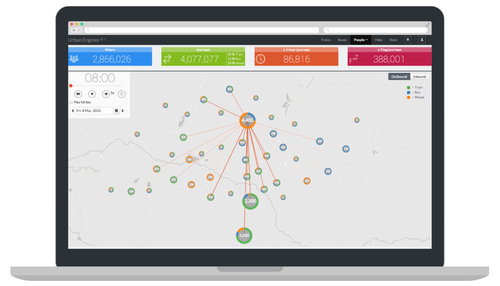
    Which is why I’m excited about a new startup that recently launched called Urban Engines. Their solution is twofold. It’s based on incentives and on treating people and cars in cities as sensors that feed back data into their network. Here’s a brief video. If you can’t see it below, click here.

    [youtube https://www.youtube.com/watch?v=oaCp5Tl-uAc]

    The data piece is almost a no-brainer (provided they can get the data). The more data we can collect about the way people and cars move in a city, the more they’ll be able to optimize and manage the flows. The possibilities are endless.

    But what I found really interesting is their incentives based approach. Typical road pricing methods are, one could argue, a punitive approach. As traffic increases so does the price of the road. (I like to look at it as efficient pricing.)

    With Urban Engines, their approach is the opposite: it’s to reward people–through money and lotteries–for driving during off peak times. It’s smart because selling a reward program to cities will be a lot easier than selling a new charge.

    Overall, this a great example of how startups are stepping up to solve some of our most important societal problems. For more information on Urban Engines, check out their website and this writeup on CityLab.

  • The why of ATC

    The journey of Architect This City has been an organic one. When I first started blogging regularly in September 2013, I had no plan in mind other than that I wanted to write about cities. I had just come off working full-time on my startup, Dirt, where I had gotten into the habit of writing and I enjoyed it immensely. So I wanted to continue.

    Cities seemed like the perfect umbrella to capture all of my passions: architecture, design, planning, real estate, and even technology. And so I rebranded brandondonnelly.com—which I had already been using as a microblog—and slapped the title “Cities” on it. (That personal microblog has since become brandondonnelly.me.)

    Then, after a few months of blogging, I was having drinks with a good friend of mine and telling her about my new daily discipline. She immediately asked me what it was called and, when I replied by saying that I didn’t really have a name for it, she insisted that I create one immediately. Since she’s one of the brightest people I know, I gave it some serious thought. A few days later, Architect This City was born.

    I liked the idea of having a distinct brand, because then it meant it could grow beyond just a personal blog. It could become a real community of people passionate and committed to building better cities. And that ultimately became the goal as I got deeper and deeper into writing.

    Since that time last year, I’ve had friends guest blog on ATC. It has gone on to become syndicated on Mobility Lab and Urban Times. And it has been featured by the Guardian in the UK has one of the big city blogs in the world. But even more exciting are the moments when somebody tells me, either face-to-face or through a quick message, that they’re really enjoying ATC and that they read it daily. That’s what keeps me going.

    Lately though, I’ve been thinking about what’s next. What’s the purpose of ATC? What’s the why? I thought about writing a manifesto of sorts, but that just seemed unnecessarily onerous. So I sat down, primarily on the subway, with Evernote, and I wrote a purpose statement for ATC:

    To promote the building of beautiful and environmentally sustainable cities that offer strong economic opportunities and a high quality of life.

    That’s really what I believe cities should do. They should be enjoyable and beautiful places to live life and they should empower people to get richer. At the same time, we need to be aware that as more and more of the world’s 7 billion people move into cities, the need for environmentally sustainable solutions is only going to increase.

    So those are the kinds of discussions I hope we can have on ATC. Regular scheduled programming will continue as usual, but hopefully now the why is clearer. If you have any feedback on the above statement, I would love to hear from you in the comment section below.