Daily insights for city builders, delivered every morning at 6 AM ET. I’m Brandon Donnelly — a Toronto-based real estate developer and founder of Globizen. I’ve been writing here since 2013.

Tag: startup

  • I’m back from Startup Weekend

    image

    I usually write on Architect This City every day. But this past weekend I skipped both Saturday and Sunday, which is something I haven’t done in the 15 months that I’ve been writing this blog. I hate missing days. I really do. But I had no choice. I was at Startup Weekend here in Toronto.

    For those of you unfamiliar with the global Startup Weekend initiative, let me tell you how it works.

    Last Friday night, hundreds of people from Toronto’s startup community convened at the MakeWorks coworking space in Toronto’s west end to pitch and hear new business ideas. The floor is always open to anyone who would like to pitch, but you only have 60 seconds (hard stop) to convince the crowd that your idea is worth pursuing. This past weekend there were about 40 pitches.

    Following the pitches, the crowd then gets to vote on their favorite ideas. The top pitches – there were 13 selected this past weekend – get to move on and the people who delivered those pitches become team leaders. They are then asked to get up one more time to tell the crowd who they need to develop their idea over the weekend. Once that happens, everyone starts scrambling around to try and put together a team. It’s all about hustle.

    Immediately after the teams are formed, the work starts.

    By Sunday at 5pm, you’re expected to have validated your idea and problem in front of real people, executed on some sort of minimum viable product (the solution), and ideally brought in some of your initial customers. Because at the end of the weekend, all the teams get up and deliver a 5 minute pitch in front of a panel of judges who assess you on how well you did against those 3 objectives.

    It’s a weekend of raw adrenaline. I wouldn’t be surprised if I lost about 5-10 pounds as a result of how little food I ate and how much coffee I consumed.

    I pitched a real estate related idea – just like I did 2 years ago at the last Startup Weekend I attended – and I was fortunate enough to win the top pitch on Friday night. I think it may have been because I said fuck in my pitch. Although, a lot of people also remembered me from the previous Startup Weekend and started calling me “Mr. Real Estate.”

    //platform.twitter.com/widgets.js

    Our team ultimately didn’t place – which may have been because it was an Internet of Things themed Startup Weekend and we weren’t that – but I think we developed a super solid business idea.

    Either way, I had a blast. We knocked on people’s doors to validate our idea. We got a ton of positive feedback on what we were trying to do. And I was fortunate enough to meet a bunch of smart and ambitious people. I was so impressed by what our team accomplished.

    But what I also love about events like Startup Weekend is that it shows you how vibrant the startup ecosystem really is in Toronto. There is no shortage of passionate entrepreneurs in this city fighting to change the world. And what’s great about this community is that they all know how hard it is to start something from nothing, and so they’re incredibly supportive. 

    If you have any interest, I would encourage you to check out events like Startup Weekend. They’re a lot of fun and they all contribute to the greatness of this city.

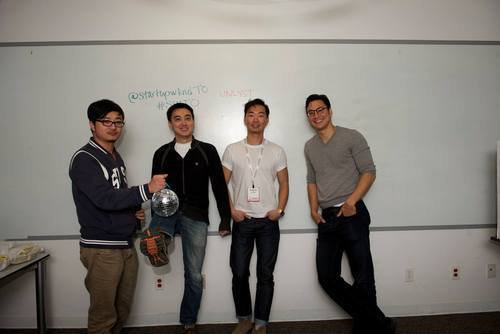
    Image: The Unlyst Team at Startup Weekend TO 2014 (Jerry, Louis, Landon, and me)
  • The demand for character office space

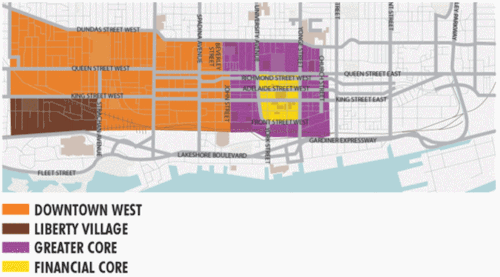
    Last Friday the Toronto Star published an article talking about the growing demand for character office buildings in submarkets outside of Toronto’s core. Specifically, it was talking about the Downtown West and Liberty Village submarkets (citing a report from CBRE).

    I’m sure this isn’t news to most of you. Cool loft spaces have been popular for years. But it’s interesting to look at how rents and vacancy rates have changed for these submarkets and product types over time.

    Since 2002, average (net) asking rents for brick-and-beam buildings in the west end have gone from $16.12 to $22.23 per square foot. Almost a 38% increase. By comparison, office space in the core has gone from $28.40 to $32.38 per square foot. A 14% increase.

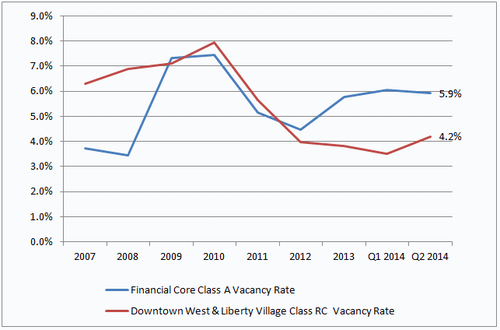
    And if you look at vacancy rates since 2007, you’ll see that the character office market has really tightened up over the past 4 years or so. There’s growing demand for a limited amount of supply.

    With the growth that the downtown core is seeing and with the rise of Toronto as a creative startup hub, I’m sure we’ll continue to see strong demand for this type of space. But there’s only so much of it to go around. So I think we’ll also end up seeing greater interest in the east side of downtown and also more interesting new builds.

    Images/Charts: CBRE

  • What’s in a neighborhood?

    image

    When I was working on my startup Dirt last year, one of the things we spent a bit of time figuring out was how to classify buildings according to neighborhood. Now, at first blush, this may seem like a fairly easy thing to do. You simply locate the building, figure out which neighborhood it’s in, and then tag it accordingly. But neighborhood boundaries and definitions aren’t as clear cut as you might think.

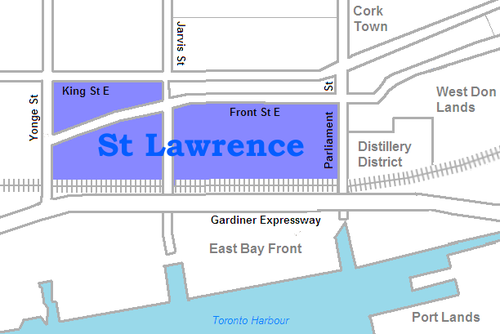
    For example, a lot of you probably know that I live in the St. Lawrence Market neighborhood of Toronto. And indeed, if you look at this Wikipedia definition, I live in that area. But if you look at what they call it, it’s just: “St. Lawrence.” They also specify that it used to be called “St. Lawrence Ward”, but that today most people actually call it “the St. Lawrence Market.” So here you have an example of an evolving and changing name.

    image

    But then there’s the question of boundaries. According to Wikipedia’s definition, the north boundary is Front Street. This means that the North Market Building would be technically outside of the area and so would the Market Square condos. But I suspect that almost everyone would consider these two buildings to be part of the neighborhood. So where exactly is the north boundary? Is it King Street? Or maybe by Front Street they mean that all buildings on the north side of the street are included.

    If you look at the city’s official neighborhood list (which is built from Statistics Canada Census Tracts) you’ll find a completely different boundary and name. According to this list, I live in the “Waterfront Communities–The Island” neighborhood. Obviously nobody, other than maybe somebody who deals with census data, would have any idea what this area is. But it’s how the city tracks its demographic data.

    What this begins to show you is that neighborhood definitions and boundaries aren’t as black and white as they might initially seem. And it’s partially because cities themselves are always in flux. New neighborhoods emerge and old ones reinvent themselves. And as that happens, people start introducing new names and new terminologies.

    image

    When I was about 19 years old, people in Toronto used to say they were going out “on Richmond and Adelaide.” Since then, gentrification has pushed many of the bars and clubs out of that area. So people instead go out “on King West” or “on Ossington.” And as people begin to use those terms and identify with an area, new brands are created. Ask anybody who lives downtown and I bet they’ll tell you that King West has its own unique personality and even a type of person who typically lives there. This is an on the ground type of awareness though, which doesn’t get captured in census tracts.

    The other reason neighborhood boundaries can be so fuzzy is because we – the real estate community – are constantly trying to manipulate them for our own benefit. I’m indifferent to the fact that this happens, but it is a reality. Think about how much the neighborhood of Yorkville has been stretched from its original roots north of Bloor Street. If a neighborhood has a good brand, agents and developers will naturally try and leverage it. Homeowners do it all the time too. Would you prefer to say that you live in Seaton Village or the Annex?

    Ultimately, we (my Dirt cofounder and I) decided that neighborhood definitions and boundaries needed to be fluid. They needed to dynamically adjust with the market and come from as many people as possible on the ground. Because at the end of the day if the official documents say one thing, but the majority of city residents believe another, then that official boundary and definition are probably out of date. The crowd wins here.

    We liked this approach because it was organic – just like cities.

    Images: Flickr, Wikipedia, Flickr

  • Put your window to work and make $50 a month

    image

    I’m convinced that city building – like probably every other industry – is going to get a lot more data driven. Yesterday I wrote about how driverless cars are collecting exact replicas of our cities as a result of the 3D scanning that they do. And today I learned about an interesting new startup called Placemeter.

    Basically it works like this: If you have a window (at home, at the office, or wherever) that faces onto a lively street, Placemeter will pay you to setup a smartphone in that window as a “meter.” The going rate is up to $50 per month and they’ll even provide you with the necessary suction cups.

    Through video, your phone will then start collecting anonymous data about that street’s activity levels: the number of people, cars, and so on. Below is a video of what that output looks like. Notice that it’s even collecting the number of people that go into each of the stores. Click here if you can’t see the video below.

    //player.vimeo.com/video/69091237

    To make money, Placemeter plans to sell (or is already selling) this data. And their goal is to “make your city better” by specifically improving the way that pedestrian spaces are designed. There are of course lots of other use cases for data like this (such as seeing how busy that bar is across town), but their primary goal appears to be around city building. At least that’s the case right now.

    Not surprisingly, there are concerns about privacy. But I’m sure they’ll be able to work around that. All of the data they collect is anonymous and they don’t save any of the footage that they receive from the meters. Their system just extracts the relevant data points and then automatically deletes the video. 

    What’s also interesting to me about this startup, though, is that it’s yet another example of decentralized value creation. Just like Airbnb empowered anyone with a spare room to run their own bed and breakfast and YouTube empowered anyone with some talent (or a funny cat) to create engaging content, Placemeter is allowing anyone with a window and a view to connect and contribute to a network of urban sensors.

    And it works because the marginal cost of adding a new meter to their network is relatively low. Especially if you compare it to what it might cost for a municipality to setup and manage a similar – albeit centralized – system. It’s a totally different cost structure. So when we talk about smart cities and data driven city building, we’re really talking about networks and an environment of decentralized inputs.

    It’s a pattern that keeps coming up as a result of the internet. If you start watching for it, I’m sure you’ll see it.

    Image: Flickr

  • Embracing 3D in the real estate industry

    I recently discovered a New York-based startup called Floored. What they do is create “interactive, online 3D models for real estate.” They take spaces that may or may not exist yet, and turn them into interactive experiences that can be accessed online from any browser.

    Here’s one they created for ClearRock Properties and Cushman & Wakefield, designed to show how two adjacent retail spaces would look if they were combined into one.

    There’s been a lot of talk over the years about how limiting 2D floors plans are for communicating space to potential tenants and purchasers. But in the same way that virtual reality has never really taken off, neither have 3D floor plans, interactive walkthroughs, and other more sophisticated tools. When people buy a new condo, for example, they still buy it based on a floor plan.

    However, as the technologies get better–and perhaps as BIM supersedes CAD as the dominant platform for architects and designers–I think we’ll see these 3D tools become standard in the industry.

    And one of the things that I think it will allow us to do is be much more iterative in the way we design and build spaces. Right now it’s almost impossible to test different iterations of a building in the same way that, for example, a web developer might test different websites. Construction is a pretty permanent act. But 3D could open up that possibility.

  • Introducing Polyform Labs

    image

    A few weeks ago I had coffee with a friend of mine who is a partner at a Toronto-based enterprise software company called Polyform Labs. Their products are geared towards the commercial real estate industry and, since I’m a big proponent of introducing more technology into the real estate space, I thought I would share a little bit about them with you all today.

    The first of their 4 main products is called Lingo, which is a machine learning tool that helps companies quickly review legal documents and contracts. In the case of commercial real estate firms, the most obvious use case is leases. These documents are often hundreds of pages long and, if you have a big portfolio of properties, I’m sure you can imagine how quickly these pages add up.

    What’s neat about Lingo is that you basically upload a lease and then the tool interprets and summarizes all of the clauses for you. It then tells you where you’re potentially exposed and where your risk factors are. And if by chance it gets it wrong, you can correct it and the system will actually get smarter – hence the machine learning part.

    I’m not going to go through their entire product line, but I did also want to mention one more called Aura. They call it a “location-aware loyalty engine”. And you may have heard of similar products out there in the marketplace. What it does is use the MAC address on mobile phones (which is a unique, but anonymous, identifier) to track how people and crowds move through spaces.

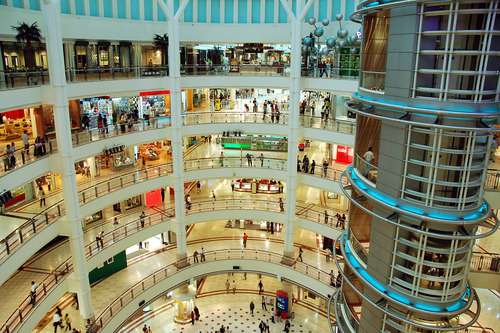
    The most common use case I’ve come across is within shopping malls and retail spaces. It’s used to determine which stores have the most foot traffic, which departments and aisles draw the most people, how long people stay in each store, where they buy, and so on. So even if you didn’t already know about this technology, you may have already been giving up your location data. There are lots of mall landlords using it.

    And it’s producing some interesting data. For example, as soon as somebody buys one thing in a mall, their propensity to buy something else grows exponentially. This is what the data tells us and I can certainly relate to it from my own experience. So as a mall landlord and tenant, you are obviously trying to figure out ways to encourage people to make that first purchase. 

    The other use case that (obviously) came to my mind was with respect to city planning and urban design. How could we harvest anonymous location data to improve the way we design both our private and public spaces? Imagine if we had this data for subway stations, public parks, public plazas, and so on. I bet we would discover all kinds of ways to improve the experience within our cities. I’d like to see the location data for Trinity Bellwoods Park in Toronto on a sunny summer day.

    But I digress.

    If you’d like learn to more about Polyform Labs and their real estate products, click here

    Image: WPC

  • World’s first connected bike for urban commuters

    image

    The Vanhawks Valour smartbike has been making the rounds on the internet over the past few weeks. They’re a Toronto based startup and they’ve just raised $820,000 on Kickstarter to build and sell the first connected smartbike. The bike will eventually retail for around $1,000. 

    Here’s a video that explains it all. If you can’t see it below, click here.

    https://www.kickstarter.com/projects/1931822269/vanhawks-valour-first-ever-connected-carbon-fibre/widget/video.html

    I’m pumped to see a Toronto startup doing so well and attracting so much attention globally. I hope they continue crushing it. Good luck guys.

  • Innovating amongst the haters

    Whether you’re developing a building, planning transit, starting a company or just trying to do something different, there will always be haters. But pessimists don’t change the world—optimists do.

    I came across a great post last night by venture capitalist Ben Horowitz. It’s called, “Can-Do vs. Can’t Do Culture.” And I think you’d be well served to keep a copy of it on file and read it before every single meeting where you’ll be asked to provide input on something new.

    He’s specifically talking about a growing and discouraging trend of naysaying in the tech community, but the lessons apply more broadly to innovation as a whole.

    I love these lines:

    “The trouble with innovation is that truly innovative ideas often look like bad ideas at the time. That’s why they are innovative — until now, nobody ever figured out that they were good ideas.”

    “From a psychological standpoint, in order to achieve a great breakthrough, you must be able to suspend disbelief indefinitely. The technology startup world is where brilliant people come to imagine the impossible.”

    But the best part of Horowitz’s post is an excerpt from an internal Western Union report (then the largest telegraph provider in the US) recommending that the company not purchase Alexander Graham Bell’s invention (the telephone) and patents for $100,000.

    The Telephone purports to transmit the speaking voice over telegraph wires. We found that the voice is very weak and indistinct, and grows even weaker when long wires are used between the transmitter and receiver. Technically, we do not see that this device will be ever capable of sending recognizable speech over a distance of several miles.

    Messer Hubbard and Bell want to install one of their “telephone devices” in every city. The idea is idiotic on the face of it. Furthermore, why would any person want to use this ungainly and impractical device when he can send a messenger to the telegraph office and have a clear written message sent to any large city in the United States?

    The electricians of our company have developed all the significant improvements in the telegraph art to date, and we see no reason why a group of outsiders, with extravagant and impractical ideas, should be entertained, when they have not the slightest idea of the true problems involved. Mr. G.G. Hubbard’s fanciful predictions, while they sound rosy, are based on wild-eyed imagination and lack of understanding of the technical and economic facts of the situation, and a posture of ignoring the obvious limitations of his device, which is hardly more than a toy …

    In view of these facts, we feel that Mr. G.G. Hubbard’s request for $100,000 of the sale of this patent is utterly unreasonable, since this device is inherently of no use to us. We do not recommend its purchase.

    It’s a classic example of The Innovator’s Dilemma (a book written by management guru and HBS professor Clayton Christensen). Many firms see their businesses disrupted because they blindly stick to the innovation that made them successful in the first place—ignoring what’s coming up on the horizon.

    In the case of Western Union, they could not imagine “telephone devices” in every city. The idea was pure lunacy to them. Of course to us today, they look like myopic fools. We now not only have telephone devices in every city, but a full fledged computer in every pocket. Imagine that.

    Which is why I think it’s important to remember that the way to drive the world forward is—to use Horowitz’s terminology—through hope and curiosity. Suspend disbelief. Think big. Dare to be crazy. Because you’re only crazy until you’re proven to be a genius.

  • Zillow Prices Follow-On Offering At $82 Per Share To Raise $205M | TechCrunch

    Zillow Prices Follow-On Offering At $82 Per Share To Raise $205M | TechCrunch

  • Every employee in a company depends on the CEO to make fast, high quality decisions. Often any decision, even the wrong decision, is better than no decision. These decisions are pulse of the organization. Sharing command almost guarantees that the CEO position will perform poorly in this dimension.

    Ben Horowitz