Daily insights for city builders, delivered every morning at 6 AM ET. I’m Brandon Donnelly — a Toronto-based real estate developer and founder of Globizen. I’ve been writing here since 2013.

Tag: soho

  • The Germania Bank Building at 190 Bowery

    I recently mentioned that it would be nice to be able to buy a five-storey building in Soho (New York) for $70,000. Yes, that was in 1968 dollars. But even in today’s dollars, we’re talking less than $600,000. I would gladly buy a cast-iron five-storey building in Soho for that price today if it were somehow possible.

    In response to this post, a reader sent me this (thank you), which is another great example of an artist buying an old buying in New York for what is clearly an absurdly low price. The artist is photographer Jay Maisel, and the building is The Germania Bank Building at 190 Bowery.

    Jay bought the six-storey building in 1966 for $102,000. He then used it as his residence, a studio, and as a place to collect a hell of a lot of things. Though at one point he also rented out some of the other floors to artists like Roy Lichtenstein.

    It is alleged that most people thought the building was abandoned. But this was obviously not the case. Jay sold the building to RFR Holdings in 2014 for $55 million. And in 2019, streetwear brand Supreme opened up in the bottom.

    Today, I understand that Web3 things are also happening in the building. And who knows, it might be the case that we’ll be reading about some of them, in a similar kind of way, fifty years from now.

  • 1970s New York, through the lens of a taxi driver

    Even if you never experienced it yourself, we have all heard the lore of 1970s New York City. It was a raw, dangerous, and unpolished city that was simultaneously teetering on the edge of bankruptcy and providing fertile ground for artists and many other forms of expression (some suspect and some not).

    Jane Jacobs is famous for saying that “new ideas often require old buildings.” And the New York of this era was exactly that kind of city. Artist Donald Judd (a favorite of mine) bought his five-storey cast-iron building in Soho (on Spring Street) around this time (1968). He paid just under $70,000.

    So it is perhaps easy to romanticize this more accessible (and equitable?) version of New York. But there were many other things going on the city at this time beyond minimalist art in Soho loft buildings.

    This photo essay by Joseph Rodriguez does a great job at telling some of those other stories in a decidedly humanistic way. Joseph was a New York cab driver from 1977 to 1985. And his final years, he had taken up photography and had started documenting the people and the city through his windows.

    His incredible photos are also available in this book called, TAXI: Journey Through My Windows 1977-1987.

    Photo: Joseph Rodriguez

  • In real life in New York City

    This past weekend Bright Moments opened up their NFT art gallery in New York’s Soho. This is the company’s second gallery. The first was in Venice, California. And there are plans for eight more cities, with Berlin being the next one. (When is Toronto?!)

    Bright Moments is a decentralized autonomous organization (DAO), which is interesting in its own right but is a topic for another post. You can read a bit more about Bright Moments and DAOs, here and here.

    What I would instead like to talk about today is how Bright Moments is operating at the intersection of NFT art and real-world spaces. They are in effect a community. It’s a place for artists to release/showcase their work and a place for people to connect.

    One of the things that the company is doing with each gallery launch is minting an NFT collection that is tied to the city and that uses the local demonym. When they opened their popup in Venice, they launched the CryptoVenetians. And last weekend in New York they launched the CryptoNewYorkers.

    In each case, 1,000 NFTs were minted and the idea is that once they have expanded to their 10 cities, there will be a collection of 10,000 NFTs.

    I have said it before, but this is an exciting time in the world. Maybe this current NFT craze ends up being a massive bubble, or maybe it doesn’t. Either way, things are exciting.

    But here’s the thing.

    Organizations like Bright Moments show you just how important physical spaces, live communities, and cities continue to be. It doesn’t matter that this is digital art being displayed on a screen and that one could be viewing it from anywhere. People want to hang out in the same room and experience these sorts of new things together.

    I can’t see that ever going away.

  • Beer over water and the contributions of John Snow

    The work of John Snow is instrumental to the field of epidemiology. In the mid-19th century, during what was the third major outbreak of cholera, he created the following map showing the clusters of cholera cases in London’s Soho neighborhood. Stacked rectangles were used to indicate the number of cholera cases in a particular location. This was a major breakthrough for the fight against cholera because, at the time, it wasn’t clear what was causing it. According to Wikipedia, there were two main competing theories. There was the miasma theory, which posited that cholera was caused by bad particles in the air. And there was the germ theory, which posited that cholera could be passed along through food and/or water.

    By mapping the clusters of cases, Snow discovered a concentration of incidents in around the intersection of Broad Street and Cambridge Street (now Lexington Street) where a water pump was located that drew water from the Thames. This led Snow to the conclusion that it was maybe a bad idea to offer up polluted river water as drinking water. And sure enough, when the pump was shut off and residents were directed to other nearby pumps, the incidences of cholera began to decline. The germ theory had proven to be true.

    The first time I saw John Snow’s map was in architecture school. Perhaps many of you have seen it as well. It is often used to illustrate the potential of visual representations to not only tell a story, but to teach the creator what that story actually is. In hindsight, it may seem obvious that polluted river water is something that we maybe shouldn’t drink, but it wasn’t at the time. This map helped people understand that. Today, we have far more sophisticated tools available to us, but we still have a lot to learn and we’re doing that every day — particularly during a pandemic.

    One other thing worth mentioning is that there are a few exceptions to Snow’s findings. Supposedly, many of the workers in a nearby brewery were able to completely avoid the cholera infection during the outbreak by only drinking their own brew. Some say it is because the brewery had its own water source, whereas others say it is because the brewing process — the water is boiled — kills the cholera bacteria. Either way, I think the moral of this story is pretty clear: when in doubt, choose beer over water.

    Map: Wikipedia

  • Inside-outside

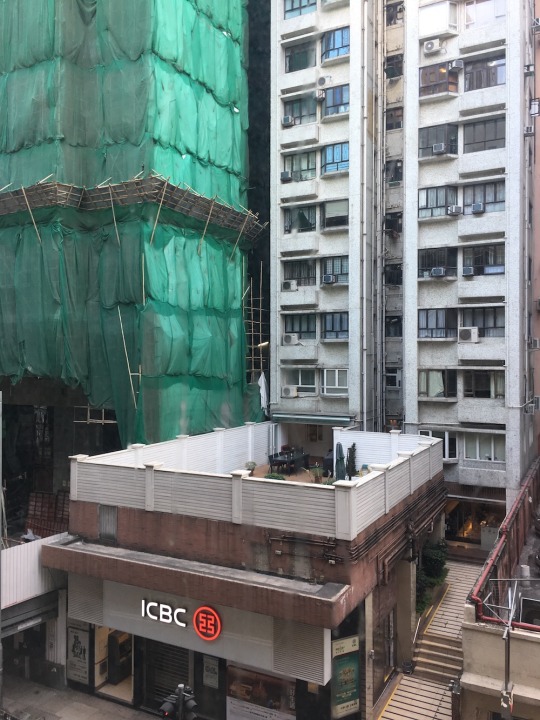
    Take a look at this photo from Central in Hong Kong and note the MEP (mechanical, electrical, and plumbing) systems running up the cutout in the middle of the tower. Also note the bamboo scaffolding next door and the epic terrace on top of the ground floor bank. The building on the opposite side put parking on top of its podium.

    image

    I was told that systems are commonly run on the outside of buildings here to maximize interior square footage. Again, space is a precious commodity in this city. But it also speaks to not having to worry about freeze-thaw cycles. Winter in Hong Kong has so far equaled me walking around in a t-shirt.

    These exposed systems look ugly as all hell, but I suppose they also mean not having to break open drywall when you have a problem.

    I am fascinated by the relationship that buildings have between interior and exterior space. In cold cities like Toronto we are forced to hermetically seal off our buildings from the elements. We have to worry about thermal bridging and about heat tracing cold spots.

    But in a city like Hong Kong I would imagine that the greater concern is stifling heat and humidity. All of this comes through in the built form.

  • Late-stage gentrification on Bleecker Street

    The New York Times ran an interesting piece this past week about the rise and fall of Bleecker Street in the West Village. 

    The synopsis of the story is as follows: 

    Bleecker was once a quaint West Village street. Then the yuppy cupcake shop and big brands (Marc Jacobs) came in to cater to the “Black Card-wielding 1-percenters”. But eventually rents got so out of hand that even the big brands started closing up shop. Now the street is filled with empty storefronts.

    Here’s an excerpt from the article:

    Bleecker Street, Mr. Moss said, is a prime example of high-rent blight, a symptom of late-stage gentrification. “These stores open as billboards for the brand,” he said. “Then they leave because the rents become untenable. Landlords hold out. And you’re left with storefronts that will sit vacant for a year, two years, three years.”

    Nobody likes vacant storefronts. But it is a perfect example of the kind of cycles that neighborhoods and cities can and will continue to go through. Understandably though, there is a real concern that New York could be losing its soul. And really that’s a question and challenge for all global cities.

    What happened to the New York where the artist Donald Judd was able to buy a five-story cast-iron building in Soho for under $70,000 (1968)? It’s gone. 

  • Architecture bike tour

    I am in New York right now and I spent the day riding around on a Citi Bike looking at architecture. Atop two wheels is such a fast way to get around.

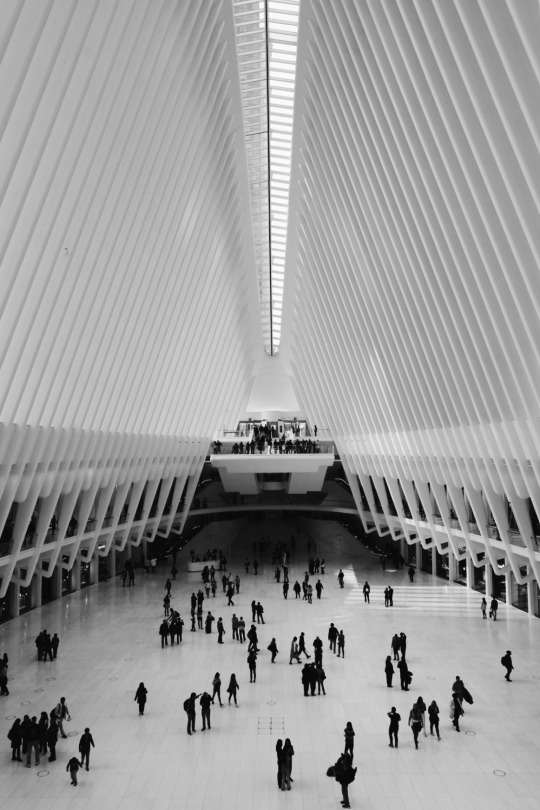
    The first stop was the new transportation hub at the World Trade Center. Here’s a photo of the Oculus:

    The main station house (above) is absolutely breathtaking, but the exterior (in particular the entrances) felt a bit unresolved to me.

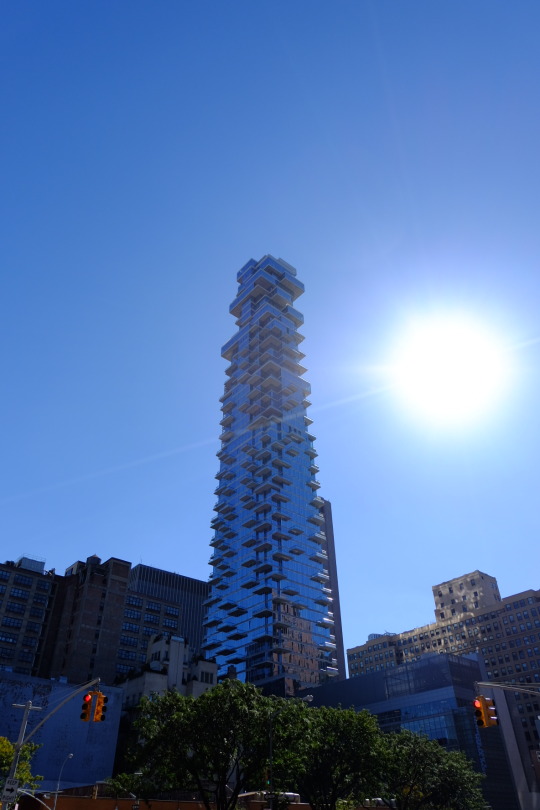
    Here’s a photo of 56 Leonard by Herzog & de Meuron:

    People call it the Jenga tower.

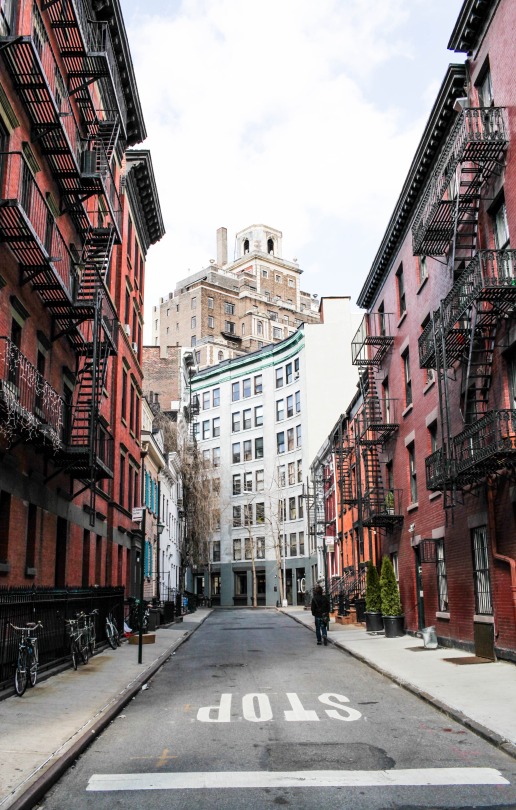
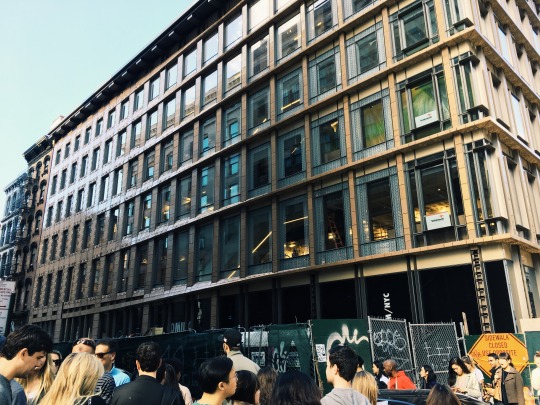
    And here’s a photo of a building on Broadway in Soho:

    Look at how the overhangs fold down and adjust the window dimensions so that it matches the building to the left. Bigger windows towards Broadway. Smaller windows as you move inward. I thought this was really neat.

    And now back to New York City. See you tomorrow.

  • New urban planning buzzword: Lean Urbanism

    The term “lean” is well known in technology and startup circles. Thanks to people like Eric Ries and Steve Blank, it’s become all about starting up lean and not investing a lot of time and money before you’ve really tested your business assumptions in the marketplace.

    But keeping it lean isn’t unique to just tech companies. Its origins are actually in manufacturing—mostly from Toyota’s celebrated production system. Lately though, it has been starting to make its way into cities with a new buzzword called “Lean Urbanism.”

    Championed by New Urbanist Andres Duany—who is actually in the midst of writing a book on the topic—the methodology seems to be gaining awareness in cities spanning from Detroit to San Diego. Here’s an article that a friend of mine (currently working in San Diego) sent me yesterday on the topic.

    At first, the article gave me the impression that the movement was all about building as-of-right. That is, build what’s allowed and stop asking for special discretionary permissions, which is often how real estate development works.

    But then I started to do a bit more research.

    And it turns out that Lean Urbanism is about something much deeper. It’s about empowering incremental urban growth:

    “Lean Urbanism…focuses on revitalizing cities by finding ways for people to participate in community-building — specifically, by enabling everyday people to get things done.”

    What Lean Urbanism hopes to do is create tools and techniques that will help local communities avoid and workaround overly onerous regulations. It’s about removing the barriers to entry—whether that be a business permit or a building permit—so that more people can participate in shaping their own community.

    What I like about it is that it’s building upon the renewal cycle that has traditionally always powered cities. It hopes to empower the proverbial artist that moves into a neighborhood like New York’s Soho and magically makes it cool—then spurring an onslaught of investment.

    And so while the buzzword might be new, it’s a renewal cycle we’ve seen before. But, if it works, maybe not with so much frequency.