Daily insights for city builders, delivered every morning at 6 AM ET. I’m Brandon Donnelly — a Toronto-based real estate developer and founder of Globizen. I’ve been writing here since 2013.

Tag: snapchat

  • Instagram Stories has more active users than all of Snapchat

    Instagram has a company chart that shows: Days to Reach the Next 100 Million Users. It is only the chart where they want to see it decline. The first 100 million users took 28 months. And the last took only 4 months. Instagram now has 700 million active users.

    Instagram is also saying that they have 200 million people using their Stories feature – you know, the feature they blatantly stole from Snapchat. This would mean that more people are using Instagram Stories than Snapchat has daily users (~158 million).

    Anecdotally, I can tell you that I’ve almost completely stopped using Snapchat. (Snapchat battery usage over the last 7 days = <1%.) I still prefer Snapchat’s direct messaging functionality, but not enough to continue using the platform. Instagram now provides basically the same functionality – plus my photos – in a single app. 

    But more importantly, Instagram’s network and my network are bigger there. And network effects are clearly the most important thing. In fact, by directly copying Snapchat, Instagram (Facebook) made sure that this competition was only about network size and not about features. Monopoly power.

    In real estate, if you own a property in a great location, your position is pretty defensible. (Though you may not be completely immune.) But in tech, that is clearly not the case. Someone might copy everything you’ve done and beat you at your own game.

    As someone who used to be very bullish on Snapchat, I am now wondering if I need to remove my Snapchat handle from the header of my blog emails. I mean, I’m not there very often anymore. But maybe, just maybe, Snapchat will find a way to compete outside of network effects at a game that Instagram/Facebook can’t play.

    How would you or are you placing your bets?

  • Big bad (software) developers

    “There is no higher God in Silicon Valley than growth. No sacrifice too big for its craving altar. As long as you keep your curve exponential, all your sins will be forgotten at the exit.” –David Heinemeier Hansson

    Snap Inc. went public last week. Offering price was $17. Closing price on the first day was $24.48. Given that the company is not profitable and may never be profitable (their caveat, not mine), many people have been asking: Is a valuation somewhere around $34 billion justifiable?

    This is a common question when it comes to tech companies. And the answer usually comes down to something along the lines of this:

    The Snapchat story “is all about growth,” Mr. Nathanson said. “It’s not about economics.”

    It’s about the future.

    I love Snapchat and I think the company is run by a very creative founder. But now that Snapchat Stories was stolen by Instagram, they need, in my humble opinion, something new and killer to stick.

    How else will they meet their growth targets?

    On a related note, I recommend you read a piece by David Heinemeier Hansson called: Exponential growth devours and corrupts. That’s where the quote at the top of this post is from.

    Here is an excerpt:

    What sucker wants to earn $10 million/year at a 52.5% tax rate when you can get away with hundreds of millions in one take at just 15%? Nobody, that’s who.

    It’s hard to argue that boards, founders, and their financiers aren’t just doing exactly what the incentives are coaxing them to do.

    Which is why growth is now everything and residual value is nothing. In fact, the latter can be outright harmful to the former. When you’re being priced on the hopes and dreams of potential, reality can be a dangerous and undesired competitor. Best just to appeal to the exponential curve and let the imagination roam free. An epic capital gains score awaits!

  • Snapping with Spectacles

    I am testing out Spectacles by Snap Inc. right now:

    They were incredibly easy to sync with my phone (just look at your Snapcode while wearing them). And the case itself charges the glasses when you put them away. Pretty slick.

    I also started using Instagram Stories for the first time. I had been boycotting it because it was such a direct copy of Snapchat Stories, but at the end of the day, the audience is there and lots of people are using it. I capitulated.

    It’s somewhat disconcerting how quickly a product feature can be copied that immediately pulls users away. Or maybe that’s just business. I mean, if I’m already using Instagram, why not just post my ephemeral stories here, right?

    That’s why it’s so important to keep trying new things. And that’s why I think Spectacles are an important product for a company that has just filed to go public. They keep you in the moment while you share.

    I’ll report back once I’ve had more time to experiment with Spectacles. But already I can tell you this: they are fun.

  • Winter Wonderland (and 3 things to read)

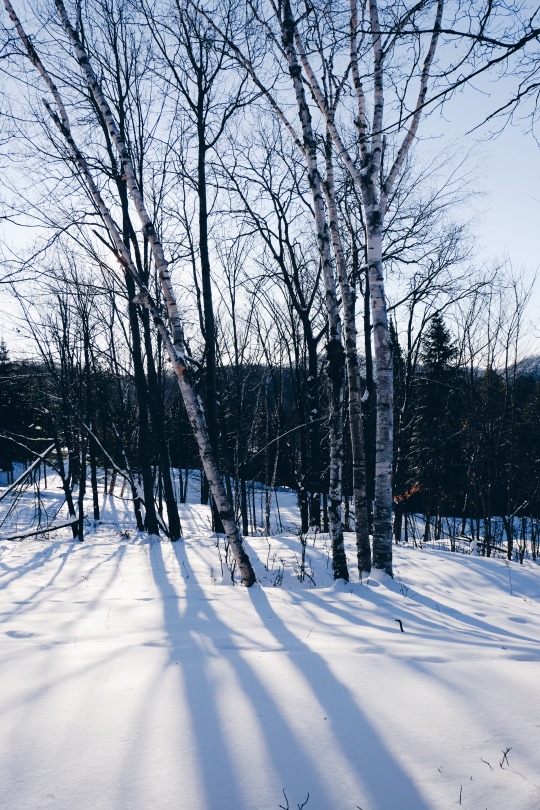
    This is what it looks like in Mont-Tremblant right now:

    It’s currently -11 degrees celsius and it’s expected to snow for most of the day. It’s starting to come down right now. But this evening it’s supposed to warm up to +1 degrees celsius, which means it may turn into (freezing) rain. I hope we see a lot more snow than rain. Nobody wants an icy mountain.

    If you’re looking for things to read this morning, here are 3 pieces:

    1. In American Towns, Private Profits From Public Works. It’s a NY Times article talking about how cash-strapped towns are turning to private equity firms to pay for their infrastructure. 

    2. How Zoning Laws Shaped New York City Over the Last Century. This is about an exhibition being held at The Museum of the City of New York right now. The rules we make shape our built environment. Thanks John for the link.

    3. Authenticity, and how Snapchat is banking on it. I am very fascinated by Snap Inc.’s ability to think differently and adopt counterintuitive business strategies. There’s also a cultural dimension to all of this.

  • Snap Inc.

    Snap Inc. (Snapchat) nailed the launch of Spectacles. I want a pair.

    If you haven’t been following, it all started with a pop-up vending machine in Venice Beach. But like Snapchat itself, it was an ephemeral installation that eventually disappeared, moving on to Big Sur, California. At the time of writing this post, the countdown is on to discover where the vending machine will pop up next. It’s a viral marketing play that aligns very well with their brand.

    But there’s even bigger news.

    Earlier this week it was revealed that Snap Inc. has filed for an initial public offering. It plans to go public by as soon as March 2017 and expects to be valued somewhere around $25 billion. Remember when everyone flipped out because Evan Spiegel had rejected Facebook’s acquisition offer of $3 billion?

    Here’s their revenue story from Vanity Fair:

    Last year, Snapchat brought in $59 million in revenue—a low number that reflected the embryonic stage of its business. This year, however, Snapchat predicts it will generate revenues between $250 million and $350 million. And in 2017, the company estimates it will reach revenues between $500 million and $1 billion, based on “bullish sales targets.”

    I’ve been a Snapchat fan for awhile now, so I am thrilled to see the company going public. As Fred Wilson wrote on his blog this morning: “Snap is a great company led by a creative and ambitious founder and they have a loyal and growing use base. I think Snap can be an excellent public company.”

    If you’ve got people’s attention, you can figure out how to monetize it.

  • Where do you shop?

    Matthew Townsend of Bloomberg recently published an interesting article talking about the dominance of Amazon.com (and online shopping in general); the shift towards experiences over stuff; and the languishing brick-and-mortar brands that keep saying it’s the macroeconomy, rather their product/approach, which is causing sales to slump.

    Here are a 3 excerpts that stood out for me:

    Lurking behind the cliché is a hard truth these executives are eager to avoid. “All this pleading that the consumer isn’t spending is an excuse, largely from management teams whose product is less relevant,” Kernan said. “The consumer is actually driving the U.S. economy, so it’s a little ridiculous when we hear the excuse of the macro environment is not good.”

    Another hurdle that isn’t going away is the shift to increased spending on experiences such as travel and classes, which make for much better posts on Instagram, Facebook, and Snapchat. “Social media has really fostered a have-done environment, which is not what retailers sell,” Perkins said.

    One characteristic of these struggling brick-and-mortar chains has been direct competition with Amazon. If they don’t go head-to-head with the online giant, they rely heavily on people visiting shopping centers anchored by retailers that do, such as ailing department-store chains Macy’s and Sears. One measure of store visits in the U.S. paints a dire picture, with only a dozen positive weeks over the past two years.

    According to Bloomberg, 55% of online product searches start at Amazon.com. And while online sales in 2016 have only accounted for 11% of all (U.S.) retail revenue, it has represented 54% of all growth! That’s a big number, especially when you think about what that will mean over time.

    Talking about the growth and threat of online shopping has become a boring truism. I know that. But are retail executives taking it seriously? The Bloomberg article gives you the sense that many are not – or at least they’re not publicly acknowledging it.

    When I look around my place right now and think about where I bought each item – everything from the shoes at my door to the protein powder in my cupboard – it’s pretty amazing to think about how much I now buy online. And I’m sure that many of you are the same.

    Groceries aside, I’m probably 85-90% online. What about you?

  • Sign me up for Spectacles

    image

    Snapchat just changed their company name to Snap Inc. and announced a new product called Spectacles. They are sunglasses with an integrated video camera that captures a 115 degree field of view. Compared to the camera on your phone, this is more similar to what our eyes see.

    Here’s their announcement video:

    [youtube https://www.youtube.com/watch?v=XqkOFLBSJR8?rel=0&w=560&h=315]

    Some of you are probably thinking that Google already tried something like this and failed. But that doesn’t mean that Snap won’t be successful. I think Spectacles will be a huge success. 

    Evan Spiegel is calling them a fun toy right now, but lots of meaningful products start out that way (including Snapchat itself). Regardless, it strikes me as absolutely the right move for a company like Snap.

    What differentiates Snapchat is that, relative to other social platforms, the content that gets shared is far more natural and unfiltered. It empowers a different kind of conversation and a different kind of content creation.

    Still, there is something about pulling out your phone that takes you out of the moment. And Snapchat is all about sharing that moment. That’s where Spectacles come on. They are further minimizing the barriers to sharing.

    But here’s the other thing: Snap made them look cool. Google Glass looked positively dorky. I already want to take a pair of Spectacles snowboarding and on tours around different cities. I can think of so many interesting/entertaining use cases. If I were GoPro, I’d be anxious right now.

    Snap, if you’d like to send me a pair to test out, please shoot me an email. Thanks 🙂

  • Cottage weekend

    I just got home from a weekend up at a friend’s cottage. It’s an annual birthday tradition and it’s always a great time. A good cottage weekend can do wonders to reinvigorate yourself. I am ready for the week.

    But since the Pan Am Games closing ceremony fireworks are about to kick-off and I want to go watch them from my sun deck, I don’t have a lot of time to write a post. So instead, I thought I would share a few of my photos from the weekend.

    The first photo is near Shelburne, Ontario. The wind turbines are from the Amaranth Wind Farm, which is the largest wind energy installation in Canada.

    image

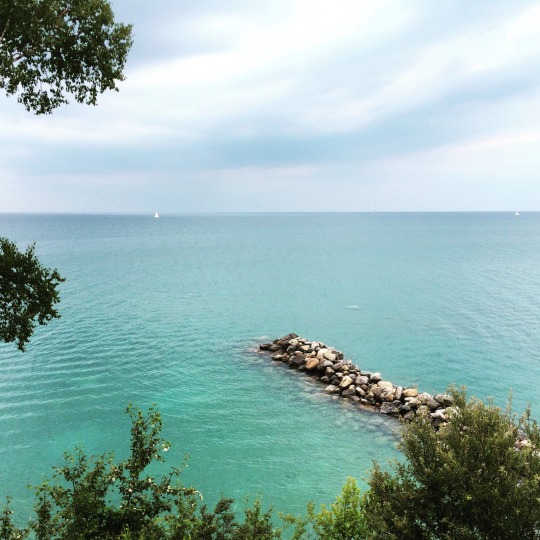
    This is the Georgian Bay. I love swimming in this water.

    image

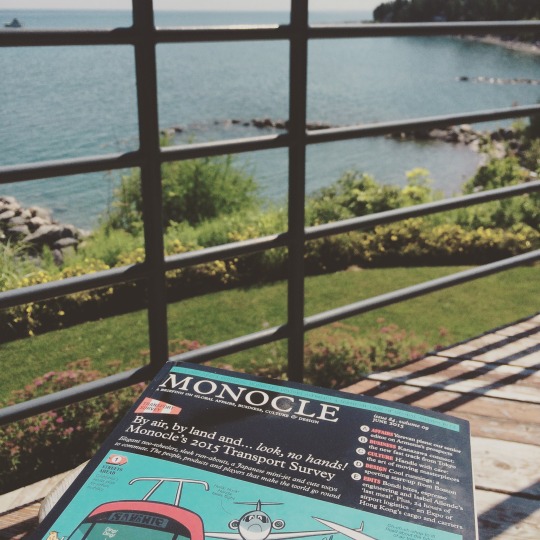
    Cottage reading: Monocle.

    image

    The wood shop. There’s a lot of creative talent at this particular cottage.

    image

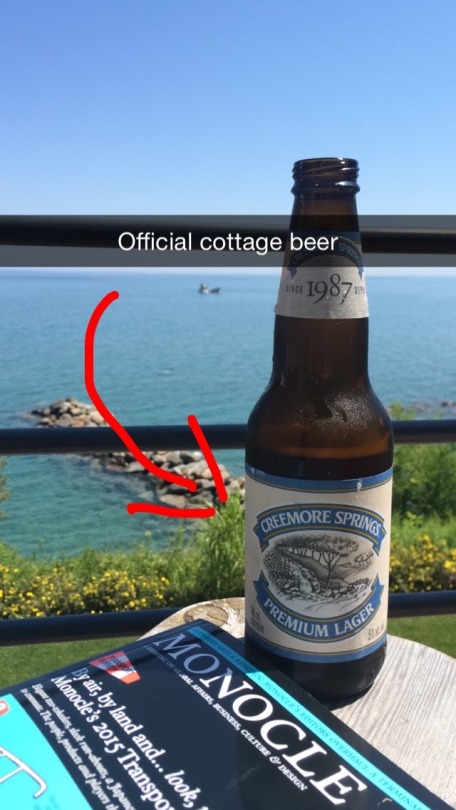
    Creemore = cottage.

    image

    All of these photos were also posted to my Instagram if you’d like to follow me there. The last photo was from Snapchat (donnelly_b).

    Regular scheduled programming will resume tomorrow. I have a great guest post queued up on road pricing. I can’t wait to share it.

  • Towards more publicness

    Back when the commercial internet first started to take off it was uncommon to use your real name online. Instead people relied on usernames and other pseudynoms to represent themselves. I honestly can’t remember what I used in those days, but I’m sure it was something ridiculous.

    Over time though that started to change. 

    Blogging started to take off in the late 1990s. And we started to become more comfortable sharing personal information online. Perhaps the biggest shift though, came with the introduction of Facebook in 2004 (over 10 years ago!). All of a sudden people – young college students initially – started sharing lots of personal information online, including photos of themsleves and their friends.

    But this wasn’t an overnight change. When Facebook first launched, privacy was an important component. It still is, but I would argue that it has become less central given how public a lot of other social media platforms are today. Twitter, for instance, is what it is today largely because of its publicness. 

    For my own social media accounts, I have made every single one of them completely public. From Twitter to Facebook to Instagram to Snapchat, nothing I post to social media is restricted in any way. And I do that because I believe we are headed towards a world with more – not less – openness, transparency and publicness.

    Of course, I’m not just talking about social media and tech. I’m talking about open data in general.

    Earlier this year, the Toronto Real Estate Board clamped down on real estate brokers who were publishing historical sales data online. Citing privacy concerns, TREB ordered them to stop or lose their access to the MLS system. 

    For those of you not from familiar with the Toronto real estate market, historical sales data for homes is not open and published online. You generally need to go through a realtor to get access to this data. Some think this is the right approach. And others think it is antiquated.

    But as I explained above, our conception of what should be private can, and will, evolve over time.

    Here are the details on my home:

    I purchased it in September 2012 for exactly $400,000 (Canadian). It’s a 650 square foot condo in the St. Lawrence Market neighborhood of Toronto. It has one bedroom, a 400 square foot terrace, one parking spot, and 10′ ceilings.

    Sooner or later, I believe this information will be freely available online. But since that’s not the case today, I figured I would just tell you. Sharing this information is not a big deal for me.

  • What are your disciplines?

    Photograph sunset drag by Philippe Clairo on 500px

    sunset drag by Philippe Clairo on 500px

    I’m sitting in Calgary International Airport right now waiting for my flight back to Toronto. This marks the end of the 6th Penn Annual (our annual ski and snowboard trip). We all had an amazing time and I can’t wait until next year’s annual. We’ve already (pretty much) decided that it’s going to be in Park City, Utah.

    As you can probably tell, I like traditions and routines. As boring as that might sound, I think there’s a lot of value in doing the same thing over and over again. 

    It’s why I do an annual ski and snowboard trip every February with some of my closest friends (to a mountain we’ve never been to before). It’s why I write something – no matter how short it might be – every day here on Architect This City. It’s why I lift weights 3-4 times every week. It’s why I’m interested in brand building (creating equity takes consistency and time). It’s why I love the permanence of real estate. And it’s also why I like dollar cost averaging when it comes to investing.

    I guess you could say I like the long game. I enjoy having “disciplines.”

    And that’s because I think there are very few substitutes for hard work and sustained efforts. We all love to talk about those overnight success stories, but in reality they’re often the farthest thing from overnight. I know that it takes time to get great at something. And I also know that I’m not always going to be right. But the simple act of not stopping can take you pretty far.

    In any event, I hope you enjoyed all the mountain town talk (I have a few more ideas I want to write about) and my Snapchat stories (if you followed along). I got really into Snapchat on this trip. And that’s because I think the platform is at a tipping point where brands are going to start thinking of it as a legitimate marketing channel – and not just an app for teens.

    Do you have any routines or disciplines? If so, feel free share them in the comment section below. Or if you hate routines, tell us why.

    See you in Toronto 🙂