Daily insights for city builders, delivered every morning at 6 AM ET. I’m Brandon Donnelly — a Toronto-based real estate developer and founder of Globizen. I’ve been writing here since 2013.

Tag: shane dingman

  • Shrinking lot sizes and unit sizes

    Shane Dingman’s recent piece in the Globe and Mail about shrinking lot sizes raises two interesting points.

    One, new low-rise lot sizes seem to be shrinking and that’s probably a normal market outcome. Similar to the way in which average unit sizes have been generally coming down for mid-rise and high-rise product, it is a way to maintain some semblance of affordability in the face of ever-rising costs.

    The average price of a new condo in the City of Toronto last quarter was nearly $1,300 psf. That means that if you had an average unit size of 1,000 square feet, you’d have an average selling price of $1.3 million (to state the obvious). Not everyone can afford this ticket price, and so there’s downward pressure on unit sizes in order to get the face prices down.

    Two, developer margins aren’t increasing just because home prices have been going up. At best, they’ve remained constant (Shane provides a quantitative example in his article). But there are also many cases where margins are getting squeezed as a result of rising costs.

    All of this to say that I think we can continue to expect downward pressure on lot sizes and unit sizes as the Toronto region continues to grow.

  • Everything has a cost

    A new report was just published by Urbanation and the Federation of Rental-Housing Providers of Ontario (FRPO) arguing that the Greater Toronto Area is undersupplying rental housing to the tune of about 20,000 units per year. This number considers both purpose-built rental housing and condominiums that are purchased by investors and later rented out. (Shane Dingman also covered the report in this recent Globe and Mail article.)

    These findings probably won’t come as a surprise to a lot of you. It is pretty common for most big/growing cities to operate with a perpetual housing supply deficit. With all of the barriers to development, it’s often impossible to keep pace with demand. This naturally creates upward pressure on pricing. But the other factor that cannot be ignored is development costs. How much does it cost to actually deliver new supply?

    Here’s an excerpt from the report that speaks to this consideration:

    While the results of the infill development potential exercise are encouraging, the economics
    of intensifying these sites may be too difficult for owners to ultimately move them forward in many cases even with a zero land cost, as achievable rents outside of Central Toronto are
    often not high enough to offset development and operating costs.

    It’s also something that we’ve talked about many times before on the blog. Even with free land, there are going to be countless sites and neighborhoods where it does not make economic sense to build anything new: development costs > potential revenues. And so to build, somebody is going to have to pay. Either the costs need to be subsidized or the revenues needs to be topped up somehow. Otherwise, supply = 0.

    If you’re facing a deficit of 20,000 units per year, this seems like something you may want to consider. How might we increase supply? And how might we increase the supply of affordable housing? Many, including some of the folks interviewed in Shane’s Globe and Mail article, believe that inclusionary zoning is one such solution. Force new developments to deliver a certain percentage of affordable units (kind of like forcing restaurants to offer up 5-10% of their tables at a loss).

    But again, I think it’s important to remember that whenever costs exceed revenues, somebody is going to have to pay for that shortfall, otherwise supply = 0. Something has to give, whether that be reduced costs, greater density, or higher rents on the remaining market rate units. I think part of the allure of inclusionary zoning is that it creates the allusion of a free lunch. But here’s the thing: everything has a cost.

  • An example of city building doublethink

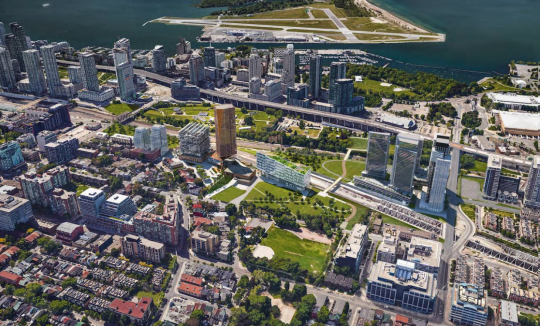
    Earlier this month, Shane Dingman wrote a piece in the Globe and Mail talking about TAS’ proposed development for 2 Tecumseth Avenue here in Toronto – the former home of Quality Meat Packers, a slaughterhouse. In the article there’s a quote from Mazyar Mortazavi, which I posted to my Instagram (as a story), but that I have been meaning to also post to the blog. So here it is: 

    “It’s not a conversation about towers good, towers bad: Mid-rise is the most expensive construction typology and it delivers effectively luxury housing, so it doesn’t respond to the needs of affordability,” he said. “We didn’t buy Tecumseth to build a bunch of condos and move on. We bought it because we wanted to pursue a vision around city building. You need density … the question is how do we actually deliver density that’s relevant today and relevant 50 years from now?”

    He’s of course right about mid-rise construction costs. There are diseconomies of scale and other construction inefficiencies that we have talked about many times before on this blog. The result is one of the Catch-22s of city building. Mid-rise and small scale infill is often seen as desirable, but we also say that we need more affordable housing.

    It’s doublethink.

    Image: 2 Tecumseth by KPMB Architects for TAS