Daily insights for city builders, delivered every morning at 6 AM ET. I’m Brandon Donnelly — a Toronto-based real estate developer and founder of Globizen. I’ve been writing here since 2013.

Tag: san francisco

  • Mapping public transit travel times

    image

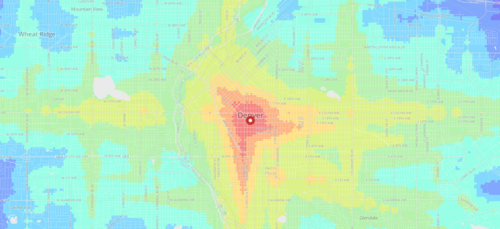
    I just came across an interesting web app created by geographer and programmer Andrew Hardin that maps public transit travel times for San Francisco, Seattle, Boulder and Denver.

    The app allows you to click on a location within one of these cities (or enter an address) and then receive a visual representation of travel times from that location.

    Both public transit and walking are factored in, and the fastest of the two is then modeled. The public transit data is taken from each respective authority and is similar to the data used by Google Maps.

    With these sorts of applications, I always wonder what it might look like overlaid with additional data points, such as home prices. Intuitively I would expect the best connected neighborhoods to also have some of the highest real estate values.

  • Housing policy in San Francisco

    The tech community has been receiving a lot of backslash in San Francisco as of late. And Peter Shih’s infamous 10 things I hate about San Francisco post certainly didn’t help. But I think there’s a bigger issue than just rich tech people driving up the price of real estate.

    I was reading Quartz this morning and I think they nailed it: 

    “But the blame shouldn’t go to the tech companies or their employees moving to San Francisco, however despicable some might be. Blame San Francisco for being pleasant, and its policymakers for being foolish: When a lot of people are moving to your city—San Francisco the city gained 50,000 new residents between 2000 and 2012, including some 25,000 between 2010-2012 and likely more since—home prices are going to increase unless you build a lot more housing.”

    I’ve talked about this idea before. But I wanted to break it down a bit more precisely.

    If San Francisco, the city, gained 25,000 people between 2010-2012, let’s say that the city gained roughly 8,300 people per year. I just divided by 3. However, if you look at the rate of new housing supply, you get a 10-year average of 2,350 housing units a year (from the Quartz article) and an even lower amount according to Atlantic Cities.

    Regardless, what you end up with is a pretty simple phenomenon: More people are moving to the city than new housing is being provided and that’s driving up the price of real estate. In fact, San Francisco allegedly only created 269 housing units in 2011! That’s the equivalent of only one fairly typical Toronto condo building going up (and we have hundreds under construction). No wonder there’s upward pressure on prices.

    So rather than just blame the tech community for the city’s housing problems, I think there needs to be a broader look at housing policy. If you really want to help affordability, here’s one simple solution: start building.

  • A culture of transparency

    One of the things I think the real estate industry is notoriously bad for is transparency. It’s getting better, but we’re nowhere near as transparent as some other industries, such as tech. In tech, you get companies like San Francisco-based Everpix who fail and then release all of their private documents to the public, including revenue, subscribers, cap table and so on.

    Could you imagine a real estate developer failing and then releasing all of its financials? This is what we paid for the land. This is how many units we sold. And this is why we failed. It doesn’t happen (or at least I’ve never seen it).

    Sure you might be able to get some of this information with a publicly traded real estate company, but that’s because they have to be more transparent. Everpix was 7 employees working out of a co-working space. They didn’t have to do this. But they did it because they wanted to help the larger startup community. They didn’t want to let a good failure go to waste.

    But at the same time, I actually don’t think that transparency is all about being altruistic. Transparency can also drive the bottom line. Every company wants to stand out from the competition and engage with its customers on a deeper level. But in order to do that, I think you need to give your customers something to engage with. You have to put yourself out there.

    One way to do that is to be more open and transparent. Be genuine and tell your customers who you are, what you believe in and, perhaps most importantly, why you’re doing the things that you’re doing. I like Simon Sinek’s philosophy that “customers don’t buy what you do, they buy why you do it.

  • Design your own beautiful maps

    If you love cities, then I’m willing to bet you probably also love maps.

    I just stumbled across a neat tool called Map Stack. It was created by San Francisco-based Stamen Design—probably one of the leaders in beautiful maps. The tool is one part Photoshop and one part Mapbox, and it allows you to quickly create an endless array of cool looking maps. Like these:

    image

    I spent 2 minutes and made a watercolor version of Toronto’s financial district:

    image

    This tool aside, I also really like Mapbox. When we were designing and building Dirt, we ended up using them for our map underlay because we wanted something beautiful and we didn’t love Google Maps for that reason. Though we missed Google Streetview, we were happy with the decision. Other apps using Mapbox include Foursquare and Pinterest.

  • BlackBerry started our forest

    A friend of mine posted this article on my Facebook wall yesterday: “A Snowier Silicon Valley in BlackBerry’s Backyard.

    It essentially talks about the fact that despite the rapid decline of BlackBerry (it just reported $4.4 billion in losses), the Kitchener-Waterloo region is thriving. Many companies—both local and international, such as Google and Motorola, Square, Desire2Learn, Kik and others—have all hung their shingle in the area. 

    Part of this certainly has to do with the University of Waterloo, but much of it also has to do with the legacy of BlackBerry. In fact, you could argue that BlackBerry (formerly Research in Motion) is what started at all.

    In reading the New York Times article I was reminded of a post that Fred Wilson wrote last year called, “The Darwinian Evolution of Startup Hubs.” It’s a great post. In it he talks about how he looks for the company that gave birth to the hub. In Silicon Valley he argues that it was Fairchild Semiconductor and in New York it was Doubleclick.

    Once started, he likens the hub to a growing forest. The big trees (mature companies) start dropping seeds and new trees then start to grow (more startup companies). This is important, because it kick-starts a non-linear cycle of entrepreneurial growth.

    Here’s how he maps out Silicon Valley:

    “In my mental model of Silicon Valley, the first “tree” was Fairchild Semiconductor (founded in 1957) which begat Intel (founded 1968) which begat Apple (1976) and Oracle (1977), which begat Sun (1982), Silicon Graphics (1981), and Cisco (1984) which begat Siebel (1993) and Netscape (1994), which begat Yahoo! (1995) and eBay (1995), which begat Google (1998) and PayPal (1998), which begat YouTube (2005), Facebook (2004), and LinkedIn (2003) which begat Twitter (2006) and Zynga (2007), which begat Square (2010), Dropbox (2008), and many more.”

    Using this logic, Fred Wilson argues that Silicon Valley is about 10 cycles in and New York is at about 2. So what about Kitchener-Waterloo? Well if you buy into the argument that BlackBerry is what started it all, we’re really only into our first cycle. BlackBerry created a lot of wealth and talent, and now it’s being deployed into local startups. Our forest has begun.

    Part of me worries, though, if Kitchener-Waterloo is the right place for a startup hub over the long term. Sure it has the University of Waterloo, but does young talent want to be there? At about 320,000 people, it’s no San Francisco, New York or Toronto. And we’re already seeing a significant pull towards urban centers.

    But let’s look at it from the perspective of Southern Ontario as a whole. We’re at a critical moment in our evolution. The mother tree has caught a disease and it’s starting to take its toll. It may be able to fight it off, but right now it’s not looking promising. Thankfully, there are many young trees sprouting up to replace it. But we’re going to need to take special care of them, because they’re probably our best shot at creating our own thriving forest.

  • Tech irony

    I came across an interesting op-ed in the New York Times this morning called “What Tech Hasn’t Learned from Urban Planning.” It basically talks about how, despite the fact that tech companies are increasingly moving from the suburbs to the city, they haven’t yet figured out how to be urban.

    “The tech sector’s embrace of urbanist lingua franca and its enthusiasm to engage with urban problems is awesome, and much welcomed. But these folks need to become better urbanists.”

    The problem—Allison Arieff argues—is that they create sterile and insular environments. Breakfast, lunch and dinner are served to employees so they don’t need to leave the building. And private social spaces are created just for them.

    It strikes me as being terribly ironic that these companies—a great number of which are committed to making the world more open and connected—actually suck at doing that in real life.

  • Closing the homeownership affordability gap

    Through TAS, I’m involved in an affordable homeownership seminar at Ryerson University. The goal of the semester is to develop a comprehensive policy document for how best to deliver affordable homeownership units in Ontario. 

    The students are still working on their final report, but I wanted share one thought that came to mind as I was reviewing the draft.

    As a first step, I think the question of affordability needs to begin with a broader look at the market rate housing market. Have we optimized for the delivery of new housing or are we operating in a state of perpetual supply deficits?

    The reason for this question is that—as I’ve written before—I subscribe to Edward Glaeser’s argument that easing housing regulation and increasing supply can go a long way to broadly improving housing affordability. It won’t make New York as affordable as suburban Houston (Glaeser says), but it will help to avoid some of the outrageous pricing that can occur in severely supply constrained markets like San Francisco.

    Once this has been addressed, it then comes down to deciding how you want to make up the shortfall. If you want to provide housing below its costs (the market rate), somebody is going to have to pay for the difference. However, if you’ve optimized around the market rate, it means that the required subsidies should be less than they otherwise would have been. This makes it more cost effective for governments, or whoever else is providing the subsidy.

    So my point is to not take the market conditions as a given when looking at affordability. Are there structural changes that could be made to improve affordability more broadly?

    There’s certainly no easy answer, but it’s an important discussion to be having. Let me know your thoughts in the comments below.

  • Is San Francisco so liberal that it’s actually conservative?

    One of the things I’ve always found funny about San Francisco is that, despite being a bastion of liberalism, it’s a city that’s incredibly anti-development. From the outside, it seems like a city filled with NIMBYs. Doesn’t that seem odd given its reputation as one of the most progressive cities in America?

    Of course, many would argue that part of the reason so many people love San Francisco is because it’s done such a great job of preserving its history. And don’t get me wrong, I think that’s important. But as I’ve argued before, development should be about a balance. We should be looking to the future, while not forgetting the past.

    Let’s put some numbers to this discussion.

    According to Atlantic Cities, San Francisco has produced on average 1,500 new housing units each year over the past decade. Seattle does about 3,000. And in the Greater Toronto Area, we’re probably around 30,000. I’m not sure if the Atlantic Cities numbers represent only the city proper but, either way, the spread seems massive. Even still, market analysts, such as George Carras of RealNet, have argued time and time again that the Toronto region needs 40,000 new housing units a year just to keep pace with demand!

    So what happens when supply doesn’t keep up with demand and you have a robust economy that continually draws in people from around the world? You get San Francisco. And you get expensive real estate and high rents that relatively few people can afford. San Francisco regularly tops the list of most expensive real estate markets in the US.

    This is a phenomenon that I don’t think many people appreciate: When you fight development you restrict supply and when you restrict supply you hurt housing affordability. This is the argument that economist Edward Glaeser makes in his book, the Triumph of the City, when he talks about why housing is so affordable in Houston.

    Now, if you think about it for a second, this actually means that it’s entirely contradictory to be a NIMBY and, at the same time, an advocate for affordable housing. The two are at odds with each other. Do you want an exclusive city with only enough housing for rich tech moguls? Or do you want an inclusive city with enough new housing supply for the middle class?

    When asked, I’m sure many liberals would choose the latter of those 2 scenarios. But in practice, at least in San Francisco, it would appear that many are opting for the former. And it’s happening because residents want their perfect community to remain unchanged. However, in the process, the values that supposedly underpin that community are being threatened.

    Which makes me wonder: Is San Francisco so liberal that it’s actually conservative?

  • Richard Florida on why creativity is the new economy

    Richard Florida recently gave a talk at the Rotman School as part of Toronto’s “Big City, Big Ideas” lecture series. It was called: Why Creativity Is the New Economy. You can watch it here via Rotman. It’s about an hour long.

    If you’re familiar with the work of Richard Florida, you’ll find much of what he talks about familiar. But there is one point that I think is absolutely worth reiterating again, and again: The new economic unit of our time is the city. It used to be nations but, in today’s world, cities trump nations, provinces and states in terms economic importance.

    Florida has long stressed this point in his work and I think he’s absolutely right. The problem, however, is that our governance structures are ill-suited to deal with this shift. There are too many layers of government and our cities do not have nearly enough autonomy. 

    Toronto is also facing a profound leadership deficit at the municipal level, to say the least (See Rob Ford). This cannot continue. Strong municipal leaders are critical to our sustained global economic competitiveness. It’s every global city for themselves and I, for one, want to win.

    To give you an example of the dramatic rise of cities, take a look at this recent TechCrunch article on billion dollar startups. If you take a look at learning number 9, you’ll see an incredible interesting fact: San Francisco—not “the Valley”—is now home to the most billion dollar startups. Startups are eschewing the suburbs for the city.

    I’ve written a lot on this trend, but I still don’t think that our governments have truly woken up to the fact that, in the new economy, our cities are our most important asset.

  • Gentrification and corporate shuttle buses

    A couple of months ago I had coffee with an urban planner who had recently relocated from the Bay Area back to Toronto. One of the interesting things that came up during our conversation – that I hadn’t really given a lot of thought to before – was how corporate shuttle buses (from the likes of Apple, Google, Facebook and so on) could be impacting cities.

    On the surface, they seem fairly benign. Most of the big tech companies are located outside of San Francisco, but young smart people today like living in cities. So let’s run shuttles buses that take people back and forth. Employees get to live the life they want and employers get broader access to human capital. It seems like a win-win.

    But in reality, some argue that these shuttles buses reinforce a powerful trend already plaguing the region: The alienation of non-tech people. George Packer of the New Yorker called the buses “a vivid emblem of the tech boom’s stratifying effect in the Bay Area.”

    What I wonder though is to what extent these buses are not just an emblem, but an actual driver of stratification and other negative outcomes. The first concern that comes to my mind is the possibility for this to lead to infrastructure disinvestment. Already there seems to be a philosophical divide around transit (see BART strike).

    Wired just published an interesting set of maps that try and map “Silicon Valley’s gentrification problem through corporate shuttle routes.” They’re worth checking out. It’s also interesting to see how they collected the data; it was a fairly messy process.