Daily insights for city builders, delivered every morning at 6 AM ET. I’m Brandon Donnelly — a Toronto-based real estate developer and founder of Globizen. I’ve been writing here since 2013.

Tag: sales

  • People like us

    Seth Godin wrote on his blog today about what it means to be a lifelong fan — whether it be of a sports team, a car company, a political party, or, in his words, “anything where affiliation drives our sense of self and community.”

    There’s a powerful sentence in the middle of his post and it’s this one here:

    People like us do things like this.

    We often make decisions about products, brands, and even where to live based on a narrative that we craft for ourselves. We tell ourselves that I am the kind of person who lives in this neighborhood and drives this car. People like us do things like this.

    There’s an innate, emotional, and sometimes nonsensical desire to be part of what Seth calls our chosen “tribe.” And tribe does really feel like the right word. We all want to be a part of something. It helps to create meaning.

    So what’s your internal narrative? It probably determines how you hire for many of the “jobs” you need filled.

  • The [Next] Pepsi Generation

    The product matters. How big is the screen on this smartphone? How many horses does this all-wheel drive car have? And how high are the ceilings in this condo? (Some architects get grumpy with me when I call buildings a “product.” It’s so much more than that, right?)

    But here is a good reminder from Zander Nethercutt via a post he did on Medium earlier this year: People Don’t Buy Products, They Buy Better Versions of Themselves.

    The example he gives is that of Pepsi. While damn near identical to Coke in terms of its chemical composition, Pepsi was struggling until it decided to try something new. They stopped focusing on the product itself and instead starting selling the type of person you would become, if you drank Pepsi.

    These people, and this campaign, became known as the Pepsi Generation.

    We have talked about this idea before on the blog and this approach to selling is now quite commonplace. But I like how Nethercutt distills it down: Desire translates into consumption. And I want to buy a better version of myself.

    I also buy his add-on argument that social media has amplified our awareness and desires around self, because today we are so often externalizing it to the world and being instantaneously judged on it. Like. No like.

    Am I the kind of person who eats here, stays there, and consumes this?

    Photo by Christina Boemio on Unsplash

  • The world’s best brands — 2018 edition

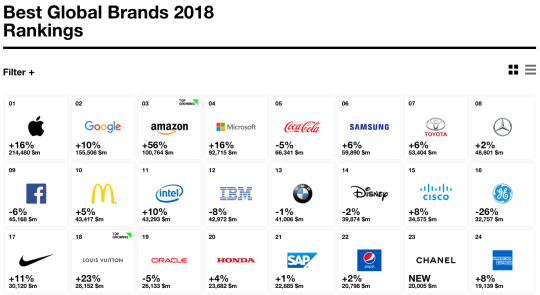
    At the beginning of this month, Interbrand released its annual ranking of the world’s best global brands. This year’s 2018 report marks the 19th year of the study. If you’d like to download a free copy of the report, you can do that here. But below is a snapshot of the first 24 brands:

    Apple and Google are in top position for the 6th year in a row. And Amazon is on a hockey stick trajectory with its brand value jumping by 56%. More than half of the list is comprised of the following five sectors: Automotive (16), Technology (13), Financial Services (12), Luxury (9), and Fast-Moving Consumer Goods (9). Luxury is currently the fastest growing sector.

    In their report, they outline five themes that have emerged and that are helping these brands outperform. They are:

    1. Positive utility – not enough to just make people feel good through storytelling; you need to create real value and a positive impact in the world
    2. Subscription mindset – there’s an increasing amount of brand value in subscription-based businesses (29% in 2018 compared to 18% in 2009); you need to offer your products and services with the least amount of friction as possible
    3. Customer-centricity – bring the voice of your customer into every aspect of your business; be nimble enough to respond quickly
    4. Learning from luxury – the top performing category in this year’s ranking; about exclusivity and authenticity
    5. Role of brand – make your brand part of the decision-making process; build brand equity and trust

    I’ll stop there and let you all dig into the rest of the report if you’re interested. 

    But one thing I found particularly interesting about the study is that they used – insert buzzwords here – “AI-powered social listening” to try and measure the emotion and sentiment floating around on the internet around specific brands. The goal was to pin down the perceived trustworthiness of specific brands.

    Not surprisingly, they found a pretty strong correlation between customer trust and purchasing intent. Makes sense to me.

  • Create things people love

    I just finished listening to this podcast about venture capital and consumer products. One of the underlying questions is whether we are currently in a “consumer downturn.” Rebecca Kaden of Union Square Ventures (USV) talks about the importance of “platform shifts” for venture returns. These are moments where a new technology hits the marketplace and there’s a corresponding mass consumer adoption. When and where will that next shift occur? Maybe it’ll be in real estate.

    I like the discussions at 10:00 and 13:50. The first deals with the importance of non-paid customer acquisition strategies for consumer products. Rather than relying on bought attention, you really need organic growth strategies, which is often an indication that people are passionate about your product. This is arguably more important when you’re fundamentally reliant on massive growth/scale, but whether we’re talking about software or a home, I still believe it’s paramount. Create things people love.

    The second point is about commerce, Amazon, and how USV avoids investing in companies that are unlikely to ever win against Bezos. Kaden’s position is that Amazon’s advantage is and has been more executional than structural. They are simply really good at doing things better. But Amazon wins at logistics, speed, and value. They are not as focused on experience, entertainment, and discovery. And people still want that.

    I’ll stop there. If you can’t see the podcast below, click here.

    [soundcloud url=”https://api.soundcloud.com/tracks/507691569″ params=”color=#ff5500&auto_play=false&hide_related=false&show_comments=true&show_user=true&show_reposts=false&show_teaser=true&visual=true” width=”100%” height=”300″ iframe=”true” /]

  • Flynn in the city

    I very much enjoy the branding and marketing side of the development business. It’s probably an architect / designer thing. So I’m always looking out for interesting case studies.

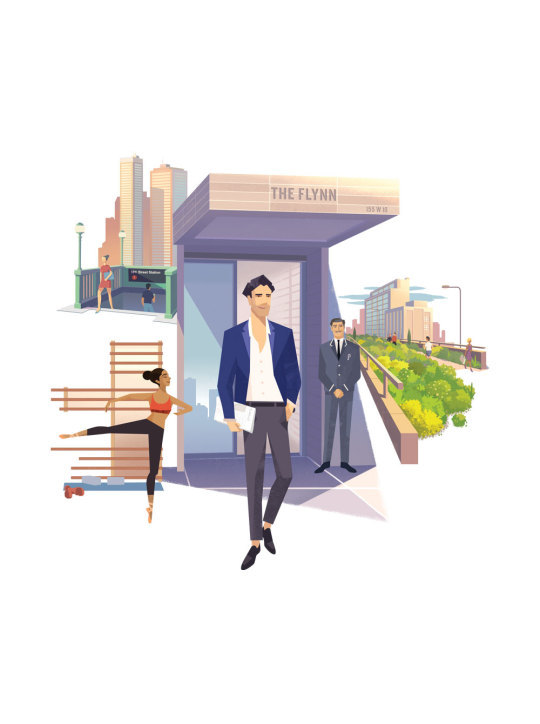
    Recently I came across The Flynn in Chelsea, New York. The developer is IGI and the agency is Winkreative.

    What they did was create a namesake character named Flynn. Everything then became about a day in the life of. 

    The Instagram account is flynninthecity. They made colorful animations. And they even partnered with the Spring Street Social Society to host in-person performance art pieces. The Being Flynn series was a bunch of vignettes that combined “dance and physical comedy” and highlighted a cast of fictional characters who all, of course, reside at The Flynn.

    As you all know, selling condos is typically about selling a lifestyle. A dream. In this case, they created a character to show you exactly what that dream should be.

    Real estate marketing can sometimes often be cheesy. But I thought this was a clever and overall creative approach. Winkreative does great work.

    What do you think of the approach?

    Image: Winkreative