Daily insights for city builders, delivered every morning at 6 AM ET. I’m Brandon Donnelly — a Toronto-based real estate developer and founder of Globizen. I’ve been writing here since 2013.

Tag: rio de janeiro

  • Oi Rio

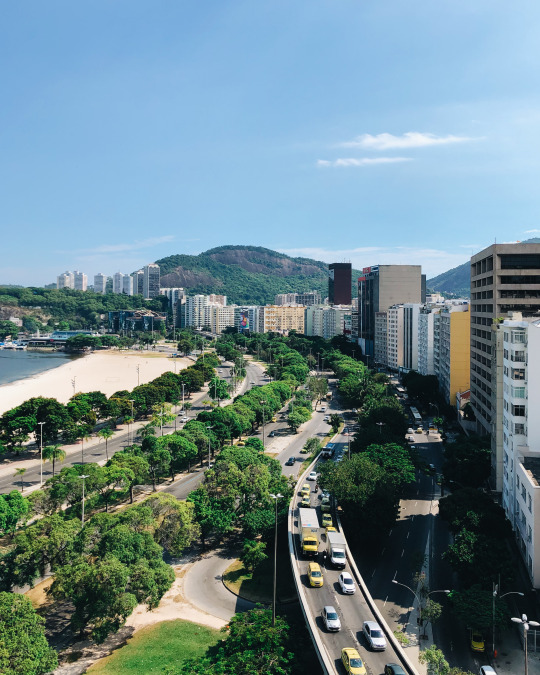
    I just arrived in Rio de Janeiro, which is where I’ll be for the next ten days. Here is a photo looking south from the rooftop of our hotel (more photos to follow on Instagram):
    image

    Today was a fairly relaxed day after many hours of travel. But tomorrow the architecture and design tour begins. 

    I am still trying to get a feel for the city. The first thing people tell you after you arrive is to be careful. Don’t go out at night. And take Ubers. 

    Uber is a significant advantage in a place like Rio where few people seem to speak English and you may be concerned about somebody taking you for a ride.

    Not only was the Uber from GIG about R$80 less expensive than a taxi (I was probably quoted the gringo rate), but you also get perfect information in terms of where you are going.

    This emphasis on safety and security is, of course, highly evident as you walk around the city. Lots of gates and lots of cameras.

    It’s perhaps a bit ironic to see so many places sealed off from the outside when you consider how great the climate is and how friendly the people are.

  • Project Profile: Hotel Emiliano, Rio de Janeiro

    image

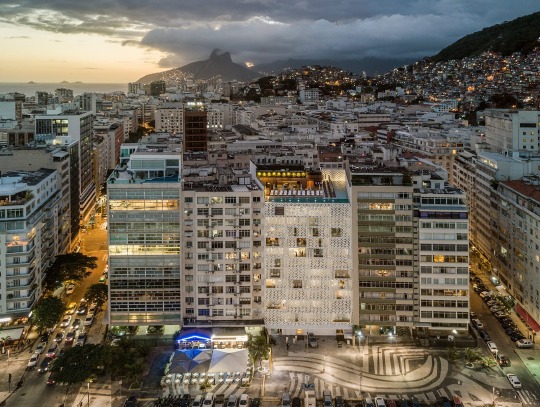
    This is not exactly a new project. The hotel, pictured above, opened in 2016 and was the brand’s second location (their first opened in São Paulo in 2001). But I like the story and how it was executed.

    Hotel Emiliano is the work of husband and wife team Gustavo Filgueiras and Andrea Colli Filgueiras. He is a hotelier. And she is a jewelry designer. Both wanted to pay homage to the glory days of Rio’s Copacabana Beach.

    Designed by Arthus Casas and Chad Oppenheim – who, by the way, recently built himself a stunning home in the Bahamas – the 90-room hotel is clad in white shutters that can be used to modulate the Brazilian sun. 

    image

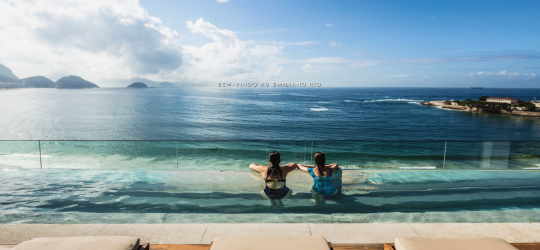
    On the roof is an infinity pool with a glazed side. Here is a screen grab from the hotel’s website:

    image

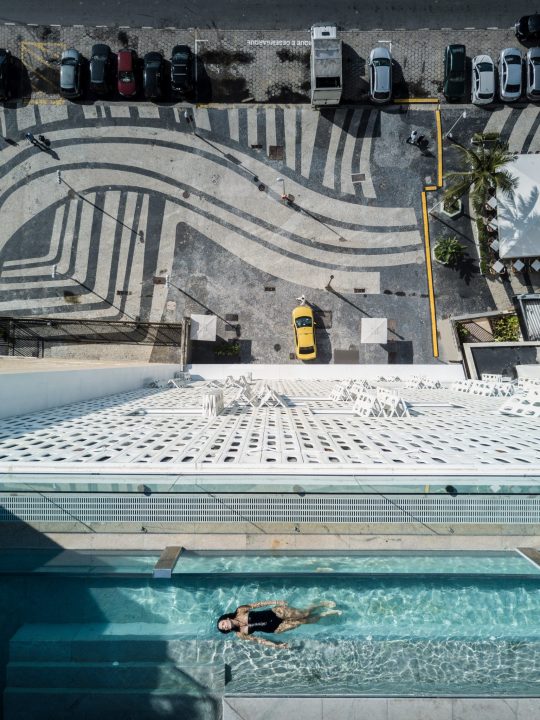
    And here is an aerial view of the pool taken from Dezeen:

    image

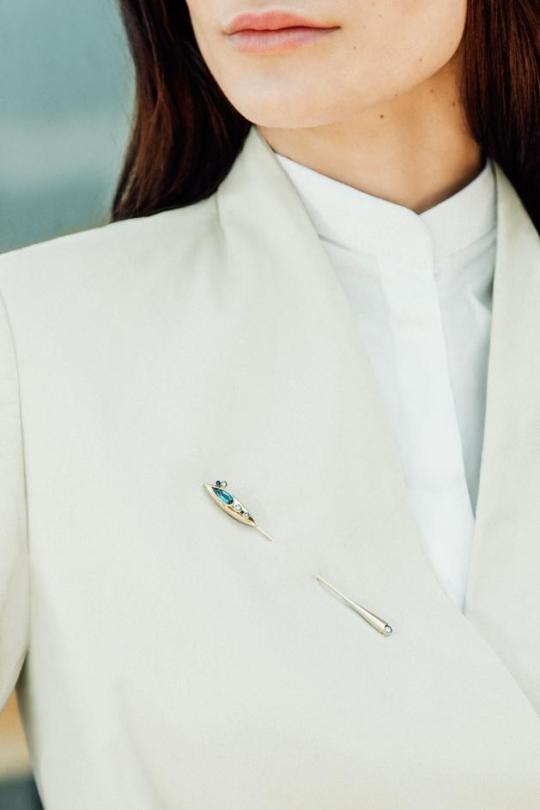
    The uniforms for the hotel were designed by Barbara Casasola and a custom jewelry collection was created by Andrea Colli. 

    image

    For more photos, check out Dezeen and Wallpaper.

    Architectural photography: Fernando Guerra

  • What’s your favorite Olympic winter sport?

    The 2018 Winter Olympics start this Friday, February 9 in PyeongChang, South Korea. Unlike the past couple of winter games, which struggled with warm temperatures, this should be a cold one.

    The Winter Olympics tend to be less popular than the Summer Olympics, with fewer athletes and countries participating. 207 countries participated in the 2016 Summer Olympics in Rio de Janeiro, but only 88 countries participated in the 2014 Winter Olympics in Sochi. A big part of this has to do with the fact that winter sports generally require winter and snow and not every country has those things.

    I like the Winter Olympics. And perhaps not surprisingly, my favorite sport is snowboarding. This year I’m really rooting for Canadian snowboarder Mark McMorris. If you don’t know who Mark is, watch this short video. He has had a tough time over the years with a number of serious injuries, but he managed to bounce back and qualify for the Olympics. He won bronze in Sochi and is hungry for gold.

    The Olympics are always a good reminder that if you want to be the best, you’re going to have to be prepared to work beyond hard and make many many sacrifices in your life. And even then, there are absolutely no guarantees. 

    So what’s your favorite Olympic winter sport?

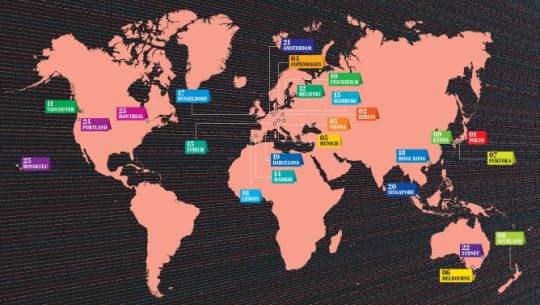
  • Monocle’s Top 25 Liveable Cities — 2016 Edition

    Monocle’s annual survey of the top 25 most liveable cities in the world was just released. It’s now in its 10th year. I found it in my inbox this morning and it was a good reminder that it was about time I renewed my subscription. I’ve been a regular reader of Monocle since 2007, but I let my membership lapse last year.

    Of course, any sort of list like this is going to be subjective. It all depends on the methodology you use. Still, their annual survey is an interesting way to see what each city is up to and where the tides are going. This year Monocle put extra weighting on each city’s nightlife. If you’re not a subscriber, here’s a short video you can watch. It will give you a rundown of all the cities. (I was happy to see Montréal creep onto the list. Incredible city.)

    This focus on the night is something that I’ve been writing about a lot both on this blog and elsewhere. It’s an idea that’s picking up momentum around the world as an economic development strategy. But for whatever reason, uptake seems to be slower here in North America.

    I like how architect Anna Dietzsch puts it in this video. She says that Rio may have the beaches, but Sao Paulo (where she’s based) has the night. That’s exactly how cities should be thinking about this opportunity. It used to be that cities thrived almost entirely because of location, waterways, transport, and other natural features (example: Buffalo). But increasingly, it’s becoming about things like nightlife.

    Vancouver may have the mountains, but Toronto has…

    Image: Monocle

  • What Rio de Janeiro looks like through an 80 megapixel camera

    Here’s a stunning time-lapse video of Rio de Janeiro that was shot with an 80 megapixel camera. It was done by LA-based photographer Joe Capra.

    [vimeo 119343870 w=500 h=281]

    10328×7760 – A 10K Timelapse Demo from SCIENTIFANTASTIC on Vimeo.

    Make sure you watch it full screen.

    As far as videos and photos go, it’s probably as close as you’re going to get to actually being there. And if you’ve never been to Rio de Janeiro (which I haven’t), it’s a great way to see and understand the city’s built environment. I loved looking at all of the details.

  • Where Uber operates and where it’s banned

    Earlier this month, Bloomberg published this map showing where Uber operates and where it’s been banned (or is being challenged). You can click on the map for a larger version.

    image

    Uber operates in about 250 cities across the world. But it’s being challenged in a lot of them, including Portland, San Francisco, Los Angeles, Toronto, Rio de Janeiro, Paris, Berlin, as well as others.

    I don’t want to dismiss any of the safety concerns that have arisen lately, because those are very serious and they need to be addressed. Life safety is paramount. But I continue to believe that banning a service that many people clearly want to use isn’t the right solution.

    On top of that, I think it could lull many of the local taxi communities into a false sense of security about the future. Uber is moving incredibly quickly. UberX launched in Toronto in September of this year. And UberPOOL – their new carpool service – is likely next.

    With these releases, Uber is working towards a specific vision for the future: Their goal is to eliminate the need for private vehicle ownership. Should they be successful, this will not only impact taxis, but also car manufacturers and urban mobility in its entirety.

    So as difficult as it might seem right now, I think urban leaders would be better served trying to figure out how to harness these innovations. Cities have been trying for decades to get people out of their cars. Uber wants to do the same.