Daily insights for city builders, delivered every morning at 6 AM ET. I’m Brandon Donnelly — a Toronto-based real estate developer and founder of Globizen. I’ve been writing here since 2013.

Tag: rio de janeiro

  • How coffee grew São Paulo

    For all of us who are involved in the building of cities, it is important to remember that cities emerge and thrive as a result of economic purpose. Take, for example, Sao Paulo. Once one of the poorest of Portuguese colonies, it is today the largest city in the southern hemisphere and one of the largest and most diverse urban agglomerations in the world.

    How did all of this happen? It was probably because of coffee.

    Brazil is the largest producer of coffee in the world. And it has owned this title for some 150 years. The best areas to grow coffee (as a result of climate, I’m told) are in the southeast part of the country, in and around Sao Paulo and Rio de Janeiro. The inland state of Minas Gerais is the biggest producer.

    But here’s the thing. Rio de Janeiro is along the coast and Sao Paulo is not, though as of 1869 it had been connected to the port of Santos by rail. This geographical feature made Sao Paulo a logical place for rail to converge as it made its way from the coffee plantations in the interior of the country to the coast, and then out to the rest of the world.

    Coffee was the economic purpose. And it was facilitated by Brazil’s longstanding use of slave labor.

    In 1888 that changed. Slavery was abolished, giving Brazil the dubious distinction of being the last country in the Western world to do so. The problem is that the coffee industry relied heavily on this labor. So to fill this void and keep the coffee industry happy, a deliberate effort was made to increase immigration.

    From 1870 to 2010, about 2.3 million immigrants settled in the state of Sao Paulo, many from Italy and Japan. Today, about half of the city is thought to have at least some Italian ancestry. And it is generally believed that it was this significant influx of immigrants that helped the city to industrialize in the way that it did.

    Big and diverse. And coffee probably had a lot to do with it.

    Photo by ViniLowRaw on Unsplash

  • Equatorial Brutalism

    Generally speaking, architects are the only people I know who like Brutalist architecture. In fact, architect, professor and author Witold Rybczynski once proposed the following litmus test to determine whether a building is indeed an example of Brutalism: “If people don’t hate it, it can’t be Brutalist.”

    But as I have argued before, sometimes architectural styles take a bit of time to settle in and become fully appreciated. Consider how improbable it would seem to demolish a beautiful old Victorian home today. And yet Toronto, and countless other cities, did this on many occasions. Regent Park, Toronto was once Cabbagetown South.

    Brutalism also took on different sensibilities around the world.

    I love this recent piece in T (NY Times Style Magazine) by Michael Snyder called, “The Unexpectedly Tropical History of Brutalism.” In it he uses the term “Equatorial Brutalism” (a new one for me) and discusses the “surprising apotheosis” of Brutalism in equatorial countries (and in particular Brazil). It is a good follow-up to my recent post on Oscar Niemeyer’s work.

    So here’s an excerpt from Michael’s article. If you don’t already like Brutalism, maybe it’ll get you a little bit closer.

    What these buildings shared, beyond an aesthetic — though they shared that, too, with their radical porousness, their blunt geometric forms and their extensive use of raw concrete — was a commitment to architecture as an instigator of progress. But in the tropics, Brutalism reached an unexpected apotheosis: Infiltrated by lush plants and softened by humidity, buildings that looked cold and imposing against London’s constant drizzle or Boston’s icy slush were transformed into fecund, vital spaces. Concrete surfaces bloomed green with moss. The panels of glass necessary for sealing rooms against the northern chill either disappeared or receded from view, encouraging cross-ventilation while also protecting interior spaces from direct sun. The openness and transparency that the Smithsons had pronounced became a practical reality in these humid environments, both theoretically and literally: Built from inexpensive, readily available materials, equatorial Brutalism was as accessible and functional as it was symbolically potent, resulting in buildings that would define new societies growing around them like vines. Here, Brutalism wasn’t only an architecture that shaped the future or confronted the past — it was an architecture of freedom.

    Photo by Samuel Zeller on Unsplash

  • A beautiful destination: Rio de Janeiro

    Below is a breathtaking video of Rio de Janeiro by Beautiful Destinations. If you haven’t heard of them before, they run a great YouTube channel profiling places and experiences from around the world. I think they also post a new video every week. If you can’t see the video of Rio below, click here.

    [youtube https://www.youtube.com/watch?v=gYy1RITRN9s&w=560&h=315]

  • Unusual ski-spots around the world

    “Like so many sports that humans do,” he [Kari Medig] says, “skiing can seem absurd: sliding over the miracle of frozen water, slipping down steep mountains wearing layers of crazy clothes—it really is a strange thing to do.”

    I love skiing (well snowboarding to be exact). And I love photography. So here is an interesting photo essay from FvF about “the unexpected diversity of the ski community.” It features the work of Canadian photographer Kari Medig.

    Kari’s career is centered around photographing unusual ski-spots around the world. He has discovered that every locale has its own unique subculture. In some places, skiing is about status. But in other places, people depend on it for their livelihood.

    Eventually Kari hopes to turn this lifelong ski project into a book. I sure hope he does that. I bet it would do very well on Kickstarter. (On a largely unrelated note, his photos of Rio de Janeiro are at least 100x better than mine.)

    Image: Kari Medig

  • To invest or not invest

    We used Uber to get pretty much everywhere when we were in Rio de Janeiro. For reasons of convenience, cost, and safety, it just made the most sense. I can tell you that it felt a lot more valuable in place where you don’t speak the language and you’re acutely aware of being in the wrong place at the wrong time.

    And since Uber is going public later this year (along with Lyft), it got me thinking about whether or not it is a stock that I would want to own. Are they destined for monopoly profits? Do they have a defensible business model? How powerful are their network effects? Having first-mover advantage doesn’t guarantee anything.

    My initial thoughts are that the network effects for their core offering – single rides – don’t feel that strong. Sure you need a critical mass of drivers so you’re not waiting around too long, but at a certain point the response time is likely good enough. Rides are a commodity.

    This arguably changes as you get into services like Uber Pool and Uber Commute, because more users on the network in close proximity to you can mean lower costs and higher service levels. But is there any sort of lock-in effect?

    Many passengers and drivers seem to “multi-tenant.” In other words, many (or maybe most) people have multiple ridesharing apps installed on their phone and they will switch back and forth when it makes sense to do so. I do that when prices are surging. And drivers appear to be doing the same based on the Uber and Lyft emblems in their cars.

    For a long time, Uber was the only show in town here in Toronto. Hailo only lasted about two years or so. But as soon as Lyft entered the market, both companies moved to aggressively discount their rates, and that is still going on to this day. This suggests certain things to me.

    Among other things, it is a reminder that the demand for (commoditized) transportation services is highly elastic. We are price sensitive. We will use whatever is cheaper. So one way to win is to obviously create a cost structure advantage. Hence the current autonomous vehicles “arms race.” 

    Lyft is also trying to establish itself as a multimodal transportation solution. (When are scooters coming to Toronto?) Perhaps that will make them less of a commodity. But again, how defensible is that approach? I suppose the market will tell us what it thinks later this year.

  • Blue Zones

    Over the weekend I learned about Dan Buettner’s Blue Zones. These are cities and parts of the world where, according to Dan, people have a much longer life expectancy. The five regions he identifies as Blue Zones are: Okinawa (Japan); Sardinia (Italy); Nicoya (Costa Rica); Icaria (Greece); and Loma Linda (California).

    Many of you have probably heard of this finding from Malcolm Gladwell. I think he writes about it in Outliers. I had. But I didn’t know about Dan Buettner and his efforts to teach these “secrets” to other regions around the world. 

    I can’t speak for the efficacy of his consulting practice, but I think it’s interesting that some of the characteristics of these Blue Zones include a strong sense of family and community, as well as constant moderate physical activity. In other words, activity that is integral to normal life, such as lots of hills in a mountain town.

    The links between urban form, walking and biking (instead of driving), and health outcomes are something that get a lot of air time. It is, of course, one of the reasons why denser cities are thought to be healthier cities. They encourage more active forms of mobility.

    But what else could we be doing to make physical activity an inseparable part of urban life? In Rio de Janeiro, they often incorporate fitness facilities into their public spaces, whether it’s a parklet or the beach. That probably doesn’t qualify as inseparable, but it’s certainly a start.

  • A door and a street — walking Copacabana

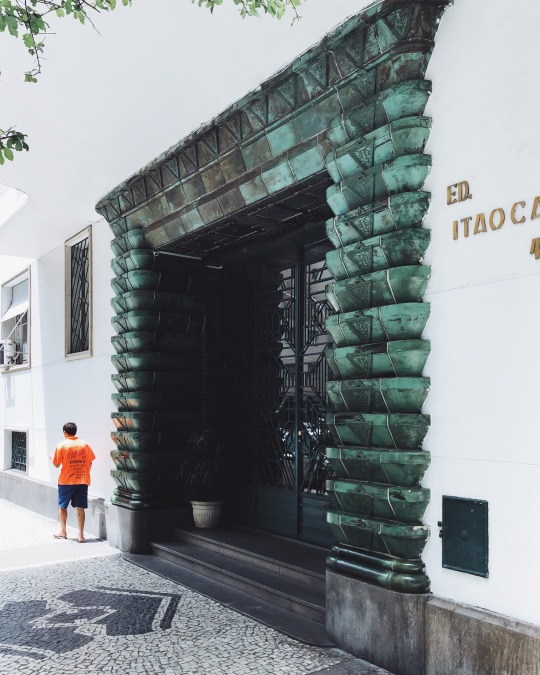
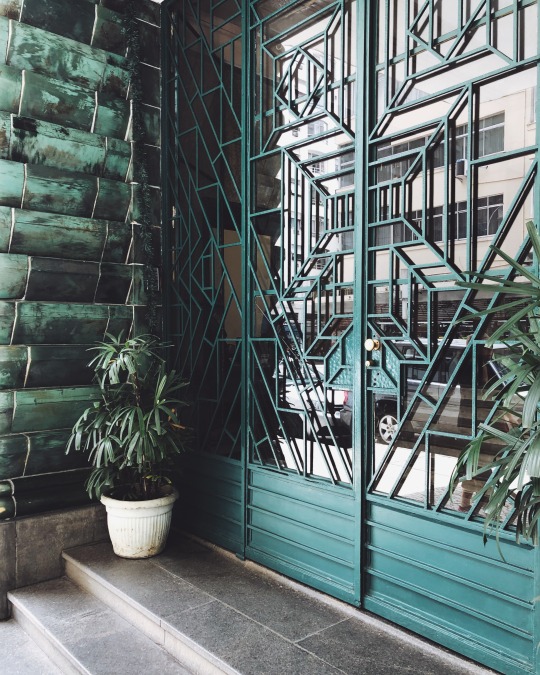
    Rio de Janeiro has some pretty spectacular entranceways. Here is one that I found today on Rua Duvivier in Copacabana:

    imageimage

    It is a magical front door located exactly one block from the beach.

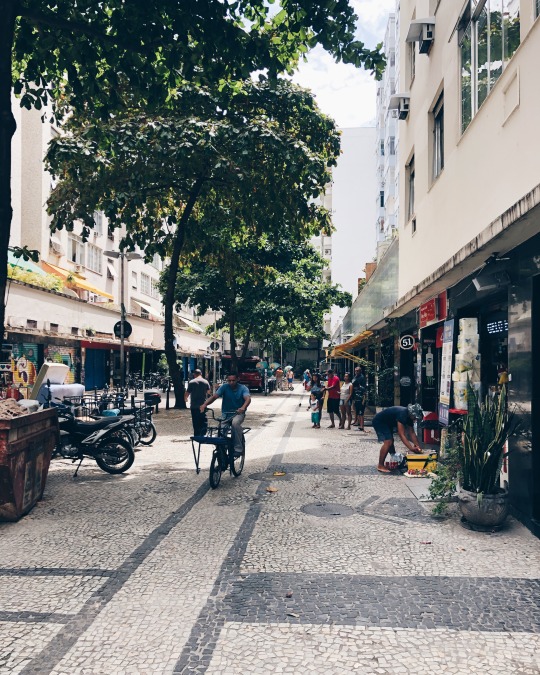
    The other gem I stumbled upon today was Rua Carvalho de Mendonça, pictured here:

    image

    Toward the left (above) is a narrow bollard-separated lane for cars. The rest of the right of way is dedicated to pedestrians and bicycles.

    When I was there today the sun was shining and the retail was in full swing.

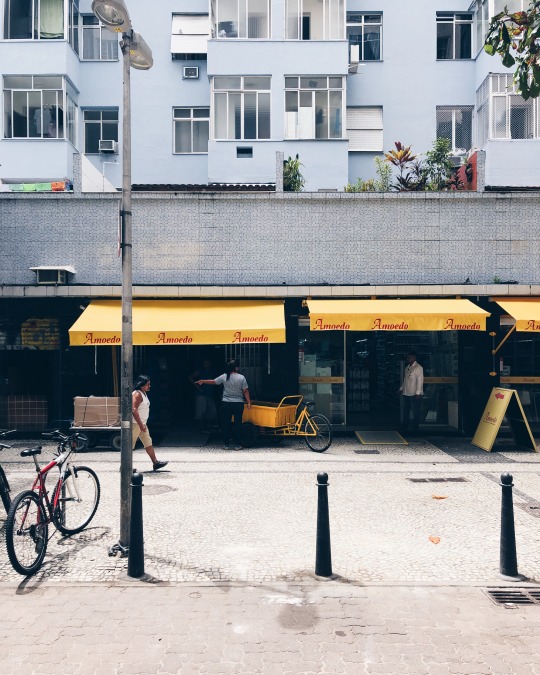
    image

    But perhaps my favorite thing about this street is the residential terraces sitting on top of the single storey “retail podiums.”

    They add life (and eyes) to the street.

  • Gustavo Capanema Palace

    Brazil has been on my travel bucket list for many years, if not decades. Whenever I tell someone that they often ask me why that is the case.

    In addition to its breathtaking natural beauty, sunny beaches, beautiful people, and lively culture, Brazil is also one of the first countries outside of Europe to have adopted modern architecture.

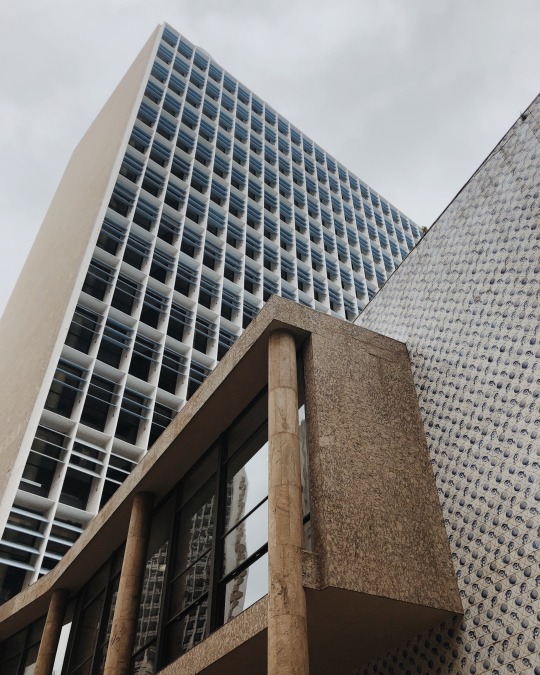
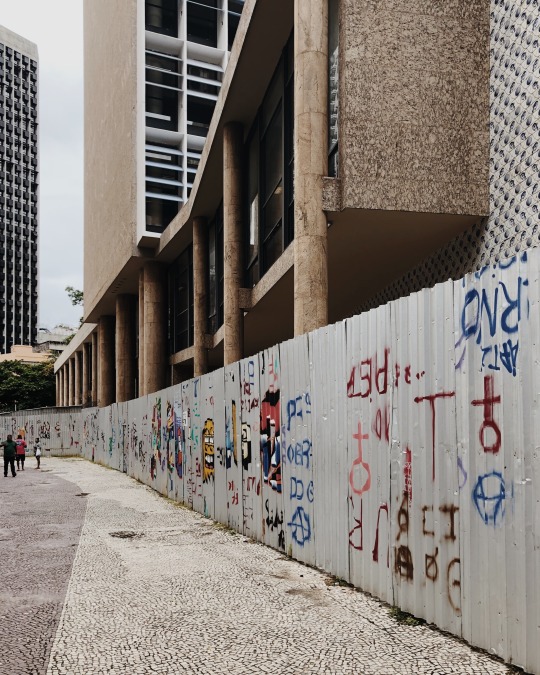
    The best example of this is, arguably, Gustavo Capanema Palace, which is also known in architectural circles as the Ministry of Health and Education Building. At the time of its construction, Rio de Janeiro was the capital of Brazil. Brasilia took its place in 1960.

    Here are two photos of the building from this afternoon:

    imageimage

    Sadly, the building is currently under renovation and I wasn’t able to get as close as I would have liked.

    All the same, Gustavo Capanema Palace is one of the first modernist buildings in Brazil and, apparently, the first modernist government building in all of the Americas.

    Designed in the 1930s, there were a whole slew of architects involved in this project, including Lucio Costa (master planner for Brasilia), Affonso Eduardo Reidy, Ernani Vasconcellos, Carlos Leão, Jorge Machado Moreira, Roberto Burle Marx, and Oscar Niemeyer.

    But most notable in the roster was Le Corbusier. And the building is everything you would expect from the Swiss-French architect. Pilotis. Brises-soleil. Glass facades. And mid-level programming.

    However, it also incorporated local elements, such as azulejos (glazed tilework common to Portuguese and Spanish buildings). And in my view that makes it a more interesting varietal of modernist architecture.

    So even though I wasn’t able to get inside today, I am still glad that I was able to finally see Gustavo Capanema Palace.

  • Merry Christmas

    Merry Christmas from Rio de Janeiro. 

    Even though I am still practicing my daily blogging ritual, this is about the only time of the year where I find it’s possible to “disconnect” a little. So hopefully you’re doing a bit of that yourself and spending time with family and friends, regardless of whether you celebrate Christmas or not.

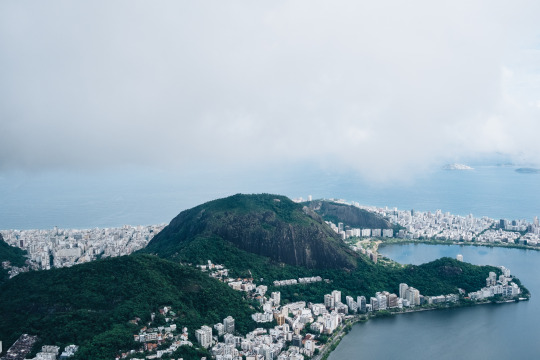
    The above photo was taken from the feet of the Christ the Redeemer statue at the top of Corcovado mountain. Excluding its base, which is about 8m tall, the statue itself is 30m in height. That’s basically the same height as Junction House (a 9 storey midrise condominium).

  • Unfinished: The Museum of Image & Sound

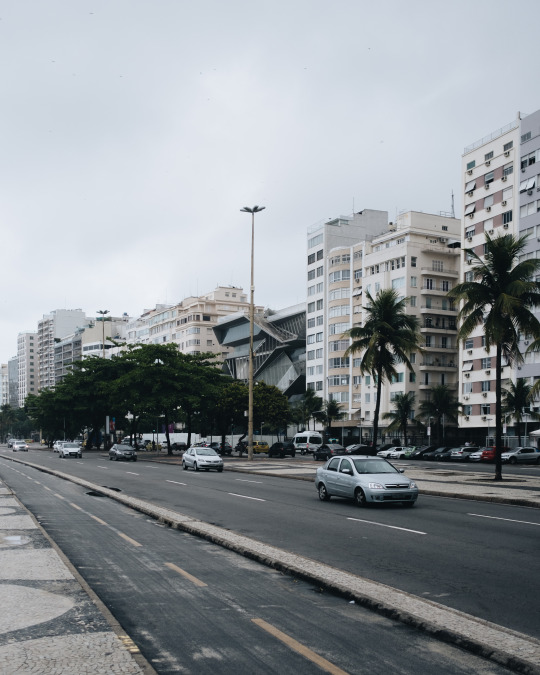
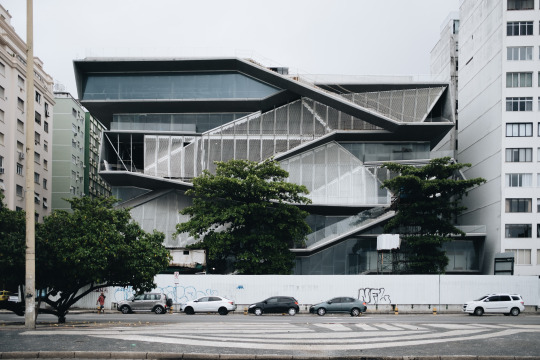
    Here are two images of the unfinished Museum of Image & Sound in Rio de Janeiro by Diller Scofidio + Renfro.

    imageimage

    The building sits across from Copacabana’s famed beach and tiled boardwalk. The street you’re looking at is Avenida Atlântica.

    The idea behind the architecture was to create a kind of “vertical boulevard” on the building’s beachside facade. Clever.

    It is particularly impactful when you see it within the context of Copacabana’s delightfully formidable streetwall and curving promenade.

    But it is unclear when the building will ultimately be finished. Construction started in 2010 and it first stalled in 2012. Too bad.