Daily insights for city builders, delivered every morning at 6 AM ET. I’m Brandon Donnelly — a Toronto-based real estate developer and founder of Globizen. I’ve been writing here since 2013.

Tag: ride sharing

  • The ride-hailing red herring

    There’s a lot of data/speculation out there about the impact of ride-hailing apps. Many dense urban centers are claiming that they have increased traffic (slowed average speeds) and pulled people away from public transit. The University of Toronto published this study last year. And the WSJ recently published this chart for Chicago:

    To be honest, I’m not sure how much of the above is a result of ride-hailing apps, overall urban growth, e-commerce deliveries, public transit disinvestment, or other factors. But what is clear is that ride-hailing is pretty convenient and most (if not all) cities are seeing massive growth in this space.

    But all of this feels to me like a bit of a red herring. People will obviously choose what is most convenient and relatively affordable. And congestion was a problem well before people started using these apps (demand > road supply). The only solution I have seen work is to price congestion/roads.

  • Lyft announces subscription plan

    Last week, Lyft announced a new subscription plan

    It costs $299 every 30 days and you get 30 rides included (up to $15 each). So it represents a possible 1/3 discount on rides. If you go over the 30 rides per month or over $15 on any one ride, you simply pay the difference. Though as a subscriber, you get 5% off additional rides.

    Subscriptions are good for business. They can be like an annuity. And I suspect that with the above model, there will be unutilized rides every month that the company is just able to bank. You can’t carryover rides with this plan.

    But moreover, Lyft’s “All-Access Plan” is designed to help you ditch your car. Trade your car payment for a ride subscription plan. So if the numbers didn’t quite work for you before, maybe they do now. Depending on the situation, I can certainly see this plan being cost effective.

    But as ride hailing/sharing continues to nibble away at public transportation and personal vehicle ownership, what will this mean for cities?

  • Lyft reveals plans for bikes and scooters

    On Monday, John Zimmer and Logan Green, the co-founders of Lyft, published this Medium post announcing their “approach to partnering with cities to introduce bike and scooter sharing” to their platform. 

    “Approach to partnering with cities” is undoubtedly a carefully chosen set of words given all the backlash going on right now around dockless scooters.

    Nevertheless, this is an exciting announcement. I could have used a scooter this afternoon to get to a meeting. And this is all part of their larger goal of transforming Lyft into a multi-modal platform – one that will also support conventional public transit.

    Here is an excerpt from the Medium post:

    Transit, bikes, small electric vehicles, and infrastructure such as safe pedestrian paths and bike lanes, all play a large role in decoupling people’s right to mobility from car ownership. We know we can’t accomplish this alone, and we’re committed to working with cities and residents to bring these elements together in the most cohesive way to maximize a reduction in vehicle miles traveled.

    The company has also set the goal that 50% of all trips on the Lyft platform will be shared rides by 2020. It is yet another example of the lines between public transit and ride sharing apps becoming blurrier. 

    Full post can be found, here.

  • Road pricing for whom?

    New York City is considering a congestion charge for drivers entering Manhattan below 60th street. It is part of Governor Cuomo’s Fix NYC plan. But we all know how difficult these things are to implement.

    Last month, Felix Salmon wrote a piece in Wired where he argued that our cities are dying of traffic congestion and that the cause is ride-hailing services like Uber and Lyft. The solution: A tax on ride-hailing services.

    The article elicited a few reactions, including this one by Charles Komanoff over at Streetblogs and this one by Joe Cortright over at City Observatory. Joe’s message: “The problem isn’t the ride-hailed vehicles, it’s the under-priced street.” 

    Precisely.

    Felix later followed-up with a post on his blog where he clarified that the reason he loves this idea – of taxing ride-hailing companies, not riders – is that it’s far more politically palatable than a blanket tax on all cars. I don’t disagree.

    Which is why I think my idea is something which is eminently politically possible, in contrast to congestion pricing, which has been implemented exactly nowhere in the USA.

    Americans love their cars, and they love the freedom that cars represent, and they hate the idea that they should be taxed for driving their cars. Tolls on roads and bridges are bad enough, but a fee just to drive in to a city?

    That said, I’m with Charles and Joe. 

    Last year, it was reported that roughly 25% of all Uber trips in New York City were UberPool trips. I’m not sure what the number is today, but these are people who are car pooling to get around. That’s generally considered to be a positive thing.

    Are these really the trips we want to be discouraging (and singling out) with a charge simply because we don’t have the moxie to do what is right and makes rational sense?

    Photo by Austin Scherbarth on Unsplash

  • Global mobility index

    Below is a short video that was created by the MIT Senseable City Lab, World Economic Forum and TomTom for a study on how people move in 100 cities around the world. They call it the Global Mobility Index.

    It shows congestion levels (using real-time traffic data from TomTom), commute times, and an estimate for the percentage of trips that could be shared if people were willing to wait up to 5 minutes.

    In the case of Toronto, they estimate that 99% of trips could be shared and that it would increase average speeds by ~7.9 km/h and reduce overall traffic levels by ~44.09%.

    Their solution to solving traffic congestion is a cocktail that involves car-sharing, bike-sharing, and public transit. It’s about developing a “mobility portfolio.” Seems sensible.

    I found myself wanting more information and data after watching the video. Still, it was interesting to see what the authors describe as the “pulse of our cities.”

    If you can’t see it below, click here.

    [youtube https://www.youtube.com/watch?v=ciJEHGMtpWc?rel=0&w=560&h=315]

  • Centralized taxi branding vs. decentralized ride fulfillment

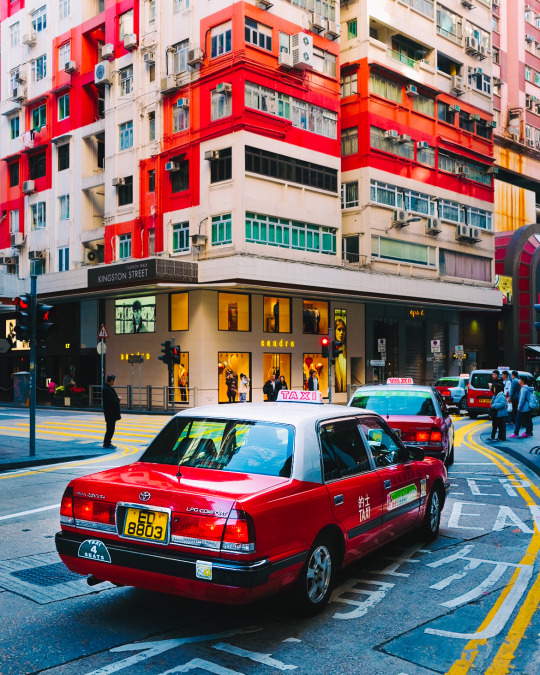
    Back in 2013, when this blog was in its infancy, I argued that Toronto needs a consistent taxi brand. Since nobody was reading the blog at the time, I am sure that most of you have never read this post. I even forgot about it, until last night when I posted this photo of Hong Kong to Instagram:

    It reminded me of the role that taxis play in city branding. This photo is clearly of Hong Kong. But take away the taxis in the foreground and I would really have to think in order to identity it. I would then be searching for street signs and looking to see what side of the road the cars are driving on.

    Now, a few things have changed since 2013. Back then I didn’t have the same appreciation for decentralized ride hailing (Uber and Lyft), though I did have the same distaste for the taxi cartel. And I recognize that there is a tension between centralized taxi branding and a decentralized approach to ride fulfillment. 

    I’m not exactly sure how to solve this problem, but maybe it gets easier with autonomous vehicles and probable changes to the way consumers own, or don’t own cars. I believe it’s important for places and cities to have specificity. If you have any thoughts, please leave a comment below. 

    (I am trying to respond to all comments on this blog, because I’m finding it impossible to respond to all blog related emails. Sorry.)

  • Shareable cities

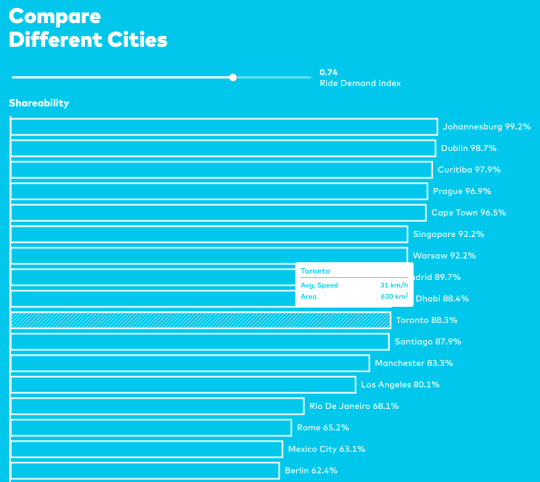
    The MIT Senseable City Lab recently looked at which cities are the most “shareable” when it comes to ride sharing services such as UberPOOL. Their goal was determine what fraction of individual trips (inefficient) could be shared or pooled (more efficient). To do this, they developed a single “shareability curve.” Full research paper, here.

    Not surprisingly, New York City does very well in this analysis. Its shareability is well above 95% for a delta of 5 minutes. That’s because the city has a large population, a small geographic area, enormous density, and lots of taxi traffic. (They used taxi data in their research.)

    But New York City also does very well when it comes to transit ridership. Highest in North America. So it strikes me that the characteristics that make a city “shareable” also apply to transit – which is effectively another form of ride sharing. Might we see the distinction between these 2 forms of mobility blur in the future? I think so.

  • So how’s Uber doing?

    A travel expense management company called Certify recently analyzed over 10 million ground transportation receipts across North America for the 3-month period ending last September (2016). 

    And what they found was that, for the first time ever, Uber and Lyft exceeded traditional taxis and rental cars when it came to business expenses. Uber was at 48% and Lyft was at 4%. So together, these two platforms have more than half of this particular market.

    If you compare this to Certify’s data from the same quarter last year, “ride-hailing services” previously accounted for 34% of receipts, whereas taxis and rental cars were at 22% and 44%, respectively. So Uber is up in a big way.

    This may not be surprising for a lot of you, but I thought it would be valuable to check-in on what the numbers say. 

    I’m hit with two thoughts. Firstly, it’s not a question of mobile apps superseding traditional taxis; it’s a question of one company taking over. And secondly, people seem to be favoring Uber over driving themselves around. I know I’ve been heading in that direction.

    Those are two powerful trends.

  • The self-driving car arms race

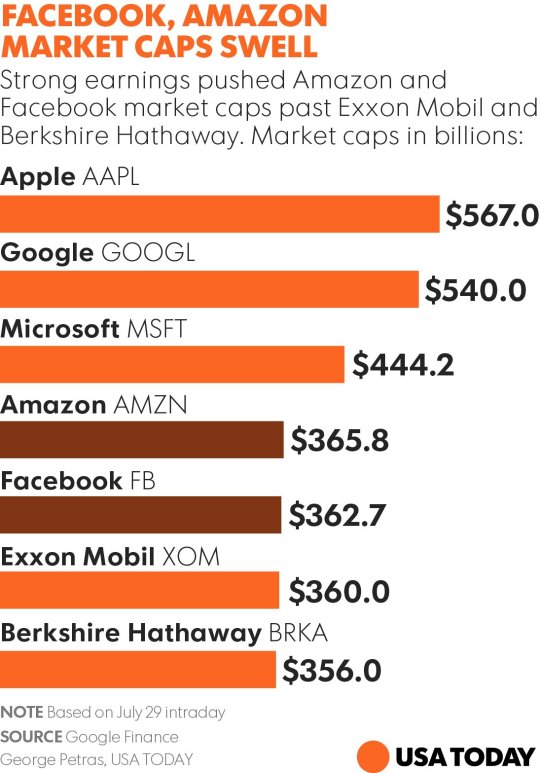
    Earlier this month, I came across the following chart from USA today. 
    image

    It was based on market caps as at July 29 and so the order wouldn’t look quite the same today. Still, here are the largest companies by market cap and the top 5 are US consumer-facing technology firms.

    Remember when it was a big deal that Apple had surpassed Exxon Mobil as the world’s most valuable company?

    We are living in a tech-driven world.

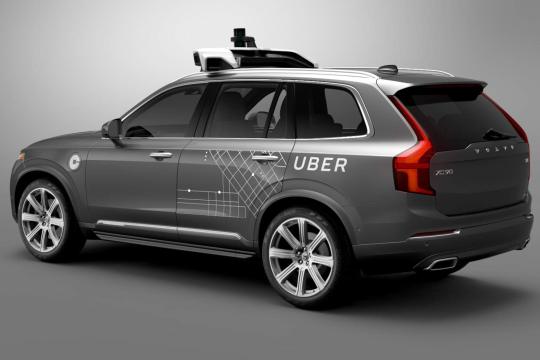
    Then yesterday, I was reading this New York Times article talking about Uber’s acquisition of Otto (a startup focused on self-driving truck technology) and its plans to allow riders in Pittsburgh to summon self-driving vehicles later this month.

    The vehicle will be a tricked out Volvo:
    image

    These two snippets from the NY Times stood out for me:

    Suddenly, it seems, both Silicon Valley and Detroit are doubling down on their bets for autonomous vehicles. And in what could emerge as a self-driving-car arms race, the players are investing in, or partnering with, or buying outright the specialty companies most focused on the requisite hardware, software and artificial intelligence capabilities.

    “There’s an urgency to our mission about being part of the future,” Travis Kalanick, Uber’s chief executive, said on Thursday in an interview. “This is not a side project. This is existential for us.

    The way it will work in Pittsburgh this summer is that the self-driving Volvos will still arrive with a driver, in addition to a sidekick in the passenger seat taking notes about how the vehicle is performing. But the goal is to start weaning us off of human drivers. These pilot rides will be free to start.

    This is quite possibly the start of a general change in terms of the way cities operate (quote from Bloomberg):

    In the long run, Kalanick says, prices will fall so low that the per-mile cost of travel, even for long trips in rural areas, will be cheaper in a driverless Uber than in a private car. “That could be seen as a threat,” says Volvo Cars CEO Hakan Samuelsson. “We see it as an opportunity.”

    Uber is currently logging about 100 million miles per day. Hopefully it is clear at this point that this is not as simple as ride sharing vs. traditional taxis. Cities who are thinking about it in this way are thinking short-term and missing the bigger picture.

    Companies such as Uber, Tesla, and Google are aiming for a fundamental rethink of urban mobility. There is an arms race going on that I believe will completely eradicate the need for human drivers.

  • Introducing Tech:NYC

    Following the lead of San Francisco, a new non-profit, member-supported organization for New York tech companies has just launched. It’s called Tech:NYC. Here are their goals, taken from this blog post:

    Tech:NYC’s primary goals are to support the growth of the technology sector in New York City, to increase civic engagement by leaders of the New York tech community, and advocate for policies that will attract tech talent, jobs, and opportunity to NYC.

    Tech:NYC will advocate for policies that: 1) underscore a regulatory environment that supports the growth of technology companies and technology talent in NYC; 2) promote inclusivity; and 3) ensure access for all New Yorkers to connectivity, technology tools, and training.

    What makes something like this important is that many public policy issues are now rooted in the tech sector. Think about all the debate regarding ride-sharing, home-sharing, drone regulation, contract employees, and so on.

    But what is also clear is that many cities are struggling to deal with these issues. As I’ve argued before, just saying no to innovation that doesn’t fit neatly into our currently regulatory boxes is often shortsighted. 

    So how do we put in place policies that deliver the right results and that are balanced? How do we grow the tech base while at the same time managing the disruptive fallout? That’s what this group hopes to do.

    And it strikes me that every big city could likely benefit from an organization like this.