Daily insights for city builders, delivered every morning at 6 AM ET. I’m Brandon Donnelly — a Toronto-based real estate developer and founder of Globizen. I’ve been writing here since 2013.

Tag: rental housing

  • New acquisition for Globizen Flats: 571 Oakwood Avenue in Toronto

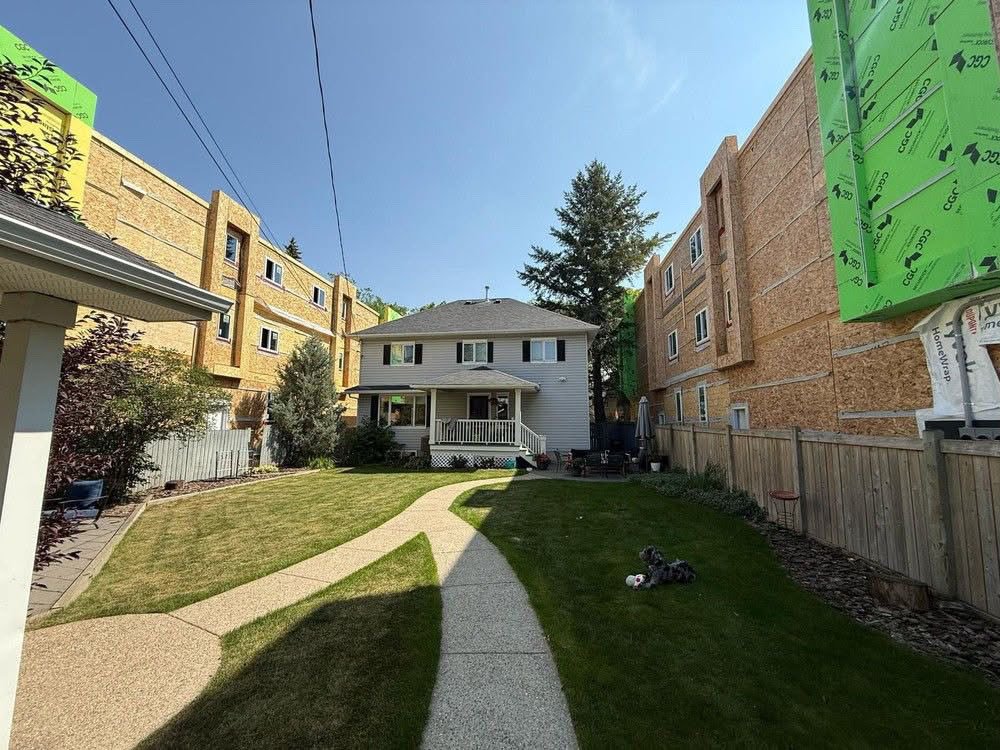
    This week, Globizen announced a new acquisition for our Flats division: 571 Oakwood Avenue in Toronto.

    This is an exciting moment for us because it marks the first project in our strategy of unlocking underutilized urban sites to create thoughtfully crafted, design-forward rental homes in walkable, transit-oriented communities across Toronto.

    The mission is simple:

    • Fill a Housing Need: We believe there’s a gap in the market for spacious, well-designed, family-oriented rental homes at accessible price points.
    • Support Toronto’s Urban Evolution: We believe that Toronto is at a unique turning point in its urban history, transitioning from a monocentric downtown surrounded by low-rise suburbs to a polycentric city that fundamentally rethinks its relationship to the car.
    • Invest in Renewable Energy: Canada needs more clean energy capacity. We see this as an opportunity to create a decentralized renewable energy asset alongside our communities.

    Globizen Flats is a response to these beliefs.

    Check out the full post in the Globizen Journal. You can also subscribe and follow Globizen Flats (@globizenflats) on Instagram.

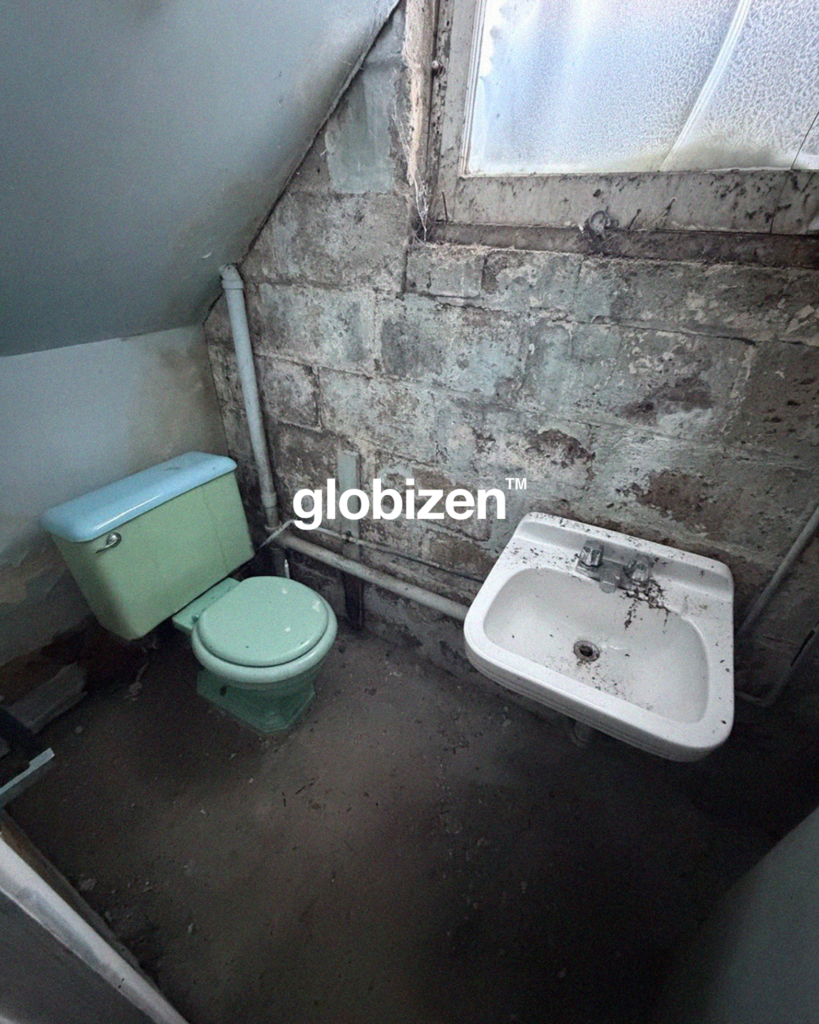
    As an aside, I initially created the above toilet image as a joke. It’s a photo of the bathroom in the existing house on site. But my partners thought it was cool and that we should share it publicly, so here we are. I bet that toilet was the neatest thing when it was first installed.

  • Burnaby backtracks on inclusionary zoning

    The City of Burnaby recently passed an amendment to its inclusionary rental requirements. It has now been removed from the southeast portion of the city, which, according to Burnaby Now, has one of the lowest median incomes in the city.

    Here’s an excerpt from the staff recommendation report that was approved in early October:

    The analysis explored the impacts of increasing the density of developments in the Edmonds Town Centre area to try and improve revenues. However, the results showed that at current values, additional density is not able to offset the costs of providing the non-market housing, and that the equity needed to pursue large developments became prohibitive. As such, it is recommended that inclusionary rental requirements apply city-wide, with a delayed effective date for the Southeast Burnaby CMHC rental zone (the “SE Burnaby CMHC Zone”), until such time that inclusionary rental requirements become financially viable.

    What’s noteworthy about this amendment is that it acknowledges the real costs associated with non-market housing and shows how important high market rents are to subsidizing them. There’s no such thing as no-cost affordable housing. In the end, somebody always has to pay.

  • Toronto announces nothing plan to create more rental homes

    Yesterday, the City of Toronto announced that it would be “unlocking” 7,000 new rental homes — including 1,400 deeply affordable homes — by doing two key things:

    • Waiving development charges on rentals
    • Providing a 15% reduction on property taxes

    And by their estimates, the value of these benefits would be roughly $58k per new rental home:

    Great news, right?

    But wait, there’s a catch. If you read the details, you’ll see that in order for a project to be approved under this program, there is also a requirement to deliver at least 20% of the homes as affordable rentals.

    So let’s look at what this could mean.

    Here is a chart comparing a market rental suite at $3,000 per month to a more affordable one at $1,500 per month:

    MarketAffordableVariance
    Face Rent$3,000 $1,500 ($1,500)
    Suite Size$600 600 
    PSF Rent$5.00 $2.50 ($3)
    Annual PSF Rent$60 $30 ($30)
    NOI Margin70%70%$0 
    Annual Net Rent$42 $21 ($21)
    Cap Rate4.50%4.50%$0 
    PSF Value$933 $467 ($467)
    Per Unit Impact($280,000)
    20% of Units($56,000)

    Both are assumed to be 600 square feet. In the case of the market suite, the per square foot (PSF) value is estimated at $933 psf, and the affordable suite is estimated at $467 psf. This represents a halving of the value (which makes sense because I halved the rents).

    On a per unit basis (again, we’re assuming 600 sf), this is a loss in value of about $280k. But since only 20% of the units would need to be “affordable”, I multiplied this number by 0.2. The result is a per unit loss of approximately $56k.

    What this means is that we’re basically doing a whole bunch of stuff to get right back to the same place. Like, hey, we’re not building enough rental housing and we’re certainly not building enough affordable housing — because the development margins are so dangerously thin — so here’s a credit of $58k per unit. But at the same time, here’s a bill for $56k per unit.

    What’s the point, besides making it sound like we’re doing something to create more housing? This program will do absolutely nothing to spur the creation of new rental housing.

  • Two different multifamily markets

    I had lunch today with a friend (from school) who runs a multifamily development company in South Florida. His business is very similar to the apartment strategy that we are now working on in Toronto, in that he builds a repeatable apartment product (garden style apartments). In fact, he was telling me that he now has a dedicated design & QA/QC team within the company. Their job is to focus on continuous optimization and on reducing construction inefficiencies.

    This is the way!

    But each market is obviously unique. His rents are in the US$3 – 3.25 psf range (call it ~C$4.15 – 4.50 psf), whereas in Toronto you need something closer to C$5 psf to have a feasible project. Our yields are also lower on average. It’s hard work to get to an untrended yield-to-cost of 5% here. But for him, he can’t raise capital with anything less than 6.5%, which represents a development spread of at least 150 bps over where multifamily cap rates are today in his market (~5%).

    Juicy by comparison.

  • Over-building and then under-building: Is Toronto headed for a severe shortage of new rental housing?

    As we know — because here’s the data — this is the current state of affairs:

    The GTA condo market is in a state of economic lockdown. The math doesn’t make economic sense from both the demand side (investors) and the supply side (developers), leaving the market at a standstill.

    The above excerpt is from a recent CIBC Capital Markets article by Benjamin Tal (CIBC) and Shawn Hildebrant (Urbanation). And what it ultimately means is that the supply of new condominiums in the GTA is falling and will continue to fall for the foreseeable future. Below are two charts, from the same article, that show that.

    Because of this, I actually think that, if you need or want a place to live, right now is a near ideal time to buy a condominium, especially if it’s from developer inventory (in an already completed project) or it’s a resale. Of course, most people won’t want to do this because they’d rather buy when most other people in the market want to buy. This is how markets tend to go.

    It has been a while since the GTA has gone through one of these real estate cycles, but it is typical: developers are prone to both over-building and under-building. It simply takes too long to build a building, and so it is natural for there to be moments when supply and demand don’t exactly line up.

    Pre-selling condominiums is — in theory only — supposed to protect against too much overbuilding. But as we have spoken about many times before, it can be challenging for end users to buy a new home so far in advance. And so the new condominium market has come to rely on investors who want to buy early and then either sell later or rent later.

    According to the above article (and MLS data), the share of newly completed condominiums used as rentals reached a peak of 34% in 2023. So a third of new condos. My gut tells me that the actual number is much higher. Many rentals never reach MLS. Overall, I think it’s very safe to assume that the majority of new condominiums are owned by investors.

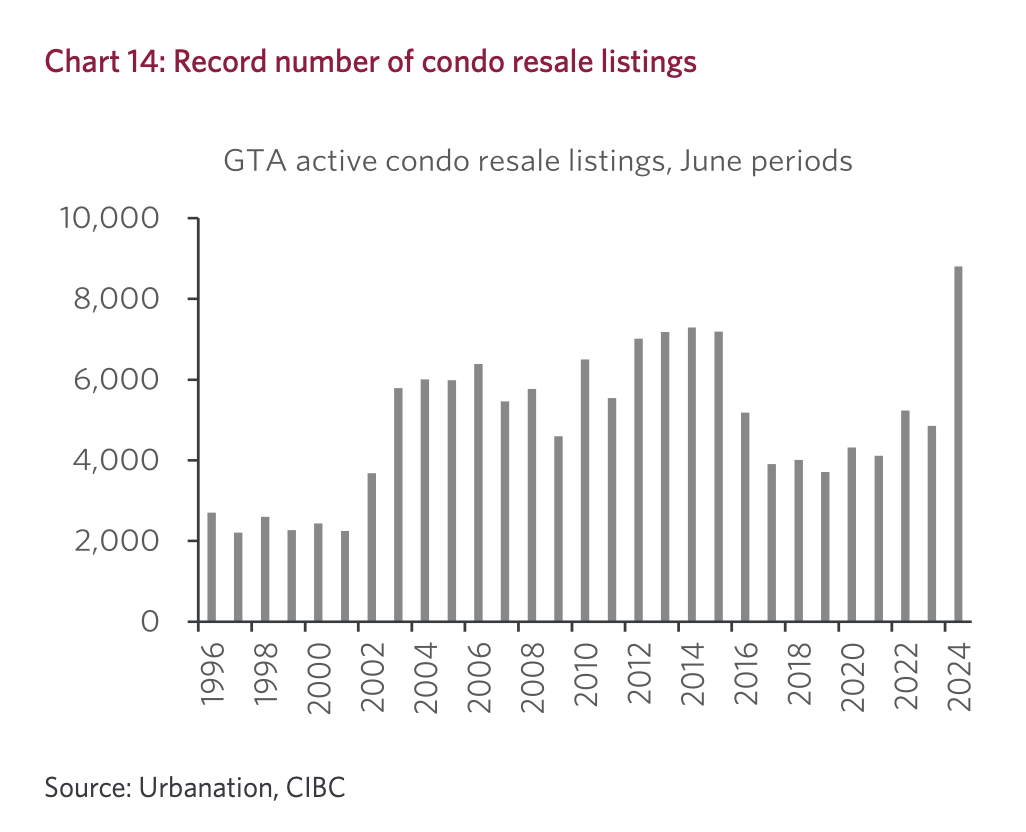
    But right now, fewer investors want to own condominiums, which is why the number of resale listings has spiked this year:

    This is, again, why I think right now is an excellent time to buy a condo. You know, be greedy when others… Regardless, this inventory will need to get absorbed and that will ultimately happen. Some of it will go to end users and some of it will go to investors who can make sense of the rental math and/or want to take a long view on Toronto. But if more goes to the former, we will be losing a lot of new rental housing.

    At the same time, while all of this is going on, construction starts are likely going to remain depressed (chart 3 above). It’s impossible to know how long this lasts, but at some point we will reach a moment in the cycle where we are under-building new housing. Maybe we’re already there. Development simply can’t turn on fast enough when demand spikes. There will almost always be a lag.

    So, since the majority of new condominiums have been serving as new rental housing, there’s a strong case to be made that at some point we will run into a potentially severe shortage of rentals. Condo investors are sometimes vilified in the media, but we will soon find out what happens when you take a big chunk of them out of the housing market.

  • Toward more rental housing

    The Greater Toronto and Hamilton Area is expected to see 6,821 new rental homes completed this year. This is a “multi-decade high”, according to Urbanation’s latest rental report. Indeed, you need to go back to the 1970s to get rental supply figures of this magnitude.

    A big part of this has to do with the fact that we are now taxing rental housing less. Toward the end of last year, the federal government removed their portion of the HST on new rental housing and, then in November, the province of Ontario followed with theirs.

    This was “a big first step” for the industry, according to leading apartment developers like Fitzrovia.

    But there’s another reason that many developers are now looking to purpose-built rentals: fewer people are buying new condominiums. And if you can’t presell condos, well then you’re going to need to find another path forward for your land.

    However, flipping over to rental is not necessarily a panacea. The margins are generally razor thin (+/- 50 bps). It requires more and different capital (typically). And you need to believe in some fairly non-consensus assumptions (high rent growth, low cap rates, etc.).

    It’ll be interesting to see how many developers are able to successfully flip over to rental and how sustained this rental supply number will be.

  • 1151 Queen East

    This morning I toured 1151 Queen East (here in Toronto). It is a new 47-suite apartment building that is being developed by Hullmark and that was designed by Superkül (the same architects as Junction House). It’s not quite finished yet, but it is looking terrific. The interiors feel, to me, like Berlin meets classic Miami Beach (if you can picture whatever this means). So a big congrats to the entire team. I’m sure it will be well-loved once people start moving in this year.

    At the same time, it’s hard not to see small and beautiful infill projects like this and wonder, “why do we make it so difficult to build this kind of new housing? This is a 6-storey rental building that, according to Urban Toronto, was first proposed in 2018. It then had to go through the typical rezoning process, which, in this case, seems to have taken two years. Now we’re in 2024. Uh, why?

    We should be looking at this kind of infill housing and saying, “Yes! You should go ahead and build this right now. Let us help you with that.” Instead, we erect barriers, which only force developers toward ever larger projects. If you’re going to spend two years in rezoning, no matter the scale of the development, why not build 470 homes instead of 47? And this has only been exacerbated with higher interest rates, because now time costs you that much more.

    I say all of this because this is an objectively great infill project. Our city would be a better place with a lot more of these.

  • An overview of rental housing in France

    Rental housing in France is both heavily regulated and supported through dedicated public funds. Here’s a high-level overview of what that means (via this 2021 Brookings case study by Arthur Acolin):

    • Homeownership rates in France went from 35% in 1954 to 56% in 2001
    • As of 2018, 58% of French households own, 40% rent, and the remaining 2% supposedly get free housing from either their employer or a family member
    • Not surprisingly, younger households are most likely to rent (the figure is > 60% for people aged 18-29)
    • Household size seems to play a major factor in how likely people are to live in public housing
    • France has some 4.5 million public housing units and 17% of all households live in them (which represents about 43% of all renter households)
    • Within the unsubsidized rental market, 93.5% of households live in homes owned by individual investors (this is as of 2013) and only about 3.5% live in homes owned by institutional investors
    • This is pretty typical of Europe, where multi-family isn’t an established real estate asset class like it is in North America; so for those of you who like to hate on individual condo investors, check out France
    • In the decade between 2010 and 2020, 28 metro regions in France adopted some form of rent control and, in a few markets, like Paris and Lille, there are also maximum rents that can be charged for specific housing types

    If you’re interested in rental housing, Brookings also has articles covering the US, Germany, Spain, Japan, and the UK. They can be found here.

  • No more sales tax on new rental housing

    Big news today in development land. The federal government just announced that it has removed sales tax (GST/HST) from new rental housing effective immediately. This is a significant step in the right direction, and something that we have spoken about many times before on the blog.

    Here’s how things used to work:

    In the case of a newly constructed or substantially renovated multiple-unit residential complex or addition to a multiple-unit residential complex, the builder must generally self-assess GST/HST on the fair market value of the whole of the substantially completed multiple-unit residential complex or addition when possession of the first unit is given under a lease, licence or similar arrangement as a place of residence of an individual.

    What this is saying is that if you build new rental housing, and even if you plan to continue owning it forever, you need to determine the fair market value of the property and then pay HST on that amount. In Ontario, the HST rate is 13%. However, the effective rate was a bit lower because of new rental rebates. Let’s say it was somewhere around 11%.

    Now that this no longer needs to be paid, a lot of rental projects that were flirting at the margin should suddenly make economic sense. Which is why I tweeted earlier today that every housing developer in Canada is right now dusting off their “what if we built rental” development pro forma. It didn’t work yesterday, but maybe it does today!

    Today is a good day for new rental housing supply in Canada.

    Update: This announcement only relates to the federal portion of the HST. The feds are now calling on provinces to follow suit.

  • We should waive the HST on purpose-built rentals

    We have spoken recently about the reset taking place in the development industry right now. It is difficult to underwrite new projects.

    But even before this current environment, it was challenging to make new rental housing pencil. Condominium projects almost always look more attractive (at least here in Toronto) and generally speaking, the spectrum for rental housing feasibility goes from “no, this doesn’t work” to “yeah, maybe this will work if we trend rents over a long enough time horizon.”

    The problem with this is that we know more rental housing would be a positive thing for our cities. So how do we address this? Here are some common solutions that get thrown around:

    • Make condominium projects less attractive to build. If fewer developers want to build condominiums and if fewer investors want to buy them, then maybe new purpose-built rentals will become more enticing to build. On some level, this makes sense. It should create downward pressure on land values. But this doesn’t help rental housing supply if it isn’t feasible to begin with. And why limit overall housing supply? (Related post, here.)
    • Make rental housing projects less attractive to build. I know this sounds counterintuitive when I say it this way, but we do do this. Rent controls, to give just one example, generally make it harder to build new rental housing. Yes, it can help those who are already housed, but it can disincentivize proper building maintenance, it can lead to more people being over-housed, and it absolutely hurts new supply. So there are trade-offs.
    • Make rental housing projects more attractive to build.

    I find this last one intriguing, and so here’s one specific idea that I have raised before. Though this time, I’m quoting Benjamin Tal of CIBC:

    But, by far, the most pragmatic step to take in the immediate future would be to waive or defer HST payments on purpose-built rental projects from first occupancy to the sale of the building, while keeping the same valuation methodology as the current regime.

    It’s the most realistic option since it’s relatively easy to implement, and Ottawa will have a willing partner in the Ontario government. Buried in page 84 of the recent Ontario budget was the following sentence, “we call on the federal government to come to the table on potential Goods and Services Tax/Harmonized Sales Tax (GST/HST) relief, including rebates, exemptions, zero-rating or deferrals”.

    Such a move alone would shave close to $60K from the unit cost of that 400-unit project in Toronto, resulting in a meaningful reduction in rent, while at the same time unlocking tens of thousands of rental units across the country in short order — clearly a step in the right direction.

    We should do this.

    P.S. Sam, thanks for sharing Tal’s article with me.