
Daily insights for city builders, delivered every morning at 6 AM ET. I’m Brandon Donnelly — a Toronto-based real estate developer and founder of Globizen. I’ve been writing here since 2013.

Tag: renewable energy

  • Tesla introduces a battery for your home

    image

    By accident, this week on Architect This City seems to be turning into Elon Musk week.

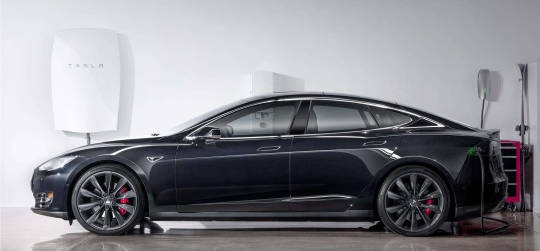
    Yesterday, Musk announced something called the Powerwall home battery. Measuring about 3′ x 4′, the shield looking battery pack will charge using the electricity generated from solar panels (or from the grid when rates are at their lowest) and then power your home.

    It’s designed for consumers and will cost between US$3,000 – $3,500 depending on capacity. The individual Powerwalls can also be daisy chained to increase capacity. It will be available starting this summer.

    A wall battery may not seem all that interesting to some, but I think this is actually a big deal for a few reasons.

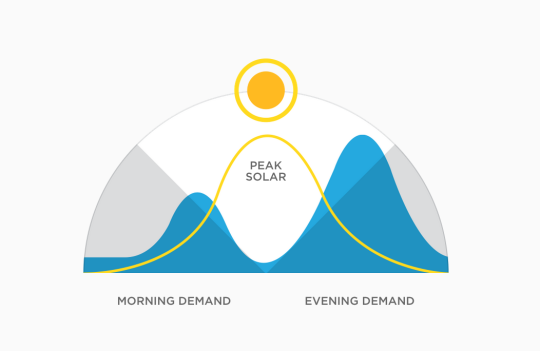
    Renewable energy is often both intermittent and produced when you don’t need it. Here’s a great chart from Tesla that shows what I mean:
    image

    During peak solar hours, most people aren’t home and most people aren’t consuming at peak levels. That’s why it’s important to be able to store the energy that you collect, whether it be from solar, wind or other renewal energy source. And from what I hear from my friends in the industry, storage has been a bit of an Achilles heel for adoption.

    It will also help to further decentralize energy production. What is produced locally (from say solar panels) will be stored locally for when it’s needed locally. This is in contrast to centralized production or producing energy locally and then feeding any excess capacity into the grid for use somewhere else. That requires transmission and will be by definition less efficient.

    Finally, the other interesting thing about Powerwall is that it closes the loop on two of Musk’s businesses: SolarCity and Tesla. SolarCity is about the production of renewable energy and Tesla is about the consumption renewable energy. But as the chart above shows, storage is often needed to link those two activities in an efficient way.

    All of this makes me excited about Powerwall.

    If any of you are an expert in this industry (which I am not) or you just have additional thoughts, I would love to hear from you in the comment section below.

    Images: Tesla
  • Bad neighbors build wind turbines

    image

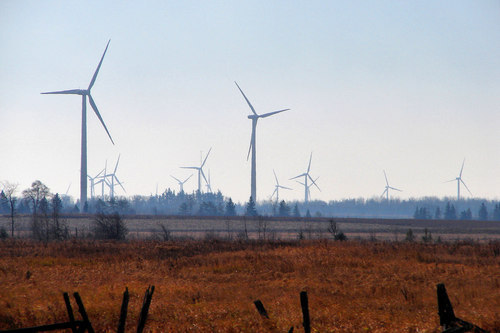
    On Friday when I was driving up to Thornbury, I ended up taking a route that goes through Shelburne, Ontario. I’ve taken this route at some point before, but I don’t remember seeing so many wind turbines. I guess it must have been before this particular wind farm had been built out.

    It turns out that these wind turbines belong to the Melancthon wind facility, which is the largest installation in Canada. The facility contains 133 wind turbines and has the capacity to generate 545,000 megawatt hours each year – enough renewable energy to power roughly 70,000 households. The facility is owned and operated by TransAlta and they’ve entered into a 20-year contract to supply renewable energy to the Ontario Power Authority.

    But what I also happened to notice were the many signs posted around with wording like the title of this post: “Bad neighbors build wind turbines.” And after speaking about it with people over the course of this weekend, I very quickly learned that there was fierce community opposition to this project.

    The concern with wind turbines is typically twofold. People don’t like the way they look and they worry about the noise that they will generate. There’s even an alleged condition called “Wind Turbine Syndrome.”

    I personally think they look quite beautiful. They seem so symbolic of the future and progress. But I am intrigued by the noise concern and so I decided to do a bit of research. I found this video from the UK. The big takeaways are that living beside a main road is generally much louder than living beside a wind turbine, and that a wind turbine isn’t usually that much louder than a quiet suburb, until you get fairly close to it. So I wonder if it’s really as bad as people are making it out to be.

    Either way, the issue at hand is incredibly important. We’re talking about renewable energy. And while you may not like the look of wind turbines scattered across the horizon as much as I do, I strongly believe that we need to figure out ways to wean ourselves off of fossil fuels. It’s for this reason that I’m a big supporter of both wind and solar power.

    So perhaps the counter to those signs scattered around Shelburne is the following: Responsible communities build wind turbines.

    Image: Wikipedia