
Daily insights for city builders, delivered every morning at 6 AM ET. I’m Brandon Donnelly — a Toronto-based real estate developer and founder of Globizen. I’ve been writing here since 2013.

Tag: realtor

  • Multiple representation

    house by Edoardo Panella on 500px.com

    https://500px.com/embed.js

    If you’ve ever bought a property, you might be familiar with something called “multiple representation.” It’s when one real estate agent represents both the seller and the buyer for a particular transaction. It may also be called “dual agency.”

    The reason this can happen is because, here in North America at least, real estate sales are typically done with two agents: a seller’s agent and a buyer’s agent. The real estate commissions are (directly) paid by the seller to the listing brokerage, but it’s usually split between both brokerages and agents involved in the transaction.

    However, if you’re an agent-less buyer and you happen to come across a property that you like on your own (perhaps by browsing around online), the selling agent will likely ask you to also sign a representation agreement with them. And that means entering the world of “multiple representation.”

    Here’s some of the wording that the Ontario Real Estate Association uses:

    MULTIPLE REPRESENTATION: The Listing Brokerage has entered into a Buyer Representation Agreement with the Buyer and represents
    the interests of the Seller and the Buyer, with their consent, for this transaction. The Listing Brokerage must be impartial and equally protect
    the interests of the Seller and the Buyer in this transaction. The Listing Brokerage has a duty of full disclosure to both the Seller and the Buyer,
    including a requirement to disclose all factual information about the property known to the Listing Brokerage.

    But I don’t understand how this can work.

    You now have a sole agent that is supposed to act as a neutral facilitator between (1) a party that is paying them all of their salary for the transaction (and which increases as the selling price goes up) and (2) a party that just came off the street (and where there’s no preexisting relationship).

    That’s why multiple representation scenarios always make me uncomfortable. Real estate already has too many information asymmetries for my liking and this feels like a conflict of interest in almost all of the cases. I guess that’s why they are not allowed in many states in the US.
  • Why do more people in Quebec sell their home without an agent?

    If you ask most people, they’ll tell you that real estate agents will never ever disappear. 

    Despite the internet, mobile phones, social networks, and companies (here in Canada) such as comFree and PropertyGuys, the bulk of the market still employs an agent when it comes time to buy and/or sell a home. This is true both in Canada and the United States. And it may always be true.

    But there are lots of entrepreneurs and people in the real estate community experimenting with different models. OpenDoor and Open Listings are two new startups out of the US that I’ve been following closely.

    At the same time, there is a certain fraction of the market that is willing to go at it alone. By some estimates this number could be as high as 25% in Canada. Of course, this is a hard number to measure accurately since there isn’t just one method of selling a home privately and many transactions likely go untracked.

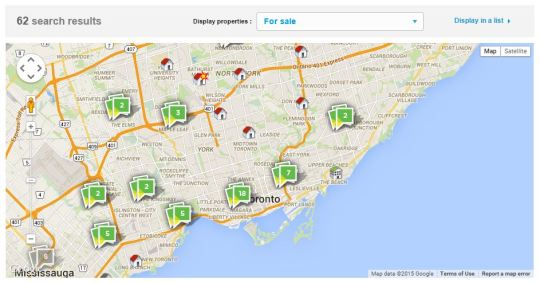
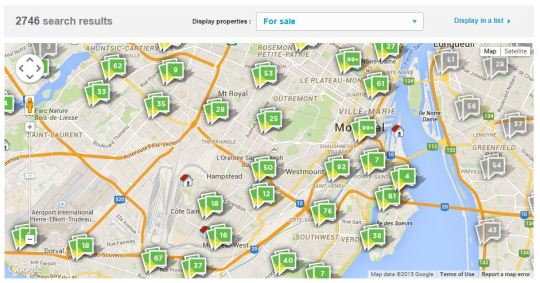
    But one thing that I’ve been wondering for awhile now is why the percentage of private home sales is seemingly so much higher in the province of Quebec. According to Wikipedia, this number might be greater than 50%. And a quick search on comFree (duProprio in Quebec) seems to suggest that this may indeed be the case.

    Here are the comFree search results for downtown Toronto. There are 62 properties.

    image

    And here are the duProprio search results for downtown Montreal (notice I tried to maintain the same zoom level). There are 2,746 properties.

    image

    If anyone has any insights on this phenomenon, I would love to hear from you in the comment section below. I don’t know why this is the way it is.

  • Towards more publicness

    Back when the commercial internet first started to take off it was uncommon to use your real name online. Instead people relied on usernames and other pseudynoms to represent themselves. I honestly can’t remember what I used in those days, but I’m sure it was something ridiculous.

    Over time though that started to change. 

    Blogging started to take off in the late 1990s. And we started to become more comfortable sharing personal information online. Perhaps the biggest shift though, came with the introduction of Facebook in 2004 (over 10 years ago!). All of a sudden people – young college students initially – started sharing lots of personal information online, including photos of themsleves and their friends.

    But this wasn’t an overnight change. When Facebook first launched, privacy was an important component. It still is, but I would argue that it has become less central given how public a lot of other social media platforms are today. Twitter, for instance, is what it is today largely because of its publicness. 

    For my own social media accounts, I have made every single one of them completely public. From Twitter to Facebook to Instagram to Snapchat, nothing I post to social media is restricted in any way. And I do that because I believe we are headed towards a world with more – not less – openness, transparency and publicness.

    Of course, I’m not just talking about social media and tech. I’m talking about open data in general.

    Earlier this year, the Toronto Real Estate Board clamped down on real estate brokers who were publishing historical sales data online. Citing privacy concerns, TREB ordered them to stop or lose their access to the MLS system. 

    For those of you not from familiar with the Toronto real estate market, historical sales data for homes is not open and published online. You generally need to go through a realtor to get access to this data. Some think this is the right approach. And others think it is antiquated.

    But as I explained above, our conception of what should be private can, and will, evolve over time.

    Here are the details on my home:

    I purchased it in September 2012 for exactly $400,000 (Canadian). It’s a 650 square foot condo in the St. Lawrence Market neighborhood of Toronto. It has one bedroom, a 400 square foot terrace, one parking spot, and 10′ ceilings.

    Sooner or later, I believe this information will be freely available online. But since that’s not the case today, I figured I would just tell you. Sharing this information is not a big deal for me.

  • Information wants to be free

    The Globe and Mail ran a piece this morning called, The Realtors of Oz: Bidding wars are unnecessarily sleazy.

    For anyone who has recently tried to buy a house in Toronto, you’ll know that multiple offer scenarios, also known as “bidding wars”, are a fairly common occurrence. Demand for housing in the city is great and interest rates are low. And so homes are frequently being priced below market to generate a feeding frenzy.

    When I read articles like this, I’m reminded of how much frustration I have for the way the real estate market operates today. There’s poor liquidity, there’s a lack of transparency, and there are high transaction costs. I’m a free market kind of a guy and so I’m bothered by how “imperfect” the real estate market remains.

    A lot of people in the business like things just the way they are, but I believe that markets function better, for everyone, when they are open and transparent, and all participants have access to information. Thankfully, I do believe that we’re headed towards a world with more transparency, not less. Information wants to be free.

  • The high cost of transacting

    This past Sunday I was over at my father’s place for dinner and we were talking about the high transaction costs associated with buying and selling homes. That is, we weren’t talking about the high price of homes in Toronto, we were only talking about transaction costs and barriers to market liquidity.

    For example, let’s say for the sake of simplicity that you own a home that’s worth $1 million and you’d like to sell it and buy a different home that also happens to be worth $1 million. In this case, you’d be making an entirely lateral move. You’re not down sizing or up sizing, you just want a different home–perhaps because you’d prefer a different neighborhood.

    In order to do this, you’re going to be faced with a number of costs. But the 2 most significant are real estate commissions and Land Transfer Taxes (both provincial and municipal). You only pay Land Transfer Taxes in Toronto when you buy (take title) of a new property, but they’re unavoidable, unless you’re a first time buyer, in which case you’d qualify for a bit of a rebate.

    Real estate commissions are technically optional, but 70-90% of the market in North America still uses a a real estate agent to sell their home (based on the estimates I’ve found). Typically a seller pays around 5% of the sale price. So in this example, you the homeowner would be paying around $50,000 in real estate commissions.

    Land Transfer Taxes would be roughly $32,000, and so you’re looking at a total somewhere around $82,000 in order to make this lateral move. This, of course, does not include legal fees or any other moving costs you might incur. It’s a hell of a lot of money and it’s a significant barrier to transacting.

    But my hunch is that we’ll eventually see real estate commissions come down. No real estate agent wants to hear this, but I think it’s almost inevitable. The internet, as a disruptive force, is bound to make it happen.

  • How does Dirt get the dirt?

    thedirtco:

    Last week we spoke about why the world needs a social real estate community and how we intend to use this community to get and share property information and activity.

    We’re about a week away from launching our first release (signup here and be the first to get notified) and so we thought…

    How does Dirt get the dirt?