Daily insights for city builders, delivered every morning at 6 AM ET. I’m Brandon Donnelly — a Toronto-based real estate developer and founder of Globizen. I’ve been writing here since 2013.

Tag: real estate

  • Tridel unveils smart condominium in South Core

    A few weeks ago, Canadian developer Tridel unveiled its first “smart condominium” at Ten York – a recently completed 69 storey building in the South Core neighborhood of Toronto. Above is an archive photo of the building under construction. I chose this one because its siting between the Gardiner Expressway (left) and Harbour Street (right) is also noteworthy.

    Smart anything is one of those tech buzzwords that is, I know, starting to feel vapid. But Tridel has done some interesting things here with their Tridel Connect platform (a collaboration with SmartONE Solutions). And if you happen to also be in the business of designing and constructing multi-family buildings, I think you’ll find it to be a useful case study.

    At Ten York, you can now use your phone as a key fob. People buzzing up are shown to you on your wall pad so you can confirm identity. The suite entry doors use digital locks, which means you use an access code instead of a key. Additional codes can be created for family and friends or for service providers like dog walkers and cleaners. You’re also given a log of who has come and gone. And of course there’s an automated parcel delivery system.

    If you’d like to see all of the features in the live, I suggest you take a look at the “b-roll video” that was included as part of their press release. Tridel is excellent at implementing new technologies and I know that they frequently reserve test suites in their projects to try some of them out. This is a great thing for the industry and for consumers.

    Image: Tridel

  • Limits of housing affordability

    The San Francisco Chronicle recently published an article called, “SF residential projects languish as rising costs force developers to cash out.” It talks about the impact that rising costs (both construction and other) are having on new housing supply. Some developers aren’t building even though may have entitled sites. And that’s because the math doesn’t work, even though we’re in a market with a severe housing shortage.

    Here is an excerpt from the article that talks about the kind of pricing that is needed in order to make a project work:

    Chris Foley, a real estate investor and partner in brokerage firm Polaris Pacific, said that in the current construction environment a condominium developer needs to sell units for at least $1,400 a square foot for a wood-frame building and $1,800 a square for a taller, steel-frame midrise or high-rise. Even in a city where more than 80 percent of the population is priced out of the market, those numbers are a stretch, Foley said.

    San Francisco also has inclusionary zoning, which requires a certain percentage of units in any new development to be priced below market. According to the article, it is 18% for new rental projects and 20% for new condo projects. That’s a cost that needs to be absorbed by the remaining market rate units – so price accordingly. 

    The MIRA tower designed by Studio Gang is currently under construction and has 156 affordable units and 393 market rate units. The market rate pricing looks something like this:

    That’s the case with three buildings rising near the new Transbay Transit Center: Mira, the Avery at 400 Folsom St., and One Steuart Lane, which overlooks the Embarcadero at the foot of Howard Street. Unless there is a remarkable drop in the market, units in all three of those buildings will probably have an average sales price of more than $2,000 a square foot and penthouses could fetch $3,000 or even $4,000 a square foot. A 3,326-square-foot penthouse at 181 Fremont St., which opened last spring, recently sold for $15 million, or $4,500 a square foot.

    Projects being squeezed by rising costs is something that we are also seeing here in Toronto. And I don’t believe that the general public fully appreciates that there are limits to the costs that can be shouldered by new development. And the reason for that is because there are limits to what people can afford to pay for new housing.

    Photo by Jamie Street on Unsplash

  • Five year anniversary

    Today is the five year anniversary of this daily blog. That’s over 1800 posts. 

    It’s almost hard to believe that it has been that long. It seems like just yesterday I was on year 2 or 3. But at the same time, it’s almost hard for me to remember a time when I didn’t blog every day. I guess we’re calling it a habit at this point.

    One of the most common questions I get regarding this blog is: “Do you pre-write posts?” The answer is never. Okay, almost never. Sometimes I’ll pre-write a post if I know I’m going to be on a plane for 12 hours and I won’t make the timezone cutoff. But generally as a rule I don’t.

    Part of the reason I don’t is because it breaks the habit. This is something I do every day. And I like that routine. I also want the posts to be timely and I want to be able to write about things that may be on my mind that day.

    Momentum is a powerful thing. And when you’ve been doing something for a number of years, and especially something as public as this daily blog, there’s a powerful incentive to keep doing it. That’s how streaks work.

    However, in the world of development, five years is perhaps not that long. It’s maybe one project. Streaks take a lot longer to establish.

    This summer One Delisle by Studio Gang went public and you’re now starting to see (bright neon) teasers for Junction House. Both of these projects are many years in the making. The Junction House story started in early 2016.

    So I reckon that this blog needs at least another five years so that there’s enough time for the really juicy stories to surface. I’ll endeavor to do exactly that. 

    Thanks for reading and making this community what it is. See you tomorrow.

  • Supreme Court dismisses TREB appeal

    Last Thursday the Supreme Court of Canada announced it would not hear an appeal from the Toronto Real Estate Board regarding a 2016 Competition Bureau decision aimed at giving consumers greater online access to information, such as historical (home) sale prices.

    I am not at all surprised by the Supreme Court’s decision and I have said pretty much all I want to say on this topic – over here. But since I believe this is a positive outcome for real estate consumers, I wanted to mention it on the blog because it appears to be a final decision.

    Some sites, such as Zoocasa, have already started publishing sold prices. Good.

  • Photogenic neon in the Junction

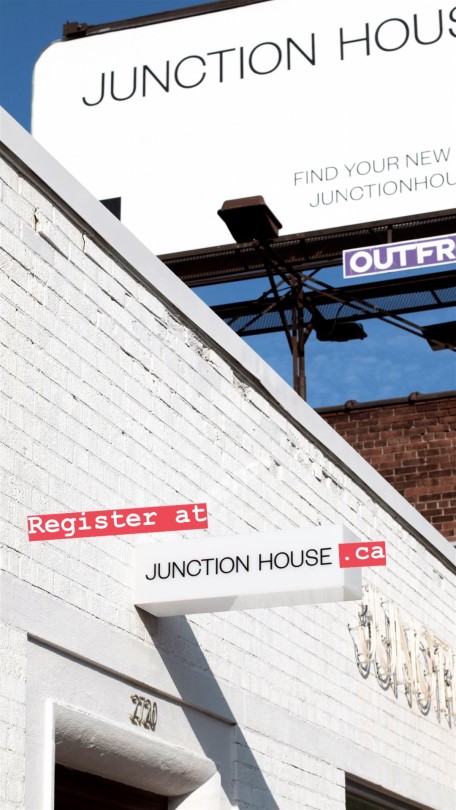
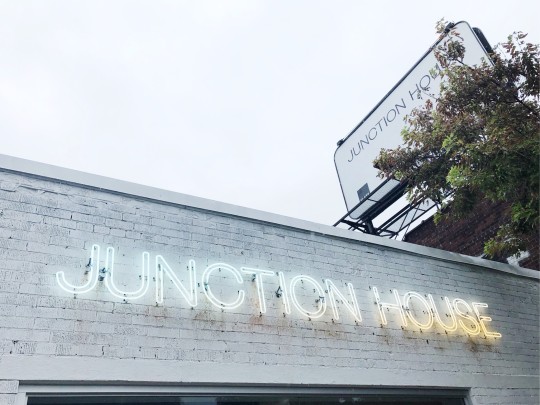
    We just finished putting up some additional signage at the future sales office for Junction House. Clean and minimal, but fun. I am pretty pumped with the way everything turned out. Creative and photos by Vanderbrand. Instagram story mashup and failed neon photo by me.

    This week I learned that properly photographing neon takes a bit of work. The neon “Junction House” sign is actually all white when you see it in person. Apparently it has something to do with the frequency. 

    I’m going to go back one evening with my tripod and Fuji and see if I can do better.

  • The Future of Hamilton

    image

    As many of you know, we have a development project in Hamilton, Ontario – more specifically in the Corktown neighborhood. We filed our development application earlier this summer.

    Because of this I was invited to participate in a Bisnow event on The Future of Hamilton. It takes place the morning of Wednesday, September 12, 2018 in The Alley by Core Urban. I walked this space last summer while it was under construction and so I’m excited to see it finished.

    For those of you who aren’t familiar with Core Urban, they are doing some really great work in Hamilton and have established themselves as a responsible city builder with a focus on adaptive reuse projects.

    Steve Kulakowsky, who is co-owner of Core Urban, will be speaking at the event along with the mayor, some guy who has pretentiously included his middle name, and many other smart people. To see the full list of speakers and to buy a ticket, click here.

    Photo of Hamilton by Vivek Trivedi on Unsplash

  • Building height fallacy

    Studio Gang has a project currently under construction in New York City called 40 Tenth Avenue. It is also known as the “solar carve tower.” Here are a couple of progress photos taken by Timothy Schenck. The glass is beautiful. (If you can’t see the embedded tweet below, click here.)

    https://platform.twitter.com/widgets.js

    This is one of my favorite buildings by Studio Gang and one that we all studied when we were kicking off One Delisle

    The geometry of the building is a result of carve outs that maximize the amount of sunlight that is able to reach the adjacent High Line (public space). It is form driven by functional logic. Here is a diagram from Studio Gang showing the carve outs that result from the sun’s rays.

    image

    The other thing I like about this project is that it is a clear proof of something that I’m going to call the “building height fallacy.” There can be a tendency to overfocus on building height, which I have argued against before on this blog. 

    In this case, a shorter and squatter building without these solar carve outs, would have actually been worse for the High Line and the surrounding environment in terms of access to light and air.

    The building is responding to site-specific criteria – which is what great architecture should do.

  • The blue (real estate) bible

    Back when I was in grad school studying real estate, we used to refer to the below book as the “blue bible.” It is a comprehensive look at real estate finance and investments, and also development. But perhaps more importantly, it is written in a way that is clear, direct, and immensely practical to the actual world of real estate.

    image

    The reason I mention this today is because the fifth edition is out and my friend Bruce Kirsch is now an author, along with Peter Linneman. Thankfully the cover is still blue, otherwise I might be a little sad and this post wouldn’t make a lot of sense.

    Bruce has an MBA in Real Estate from Wharton (at Penn) and is the founder and CEO of Real Estate Financial Modeling, LLC, which I recommend to absolutely everyone who wants to get better at financial modeling and deal underwriting.

    I have a lot of people who reach out to me on a regular basis and want to ask me about getting into real estate, and in particular, development. I try my best to make time because I was once in their shoes. Usually that means an early morning coffee in Toronto’s PATH.

    My advice is fairly consistent. You have two options. Try and get your foot in the door at a shop or, if you’ve got the gall, go out and try and do it on your own. I have friends who have successfully done the latter with very little in the way of formal real estate training.

    Whatever your decision, knowledge of the industry will obviously serve you well. Oftentimes I’m meeting with design and/or planning professionals who bring a lot to the table, but usually lack the finance and investments knowledge. That’s when I remind them of my story: Don’t screw up the numbers.

    This is also when I suggest taking one of Bruce’s classes. I’ve taken a number of them. Because to learn how to model something in Excel you have to understand how it actually works and Bruce helps you do exactly that. Garbage in, garbage out. That’s how models work.

    But the other thing one should consider doing is picking up a copy of the blue bible. I have a copy sitting on my desk right now and will tell you that it’s a “must read”, whether you’re a designer and just want to learn more about the other side of the business, or you’re an experienced real estate professional.

    For more on the book, click here and then on Textbook at the top. Oh, and Bruce, congratulations on the new book!

  • Learning about O-zones

    I spent this evening reading about Opportunity Zones, or “O-zones”, in the United States. 

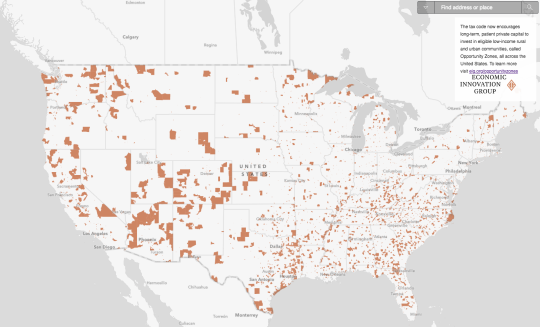
    For a census tract to become an O-zone, it has to have a poverty rate of 20% or higher, or the median household income has to be less than 80% of the surrounding area. Governors are also only able to designate 25% of their eligible census tracts.

    Here is a map of the areas that have been designated as Opportunity Zones.

    image

    Here is how these O-zones work. (All excerpts taken from this Forbes article.)

    The law’s engine is a new breed of financial product, the opportunity fund, that offers investors a trifecta of attractive tax breaks. Here’s how it works. Investors who sell assets have 180 days to plow their taxable capital gains into an approved opportunity fund, which must hold 90% of its assets in Opportunity Zone projects. To put money to work fast, the law requires that the funds invest all of their cash within some specified time frame. (The Treasury Department is still deciding on that and other crucial details.) Tax on the original reinvested gain isn’t due until 2026, and the taxable gain is cut by 15%. Meanwhile the new opportunity investment grows tax-free, like a Roth IRA, provided it’s held for at least ten years. (If it’s sold earlier, it can be rolled into another opportunity fund and remain tax-free.)

    Here is how it could get the real estate industry to take action.

    For real estate developers, O-zones offer cheap real estate and unlimited, untaxed upside if a neighborhood takes off. Developers must do more than stash cash in crumbling property. To qualify for tax perks, they must make swift and significant upgrades (at least equal to the cost of the initial purchase). With real estate projects come new office buildings, industrial districts, restaurants and affordable housing—all of which can lay the groundwork for an economic boom. “The real estate aspect is a great catalyst to attract new businesses,” says AOL founder Steve Case, an early supporter of the O-zone initiative, whose Rise of the Rest Fund invests in backwater areas. “But it’s the startups that will be the real job creators.”

    And here is how it could influence where new businesses decide to locate.

    “If Facebook could have chosen to locate itself in an Opportunity Zone, like the Tenderloin in San Francisco, the investors would’ve paid no capital gains on their equity,” says Parker, who presumably would have been one of the big winners. The promise of mega-returns could send VCs, investment banks and private equity firms scrambling to launch their own opportunity funds to create incubators, scour second cities for overlooked talent or move portfolio companies into O-zones. “It wouldn’t surprise me if a lot of Silicon Valley VCs started to tell founders, ‘We’d like you to go over the bridge to Oakland, or we’d like you to go to Stockton,’” Parker says.

    If you’d like to learn more about Opportunity Zones, check out the Forbes article.

  • Condo rents in Toronto are up 11.2% from last year

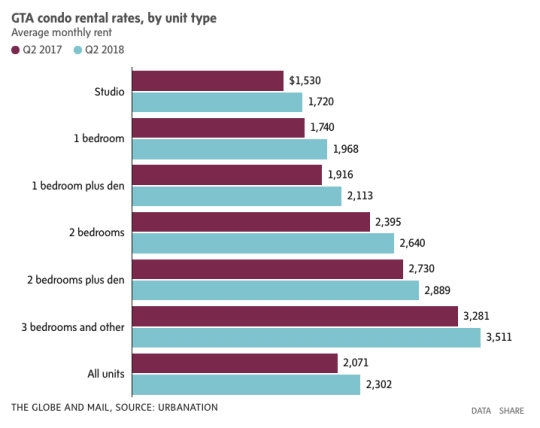
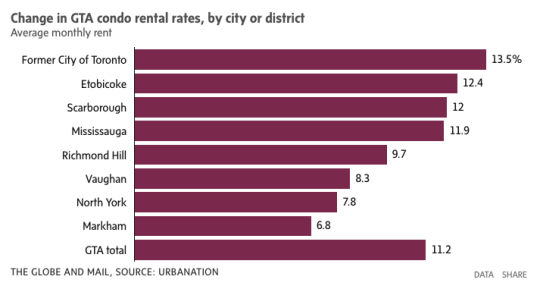
    Yesterday Urbanation released its Q2-2018 rental report for the Greater Toronto Area. It tracks both purpose-built rentals and condominium rentals, the latter being condominium units that are listed for rent on MLS. The average condo rent, for all unit types across the GTA, is up 11.2% year-over-year to a face rent of $2,302 per month.

    Here is a chart from the Globe and Mail:

    The former City of Toronto, which includes downtown, is actually up 13.5%:

    But here are the stats that I really wanted to draw your attention to today (figures from the Globe).

    According to Urbanation, there were some 384,000 condo apartments in the Greater Toronto Area in 2017 and nearly 1/3 of them were rented out. Given that the Canada Mortgage and Housing Corporation pegs the total number of rental apartments in the GTA at approximately 311,596, condo apartments represent about 40% of all our rental housing stock.

    So condo buildings are actually doing quite a bit of heavy lifting when it comes to providing rental housing in this region.