Daily insights for city builders, delivered every morning at 6 AM ET. I’m Brandon Donnelly — a Toronto-based real estate developer and founder of Globizen. I’ve been writing here since 2013.

Tag: real estate startup

  • “As-is” residential real estate marketplace raises $80 million

    Sundae, which is a residential real estate marketplace that connects distressed sellers and/or dated properties with potential investors, has just raised $80 million in Series C funding. Since its founding in 2018, the company has raised a total of $135 million.

    The marketplace is largely targeted at investors looking to buy, renovate, and then flip off-market homes. The company has also said that it is looking to protect distressed and/or uninformed sellers from opportunistic buyers.

    The way it works is that Sundae lists the home and then aggregates demand from qualified local investors. These investors then bid against each other, in an auction, to buy the home. Presumably this is a good thing for homeowners.

    Once a bid has been accepted, Sundae will then advance $10k to the seller to help with moving and other expenses. Supposedly the company delivers, on average, about 10 offers within the first few days of a listing.

    Sundae appears to have a narrower focus compared to other real estate startups like Opendoor. This is a marketplace for “as-is” homes and a solution to “predatory wholesalers” who buy off-market and then quickly assign the paper.

    But perhaps this is just the start of more change in the real estate industry.

  • Revolutionizing the online buying and selling of consumer real estate

    This week it was announced that Social Capital Hedosophia II — a special purpose acquisition company associated with Chamath Palihapitiya — will merge with the real estate startup Opendoor, effectively taking the company public. Without going into all of the details, SPACs are kind of popular right now. They’re a way to take companies public without going through the traditional IPO process. And Chamath is clearly a believer in the approach, as he has gone ahead and reserved all of the symbols from “IPOA” to “IPOZ” on the New York Stock Exchange. $IPOB is what will be merging with Opendoor.

    But SPACs are not the point of this post. The point is that I have written a lot about Opendoor over the years on this blog. (Here are those post.) And I’m pretty sure that, on a number of occasions, I have referred to it as one of if not the most promising consumer-facing real estate startup. So in my view this announcement is a pretty big deal for both the company and for the industry. As Chamath puts it in the below investment thesis, “real estate is the largest, undisrupted form of buying/selling in the US worth more than $1.6 trillion annually.” And it’s only a matter of time before that process moves online.

  • The scale and scope of urban tech

    “Cities have become the basic platforms for global innovation and economic growth, supplanting the corporation as the fundamental organizing unit of the contemporary economy.” -Richard Florida

    Richard Florida and Patrick Adler of the Martin Prosperity Institute here in Toronto have been doing some research on what they are calling “urban tech.” They define it as encompassing the following industry sectors: co-living and co-working; mobility; delivery; smart cities; construction tech; and real estate tech.

    Here are the largest urban tech startups based on the amount of VC investment they have received:

    Below is how the space breaks down by sector. Mobility / ride hailing is the behemoth, receiving 61% of all VC investment. Food delivery is next. And “proptech” is at the bottom.

    Finally, here are the top “urban tech” cities. Beijing is right up there with San Francisco.

    For more information on the study, click here.

    Tables: CityLab

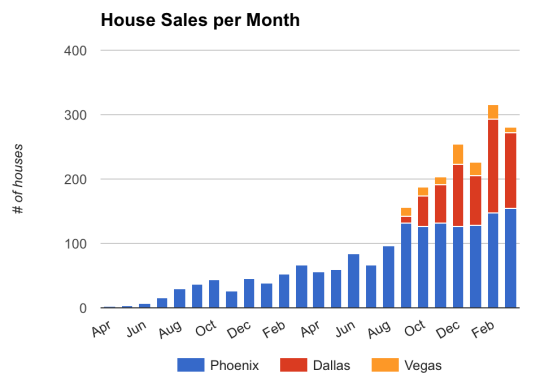
  • Opendoor is now selling ~300 homes per month

    Farhad Manjoo of the New York Times published an article this morning about Opendoor – a startup that I have written about multiple times on this blog – called, The Rise of the Fat Start-Up. (His definition of “fat” is that the startup owns lots of hard assets, which considered atypical in tech.)

    Below are a couple of interesting tidbits from the article:

    • Opendoor has raised over $300 million in equity and over $500 million in debt since inception.
    • Opendoor plans to be in 10 cities by the end of this year.
    • Average commission charged on Opendoor is 7.5%, which is higher than a traditional real estate agent and higher than what was quoted before in the press. The higher % is because of certainty and convenience.
    • Opendoor offers a leaseback option if you’d like to stay in your house for a period of time after you’ve sold it.
    • Their conversion rate (offers made to closings) is about 30%.
    • Other startups are now in the market with similar models, including Offerpad and Knock. Zillow is working with Offerpad on a pilot. Someone is starting to feel threatened.

    The article also quotes a blogger and real estate analyst named Mike Delprete. Heads-up: His blog is called “Adventures in Real Estate Tech.” I’m sure this will appeal to many of you. I obviously just subscribed.

    Mike dug into MLS records in order to figure out Opendoor’s transaction volumes, since the company is not releasing this information. Here’s what he found (the chart is up to March 2017):

    The trend line is certainly moving in the right direction. But Mike also believes that Opendoor is only netting around $8,320 in profit per home and that much of it is driven by appreciation. There’s also substantial risk in owning so many homes – each one is usually held for a few months.

    But you can be sure they’re thinking well beyond where they are at today. Expect many more updates on this blog.