Daily insights for city builders, delivered every morning at 6 AM ET. I’m Brandon Donnelly — a Toronto-based real estate developer and founder of Globizen. I’ve been writing here since 2013.

Tag: real estate development

  • The future of the architecture profession

    image

    Yesterday I had a really interesting conversation with somebody about the future of the architecture profession. We spoke about how Joshua Prince-Ramus of REX believes that architects have marginalized themselves as a result of shying away from liability. We spoke about how architecture schools need to teach more about about business and making money. And we spoke about why I decided to never practice architecture and instead become a developer.

    At the end of it all, he came to more or less the same conclusion that I did in this post. He felt that as more and more trained architects choose to become developers, that maybe the future will be firms that vertically integrate both architecture and real estate development. For those of you not in the building industry, this is fairly uncommon practice today. Typically, developers retain the services of an architect to design their buildings and do not handle this in-house.

    But there are firms that do. DDG out of New York and San Francisco is one example. Although there’s a subtlety worth mentioning. According to their website, they say that they often act as the “design architect” for their projects. This means that there would still need to be an “architect of record”, whose name would appear on the building permit and who would ultimately end up shouldering the liability for the design.

    You see, a bifurcation has happened even within the architecture profession itself. You have “design architects” who may or may not be licensed, but do a lot of the fun design work upfront for a project. And you have production oriented firms that actually produce the technical drawings needed for construction. The fees are generally higher in the latter case (unless maybe you’re a starchitect), but the work is less creative.

    The emergence of these two streams of architecture is precisely what Joshua Prince-Ramus is talking about when he says that architects have marginalized themselves by shying away from liability. He believes that architects are reducing themselves to designers and stylists, from master builders. So his argument is that architects need to reinsert themselves into more of the building process.

    What I’ve been suggesting is that architects should become owners. They should insert themselves into the development process. And the reason I feel this way is because I worry about the tendency for production and construction to just be farmed out to the lowest bidder. Design and development, on the other hand, are high value creation items.

    Truthfully though, I don’t really know which option is better for the profession in terms of relevance. I know which one I’m most interested in, but that could just be a personal preference. What do you think?

    Image: The Red List
  • Should I have just become an architect?

    I say “just”, not to belittle the profession in any way, but rather because that was my original plan–to become an architect. That’s what I was studying to become and I was loving the ride.

    But along the way, as I’ve mentioned before, I became somewhat disillusioned with the profession and I became a real estate developer. It’s not that I didn’t and don’t love architecture. I still do. It’s that I felt the profession had been marginalized. Architects were no longer the “master builders.”

    But I’m often asked by people if I miss architecture and design. And to be perfectly honest, I do sometimes. Every now and then I’ll read something about architecture or I’ll come across an interesting design and think to myself: “Should I have just become an architect?” This morning was one of those moments. I opened up my phone while still in bed and, for whatever reason, I just wanted to look at cool architecture in my inbox.

    But I never regret the deliberate decision I made. Developers are very much entrepreneurs and I believe wholeheartedly in the power of entrepreneurship to disrupt, improve, and move the world forward. I just love architecture. And that will never change.

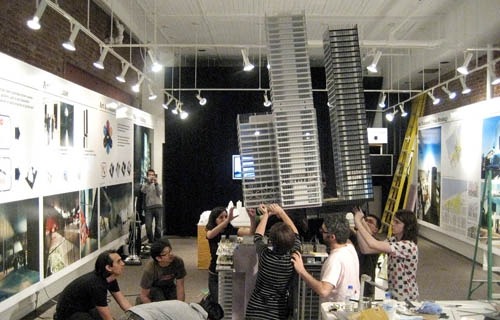
    Image: REX

  • Studying to become a real estate developer

    Earlier this week I received a message from an undergraduate architecture student interested in moving into real estate development after school. That was his 10 year plan. And he had clearly read my blog post, “Transitioning from architecture to development.”

    In his message, he asked me if there were any books I would recommend he read to improve his real estate and finance knowledge, and, if I could have a “redo”, if I would still do a M.Arch (Master of Architecture) or just go straight to the MBA?

    After responding to his message, I thought: “This would make a good blog post, as well as an opportunity to talk about the current state of real estate education in Canada.” So here goes.

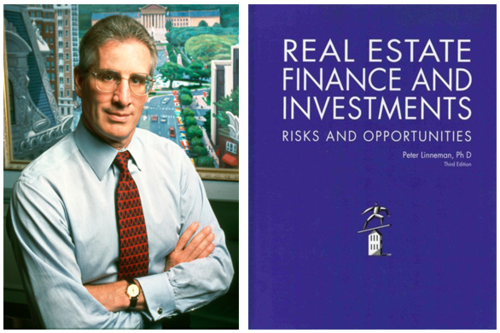
    If you’re looking for a good real estate book to get you started, I recommend checking out “Real Estate Finance and Investments: Risks and Opportunities" by Peter Linneman. It’s a much easier read and way more casual compared to most textbooks. When I was in grad school, people referred to this book as the "blue bible.” The cover on the previous edition was less purple and more blue. Unfortunately, he has also changed his glasses since the photo below.

    image

    To his second question, if I were to do it all over again, I wouldn’t change a thing about my education. I loved architecture school and combining it with business school classes and a real estate concentration was the best thing for me. I never wanted to be just a “numbers guy”, but I also never wanted to be a fanciful artist type who didn’t know how to build and manage a pro forma.

    Now, let’s talk about real estate education in Canada.

    I think we’re way behind. In the US, you can do a Master of Science in Real Estate Development, a Master of Real Estate Development, and all sorts of other real estate degrees. In Canada, you’re probably doing a MBA with a few elective real estate classes. Real estate is the largest asset class in the world. Does that not justify a dedicated degree?

    Part of the reason for this, I think, is because real estate development is still very much an entrepreneur’s business–though it has become more institutionalized in recent years. Because of this, people get into development from a variety of different professions. They just need that entrepreneurial hutzpah. And that’s all fine, but I still think that the profession, the economy and our cities would benefit from University trained developers.

    So if you’re reading this University of Toronto, I think–and I’ve thought this for awhile now–that The John H. Daniels Faculty of Architecture, Landscape and Design and The Rotman School of Management should get together and collectively form a real estate program. Who’s with me?

  • Transitioning from architecture to development

    A few years ago during a class at the Rotman School when we were all introducing ourselves, I had a professor ask why all architects seem to want to become developers. He asked it because there were 3 architects (or at least architect-trained) in the class who were either currently working in development or planning to move into development following their MBA.

    Indeed, it is pretty common for architects to make this jump. So much so that I’m often asked (as recently as last night) about how I made the transition from architecture to development. Given the frequency of this question, I figured it would be worthwhile to turn my response into a blog post—particularly since I did make the decision to write more about what it means to be a developer.

    The first thing I should say is that I’ve never really worked as an architect. I interned at an architecture firm one summer, but that’s about it. I’m not licensed as an architect and I have no plans of ever becoming licensed. Therefore, I’m technically not allowed to call myself one, which is why I often say “architect-trained.”

    However, this doesn’t mean that I didn’t face a certain degree of stigmatization while I was completing my Master of Architecture and looking for my first real estate job. The real estate community often perceives architects as being impractical, fanciful and generally poor with money and business.

    Part of this, I think, has to the with the fact that design schools often don’t like to talk about making money. It’s taboo. Design is supposed to be something purer and grander than money. Maybe that’s why it’s not uncommon for even the most famous of architects—such as Louis Kahn—to die deeply in debt.

    But I think this perspective is bullshit. Which is why I spent every single one of my electives during my Master of Architecture over at the business school taking finance, economics and real estate classes. I was determined to be just as good as the MBAs at “the numbers.” And even became a teaching assistant for a real estate economics class.

    So my first piece of advice to architects looking to make the transition to development is that you need to overcome the perception that you don’t understand money and business. You need to demonstrate that you can crunch numbers and that you know how to make money for investors.

    This could mean getting an MBA or Master of Real Estate Development, taking extracurricular classes, starting a blog, or just convincing somebody in real estate to give you a chance so that you have it on your resume. Whatever it is, you need to reposition your personal brand so that it no longer says architect.

    This is important because, from my experience, if a real estate company is used to hiring people with business degrees, then it’s going to be tough to get them to pay attention to you and your architecture degree. They just don’t understand the value that you might be able to bring to the organization (and you do bring value).

    My second piece of advice is to find developers who have an architecture background and specifically reach out to them. There are lots of us. They’ll be sympathetic to your background and will probably give you more time of day. But you’ll need to come prepared with the right tool chest. Demonstrate to them that you have the skills necessary to be a developer (see above).

    As I’ve said before, developers are, in many ways, a jack of all trades. So the more you can master all of those trades, the more likely you’ll get some hiring manager to take a risk on you. But when you do finally make that transition, I believe that you’ll be better for it.

    Not only because architects understand the building process, but because architects are trained to have an inherent sense of responsibility for the built environment. We get upset when building are ugly and public spaces suck. But we also know what will make them better.

    The way I see it, by becoming a developer you’re really just learning how to execute on your ideas. It’s one thing to know what makes a building beautiful, but it’s another thing to go out and raise the capital and build the damn thing.

    So I don’t regret any of my architecture degrees. I got so much out of them. And I firmly believe that design is only going to become more important. Designers, after all, are the new rock stars. We just need a few more business and entrepreneurship classes in architecture schools.

  • Paul Reichmann, dead at 83

    This past Friday, Paul Reichmann passed away in Toronto. He was 83. For those in the real estate business, Paul was a legend. He was the developer behind landmark office projects such as First Canadian Place in Toronto, World Financial Center in New York and Canary Wharf in London.

    He was the man behind Olympia & York, which by the late 80s was one of the largest real estate development firms in the world, making the Reichmann family the 7th richest family in the world. Their net worth reached $12.8 billion at its peak. In 1990 they owned 8% of New York’s commercial office space. This was more than twice as much as the Rockefellers.

    But what makes the Reichmann story so fascinating is the beginning and end of it.

    Paul was born in Vienna, but his family fled the Nazis and came to Toronto like many others at the time. He and his brothers setup a tiling company called Olympia Tile and its this business that eventually led them into real estate. 

    Paul became known for taking on huge risks. He believed firmly in the principles of risk and reward.

    I remember when I was at Penn hearing stories about Olympia & York from the Dean at the time, Gary Hack (a Canadian). He used to tell us about the phenomenal amounts of leverage that O&Y used to take on in order to scale.

    But ultimately it was this leverage that brought them down. In 1992, Olympia & York went bankrupt and the family was left with a net worth of less than $100 million. Still a great sum of money, but nowhere near the $12.8 billion they once had. The New York Times called it “one of the most astonishing financial collapses in history.”

    But in many ways, this is not an uncommon developer story. Real estate development is risky. And Paul did eventually rebuild. Not to where he was before, but he did come back. He became Chairman of Canary Wharf in London and went on to develop the tallest tower in Latin America.

    Last week Toronto lost one of its most prolific real estate minds. Paul was also largely part of an era that no longer exists. The real estate business in the 80s wasn’t as institutionalized as it is today. It was filled with larger than life individuals, such as Paul, taking on huge personal risks. It must have been an exciting time to be in real estate.

    Thanks for everything you’ve done for Toronto, Paul.

  • DUKE

    As many of you know, I recently made the move to a new real estate development firm here in the city called TAS. Well, actually, it was a return for me. I interned here one summer while I was in grad school at Penn. I was always a big fan of the company’s philosophy around city building and so it felt then, as it does now, as a really good fit for me.

    As a returning member of the TAS team, I’m excited to announce the launch of our latest condo project called DUKE. It’s located in the Junction (near Dundas & Keele), which is arguably one of the hottest up-and-coming neighbourhoods in Toronto. And, it’s a stone’s throw away from Playa Cabana Cantina, which just so happens to be my favourite Mexican place in the city (although sometimes I think it could be Grand Electric).

    In all seriousness though, and with as much bias aside as possible, I think it’s a fantastic project. I obviously wasn’t around for its formative years, but I’m thrilled to be a part of it now. If you’ve read any of my blog posts over at Dirt (thedirt.co), you’ll know that I’m a huge supporter of more midrise development in Toronto. It’s a European scale of buildings that I think we’re largely missing in our fantastic city.

    So if you’re in the Junction area, I would encourage you to pop into our sales office and say hello to the team. We’re located at 2800 Dundas Street West. The tile as you walk in is awesome (I can say this because I didn’t choose it) and I think you’ll find that the design of the place is very much of the Junction. Much of the materials, fixtures and labour that went into the sales office were sourced locally from the hood.

    If you do go check it out, let me know what you think by commenting below, tweeting me, or tweeting @tasdesignbuild.