Daily insights for city builders, delivered every morning at 6 AM ET. I’m Brandon Donnelly — a Toronto-based real estate developer and founder of Globizen. I’ve been writing here since 2013.

Tag: real estate development

  • Locations of the 100 tallest skyscrapers in the world

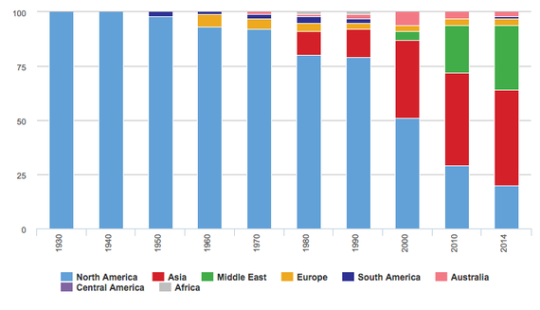
    This morning I stumbled upon the following chart (via The Atlantic) summarizing the locations of the 100 tallest skyscrapers in the world.

    As you can see North America dominated tall buildings for most of the 20th century. But then in the 1980s, Asia starting building. Then in the 2000s, the Middle East started building. And today, Asia and the Middle East are where the world’s “supertalls” sit.

    What’s fascinating about this shift is that in many cases, there’s absolutely no physical or economic need to developing so tall. Yes, rising land values can drive up the height of a building, but not to the extent that we’ve been seeing.

    Instead, building “the tallest building in the world” is more symbolic than anything else. It’s about ego. It’s about asserting your position on the global stage. And so while this is a chart about tall buildings, it’s actually a pretty telling chart about global ambitions.

  • I would make a terrible politician

    Ever since I was a little kid, I have thought that I would one day get into politics. 

    A lot of it has to do with me wanting to affect positive change, which is also one of the reasons I love real estate development (and one of the reasons I write this blog). Developers might have a bad rap in some circles, but I view it as a mechanism for positive change in the built environment.

    However, I have also felt that politics is something that’s better to do when you have grey hair and you don’t actually need the money to live. That way people take you more seriously and you can, hopefully, just do what you feel is right as opposed to playing the political game.

    But more and more I find myself thinking: Brandon, you would make a terrible politician.

    I don’t want to play games. I don’t want to have to think about which stance will win me the most votes. And I don’t want to have to dance around questions so I can avoid upsetting certain constituents. I’d rather be clear and decisive about what I think is the right thing to do.

    But that doesn’t always work so well in politics. So I think I’ll just stick to building things and writing this daily blog.

  • Learning to build real estate financial models

    One of the things I did when I was in graduate school studying real estate and early on in my career was take a bunch of ARGUS and Excel modeling classes. Some of them I took through the University of Pennsylvania. Some of them I took through work. And some of them I just took on my own.

    Regardless, I always found them incredibly helpful. Because at the end of the day, you’re not just learning the software; you’re also learning the real estate business. You can’t build a financial model if you don’t understand the business. And I mean really understand it.

    So if you’re looking to get into real estate development or you just want to brush up on your skills, I would encourage you to consider taking a financial modeling course. I plan to do a refresher later this year.

    The last one I completed was through a company called REFM (Real Estate Financial Modeling). The founder is a Penn (Wharton) alum – so it must be good, right? 😉 There are a lot of self-study options if you just want to take them online from home and all of them include prebuilt Excel models that you can then use (and customize) going forward.

    Click here to check out REFM.

  • A new chapter

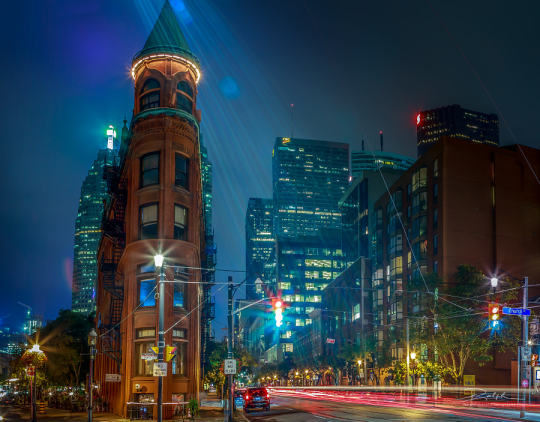
    Photograph St. Lawrence by Ralph Sobanski on 500px

    St. Lawrence by Ralph Sobanski on 500px

    I have an announcement to make on Architect This City today.

    Next week I’m joining the development team at CAPREIT (TSE: CAR.UN) here in Toronto. CAPREIT is one of Canada’s largest residential landlords. They are a growth-oriented real estate investment trust with over 41,839 residential units in major urban centers across both Canada and Ireland.

    They also happen to be headquartered in the St. Lawrence Market area, which means I now live and work in the same neighborhood. As we discussed here, location matters a lot.

    So here’s to a new chapter. I’m looking forward to diving into the multi-family business. Change is good.

  • Dublin 2007

    image

    In 2007, I spent the summer working in Dublin, Ireland for a boutique real estate consulting firm called Urban Capital. (For those of you who are from Toronto and know the industry, there’s no connection between the Urban Capital in Dublin and the Urban Capital in Toronto.)

    At the time, they were working with a number of government agencies on the development of masterplanned communities, as well as on specific development projects. Real estate was booming and everyone wanted to be a part of it – including the band U2.

    But as you all know, the following year (2008) wasn’t kind to the real estate industry and, in particular, to Ireland. That year the country fell into recession for the first time since the 1980s and became labeled as one of the “PIGS.”

    I really wish I had started this blog by that point because it would be interesting to look back today on my posts from that summer and see how I was thinking about the Dublin real estate market. I remember having many Guinness-fueled discussions about whether the bull market could continue.

    In any event, the Irish economy is coming back.

    This year GDP is expected to grow by 5.4%, which would make it the fastest growing economy in Europe. National debt is also falling. At the end of 2013 it stood at €215 billion or about 123% of GDP. And at the end of 2014 it had fallen to €203 billion or about 109% of GDP. The national debt is expected to fall below 100% of GDP by 2018.

    At the same time, Ireland also got permission to pay off its bailout loans early. That’s a good sign.

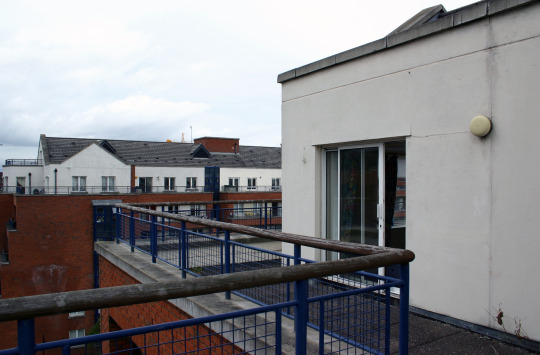
    I’m thinking and reading about all of this today because I was looking through my photo collection this morning and I stumbled upon a folder titled “Dublin 2007.” The photo at the top of this post was the terrace that I had outside of my apartment in the Docklands area. I don’t think I used it once that summer. 

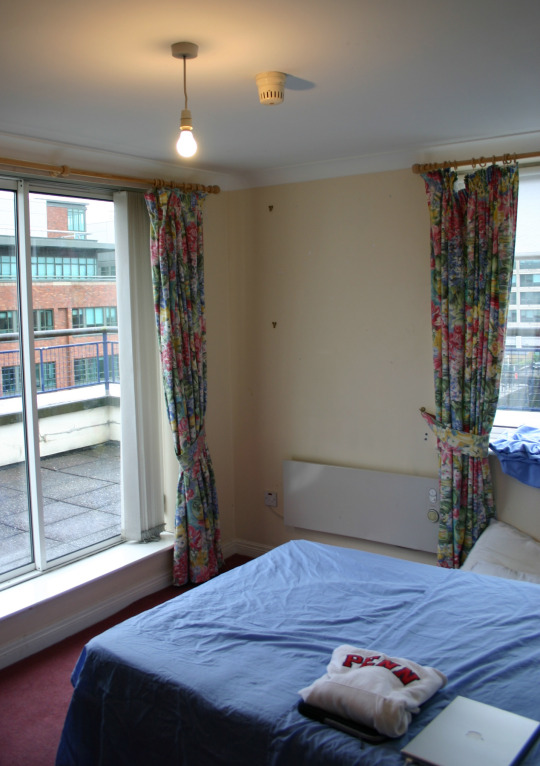
    And here’s a photo of my bedroom. It must have been the curtains that sold me on the apartment.

    image

    I had a great time in Dublin that summer. It’s a fun and young city and I remember being incredibly impressed by the quality of city building that was going on. I’m sure that wasn’t lost in the Great Recession.

  • First crowdfunded real estate project opens in D.C.

    Want further evidence that technology and the internet are going to dramatically transform many “non-tech” industries such as real estate? 

    Take a look at 1351 H Street NE in Washington D.C (pictured above). It houses a hybrid retail store and restaurant and is probably the first truly crowdfunded real estate project.

    The project was completed using a platform called Fundrise, which I’ve written about before here on Architect This City. Their vision is to completely democratize real estate investment by removing middlepeople and outdated regulations that restrict who and how people can invest in real estate.

    To accomplish this, the founders of Fundrise went out in 2011 and bought the building located at 1351 H Street NE for $825,000. The goal was for it to act as their proof of concept. 

    They then spent a significant amount of time and money figuring out how to make it legal for small and local investors to participate in the project (as opposed to just accredited investors). It was ultimately done through a “local public offering” filed with the SEC.

    So how does it work?

    In the case of 1351 H Street NE, they first went out to the local community and asked them what they wanted to see. That’s how they ended up with a unique retail store / restaurant. It’s what the community wanted.

    Once this was established, they went out and issued 3,250 shares and crowdfunded $325,000 from 175 local investors. This was for an ownership share in both the building and the future business. The average investment amount was $2,000, but people were able to invest as little as $100.

    This is an incredible accomplishment. It takes real estate investment and development to a local level and really empowers small entrepreneurs to start businesses that may have been previously unfundable by traditional sources.

    I don’t know what you think, but I think this is the beginning of a powerful transformation. Many of the structures that are currently in place were formed at a time when it wouldn’t have been practical to crowdsource ideas and crowdfund money. But now that is very possible. It was just done.

    Image: Maketto 

  • Imagining the way things could be

    Photograph Old in new by Andrew Johnston on 500px

    Old in new by Andrew Johnston on 500px

    I was out for lunch with a colleague of mine yesterday afternoon and he said to me: “Brandon, I’m really surprised that you’re so interested in technology. It just seems so different compared to real estate and architecture.”

    And I’ve certainly heard that exact same comment from a number of people before. But I don’t see it that way and here are a few reasons why.

    The common thread for me between architecture, real estate development, and technology is that in all of these cases it is about imagining the way things could be in the future and then creating it. It’s about change. It’s about growth. It’s about creation. And I consider myself a builder in practically every sense of the word.

    At the same time, each of these disciplines is about creating engaging spaces for people. Architects and real estate developers do it in the physical world, but many technology products strive to do exactly the same thing in the online world.

    In fact, a couple of years ago I was fascinated to learn that Facebook has and continues to draw inspiration from many of the same books and philosophies that architects, planners, and developers rely on when it comes to creating engaging communities. The medium might be different, but it’s still about people.

    Finally, as I’ve said many times before here on Architect This City, I think that the distinction between tech and non-tech companies and industries is quickly evaporating. Is Airbnb a tech company or a hospitality company? Is Uber a tech company or a taxi company? Pretty soon we’ll be saying that about many other industries.

    Maybe it’s because I’ve always been interested in wading through the overlaps between disciplines, but this is just the way I see it.

  • 3 risks that real estate developers face

    Photograph 'Jailhouse Rock' by Michael Hill on 500px

    ‘Jailhouse Rock’ by Michael Hill on 500px

    Real estate development is a risky game. So much so that some people in the business like to say that their primary function is to mitigate risk. 

    Today I’m going to focus on 3 risks that developers face. There are, of course, others risks, but these are some of the biggest. Some people might also categorize them differently, but this is my simplified way of thinking about it.

    The first risk is approvals. Oftentimes in development you need some sort of special permissions to build what you hope to build. These permissions come in many different forms, but whatever the case may be, there is risk associated with this part of the process. 

    What happens if you’re not able to build what you were hoping to build? Is the project still feasible? Do you have a viable plan B? Did you budget for a redesign? Have you now overpaid for the land? There’s a lot of uncertainty in this phase and uncertainty generally means risk.

    Assuming you’re able to obtain your entitlements (this is more of an American term), the next big risk factor is the market. Can you sell or lease out the space that you’re about to build and can you do it at the rates you were assuming when you acquired the site? 

    In a bull market this isn’t usually a problem. In fact, prices and rents may actually exceed your early assumptions. But what if you bought the site in 2006 and now it’s 2008 and you’re hoping to go to market. Now you might be in trouble. In business school I learned to do sensitivity analyses and stress tests. How far does the market need to drop before I lose my shirt? Those are good exercises to do in development.

    Assuming though that the market holds up and you’re able to pre-sell and/or pre-lease your new project and obtain financing, you would then be ready for construction – another big risk. This is why many developers bring construction in-house. It’s them trying to exercise more control over the process and mitigate risk.

    Construction is messy both literally and figuratively. There’s a lot to consider. 

    Are the drawings that you’re using to buy construction properly coordinated? Because if they’re not, you’re going to pay for it later. Is that Chinese curtain wall a great bargain or are you going to end up on a flight to China when it never shows up on your construction site? Are the trades hungry for work or are they busy? If it’s the latter, you’re going to get higher prices. And oftentimes there’s nothing you can do about it. You’re just buying construction at the wrong time.

    But we all know that with risk there’s reward. So if weren’t for all these risks, real estate development just wouldn’t be the same. 

    If you’re in the business, what keeps you up at night? Did I miss something? Let us all know in the comment section below.

  • Project Profile: Fashion House in Toronto by CORE Architects

    image

    As Architect This City continues to grow in readership, I’m starting to get pitched more and more. People email me with something they want promoted and they try and convince me to write about it. Everybody is looking for distribution. I get it.

    I have no qualms about people and companies reaching out. In fact, I welcome the suggestions. But the vast majority of these “pitches” don’t make it onto ATC. 

    When it comes to these sorts of things, I have two simple rules: (1) I have to like it myself. If I don’t think what you’re pitching is interesting or cool, I’m not going to write about it – even if you’re offering up money. (2) I need to be able to be transparent about it. More on this second point in the coming weeks.

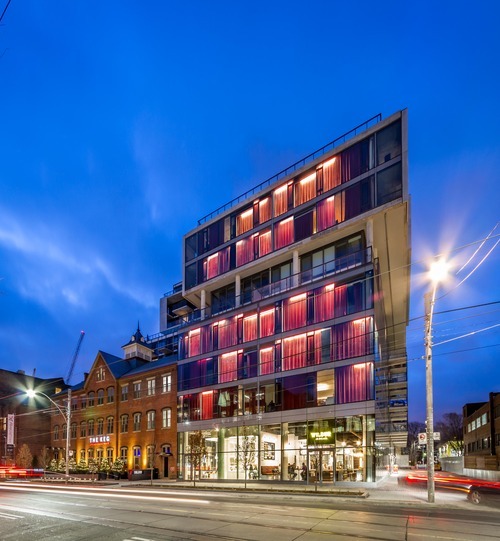
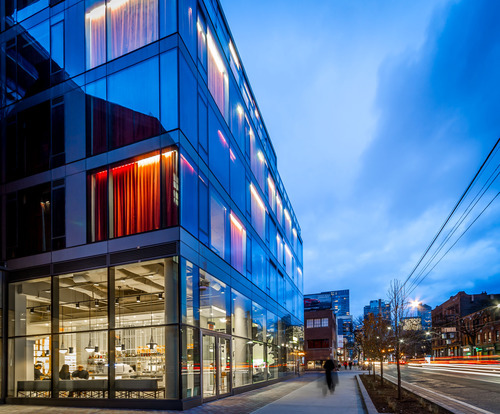
    Recently I was asked to do a post about the Fashion House Condos in Toronto’s King West neighborhood. 

    Here’s why I decided to do it:

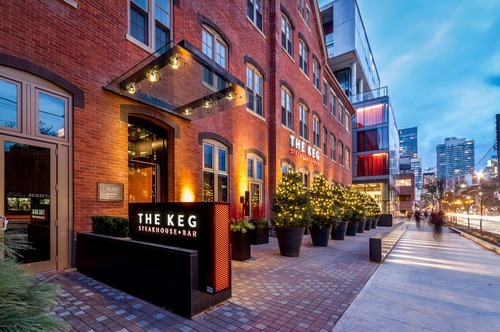
    I like that the existing Silverplate heritage building was preserved and integrated into the base of the condo. It’s now tenanted to The Keg, which has gone into the base of a number of new condo buildings in the city. They’re a successful chain.

    image

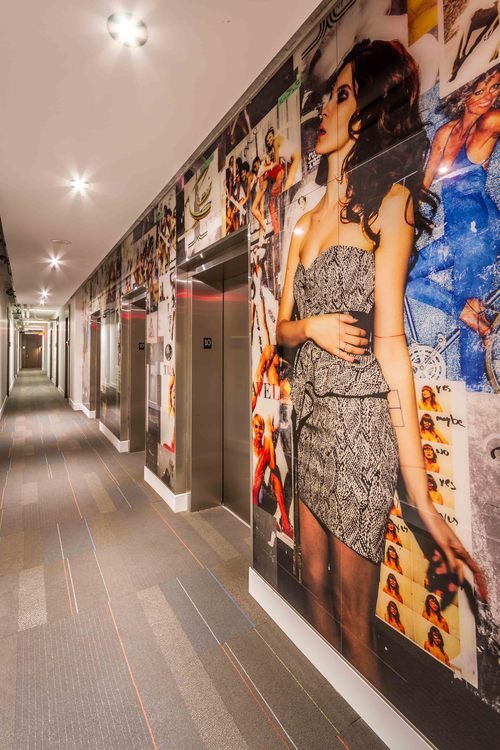
    Each elevator lobby within the building has a unique mural designed by a different fashion designer – most of which are Canadian. The whole Fashion House theme is meant to speak to the area’s history as Toronto’s Garment District.

    image

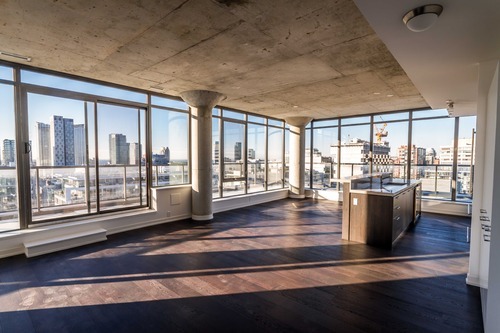
    Many of the residential suites have red curtains (which are white on the interior). They form a “common element” and have to stay in the condo. It gives the building a dramatic and unique feel, though it means you have to be a fan of curtains.

    image

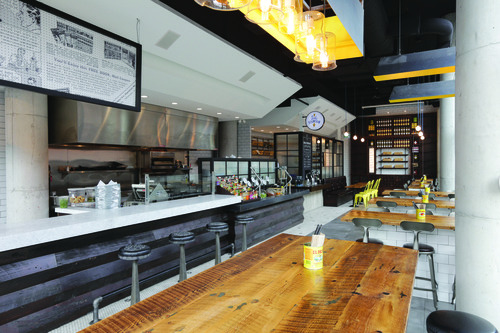
    My good friend designed the Mexican restaurant at the base of the building (Wilbur Mexicana). His firm is called Reflect Architecture.

    It’s also an example of cool startup businesses going into the base of a new development. As far as I know, Wilbur Mexicana is the group’s first venture.

    image

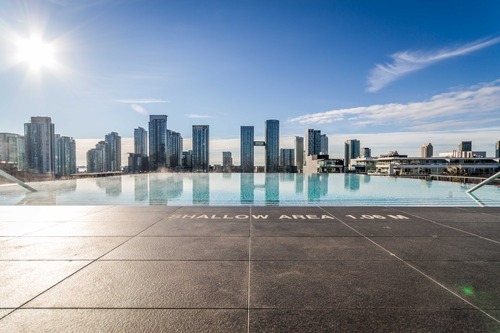
    There’s a rooftop pool that I’m hoping somebody will invite me to this summer.

    imageimage

    And finally, because I think the King West neighborhood is such a great example of urban renewal.

    image

    To end off, here are some stats on the project:

    • Address: 560 King Street West, Toronto
    • Developer: Freed Developments
    • Architect: CORE Architects
    • Project Timeline: 2008-2014
    • Construction Costs: $60M (estimate)
    • Site Area: 4,887 square meters / 52,603 square feet
    • Gross Floor Area: 27,107 square meters / 291,777 square feet
    • Floors: 11 and 12 storeys
    • Building Heights: 33m and 39.7m
    • Residential Suites: 334

    And here are the fashion designers responsible for each elevator lobby mural:

    • 2nd Floor – Beckermans
    • 3rd Floor – Dean Davidson
    • 4th Floor – Jeremy Laing
    • 5th Floor – Adrian Wu
    • 6th Floor – Jenny Bird
    • 7th Floor – Ashtiani
    • 8th Floor – Peach Berserk
    • 9th Floor – Smythe
    • 10th Floor – Jay Godfrey
    • 11th Floor – Bustle
    • Penthouse – Greta Constantine

    What do you think of Fashion House?

    Images: CORE Architects

  • What you should study to become a real estate developer

    One of the most common questions I receive from readers is about what to study in school in order to become a real estate developer. Here’s one of those questions:

    “Thank you so much for your insight into the real estate development process! I was wondering if you could do a post on what educational degrees you think would best prepare someone for a career in real estate development?”

    I’m not surprised that a lot of aspiring real estate developers have this question on their mind. Compared to many other career options, the path to real estate development has traditionally been pretty informal. It’s much less structured compared to other professions such as law or medicine.

    But as the real estate industry continues to institutionalize (transition from rich families to institutions), I’m sure we’ll see recruitment become more structured as well.

    Already the MBA and Master in Real Estate Development (or some other permutation of that degree) have become — for many large real estate organizations — the prerequisite to getting in the door. So if you’re looking for a simple and safe answer, just get one of these degrees.

    To more fully answer this question though, I thought I would just share my own strategy for getting into real estate development. Because at the end of the day, there’s no one way to become a developer. Lots of people start out in other industries, only to fall into real estate later on.

    The way I started was by first identifying the skills that I thought I would need as a real estate developer and that I felt employers would be looking for. And I assembled this list by going on lots of informational coffee meetings with developers to make sure I was headed in the right direction with my assumptions. 

    In the end, this is more or less what I decided I needed to know:

    Planning: An understanding of local planning policies, zoning, and so on. For this one, it’ll help if you can pick a particular place and commit to learning it (which is what I did with Toronto). There are a lot of local particularities that you’ll need to grasp. Real estate is very much a local business.

    Finance & Economics: The ability to understand markets, build models, and crunch numbers just like a banker. That was my goal before I got an MBA. This includes discounted cash flow analyses, net present value calculations, internal rates of return, and so on.

    Sales & Leasing: There are a lot of people who think that this is the best way to start in real estate (particularly on the commercial side). Learn the nitty gritty of leases and deal negotiations and then figure out where you want to be in real estate. Because at the end of the day, development projects are only viable when you have sales and/or signed leases in place.

    Design & Construction: This was the easy one for me because I was coming from an architecture background. I could “read plans” and I didn’t need to convince people that I understood how buildings worked and how they were built. Instead, I needed to convince people that I had all the other skills.

    And I knew this because that was the feedback I received my informational coffee meetings while I was in architecture school. One CEO (of a large publicly traded REIT in the US) told me flat out: “I need to feel comfortable that you can negotiate and that you won’t fuck up the numbers.”

    And that stuck with me. I realized that I had an image to shed.

    To round out my skill set, I decided to specialize in real estate in my first masters and then get an MBA. And given the chance, I would do it the same all over again. But even if you don’t have the opportunity or inclination to do that, there are a lot of other things you can do to shore up your knowledge base.

    I took a number of ARGUS and Excel classes to learn how to build robust real estate models. You might be surprised at how much you end up learning about the real estate business by doing that. I also became involved in organizations like the Urban Land Institute and started going to every real estate panel I could find. And before committing to doing an MBA, I even thought about taking some accounting classes at a local College.

    So my point is that I think you should identify the skills and strengths that you have today and then figure out some way to acquire the missing ones. Go buy a real estate textbook. Take an online class. Go to industry events. Do whatever it takes to round out your skill set so that you can sit in front a prospective employer (developer) and tell them that you’re able to create value for them and their organization across every facet of the development process. That was my goal when I was trying to get in.

    Of course, those aren’t your only options. 

    You could also just work your way up by taking any job with a real estate developer. One of my closest friends did exactly that and today is doing incredibly well with no formal training in real estate or even a related field. You could also just go out and buy your first property and have a go at it. Many great fortunes have been created by doing exactly that.

    Either way, real estate development is an exciting business to be in. It can often be hard to get your foot in the door given the size of most development teams, but if it’s truly what you want to do and you work on acquiring the skills, I think you’ll eventually find your path.