Daily insights for city builders, delivered every morning at 6 AM ET. I’m Brandon Donnelly — a Toronto-based real estate developer and founder of Globizen. I’ve been writing here since 2013.

Tag: real estate developer

  • Flux launches Austin Preview to help streamline development

    image

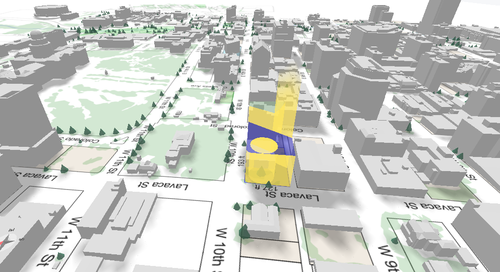
    I recently wrote about a startup called Flux.io in a post titled: How technology could completely change the real estate development industry. Given that I received a lot of positive feedback on this post, I thought I would let you all know that, as of today, you can now test out the product yourself for free online.

    Here are a few snippets from today’s announcement:

    At Flux we believe that data, analytics, and visualization can help bridge understanding between stakeholders and result in smarter growth and faster development and faster building. The Austin Preview of Flux Metro is an important first step in this direction.

    Flux Metro aggregates geographic data from public and private sources to build a three dimensional visualization, starting with downtown Austin. Alongside a rendering of the existing landscape, Metro shows what can be built on a lot or parcel under the zoning code. It considers more than 10,000 code sections for land use guidelines, height limits, floor area limits, setbacks, and view access rights as well as the locations of protected trees and daylight shadows to project what can be built and how it fits into the existing environment.

    We believe that everybody should be able to understand what a zoning code means for their city and that visual representations are the best way to create a shared understanding.

    Click here to signup and give it a try. It is based on Austin’s development code and on the same building site that was shown in the video I shared in my post.

    Image: Flux

  • Fun Friday: Skateboarding city tours (Brisbane & Porto Alegre)

    Some of you told me that yesterday’s post on careers was actually quite sad. That it came across as if I were advocating for people, not to do what they love, but to instead do what makes them the most money. But that was not my intention. 

    There were a lot of reasons why I got into real estate development, and perhaps I oversimplified yesterday. But a lot of it actually came down to the fact that I’m passionate about building great cities (hence this blog).

    And I thought it was ultimately unfair that some investment-banker-turned-developer, who doesn’t really care about cities, might end up having more say over the built environment than me, the architect. 

    So I decided to sacrifice designing individual buildings in the hope that I’d one day be able to give back to cities on a much larger scale. And I still hope to be able to do that.

    In any case, to end the week on a more fun note, I thought I would do a post called Fun Friday and link to 2 city tours: one of Brisbane, Australia, and one of Porto Alegre, Brazil. 

    But these aren’t just any city tours. They are by local skateboarders showing you their city. I posted one for Toronto about 8 months ago, so some of you might be familiar with the series.

    I love how differently skateboarders look at the urban environment. I hope you can appreciate it as well. 

    Brisbane, Australia:

    [youtube https://www.youtube.com/watch?v=KEFQLjnhKT4?rel=0]

    Porto Alegre, Brazil:

    [youtube https://www.youtube.com/watch?v=taF71igPZY0?rel=0]

  • Why I didn’t go work for my favorite architect

    As a result of writing Architect This City, I’m fortunate enough to receive a lot of emails from random people. But I’m always open to meeting new people, and so I enjoy this very much.

    One of the most common questions I get is from architects, and students of architecture, who want to know about transitioning over to real estate development. (Posts related to this topic also happen to be some of my most popular.)

    So today I thought I would share a story with all of you about the one decision that ultimately lead me into real estate development.

    When I started graduate architecture school, I already had inklings that I was going to get into development. That’s one of the main reasons why I went to Penn. I knew that I could concentrate in real estate and I knew that I could take courses over at the business school. And that’s exactly what I wanted to do.

    But during my first year, I still wasn’t exactly sure how I was going to reconcile this dual interest. In fact, I remember feeling really conflicted. I loved architecture and design, but I also really enjoyed business and entrepreneurship. I was also interested in making money, and architecture isn’t often the best place to do that.

    So for my first summer internship, I decided to apply to both architecture firms and to real estate developers. I was fortunate enough to be offered jobs in both. And on the architecture side, I actually got my top choice, which was the Bjarke Ingels Group in Copenhagen. To this day, Bjarke remains one of my favorite practicing architects.

    But when I looked at the numbers, I quickly realized that real estate developers were prepared to pay me about 3x more than any architect would and that, if I were going to take an architecture job, I was going to end up going more in debt just to live throughout the summer.

    While internships are often career loss leaders, I took this as a sign of things to come. This was a 10 or 20 year decision in my mind. And even though I loved architecture, I figured I would quickly fall out of love with it if I couldn’t pay my bills or live the lifestyle that I wanted.

    So I accepted a real estate job and I moved to Dublin, Ireland for the summer to work for a small consultancy called Urban Capital (no relationship to the Toronto firm of the same name). And I haven’t looked back since.

    This may not have been the right decision for some of you, but it was for me. So if you’re at a crossroads, my advice is always to think about where you’d ideally like to be in 10 or 20 years. Because once you establish that, it’ll become much easier to make that decision today.

  • DSCRBD: Curating interesting minds through short video

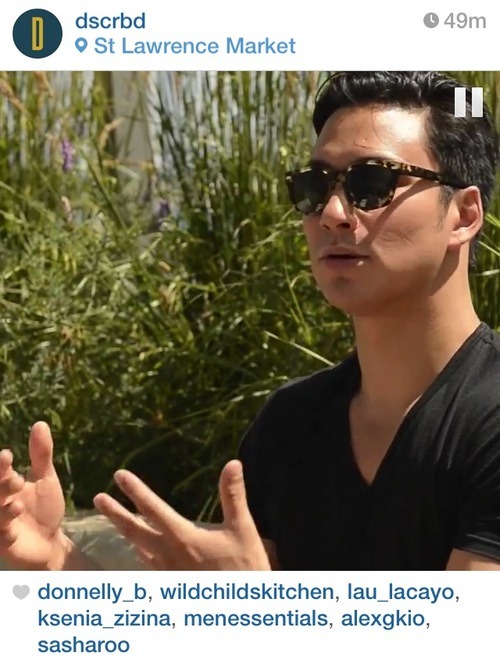
    A good friend of mine recently launched a new project called DSCRBD (pronounced ‘described’). The goal is to “curate interesting minds” through short social video clips. Think Humans of New York but only creative types and only short videos.

    I think it’s a great idea. And I was fortunate enough to be one of the first test subjects. It was conducted as an interview between he and I, and we spoke for probably about 45 minutes on the sun deck of my building.

    He then took that entire interview and distilled it down to only a few seconds, extracting what he found most interesting. Perfect for social media consumption.

    image

    Click the image above for my video. What I’m talking about is my approach to architecture, and how I ended up not becoming an architect, but instead becoming a real estate developer.

    I think he’s on to something here and I would love to see it develop further. He’s using the right mediums and format to get the message out in today’s noisy social world. But there’s also no reason that it couldn’t grow to include more content or simply feed to other content, such as what he did with Architect This City.

    If you’re somebody that you think he should profile or know of someone that would be a good fit, drop him a line at hello@dscrbd.com.

  • Will real estate developers open up, too?

    A few months ago I read a book by venture capitalist Ben Horowitz called “The Hard Thing About Hard Things.“ It was a great read and I recommend it to anyone who currently or plans to one day manage and lead people. But on a side to that, one of the things I found really interesting is the shift he talks about in the venture capitalist business.

    Over the span of a decade, venture capitalists went from being ivory tower professionals to incredibly open and transparent. And they did that primarily through blogging. Just yesterday, I saw somebody tweet out that the key to becoming a venture capitalist in 1994 was to get an MBA. Today, it’s to start a blog.

    The reason I find that interesting is because I predict that the same transformation is going to happen in the real estate development business. Today, most developers are pretty opaque. The people and personalities behind the projects are still generally concealed (save for a few developers) and my sense is that there’s still very much a fear of exposing and sharing too much.

    But the lesson to be learned from the VC business is that blogs have become one of, if not their most important customer acquisition tool. I read somewhere that entrepreneurs—which are the customers of VCs—are most heavily influenced by blogs over any other medium. That is how they decide who they will allow to invest in their business.

    Which is why I think it’s only a matter of time before the same sort of dynamic plays out in the real estate business. In fact, one of the most common questions I get from readers of ATC is about the reputation of developers and builders. Customers—before they decide who they will allow to build their future home—not surprisingly want to know something about the developer.

    So if you’re a developer looking to sell more homes or lease more space,   I suggest giving blogging a try. It’s hard work, but I think you’ll be surprised at how effective a tool it can be.

  • Should I have just become an architect?

    I say “just”, not to belittle the profession in any way, but rather because that was my original plan–to become an architect. That’s what I was studying to become and I was loving the ride.

    But along the way, as I’ve mentioned before, I became somewhat disillusioned with the profession and I became a real estate developer. It’s not that I didn’t and don’t love architecture. I still do. It’s that I felt the profession had been marginalized. Architects were no longer the “master builders.”

    But I’m often asked by people if I miss architecture and design. And to be perfectly honest, I do sometimes. Every now and then I’ll read something about architecture or I’ll come across an interesting design and think to myself: “Should I have just become an architect?” This morning was one of those moments. I opened up my phone while still in bed and, for whatever reason, I just wanted to look at cool architecture in my inbox.

    But I never regret the deliberate decision I made. Developers are very much entrepreneurs and I believe wholeheartedly in the power of entrepreneurship to disrupt, improve, and move the world forward. I just love architecture. And that will never change.

    Image: REX

  • Where the ultra rich buy real estate

    image

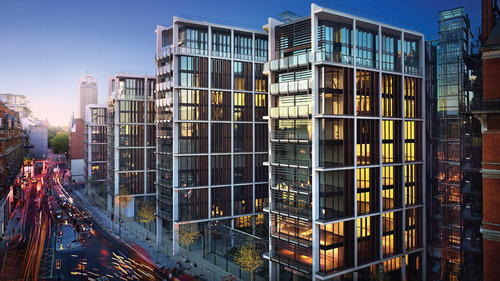
    Yesterday evening I was reading the Spring Summer Candy GPS Report put out by London-based property developer Candy & Candy. If you’ve never heard of Candy & Candy, then I guess you haven’t been in the market for a £60m apartment. Candy & Candy are the developers behind One Hyde Park in London, which is said to be the world’s most expensive residential development.

    But what is interesting about a project like One Hyde Park is that it’s really only possible in a global city, like London, that attracts a massive amount of foreign investment. A project like One Hyde Park is a possibility of globalization, not a result of local employment numbers.

    Which is why if you take a look at the Candy GPS report, you’ll see that their interest is in tracking the habits of ultra-high-net-worth-individuals (UHNWIs)–those with wealth exceeding US$30 million. Last year, the world was estimated to contain almost 200,000 of them, with a combined wealth of almost $28 trillion. This number is expected to rise to $40 trillion by 2020.

    Now, you may not be in the market for the most expensive apartment in the world, but I thought it would be interesting to talk about where this money is coming from and which cities it’s going into–at least when it comes to real estate.

    The top 3 countries for UHNWIs investing in real estate are Germany, Japan and the United States, respectively. The US has the most ultra rich people, but they have a lower propensity to invest in real estate compared to Germany. Nonetheless, these are the countries that dominate.

    But who are the recipients of this money?

    Well, first of all, it’s going into cities. But it’s flowing into a small number of them. Cities representing 5% of the world’s population are said to attract over 50% of the real estate investments made by the richest people on the plant. 

    According to Candy GPS, the top cities are Hong Kong, London, Moscow, Singapore and New York, respectively. Hong Kong sits at the top, largely because of money flowing in from mainland China, but London is said to have the broadest investment reach.

    So there you have it, a quick overview of where the ultra rich buy real estate.

  • Studying to become a real estate developer

    Earlier this week I received a message from an undergraduate architecture student interested in moving into real estate development after school. That was his 10 year plan. And he had clearly read my blog post, “Transitioning from architecture to development.”

    In his message, he asked me if there were any books I would recommend he read to improve his real estate and finance knowledge, and, if I could have a “redo”, if I would still do a M.Arch (Master of Architecture) or just go straight to the MBA?

    After responding to his message, I thought: “This would make a good blog post, as well as an opportunity to talk about the current state of real estate education in Canada.” So here goes.

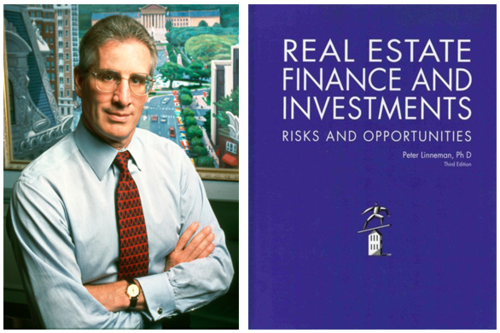
    If you’re looking for a good real estate book to get you started, I recommend checking out “Real Estate Finance and Investments: Risks and Opportunities" by Peter Linneman. It’s a much easier read and way more casual compared to most textbooks. When I was in grad school, people referred to this book as the "blue bible.” The cover on the previous edition was less purple and more blue. Unfortunately, he has also changed his glasses since the photo below.

    image

    To his second question, if I were to do it all over again, I wouldn’t change a thing about my education. I loved architecture school and combining it with business school classes and a real estate concentration was the best thing for me. I never wanted to be just a “numbers guy”, but I also never wanted to be a fanciful artist type who didn’t know how to build and manage a pro forma.

    Now, let’s talk about real estate education in Canada.

    I think we’re way behind. In the US, you can do a Master of Science in Real Estate Development, a Master of Real Estate Development, and all sorts of other real estate degrees. In Canada, you’re probably doing a MBA with a few elective real estate classes. Real estate is the largest asset class in the world. Does that not justify a dedicated degree?

    Part of the reason for this, I think, is because real estate development is still very much an entrepreneur’s business–though it has become more institutionalized in recent years. Because of this, people get into development from a variety of different professions. They just need that entrepreneurial hutzpah. And that’s all fine, but I still think that the profession, the economy and our cities would benefit from University trained developers.

    So if you’re reading this University of Toronto, I think–and I’ve thought this for awhile now–that The John H. Daniels Faculty of Architecture, Landscape and Design and The Rotman School of Management should get together and collectively form a real estate program. Who’s with me?

  • Risk-oblivious, risk-aware and risk-adverse

    image

    Yesterday when I was researching for this post on Lean Urbanism, I came across a really interesting way of describing and classifying the groups typically involved in the emergence of a new neighborhood.

    It came from New Urbanist Andres Duany, who explained the process, here, using 3 groups of people: those that are risk-oblivious; those that are risk-aware; and those that are risk-adverse

    Risk-oblivious are people like the artist, who go into a crappy neighborhood and magically make it hip. They’re the ones that give the neighborhood its character. They’re the first catalyst.

    Risk-aware are people like real estate developers. They know risks exist, but they believe they can manage it, as well as profit from taking it on. They take the neighborhood to the next level.

    And finally, risk-adverse are the boring people who only come to a neighborhood once it’s absolutely clear that it’s a safe investment. Duany typecasts this group as the “dentist from New Jersey.” There’s much less value creation at this stage.

    Most of you have probably heard of this cycle of urban renewal, but I thought it was really interesting to frame it in terms of risk tolerance.

  • Developer Dirt: Site selection and acquisition

    I’ve already spoken about why I became a developer and offered some insights into how you might be able to transition from architecture into development. So now I’d like to start focusing more on the day-to-day of what it means to be a real estate developer.

    And since I seem to be getting a lot of questions from readers on career and development related topics, I’ve decided that I’m going to turn these posts into a regular blog series. Right now the working name is “Developer Dirt”, but if you have a better name I’m all ears (let me know in the comments below).

    So let’s start with step 1.

    You’re ready to develop a new project and you’re now in the market for some land (also known as a site). It could be a greenfield site (meaning it’s virgin land that hasn’t yet been tainted by humans) or, on the other end of the spectrum, it could a brownfield site (meaning it probably once housed industry, it’s contaminated as all hell, and you’re going to need to clean that puppy up before you build).

    Without going into further detail about all the different kinds of sites you could potentially buy (which is a post in itself), here are 3 high level things to keep in mind as you move forward.

    Land is the residual claimant

    What this means is that you want to start with your top line. You want to start with revenue. What can I build on this site (use and square feet) and how much can I ultimately sell or lease that space for?

    Let’s say, for example, that you think you can build 100,000 square feet. If it were office space, you’d want to know that rents in your area are $30 per square feet and that that’s going to render you $3M a year in rental income. If it were residential condos, you’d want to know that the market is absorbing $500 per square foot and that if you sold 100,000 square feet worth of condo, that your revenue would be $50M. But remember this is top line.

    Once you know your top line, you then need to figure out what it’s going to cost to bring you that revenue stream. In other words, what are the hard costs (construction costs), the soft costs (consultant fees and other non-construction costs), the return my investors are going to demand, the money I need to keep the lights on in my business, and so on.

    Hopefully, once you’ve calculated all of these numbers, you’ll have some money left over from that original top line number. That residual money is what you can reasonably afford to pay for the land, which is why it’s often referred to as the residual claimant. But even though it comes last in this example, it comes first in development. If you overpay at the onset, it’ll be an uphill battle the rest of the way.

    You often don’t know what you can build

    But here’s the rub: You often don’t know exactly what you can build. When developers buy land they often consider what they can build “as-of-right” and what they think they can build as a result of variances, rezoning and other discretionary actions.

    As-of-right basically refers to what the current zoning permits. It’s what you could go out tomorrow and build (after you get the requisite permits of course). Unfortunately though, as-of-right uses and densities are not often inline with what’s actually happening in a neighborhood. So you need to go into the city for things like a zoning by-law amendment.

    Similarly, vendors want the most for their land and so they’re going to be aggressive on this front. As a developer, this is the point where you surround yourself with a team of smart people who can help you figure out what’s reasonably attainable for the site in question. And sometimes you have to worry about the politics as much as the planning.

    Approvals are uncertain

    During the due diligence phase, the goal is obviously to mitigate as much of your risk as possible. Nobody wants to get stuck with a piece of land that they overpaid for that they now can’t (profitably) develop. But sometimes shit happens.

    It may seem like a no brainer. You could have a site that’s surrounded by transit with lots of great precedences (this matters) for the height and density that you’re hoping to obtain and that you feel will be appropriate for the neighborhood. But sometimes the stars don’t align.

    And that’s why development is a risky game.