Daily insights for city builders, delivered every morning at 6 AM ET. I’m Brandon Donnelly — a Toronto-based real estate developer and founder of Globizen. I’ve been writing here since 2013.

Tag: real estate developer

  • When everyone thinks you’re wrong

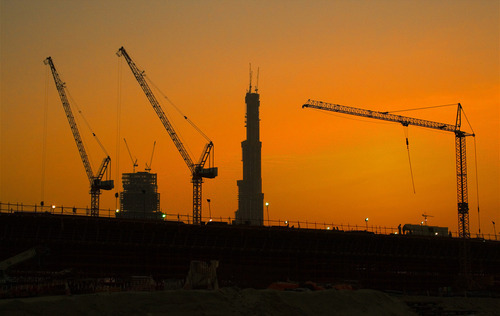
    Sunset by Paolo Mastrogiacomo on 500px.com

    https://500px.com/embed.js

    I was recently talking to my good friend Jeremiah Shamess about the current state of development land sales in Toronto (he does this for a living) and he said something to me that I found really interesting.

    He said that because the market is so competitive, you can really only win development sites in one of two ways. Either you’re willing to spend the most money or you see something and have a vision that nobody else sees.

    And it was this second piece that really stood out to me because it reminds me of one of my favorite investing frameworks.

    Warren Buffet is famous for saying that you should be fearful when others are greedy and you should be greedy when others are fearful. And what I’m about to talk about is really that same core philosophy.

    Here’s how venture capitalist Fred Wilson put it (reiterating something that Bill Gurley said):

    I saw Bill Gurley say that you can only make money by being right about something that most people think is wrong. His logic was that you can’t make money by being wrong. And you can’t make money by being right about something everyone else knows. So you have to be right about something that most people think is wrong. I really like that framework.

    But this doesn’t just apply to technology companies or stocks. It applies to city building, most industries, and probably most things in life if you think about it.

    If all you’re doing are things that everyone else is doing, then how can you expect to outperform? You’re going to revert to the mean.

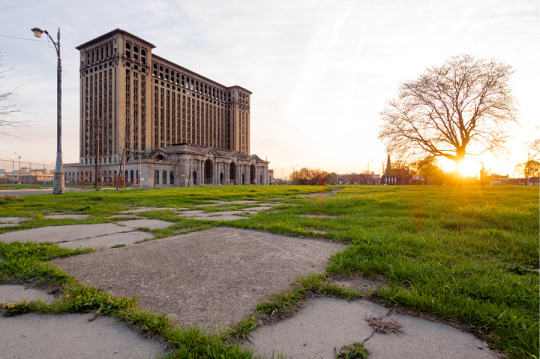
    Take, for example, billionaire Dan Gilbert and Detroit. Not everyone believes that Detroit will come back. In fact, I suspect there are probably more people who think it won’t come back, than people who think it will. Otherwise, it would already be back.

    But Gilbert is unquestionably long on Detroit (via Forbes):

    As you’ve likely heard, over the past four years Gilbert has become one of Detroit’s single-largest commercial landowners, renovating the city with the energy and impact of a modern-day Robert Moses, albeit bankrolled with his own money. He’s purchased and updated more than 60 properties downtown, at a total cost of $1.3 billion. He moved his own employees into many of them–12,000 in all, including 6,500 new hires–and cajoled other companies such as Chrysler, Microsoft and Twitter to follow.

    If/when Gilbert proves to be right about Detroit, then he will have been right about something that most people thought was wrong. And because of that, he will no doubt make a lot of money.

  • Why I write something every single day, even if it’s garbage

    I was out for brunch last weekend with a few close friends from high school. It’s a “monthly reunion” that happens nowhere close to every month. But the hope is certainly there.

    During brunch the topic of my blog came up. And one of my friends asked me how I got started and how the hell I keep up with one blog post every single day. (I get that second question all the time.)

    I’ve written about this before, but I think it’s worth revisiting.

    Earlier this week venture capitalist Fred Wilson wrote a post on his blog called The Blank Screen. And I really liked how he described the experience of writing a daily blog post:

    Sometimes this process produces great insights for me and possibly others. Sometimes it produces garbage. But I’ve come to realize that the daily post, and its quality or lack thereof, is not really the thing. It is the ritual, the practice, the frequency, the habit, and the discipline that matters most to me. And, I would suspect, the same is true of the readers and commenters who frequent this blog.

    Fred’s blog was a major source of inspiration for me. I saw him doing it. I saw the value he was getting out of it. And I wanted to do it too. So I did, almost 2 years ago. 

    But he also inspired me in another way.

    Venture capital and real estate development share many similarities in my mind, even down to the way that deals are often structured with preferred returns and promotes.

    But the interesting thing about venture capital is that it went from a largely closed and “ivory tower” kind of industry to now one where almost every venture capitalist blogs, tweets, and strives for greater transparency (when possible).

    I thought this was a fascinating shift and it made me think that the exact same thing was bound to happen in real estate development. So I am trying to make that happen. Hopefully this blog is helping.

  • I would make a terrible politician

    Ever since I was a little kid, I have thought that I would one day get into politics. 

    A lot of it has to do with me wanting to affect positive change, which is also one of the reasons I love real estate development (and one of the reasons I write this blog). Developers might have a bad rap in some circles, but I view it as a mechanism for positive change in the built environment.

    However, I have also felt that politics is something that’s better to do when you have grey hair and you don’t actually need the money to live. That way people take you more seriously and you can, hopefully, just do what you feel is right as opposed to playing the political game.

    But more and more I find myself thinking: Brandon, you would make a terrible politician.

    I don’t want to play games. I don’t want to have to think about which stance will win me the most votes. And I don’t want to have to dance around questions so I can avoid upsetting certain constituents. I’d rather be clear and decisive about what I think is the right thing to do.

    But that doesn’t always work so well in politics. So I think I’ll just stick to building things and writing this daily blog.

  • First crowdfunded real estate project opens in D.C.

    Want further evidence that technology and the internet are going to dramatically transform many “non-tech” industries such as real estate? 

    Take a look at 1351 H Street NE in Washington D.C (pictured above). It houses a hybrid retail store and restaurant and is probably the first truly crowdfunded real estate project.

    The project was completed using a platform called Fundrise, which I’ve written about before here on Architect This City. Their vision is to completely democratize real estate investment by removing middlepeople and outdated regulations that restrict who and how people can invest in real estate.

    To accomplish this, the founders of Fundrise went out in 2011 and bought the building located at 1351 H Street NE for $825,000. The goal was for it to act as their proof of concept. 

    They then spent a significant amount of time and money figuring out how to make it legal for small and local investors to participate in the project (as opposed to just accredited investors). It was ultimately done through a “local public offering” filed with the SEC.

    So how does it work?

    In the case of 1351 H Street NE, they first went out to the local community and asked them what they wanted to see. That’s how they ended up with a unique retail store / restaurant. It’s what the community wanted.

    Once this was established, they went out and issued 3,250 shares and crowdfunded $325,000 from 175 local investors. This was for an ownership share in both the building and the future business. The average investment amount was $2,000, but people were able to invest as little as $100.

    This is an incredible accomplishment. It takes real estate investment and development to a local level and really empowers small entrepreneurs to start businesses that may have been previously unfundable by traditional sources.

    I don’t know what you think, but I think this is the beginning of a powerful transformation. Many of the structures that are currently in place were formed at a time when it wouldn’t have been practical to crowdsource ideas and crowdfund money. But now that is very possible. It was just done.

    Image: Maketto 

  • The high cost of poor land use

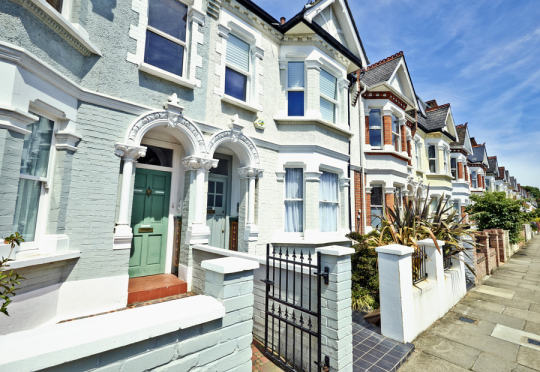
    Photograph London street of early 20th century Edwardian terraced houses by Bombaert Patrick on 500px

    London street of early 20th century Edwardian terraced houses by Bombaert Patrick on 500px

    Over the weekend The Economist published an interesting article called, Space and the city: Poor land use in the world’s greatest cities carries a huge cost. The argument is that land isn’t scarce. It’s the land use policies we have created that are artificially limiting supply and driving up real estate values.

    In fact, land is not really scarce: the entire population of America could fit into Texas with more than an acre for each household to enjoy. What drives prices skyward is a collision between rampant demand and limited supply in the great metropolises like London, Mumbai and New York. In the past ten years real prices in Hong Kong have risen by 150%. Residential property in Mayfair, in central London, can go for as much as £55,000 ($82,000) per square metre. A square mile of Manhattan residential property costs $16.5 billion.

    And part of the reason this has become so prevalent is because of the shifts we’ve seen in our economy and the great return back to cities.

    In the 20th century, tumbling transport costs weakened the gravitational pull of the city; in the 21st, the digital revolution has restored it. Knowledge-intensive industries such as technology and finance thrive on the clustering of workers who share ideas and expertise. The economies and populations of metropolises like London, New York and San Francisco have rebounded as a result.

    So how do we get better at meeting real estate demand in our cities? The Economist has two suggestions.

    One:

    First, they should ensure that city-planning decisions are made from the top down. When decisions are taken at local level, land-use rules tend to be stricter. Individual districts receive fewer of the benefits of a larger metropolitan population (jobs and taxes) than their costs (blocked views and congested streets). Moving housing-supply decisions to city level should mean that due weight is put on the benefits of growth. Any restrictions on building won by one district should be offset by increases elsewhere, so the city as a whole keeps to its development budget.

    Two:

    Second, governments should impose higher taxes on the value of land. In most rich countries, land-value taxes account for a small share of total revenues. Land taxes are efficient. They are difficult to dodge; you cannot stuff land into a bank-vault in Luxembourg. Whereas a high tax on property can discourage investment, a high tax on land creates an incentive to develop unused sites. Land-value taxes can also help cater for newcomers. New infrastructure raises the value of nearby land, automatically feeding through into revenues—which helps to pay for the improvements.

    These recommendations will probably be unsettling for a number of people. 

    I would imagine that many communities would prefer to have planning and growth decisions happen bottom up, as opposed to top down. But I think there’s some truth to this recommendation and I don’t think it has to mean completely excluding bottom up feedback. Communities and individuals are naturally going to look out for their own self-interests. And so I think many would agree that there’s value in having a holistic urban strategy in place.

    Recommendation number two pertaining to land value taxes is a loaded one. So I’m going to save my specific comments for a dedicated post on LVTs. 

    But I will say that I don’t think trying to squeeze landowners into development via taxes is the most efficient and immediate way to address supply shortages. In advance of this, we should be examining the current barriers to development. Because we’re talking about hyper competitive global cities with perpetual supply deficits. And I don’t believe the problem is incentive-based. The problem is finding sites. The problem is finding ways to build.

    What do you all think? This is an interesting topic of discussion.

  • What you should study to become a real estate developer

    One of the most common questions I receive from readers is about what to study in school in order to become a real estate developer. Here’s one of those questions:

    “Thank you so much for your insight into the real estate development process! I was wondering if you could do a post on what educational degrees you think would best prepare someone for a career in real estate development?”

    I’m not surprised that a lot of aspiring real estate developers have this question on their mind. Compared to many other career options, the path to real estate development has traditionally been pretty informal. It’s much less structured compared to other professions such as law or medicine.

    But as the real estate industry continues to institutionalize (transition from rich families to institutions), I’m sure we’ll see recruitment become more structured as well.

    Already the MBA and Master in Real Estate Development (or some other permutation of that degree) have become — for many large real estate organizations — the prerequisite to getting in the door. So if you’re looking for a simple and safe answer, just get one of these degrees.

    To more fully answer this question though, I thought I would just share my own strategy for getting into real estate development. Because at the end of the day, there’s no one way to become a developer. Lots of people start out in other industries, only to fall into real estate later on.

    The way I started was by first identifying the skills that I thought I would need as a real estate developer and that I felt employers would be looking for. And I assembled this list by going on lots of informational coffee meetings with developers to make sure I was headed in the right direction with my assumptions. 

    In the end, this is more or less what I decided I needed to know:

    Planning: An understanding of local planning policies, zoning, and so on. For this one, it’ll help if you can pick a particular place and commit to learning it (which is what I did with Toronto). There are a lot of local particularities that you’ll need to grasp. Real estate is very much a local business.

    Finance & Economics: The ability to understand markets, build models, and crunch numbers just like a banker. That was my goal before I got an MBA. This includes discounted cash flow analyses, net present value calculations, internal rates of return, and so on.

    Sales & Leasing: There are a lot of people who think that this is the best way to start in real estate (particularly on the commercial side). Learn the nitty gritty of leases and deal negotiations and then figure out where you want to be in real estate. Because at the end of the day, development projects are only viable when you have sales and/or signed leases in place.

    Design & Construction: This was the easy one for me because I was coming from an architecture background. I could “read plans” and I didn’t need to convince people that I understood how buildings worked and how they were built. Instead, I needed to convince people that I had all the other skills.

    And I knew this because that was the feedback I received my informational coffee meetings while I was in architecture school. One CEO (of a large publicly traded REIT in the US) told me flat out: “I need to feel comfortable that you can negotiate and that you won’t fuck up the numbers.”

    And that stuck with me. I realized that I had an image to shed.

    To round out my skill set, I decided to specialize in real estate in my first masters and then get an MBA. And given the chance, I would do it the same all over again. But even if you don’t have the opportunity or inclination to do that, there are a lot of other things you can do to shore up your knowledge base.

    I took a number of ARGUS and Excel classes to learn how to build robust real estate models. You might be surprised at how much you end up learning about the real estate business by doing that. I also became involved in organizations like the Urban Land Institute and started going to every real estate panel I could find. And before committing to doing an MBA, I even thought about taking some accounting classes at a local College.

    So my point is that I think you should identify the skills and strengths that you have today and then figure out some way to acquire the missing ones. Go buy a real estate textbook. Take an online class. Go to industry events. Do whatever it takes to round out your skill set so that you can sit in front a prospective employer (developer) and tell them that you’re able to create value for them and their organization across every facet of the development process. That was my goal when I was trying to get in.

    Of course, those aren’t your only options. 

    You could also just work your way up by taking any job with a real estate developer. One of my closest friends did exactly that and today is doing incredibly well with no formal training in real estate or even a related field. You could also just go out and buy your first property and have a go at it. Many great fortunes have been created by doing exactly that.

    Either way, real estate development is an exciting business to be in. It can often be hard to get your foot in the door given the size of most development teams, but if it’s truly what you want to do and you work on acquiring the skills, I think you’ll eventually find your path.

  • The unmet demand for real estate education in Canada

    image

    I continue to be amazed by the unmet demand for real estate (development) education here in Canada.

    Following yesterday’s post on the real estate development process, I received a few emails from readers asking about the best university programs (MBA, MRED, etc.) and the best approaches for becoming a developer.

    I also had a good conversation on Twitter, which covered off some details that I had left out from my post (for simplicity) and which resulted in me suggesting that a real estate development school needs to be started here in Toronto:

    //platform.twitter.com/widgets.js

    //platform.twitter.com/widgets.js

    Now, part of the reason things are the way that they are, I think, is because the real estate industry has been historically dominated by private rich families. People didn’t go to school to learn how to be developers. They learned by doing and that was then passed down to the next generation. All it took was chutzpah.

    But as the real estate industry continues to institutionalize and become run by pension funds and large publicly traded companies, I think the point of entry will also become increasingly institutionalized. And that’s where dedicated real estate programs will continue to come in. 

    I’ve spoken to a few people at the Rotman School – where I did my MBA – and there doesn’t seem to be a huge interest in a dedicated program such as a Master of Real Estate Development (they already offer real estate courses). It’s more of a “longer term” strategy. 

    But I think that’s a mistake.

    I’m confident there’s strong demand from the student side, so hopefully a wealthy donor will step forward to help make this happen. The University of Toronto has both a great business school and a great architecture school. That feels like a great recipe for a first-in-kind joint degree offering.

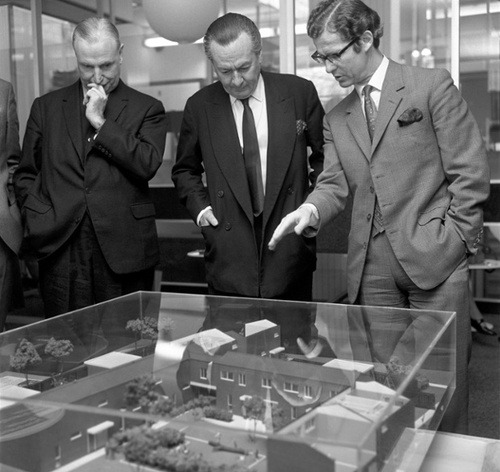
    Image: Urban Learning (via Flickr)

  • More on the real estate development process

    image

    A few weeks ago I received the following comment from a reader:

    Really enjoyed reading this post about being a real estate developer. I was just wondering if you could do a write up on the various jobs and functions in a typical real estate development company so that people like me, who intend to work for a developer can roughly know what kind of skills are required or demanded in order to work there.

    It’s a great question and so I will try and answer it today. The first thing I should say though is that real estate developers are typically very lean on people. I’ve worked for big publicly traded real estate companies and small boutique ones, and the development teams are always fairly small.

    It’s that way because development projects can be messy and intermittent. The industry itself is also prone to regular market cycles and so the strategy is generally to remain fairly lean and outsource a lot of the work. You ramp up consultants and suppliers on a per project basis – as you need them.

    With that said, let’s talk about the typical development process and some of the key skill sets required. A simplified process might look like this:

    1. Buy development site (Acquisitions)
    2. Design a project (Consultant Coordination)
    3. Make sure project is feasible (Finance)
    4. Obtain approvals for said project (Planning & Approvals)
    5. Sell/lease space (Sales, Leasing & Marketing)
    6. Build project (Construction)
    7. Make money (The goal)

    Depending on the size of the firm, one person may be responsible for managing many if not all of these steps, or they may be split up into different departments. So you could end up with a department list like this:

    1. Acquisitions
    2. Development/Project Management
    3. Finance
    4. Sales, Leasing & Marketing
    5. Construction

    From my experience as a developer, you’re going to be involved in all aspects. And that’s part of what makes development so exciting. But let’s talk about some of the key areas:

    Planning & Approvals

    After tying up a winning development site, securing your approvals (commonly referred to as “entitlements” in the US) is usually the first major step. The reason this step exists is because oftentimes what you want or hope to build isn’t what you’re actually allowed to build as-of-right.

    So you have to go through a process to make that happen. It can take years depending on where you might be doing business, but there’s typically a significant amount of value creation at this stage. Some developers only focus on this stage and don’t actually build.

    City planning is a good background for this function. You need to understand the local planning policies and frameworks.

    Consultant Coordination

    As I mentioned before, development teams are often small. And that’s because all developers rely on outside consultants to make a project happen (architects, engineers, and so on). So a big part of being a strong developer is just being a strong project manager. The expression often thrown around the industry is that development is like herding cats.

    Having some sort of a technical background helps for this function. You end up dealing with a lot of technical details (which I find super interesting), and so it helps to have a bit of a background or an interest. If you’re not inclined in this way, you might find this area boring.

    Financial Modeling

    Building project pro formas and managing budgets is obviously a key component of the development process. From the moment you first look at a site up until project completion, you’ll be building financial models and constantly refining them as you get more information. The first version might be on the back of a napkin and the last version might be a complex Excel spreadsheet.

    Banking and finance is obviously a good background for this function. But you also need to understand the real estate business. Models are only as good as the information you feed it, so your assumptions have to be sound. 

    Sales, Leasing & Marketing

    I cannot over emphasize the importance of this function. If you are not selling units or leasing space, then you do not have a project. So no matter how amazing you might be at all the other functions (even fundraising from investors), if your firm is not bringing in money from your customers (purchasers or tenants), then you are dead.

    When I was at Penn, a lot of the real estate professors used to tell us that leasing is the best way to get started in the industry. And I don’t disagree with that – even though I didn’t start there. This is often handled by a separate department and/or outside team, but you’ll need to be intimately involved.

    Construction

    If you’re at this stage, that’s usually a good sign. It usually means you’ve managed to sell a bunch of units and/or lease a bunch of space. Some developers (with enough scale) will have a construction team in-house, but many others will just outsource it to a 3rd party. Regardless of the setup, it once again helps to have a technical background.

    If I missed anything or you want to add more detail, please let me know in the comment section below. I’m always happy to receive questions and post ideas, so feel free to tweet or email me. Tweets will almost always get a faster response.

    Image: Flickr

  • My identity crisis

    If you’re a regular reader of Architect This City, there are many things that you might know about me

    You might know that I was initially trained as an architect, but that I immediately transitioned into real estate development after grad school (where I studied both architecture and real estate).

    After becoming a real estate developer, you might know that I completed an MBA with a focus on innovation and entrepreneurship (which happened by default as a result of the electives I ended up being interested in).

    And finally, you might know, given the content of this blog and my startup history, that I have a significant interest in technology. More specifically though, you might know that my interest is in figuring out how technology will continue to infiltrate and impact “non-tech” industries such as real estate.

    But what you might not know is how I even ended up in architecture and real estate in the first place. Unlike a lot of people who seem to have grown up wanting to be an architect – perhaps because they had a relative who was one – I didn’t decide to study architecture until a bit later on.

    Growing up my primary interests were: art and computers.

    During high school, my art teachers used to tell my parents that I was going to be an artist. And my computer teachers used to tell my parents that I was going to be a computer geek – or maybe they said computer scientist.

    Maybe it had to do with timing and the emergence of the commercial internet in the 1990s, but computers sort of won out during that point in my life. I spent a lot of time building them from scratch, playing with software, and asking my mom not to pick up the phone because I was literally dialed-in to the internet.

    So when it came time to enrol in university, I fairly effortlessly decided on computer science. It just seemed to make sense. But after about a year I realized that it wasn’t for me. I didn’t love programming like my classmates did and the thought of doing it for a living scared me.

    At the same time, I felt like I needed to feed the artist in me. I wanted something both artistic and technical. So I decided to drop out of computer science and give architecture a try. It just seemed like the perfect marriage of my interests.

    I immediately fell in love with architecture. And I spent the next 7 years studying it across 2 degrees.

    But during that time, two things hit me. First, I came to the realization that real estate developers are the ones who really have the most say in terms of how our cities are built. And second, that technology was having a massive impact on business and life.

    This told me that design alone wasn’t going to be enough. I also needed to engross myself in real estate, finance, business, and technology. So that’s what I set out to do. And I really enjoyed it. On the technology side, it felt like I was coming full circle in a way.

    But today, I feel a bit like a 3 legged stool. There’s the design leg. The real estate/business leg. And the technology leg. And oftentimes I feel like life would be a lot simpler if I could just balance on one of those legs – instead of trying to stand on all three. But that’s simply not me.

    These are my passions and I need all of them to stand-up.

  • Making city planning cool again

    image

    This morning my friend Mackenzie Keast – who is famous and was on the radio in Toronto today talking about The Laneway Project – sent me an interesting article from the Guardian talking about the marginalization and growing irrelevance of city planners. It’s called: For the sake of our cities, it’s time to make town planning cool again.

    The gist of the article is as follows:

    While the cult of the star architect has soared over the decades and property developers have displaced bankers as the new super-rich, the figure of the local town planner has become comic shorthand for a certain kind of faceless, under-whelming dullard.

    But what really stood out for me are the following two things. First, that people are genuinely interested in cities. I would say that it’s almost trendy to be into cities these days.

    Urbanism may have displaced cultural theory as the favoured subject of the academic hipster, but talented young men and women rarely consider becoming town planners.

    And second, that we’ve made it difficult for these same interested people to participate in the planning process.

    Planners have become simultaneously under-respected and over-professionalised. Their training and practice too often leaves them able to communicate effectively only with other planners and professionals, working in an abstract language that alienates them from people. People are occasionally allowed into the professional planner’s world, but in highly mediated terms dictated by the profession.

    This stands out for me because I think that architecture is in a somewhat similar position. I often joke that the more architecture training someone has, the more likely they’re going to like buildings that the rest of the world doesn’t. It all becomes quite insular – just like the Guardian is arguing with respect to planning.

    And that may in fact be the reason for the marginalization of both planners and architects (minus the few starchitects that have a distinct brand and can command a premium). If the general public doesn’t like what you do or understand how you create value, why should they care?

    I’ve written before about the future of the architecture profession, as well as the reasons for why I decided to never practice architecture. So I won’t repeat it all here.

    But I will say that it had nothing to do with me not loving architecture. Because I do and always will. Instead, it was about recognizing that professions are not set in stone. Just like pretty much everything else in this world, they can and will be reinvented.

    Image: The Guardian / PA