Daily insights for city builders, delivered every morning at 6 AM ET. I’m Brandon Donnelly — a Toronto-based real estate developer and founder of Globizen. I’ve been writing here since 2013.

Tag: quebec

  • Frais du toit

    This past summer, an IGA store in Montreal’s Saint-Laurent borough erected “the largest organic green roof garden in the country.” It is about 25,000 square feet and it has a soil depth of only 150mm. 

    They also claim that it’s the first supermarket in Canada to sell produce grown on the roof of the actual store. The brand: Frais du toit, or fresh from the roof. There’s even a livestream in the vegetable aisle showing you how the goods are doing overhead.

    I would be curious to know what their yields are like and what they are charging for the produce. But it’s certainly a praiseworthy initiative.

    Below is a quick video that will give you an idea of what the roof looks like. If you can’t see it, click here.

    [youtube https://www.youtube.com/watch?v=-Z69ScyHCfU&w=560&h=315]

  • Winter Wonderland (and 3 things to read)

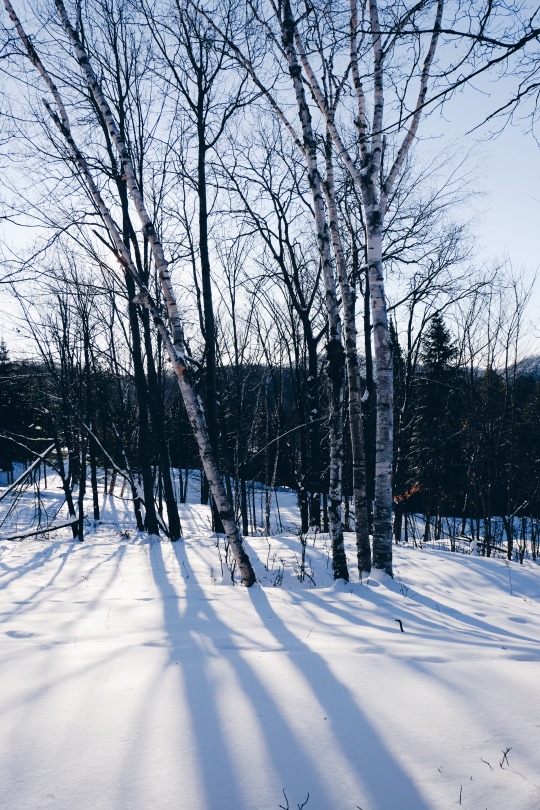
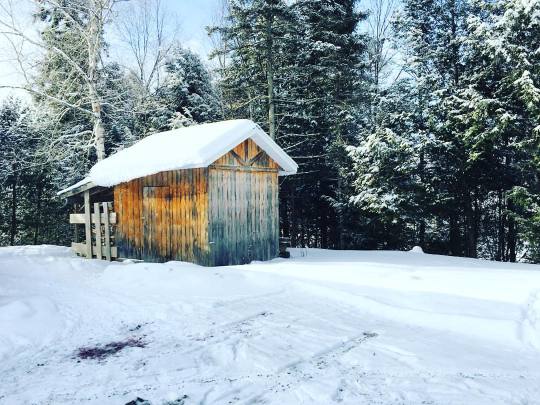
    This is what it looks like in Mont-Tremblant right now:

    It’s currently -11 degrees celsius and it’s expected to snow for most of the day. It’s starting to come down right now. But this evening it’s supposed to warm up to +1 degrees celsius, which means it may turn into (freezing) rain. I hope we see a lot more snow than rain. Nobody wants an icy mountain.

    If you’re looking for things to read this morning, here are 3 pieces:

    1. In American Towns, Private Profits From Public Works. It’s a NY Times article talking about how cash-strapped towns are turning to private equity firms to pay for their infrastructure. 

    2. How Zoning Laws Shaped New York City Over the Last Century. This is about an exhibition being held at The Museum of the City of New York right now. The rules we make shape our built environment. Thanks John for the link.

    3. Authenticity, and how Snapchat is banking on it. I am very fascinated by Snap Inc.’s ability to think differently and adopt counterintuitive business strategies. There’s also a cultural dimension to all of this.

  • Brébeuf

    I woke up this morning at 5:30 am in a hotel in Ottawa.

    I then drove to Brébeuf, Quebec to meet some friends for a ski and snowboard weekend. (It’s beautiful here.)

    Upon arriving I was faced with a large hill that my rear-wheel car with all season tires was absolutely not prepared for. So that sucked up about an hour of time.

    After we unstuck my car, we then spent the day skiing and snowboarding at Mont-Tremblant. (First day of the season for me.)

    At this point all I can think about is a good night’s sleep, so I’m afraid that there won’t be much of a post today on Architect This City.

    But please feel free to hijack the comment section and talk about whatever you would like. Maybe we can get some action started there.

    I would actually be really curious to see what topics interest all of you.

  • From seigneurial land tenure to condominium plans

    One of the things I noticed this past weekend when I was on my Porter Escape in Quebec City was that there’s still evidence of the seigneurial land use system. I saw it on île d’Orléans.

    Established in 1627 in New France, the seigneurial system was a feudal way of distributing land and creating subsistence farming for those who occupied it. It was ultimately abolished in 1854, but you can still see vestiges of it.

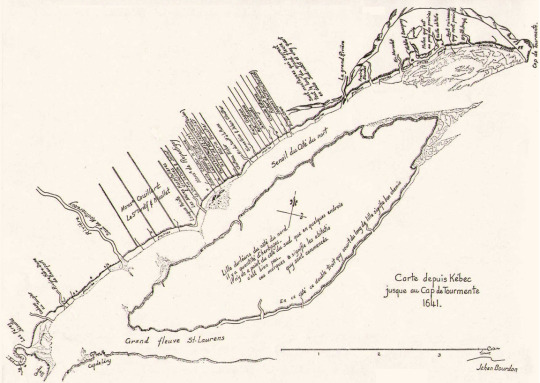
    With the seigneurial system, a typical farming lot was a long and narrow strip of land emanating from the water, which in this particular case was the St. Lawrence River. Here’s a map from 1641 showing what that looks like:
    image

    The reasoning behind this spatial arrangement was rather simple. By having long narrow lots, it meant that you could maximize the number of farmers who had direct access to water. This was needed for navigation, but also for many other obvious reasons. This was an efficient layout.

    At the same time, the long strips meant that each farmer had access to a broad cross section of different kinds of land. They had fertile land for growing, land for their home, and frequently land with trees so that they had material to build, fuel to burn, and so on. It also meant that, despite the overall lot sizes, people actually lived fairly close to each other. It created communities.

    Of course, there’s a lot more to the seigneurial system than just its physical form and there are reasons it was eventually abolished. But today I just want to focus on spatial layout. Because I think there are parallels to how we continue to plan our communities.

    If you live in a city you’ve probably come across a narrow rowhouse, a narrow townhouse, and/or a long and narrow condominium – which many people like to pejoratively refer to as a “bowling alley” plan. In these cases, the width of the home could be somewhere between 10 and 13 feet.

    If you stop and think about this, it’s exactly the same spatial principles as the seigneurial land use system. But instead of maximizing the number of people with access to the St. Lawrence River, it’s about maximizing the number of people who front onto the street and who have access to natural light.

    In tight urban conditions, it’s not uncommon to have no “side yard windows.” In my case, I live in a condominium with 20′ feet of windows on one side only. The other 3 sides of my box have none. And that’s a fairly common urban condition.

    I find this interesting because as much as the world is rapidly changing, some things don’t actually change all that much.

    Image: Wikipedia

  • Day 1 in Quebec City

    I just checked into the Chateau Laurier Quebec after a busy day touring the city. I don’t have a ton of time to write this post before dinner (though I have a few post ideas brewing). I did however want to share some of the day’s events and some of my photos.

    After I landed I went straight to Île d’Orléans. I had never been there before so I’m glad I got the opportunity. It’s about twice the size of Manhattan and it has a population that hovers somewhere between 7,000 and 10,000 people depending on the season.

    The first stop was a “sugar shack”, which is apparently a big deal in Quebec and in the springtime. The place was packed. Here I had a traditional Quebec lunch (which was great) and I learned that all of the Canadian stereotypes are actually true. We really do put maple syrup on everything.

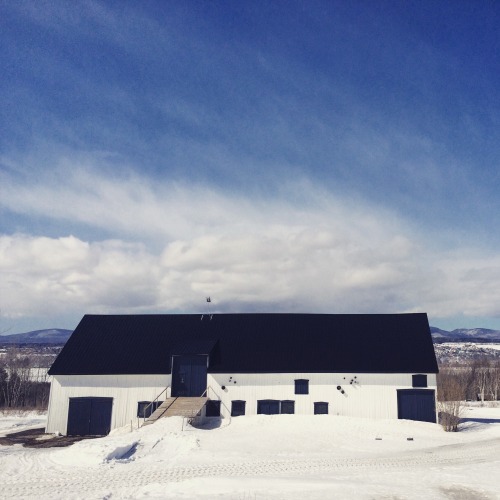
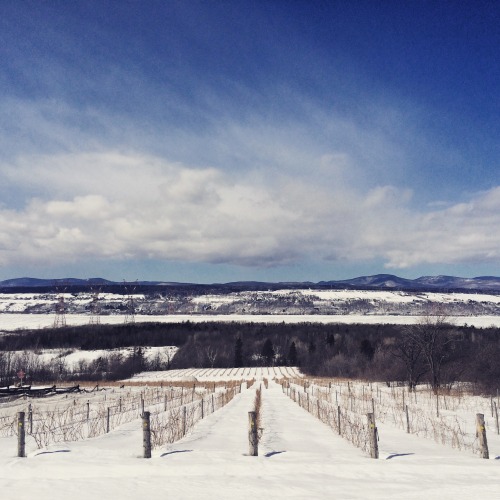
    After lunch I then asked if we could stop at a few of the local wineries. I love wine and I love wine culture.

    imageimageimage

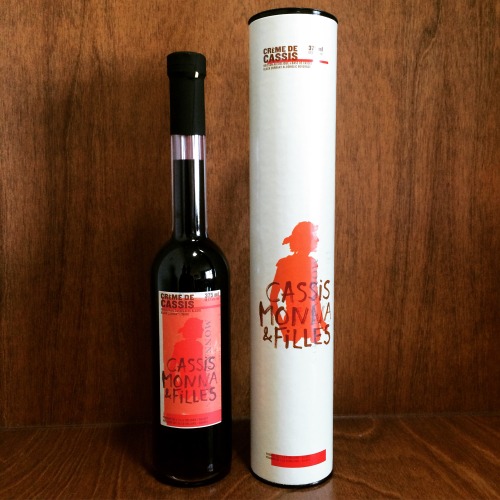
    I picked up one bottle of “wine” from Cassis Monna & Filles. It’s actually made from black currants though, which I was told was illegal to grow in North America for a long time. It’s far more popular in Europe.

    The winery is run by a father and his two daughters. And I thought they did a great job with their brand story and their overall identity.

    After leaving the island, I then went to the Montmorency Falls. I had no idea Quebec had falls, but they do. And the vertical drop is bigger than that of Niagara Falls.

    image

    Finally, I finished the afternoon with a quick tour of downtown and the OMA designed expansion to the fine arts museums. It has one aggressive cantilever.

    Here’s a video of the project. Click here if you can’t see it below. 

    [vimeo 111133943 w=500 h=281]

    If you’re interested, you can also follow my social posts on the Porter Escapes website by clicking here.

  • Architect This City x Porter Escapes (in Québec City)

    Towards the end of last year I received a one line email from a reader asking me what I thought about Porter (the airline that operates out of Toronto’s island airport downtown).

    I followed suit and responded with one line: “I’m a big fan.” I then pasted a few links to posts I had written where I talked about Porter, the island airport, and why I think they are good for Toronto.

    It turns out that was the right answer 😉

    Because today I’m excited to announce a fun collaboration between Architect This City and Porter Escapes. This weekend I get to explore Québec City and do something I love to do, which is photograph cities, think about cities, and write about cities. (And eat poutine.)

    Here are my travel essentials for the weekend (I wish it was a better photo):

    image

    The first thing I should tell you though is that Porter Escapes is different than simply Porter. Porter Escapes is their “packaged vacation” company, so it’s designed for people who want a simple way to book entire getaways (flight, hotel, activities, and so on).

    In my case, I’m going to be staying at the Château Laurier. I also have a bunch of activities planned out for Saturday during the day. Stay tuned.

    I had initially planned to squeeze in some snowboarding at Le Massif and try out the nicely branded train that goes from Québec City right to the mountain. But my back and shoulder are still tender from my spill in Banff.

    Still, I hope you’ll follow along on Twitter, Instagram, and Snapchat, and using #PorterEscapes. And if you happen to be in Québec City this weekend, let’s grab a pint and poutine.

    I’ve also been told that Porter Escapes will be launching a special promotion over the next few days for escapes specifically to Québec City.

    Note: I’m supposed to tell you that it’ll be at a price point that you should never expect to see again (i.e. it’ll be a steal).

    Happy Friday 🙂