Daily insights for city builders, delivered every morning at 6 AM ET. I’m Brandon Donnelly — a Toronto-based real estate developer and founder of Globizen. I’ve been writing here since 2013.

Tag: public spaces

  • Lobbies as pseudo-public spaces

    This is a good idea (taken from a recent FT article by Edwin Heathcote):

    The hotel lobby is already understood as a kind of public space, the corporate lobby should belong to that same world, a place open to the functions of the city, porous and welcoming. It is no accident that the vast lobbying industry has that name, lobbies are where encounters occur.

    Sometimes we do this. Maybe there’s a coffee shop or some other activations in your lobby. But more often than not, a “good” corporate lobby is about grandeur and security, which means that they do very little to animate the street.

    In the above article, Edwin reminds us that before the invention of the modern office building, the entire city functioned as a kind of dispersed workplace. Places like coffee shops and pubs were, of course, central to this.

    While this is still partially the case today — people continue to like coffee and beer — it is interesting to think about what more we could be asking of our office lobbies. And I do think it is more.

  • Learning from Lisbon

    This happened earlier in the week:

    And it got me thinking about how much I love Lisbon:

    But the important story here is that these tweets made it abundantly clear to me that (1) people from all over want far more from their parks and public spaces and that (2) Lisbon’s kiosks are a truly beloved urban feature.

    I’m putting this all out there because I received a ton of inbounds following these tweets, and I would love to find a way to execute on the kiosk idea that I outlined in the above twitter thread. So if you’d like to help, please continue to get in touch.

  • Portuguese pavement

    One of the defining characteristics of Portuguese cities is the stone paving that is used in many or most pedestrian spaces. In European Portuguese, it is called calçada portuguesa. Above is a photo — that I didn’t take — of Rossio Square is Lisbon.

    This craft was also exported to Portugal’s former colonies, including Rio de Janeiro, Macau, and Luanda. Supposedly, the Portuguese used to load up their boats with limestone in order to weigh them down and make them stable before they set sail. And that’s, at least partially, the reason why this tradition ended up traveling.

    They’re dangerously slick when wet — particularly in a hilly city like Lisbon — but they sure are beautiful. Here’s a short video talking about the tradition in Macau. It’s an interesting example because the Chinese ended up adding their own touches.

    Click here if you can’t see it below.

    Photo by Alex Paganelli on Unsplash

  • Tenji blocks

    Today, Google’s daily Doodle celebrates the work of Japanese inventor Seiichi Miyake. See above screenshot. (I wonder who at Google is responsible for coming up with these. Imagine having to post something new every day.)

    I am sure that most of you have come across these tactile paving blocks before in the subway or in some other public space. But I for one wasn’t familiar with their origin.

    Invented by Seiichi Miyake on his own dime after a close friend started becoming visually impaired, they were first introduced in 1967 on a street in Okayama City (Japan) next to a school for the blind.

    Since then, these tactile blocks — or Tenji blocks — have been adopted all around the world as a way to help the visually impaired navigate our cities and public spaces.

    There are two main types of blocks: ones with bars and ones with dots (which are kind of like domes with their tops cut off). The bars indicate a safe path of travel. And the dots tell you when to stop (such as at the edge of a subway platform).

    The idea is that these different kinds of blocks can be detected with either a cane or through your feet as you walk over them. It’s a pretty simple idea, but it clearly seems to work.

    All of this reminds me of a recent community meeting I was at where I heard a lady — who was visually impaired — speak eloquently about the importance of thoughtful materiality in our public spaces. I think she may have been an architect or designer.

    One of her comments was that echoey spaces can be overwhelming for people with limited vision. That makes perfect sense to me. Unfortunately, I think it can be hard to fully appreciate some of these design subtleties unless you’re living it.

    But as Seiichi demonstrated, maybe all you need is a close friend who is living it.

  • Short term, lasting impact

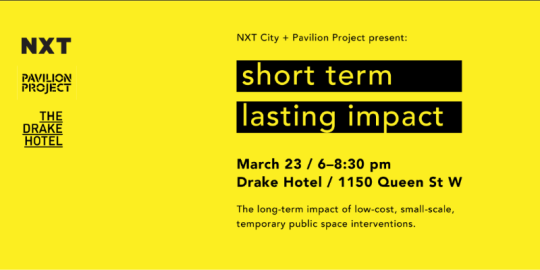
    NXT City and Pavilion Project are hosting an event on March 23, 2017 here in Toronto (at the Drake Hotel) called Short Term, Lasting Impact

    It’s all about how “temporary, low-cost and scalable [urban] interventions” can bring about lasting / meaningful change within our cities.

    Here’s some info on the panelists / topics:

    Matt Rubinoff, Tusk Global // STACKT

    This temporary shipping container market proposes a visionary complex with everything from retail and restaurants to studio spaces and a brewery. What are some of the challenges of bringing an unconventional project to life?

    Rui Pimenta & Layne Hinton, Art Spin // IN/FUTURE ART FESTIVAL

    This art experience reclaimed a beloved Toronto space, transforming it briefly through a multidisciplinary art and music festival. What opportunities can site-specific events bring to celebrate underused spaces?

    Michael McLelland, ERA Architects // PORTLANDS PROJECT

    There are many long-term and competing visions for Toronto’s Portlands. How do we make best use of this prime city site today? How can short-term planning inform a future agenda and create critical cultural space in the near-term?

    I know the folks behind both of these non-profits (NXT City and Pavilion Project), and so I am happy to support this event. Tickets are $10 and can be purchased here.

  • re:Public + NXT City Night

    On Friday, November 25th, NXT City will be hosting a one-day symposium here in Toronto (re:Public) that brings together some of the top people, projects, and ideas in the world of public spaces. Following that will be an after party (called NXT City Night) that runs from 8pm to very late. 🙂

    Here are some of the organizations that will be represented at the symposium: City of Toronto, Uber, CivicAction, Monocle, Arup, STEPS Initiative, Breather, The Laneway Project, Oxford Properties, as well as many others. It will be a great event.

    For the full speaker list, the agenda, and to buy tickets, click here. There’s an under 35 / student offering for both the symposium during the day and the after party at night. If you attend during the day though, you automatically get a pass to the after-party. I hope to see you there.

    Here’s a time lapse video from NXT City Night (edition 2015). If you can’t see it below, click here.

    [youtube https://www.youtube.com/watch?v=_i6R687sdk0?rel=0&w=560&h=315]

  • The Social Life of Small Urban Spaces

    “It is difficult to design a space that will not attract people. What is remarkable is how often this has been accomplished.” -William Whyte

    In 1980, the sociologist and urbanist William Whyte published a revolutionary book called The Social Life of Small Urban Spaces

    The ambition was to discover why some urban plazas are successful and why many others fail. And to do that, he went out and studied urban plazas throughout New York using video and simple observation, such as head counting.

    His work has been hugely influential for architects, designers, and other urbanists. But if you think about how often we fail at creating urban spaces that actually attract people, I think it’s worthwhile revising what Whyte discovered way back in the 70s and 80s.

    Some of the principles – such as providing places to sit – are dead simple and intuitive. But again, a lot of urban spaces suck. So we’re clearly not doing it.

    The other thing I feel we often forget is that it’s not just the space itself that matters, it’s also the urban fabric around it. The Seagram Building in New York plays a central role in Whyte’s work as an example of a successful urban plaza. 

    But we can’t forget that Mies van der Rohe’s simple gesture of setting the tower back from the street is strengthened by the remaining urban fabric and the activity along Park Avenue. The plaza acts as a kind of release.

    Alongside the book, Whyte also published a 60 minute video. If you’ve never seen it, I highly recommend you watch it when you get a chance. Click here if you can’t see the video below.

    [youtube https://www.youtube.com/watch?v=MjxXTsHgc8g&w=420&h=315]

    To close out this post, I thought it would be fun if everyone shared their favorite public urban space in the comment section. It can be in your city or it could just be a place you’ve visited.

    To kick things off, I’m going to go with with a space that’s close to home: Berczy Park. It has lots of places to sit, including movable chairs. There’s a great water feature. And it’s well connected to the rest of the area and surrounding streets. I often sit there during lunch or when I just want to think.

    It’s also in the midst of a revitalization and I’m excited to see that come together.

  • 10 reasons to visit Philadelphia right now

    image

    Today’s ATC post – which happens to be a guest post – is coming to you live from on board the UP Express train that runs from Union Station in downtown Toronto to Pearson Airport. (Everywhere should have free wifi.)

    I’m on my way to Philadelphia and I’ve been wanting to try this train since it opened earlier this summer. It feels great to finally ride it. It’s everything I could have hoped for. It even has that new car smell 🙂

    Last month I wrote a post called, 10 reasons to visit Toronto right now. It was in honor of my good friend Alex Feldman’s visit. Well now it’s my turn to visit Philadelphia and he has decided to return the favor and do a Philly version of that same post. 

    Alex is to Philadelphia what I am to Toronto. He grew up in Philly. He was educated in Philly (we went to Penn together). And he’s super passionate about the future of Philly. And I think that’s how everyone should be about their city.

    So I hope you enjoy his list of 10 reasons to visit Philadelphia right now. It’s basically my to-do list for this weekend.

    ———————————————

    10. World Heritage City: Philadelphia is on track to become the first World Heritage City in the United States. This UNESCO designation will underscore the city’s historic importance as the birthplace of American Democracy as well as the historic urban fabric which gives the city it’s walkable, urbane character.

    9. Shopping: Philadelphia has come a long way as a shopping destination. Conde Nast Traveler recently ranked the city as number 2 out of the best shopping destinations in the world. 3rd Street in Old City has become a hotbed for independent boutiques while Rittenhouse Square has attracted new chains such as Uniqlo, Theory, and Vince. More is on the way with a complete re-make of the Gallery shopping mall slated to start soon and the new East Market complex under construction. 

    8. The Pope is Coming:  In case you haven’t heard, Pope Francis will make his first visit to the United States – with a 3 day visit to Philadelphia in late September. The visit will coincide with the World Meeting of Families gathering. A crazy number of visitors (2 million?) are expected to descend on the city – causing Philadelphians to panic, complain, and attempt to rent their houses for ridiculous amounts of money. But this important visit will help raise the profile of the city on the international stage.

    7. Building Boom: There is probably more development happening in Philadelphia right now then any other time in recent history. The skyline is growing with additions by Norman Foster, Cesar Pelli , and Kohn Pedersen Fox. New apartment buildings, condos, and rowhouses are under construction across the city (rental vacancy rates are less than 2%). In addition the Barnes Foundation and the new Singh Center for Nanotechnology mark impressive additions to the city’s architectural landscape.

    6. Public Spaces: Philly’s public realm has seen massive investment over the last several years. A complete remake of the landscape outside of City Hall has become the new Dilworth Park. The designers of NYC’s highline have added two public spaces to the city (Race Street Pier and the new Central Green in the Navy Yard). And Schulkill Banks recently added a new boardwalk which the New York Times raved about when they ranked Philly as the number 3 city to visit in 2015. More is on the way with the first phase of the Reading Viaduct Rail Park expected to start soon.

    5. Waterfront: Philadelphia’s Delaware River waterfront has long been cut off from the city by interstate 95. Things have started to change recently, with new trails and pier parks recently added to the working waterfront. Even Penn’s Landing, the city’s much maligned waterfront attraction is seeing improvements – including the tremendously popular Spruce Street Harbor Park – a pop-up park featuring floating beer barges, shipping container food stands, and tons of hammocks.

    4. Food: Philly is one of the best food cities in the United States. So much is happening right now in the city’s dining scene, it’s hard to keep track of the latest restaurant openings. Neighborhoods such as Fishtown and East Passyunk have emerged as hot dining districts with BYOB chef driven restaurants. More can be gleaned from the Washington Post which recently summarized the dining scene better than I can.

    3. Pop-up Gardens: One of the best reasons to visit Philly in the summer is the opening of the Pennsylvania Horticultural Society Pop-Up gardens. The wildly popular beer gardens, began several years ago as an initiative to remake underused or vacant lots into useful public spaces. This summer, 2 gardens – one on 15th and South and one at 9th and Wharton have been transformed into vibrant spaces for eating, drinking, and hanging out.

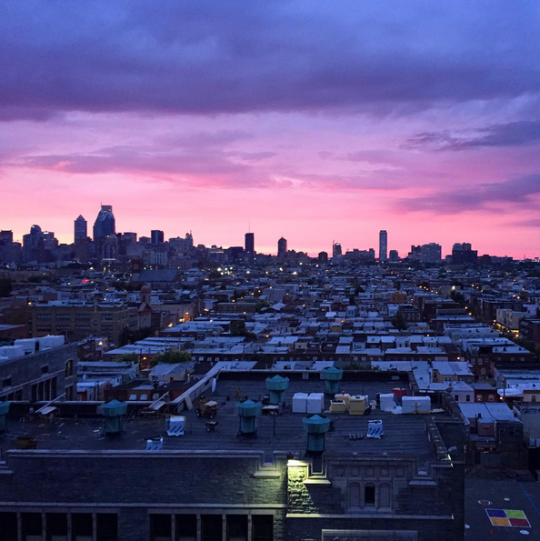
    2. Le Bok Fin: Speaking of temporary uses, the most recent addition to Philly’s pop-up (or iterative placemaking) scene is a rooftop bar called Le Bok Fin. Situated on the 8th floor of an old vocational high school in South Philly (and named after the school’s restaurant – which in turn is a play on one of Philly’s most famous French restaurants). This is the first iteration of development at what is planned to become an amazing new center for creatives inside the old school – being led by Lindsey Scannapieco and her team at Scout LTD. Check out Le Bok Fin for incredible views of the city skyline (especially at sunset).

    1. Bike Share: While a little late to the party, Philly recently launched it’s own bike share program – which is proving to be a huge success. Dubbed Indego, the new bike share is easy to use, has 60 stations, more than 600 bikes and is becoming one of the best ways to hop around town. Check one out and go explore Philly!

    Image: Alex Feldman

  • How Melbourne reinvented itself one block at a time [Video]

    https://500px.com/embed.js

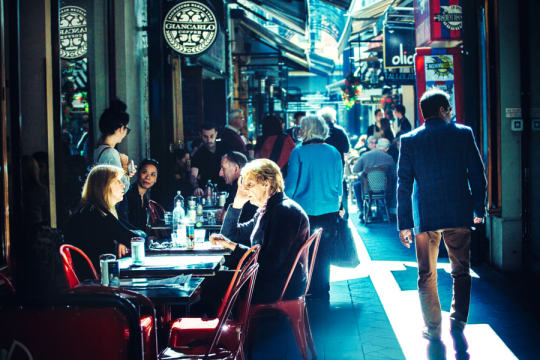
    Melbourne is famous in urbanist circles for the revitalization of its central area. In 1992, 40% of the buildings were empty above the first floor and only 5 (yes five) residents actually lived in the core. Everyone had fled to the suburbs and the city had hollowed out.

    Today, there are over 29,000 residents in the central area and Melbourne has become revered around the world for its vibrant public spaces and innovative laneway repurposing. 

    Here’s a quick 11 minute video that explains how they did it (via The Urbanist). Click here if you can’t see it below.

    [vimeo 131396094 w=500 h=281]

    What is clear from the video is that it took a lot of work convincing property owners and getting them to buy into the vision. Being able to repurpose the laneways often meant punching through blank walls at the base of buildings. And so there was pushback.

    Here in Toronto I’ve heard people say that we’re not Melbourne and we shouldn’t expect to have similar kinds of urban spaces. Well guess what, neither was Melbourne in the 1980s and 1990s. It was a dying city. But they made it happen.

  • A video and conversation about laneways

    Two weeks ago I gave a brief presentation at The Laneway Project’s inaugural summit here in Toronto. I then wrote about it here on ATC.

    At the time, I wasn’t sure if the event was being filmed or not, but it turns out it was. So here is my presentation from the event. It’s just over 7 minutes. Click here if you can’t see it below.

    [youtube https://www.youtube.com/watch?v=vdMNC1BtUz8]

    If you’d like to see the other 5 presentations and the Q&A session, click here

    Following the event, I was also interviewed by a radio show out of Calgary called Space + Place. If you are really into laneways and would like to listen to that as well, go here.

    I’ve said this before, but I’ll say it again: I continue to be amazed by how much interest there is — both here in Toronto and elsewhere — in laneways. They may be overlooked today, but that’s going to change. It’s inevitable.