Daily insights for city builders, delivered every morning at 6 AM ET. I’m Brandon Donnelly — a Toronto-based real estate developer and founder of Globizen. I’ve been writing here since 2013.

Tag: proposition 13

  • Artificially low property taxes

    A blog reader responded to yesterday’s post about rent controls (and inclusionary zoning) with an excellent point: If you’re against rent controls, then you must also be against artificially low property taxes for homeowners. And I would agree with this.

    One of the points I was trying to make yesterday was that if you’re in a situation where your revenue is capped but your operating expenses are free to grow based on the market, then you are likely heading down an unsustainable financial path.

    This is true if the revenue is in the form of rent and this is true if the revenue is in the form of property taxes. A good example of this is California’s Proposition 13, which is the principal thing that keeps property taxes artificially low over on that coast.

    Similar to what I argued yesterday with rent controls, it too creates a misallocation of housing. If you’re sitting on historic and artificially low property taxes, then you are now highly incentivized to stay put where you are. Why would you move only to have your taxes mark to market?

    So this line of thinking cuts both ways, whether we’re talking about renters or homeowners.
  • Neighborhood depopulation

    Recently we’ve been talking about California’s Proposition 13 and how it may be creating a disincentive for longtime homeowners to move. They’re enjoying below market property taxes, and so they stay put, even if they may have too much house.

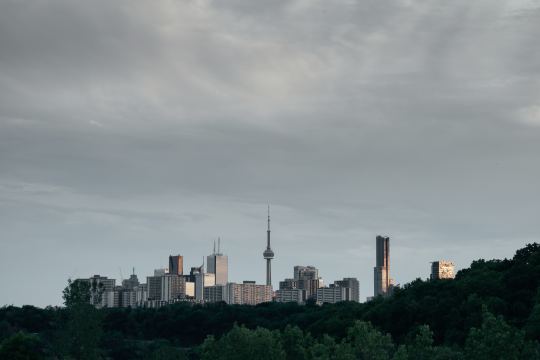
    But this concept of “overhousing” isn’t unique to California. The Globe and Mail just ran a piece talking about how Toronto’s designated “Neighborhoods” are losing people as the nests empty out, seniors remain put, and the broader city booms.

    The rate of depopulation that created the spare bedrooms in Toronto’s low-rise neighbourhoods is stark: “Since 2001, about 52 per cent of the land mass of Toronto has reduced in density of population by about 201,000 people,” Mr. Smetanin says. “Other parts of Toronto have grown by 492,000.”

    The irony of this phenomenon is that the city’s Official Plan considers these Neighborhoods to be “physically stable”, as well as “one of the keys to Toronto’s success.” However, things are clearly changing behind that physical stability.

    Photo by Verne Ho on Unsplash

  • Thoughts on housing in the Bay Area

    I was out for drinks recently with a friend of mine who is a developer in California and she mentioned a few things to me that I thought were really interesting. 

    First, she talked about how virtually nothing gets built in the Bay Area “as of right.” And so the market is hugely supply constrained. She said, you’re lucky if you can get your entitlements in 2 years. It’s starting to take longer. I immediately said: “That’s Toronto.”

    Second, we talked about Proposition 13, which was timely given this recent post. One of the consequences of Prop 13, beyond helping golf clubs survive, is that longtime homeowners seem to be highly incentivized not to move. 

    Their property taxes are so below market that it can be more cost effective for them to stay put as opposed to downsize – even if they have too much house. This means far less turnover in the housing market.

    Third, there really does seem to be a feeling in the Bay Area that it’s at a breaking point in terms of affordability. When a successful software engineer making $200,000 a year can’t afford housing, people naturally start to look to other cities.

    We hear this refrain all the time in the media, but because I’m not active in that market, it was far more impactful hearing it from a friend.

  • “I hate golf”

    I am a big fan of Malcolm Gladwell, and not just because he’s Canadian and went to the University of Toronto (my alma mater), although those facts certainly don’t hurt.

    I’m late to his podcast, Revisionist History, so in case some of you are as well, I would encourage you to check it out. Every episode reexamines something from the past and questions: Did we get it right the first time? It’s very Gladwell. It’s a must listen.

    The episodes span a secret research project setup by the Pentagon in downtown Saigon during the Vietnam War to why rich people are obsessed with the game of golf. Spoiler: He hates golf.

    The golf episode will be of particular interest to many of you because it deals with real estate. Malcolm wades into something known as California Proposition 13, which is a constitutional exemption that keeps property taxes artificially low.

    It is what has allowed these “vast, gorgeous, and private” golf courses to continue to exist in expensive cities like Los Angeles. Otherwise they would have long ago drowned under the property taxes following reassessment.

    This also leads to a philosophical debate about what constitutes a change in ownership, since many clubs are member owned and Proposition 13 requires that there not be a change in more than 50% of the ownership. 

    But I’ll stop there. Give it a listen. Malcolm is just excellent.

    Photo by Rémi Müller on Unsplash