Daily insights for city builders, delivered every morning at 6 AM ET. I’m Brandon Donnelly — a Toronto-based real estate developer and founder of Globizen. I’ve been writing here since 2013.

Tag: price per square foot

  • Multiple on land cost

    Following yesterday’s post about the most expensive home in Brooklyn’s Dumbo, Jed Bryne of Oak City CRE fame shot me a note asking about the typical land multiple that developers need in Canada in order to make a project feasible. In other words, if your land cost is $X, what multiple on this would your top line number need to be in order to have a project? And he mentioned that in North Carolina, he often sees multiples in the range of 3-5x the land acquisition cost.

    My initial response was that we don’t typically look at this metric. Many years ago, the rough rule of thumb for new condominiums here in Toronto used to be 10x the land price per buildable square foot. So if you were buying development land at $100 per buildable square foot (calculated as land price divided by the total gross floor area of the project), then you likely needed to sell your condominiums for somewhere around $1,000 per square foot.

    On some level this can be a useful metric, because it allows you to quickly tell if a parcel of land is too expensive. And in some situations, it might allow you to compare sites/markets. If you have two different markets and land at the same $X price pbsf, but one requires a 10x multiple to be feasible and the other a 5x multiple, then it tells you something about the cost structures of these two markets. Construction costs probably won’t vary all that much (assuming similar builds), but project timelines, development charges, and many other things sure can.

    But again, this isn’t a number that we typically care a great deal about.

    There are a lot of variables in a pro forma and the “required” multiple can change overnight. Maybe it’s 10x today, but then development charges go up by 49% and now you need an even higher multiple in order to make the project feasible. So for us, the salient land number is the price per buildable square foot. What is the price per pound of development density? And the way you determine if you have a reasonable number is by doing a residual land value calculation.
  • The most expensive home in Brooklyn’s Dumbo neighborhood

    The most expensive home in Brooklyn’s Dumbo neighborhood is currently under contract and is expected to close in the next few months (at least according to the WSJ). It is a 4,270 square-foot penthouse, with a 500 square-foot terrace, that occupies the full top floor of Olympia Dumbo.

    The asking price / contract price is $17.5 million, which works out to be about USD 4,098 per square foot (or CAD 5,486 per square foot based on the exchange rate right now). Based on this price per pound, an equivalent 600 square foot suite would cost you about CAD $3.3 million.

    The land was purchased in 2018 for about $98 million. I don’t know what the total GFA of the building is, but it does have 76 residences, so that works out to about USD 1,289,473 per suite (or CAD 1,726,624 per suite), for the land cost alone.

    This should give you an indication of what the end suite pricing would need to be to make this development feasible, and likely also speaks to its average suite size. New York City tends to build much bigger suites. Certainly compared to here in Toronto.

    Also, notice that I didn’t say unit?

  • Per buildable square foot

    Let’s say that you were comparing and thinking about buying two different pieces of development land. Both are about 25,000 square feet in size, but one is priced at $5 million and the other is priced at $50 million. If you were to calculate how much you were paying per square foot of actual dirt, you might conclude that the $5 million parcel is the cheaper one.

    But as we have discussed many times before on the blog, the value of development land depends on what you can build on top of it. So what matters more is the price per buildable square foot. And to calculate this, you simply divide the purchase price by the allowable gross floor area (GFA) on the site (or, in many cases, the GFA that you believe is likely achievable on the site).

    For example, if you could build 50,000 sf on the $5 million parcel and 500,000 sf on the $50 million parcel, both sites would have a price per buildable square foot of $100. This makes them, in theory, equal, assuming all other things are equal. That said, one could argue that 50,000 sf is maybe too small of a build, and so the $50 million lot is actually a better buy because you can hope to achieve some economies of scale.

    Of course, if you could build even more than 500,000 sf on the one lot, then your price per buildable square foot would come down even further and that would make it the more attractive site (again, assuming all other things are equal).

    There are a lot of other details to consider when evaluating a development site. Maybe the $5 million one actually has a bunch of environmental contamination that will cost you an additional $5 million to clean up ($10 million in total costs). In that case, your price per pound would actually be double the other lot, assuming the other parcel doesn’t have any contamination or other factors that might impair value.

    Permitted uses also greatly affect value, with residential often being the most valuable kind of urban density. And so this is ultimately why you need to create a full and detailed pro forma in order to properly evaluate a new development opportunity. But even before you get to that stage, you can tell a lot with just the price per buildable square foot. If you know the market, you’ll usually know right away if it’s too high or if it’s an opportunity that may be worth exploring.

  • The tallest residential building in the world

    Earlier this month, Extell Development Company announced the launch of sales for its Central Park Tower – which it is calling “the definitive New York skyscraper”, as well as the tallest residential building in the world. 

    The project is located on Billionaire’s Row in NYC and it will be 1,550 feet tall when completed. That puts it well into supertall territory.

    According to Curbed, the smallest apartments start at 1,435 sf and the largest will be an estate in the sky at around 17,500 sf. 

    The projected sellout for the project is, or at least was, $4 billion back in 2017. That will set all sorts of records upon completion. At the time of the above filing, the average price was pegged at $7,106 per square foot.

    If you’d like to read up on the project’s capital stack, you can do that here. And for those of us who are used to having to pre-sell condos before digging, you may find it interesting to know that this project started construction in 2014.

    I wonder how much a parking spot costs (assuming there is even parking).

  • Crazy home prices

    image

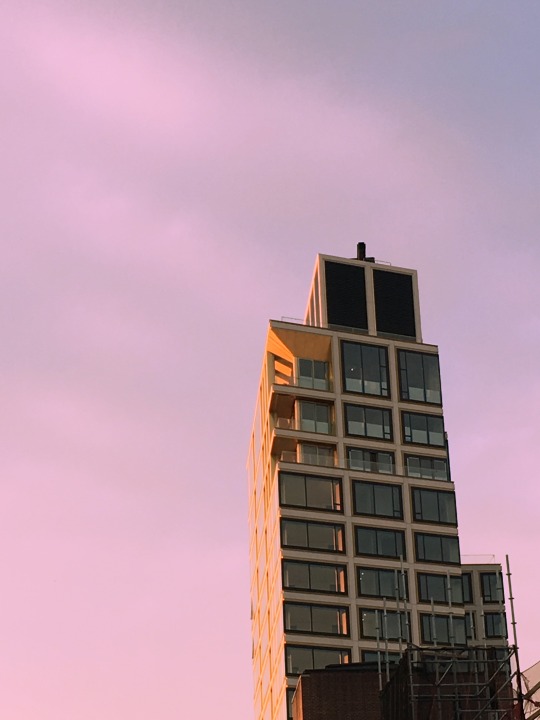
    This afternoon I walked the High Line with a friend of mine who seemed to know everything there is to know about new residential development in Manhattan. 

    She recently purchased a place and so she had done her homework. She was pointing out every building and telling me the price per square foot range; whether the floor plans were well designed (or if they had misproportioned rooms and awkwardly placed columns); and who the architect was. 

    Takeaway: To be competitive in the luxury segment in New York, you really need to have a name brand architect on the project. That seems to be the price of entry.

    As she was telling me about the “competitively priced” building in the low $2,000′s psf and the expensive penthouse that recently sold for $7,000+ psf, I started to wonder about historical pricing in New York. How has it trended? 

    I also told her that you could buy a really great condo in Toronto for $700 psf. She laughed at how affordable that was. It’s all about your point of reference.

    In any case, I found a research report from 2004 called: Why is Manhattan So Expensive? The story is one that you’ve heard before. It’s about the impact of land use restrictions on home prices. But it does also include some historical data on average condo prices.

    In 1984, the median price per square for a condo in Manhattan was $359 psf. It peaked in 1987 at $505 psf and then dropped back down to the $300′s in the early 90′s. That was not a great time for real estate. However, by 2002, the median price had rebounded to $606 psf. All USD figures.

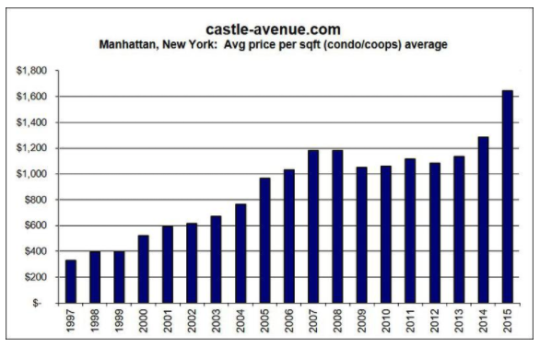
    From 2002 onwards, Manhattan saw a dramatic increase in home prices. Below are two charts from Corcoran (Q3 2016 data) and Castle Avenue, respectively:

    imageimage

    Toronto is obviously not New York, but’s interesting to consider that the average price of a downtown Toronto condo, today, is probably in the low $600′s psf. That’s in Canadian dollars and that’s pricing that New York saw decades ago. 

    It reminds me that “crazy pricing” can oftentimes be a psychological reaction to a pricing anchor that we previously set in our minds. It feels crazy. But is it?

    Image: Me

  • Revisiting Charlotte

    image

    Earlier this week, I wrote about the Charlotte Apartments in Berlin and tried to back into some of the numbers for the project. I wanted to compare the economics behind a mid-rise project in Berlin to one in Toronto.

    After I wrote that post I forwarded it to Michels Architecture – who are the architects behind the project. I thought they might be interested in reading about my (crappy) back of the napkin type of assessment and I was also hoping that they might be able to shed some additional light on the details.

    Well, they responded and graciously offered to do exactly that. So today I thought I would write a follow-up post with some additional details. I obviously don’t have everything – because they weren’t the developer for the project – but I still think you’ll find the information I got interesting.

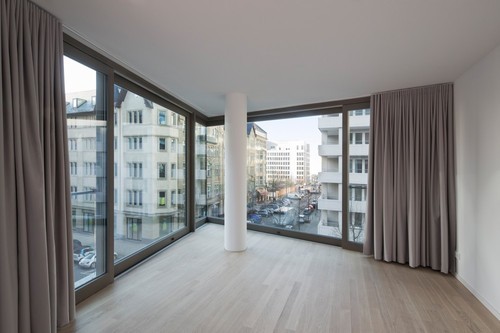
    The building has a total of 3 parking spots and they’re all on the ground floor (you can see them in this post in the second photo towards the right). They were for the penthouse maisonette/duplex units. This means that there’s only one level below grade and it’s basically for mechanical systems, storage, and waste disposal. So why does this matter?

    It matters because it means lower construction costs and the ability to develop smaller sites where you may not be able to properly layout a parking garage without car elevators and other clever strategies. This is possible because, unlike Toronto, Berlin doesn’t have any parking minimums or maximums

    With respect to unit sizes, the penthouse units are 135 square meters or 1,453 square feet which, according to the architect, are small. From the 2nd to 6th floor, there are 4 units per floor and the sizes are 37 sm / 398 sf, 65 sm / 699 sf, 68 sm / 732 sf, and 81 sm / 872 sf. On the ground floor there are 5 units and they’re at 34 sm / 366 sf (x 2), 42 sm / 452 sf, 45 sm / 484 sf, and 76 sm / 818 sf. I would say that this is comparable to what you might find in a downtown Toronto condo project. Side note: Apparently the smallest units sold the quickest.

    As of December 2011, the average sale price was 4,120 € per square meter. At today’s exchange rate, that would convert to $5,815 per square meter or $540 per square foot (in Canadian dollars). If we translate that into 2014 dollars, that’s about $575 per square foot, which would be low for prime locations/buildings in Toronto.

    A big thanks to Michels Architecture for providing this additional information. It’s always great to get local insights. I hope you all enjoyed it – happy Friday.

    Images: Werner Huthmacher