Daily insights for city builders, delivered every morning at 6 AM ET. I’m Brandon Donnelly — a Toronto-based real estate developer and founder of Globizen. I’ve been writing here since 2013.

Tag: pmhpc

  • The final push at PMH

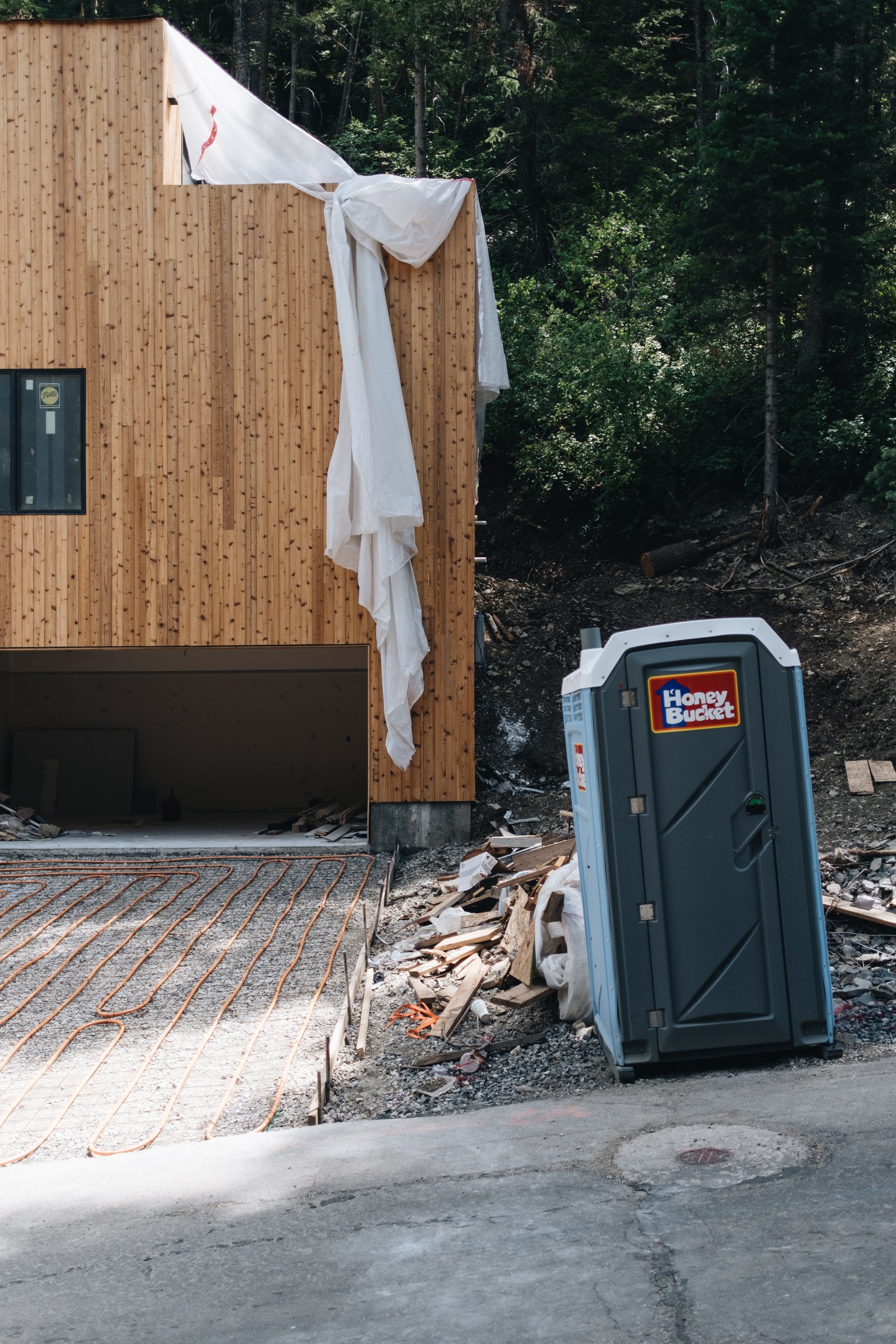
    We are into the final push at Parkview Mountain House. The radiant tubes are in for the heated driveway and walkway (essential), and the concrete is scheduled to be poured later this week. The kitchen countertops were installed this morning, and the backsplash was templated, with install scheduled for this Wednesday. The finish carpenter is back this week, and then the painters will be coming next week. The appliances and hot tub are also on standby in their respective warehouses and will be delivered to site as soon as the team is ready. As always, things are frenetic. But we’re pushing to get occupancy this month. I’m also excited to announce that we just hired an excellent management company. We’re in the midst of that onboarding process, and we’re looking forward to starting bookings sometime this fall. If you haven’t yet added yourself to our list, drop your email over here. We’ll be offering a bunch of discounted bookings on a first-come, first-served basis to the people on this list.

  • If a tree falls in a forest…

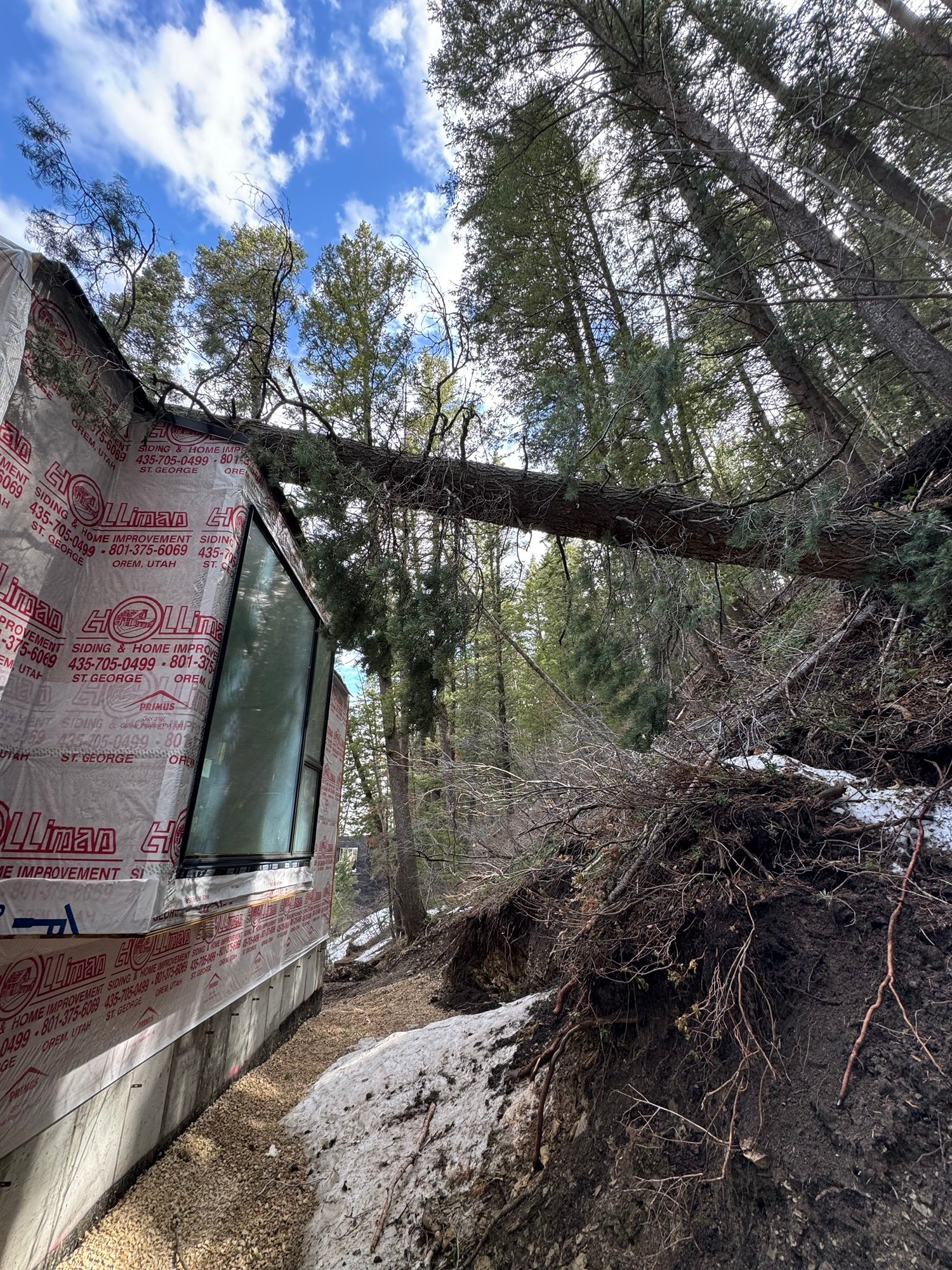
    Construction is risky. For example, last month a tree fell on top of Parkview Mountain House. The tree was located upgradient from the house and, it was so big, that pieces of it actually landed across the street on our neighbor’s property.

    Thankfully, it didn’t cause as much damage as it could have. It punctured the roof in a few places, but magically, the bay window that it landed on was perfectly fine. We also opened up the drywall around the window to inspect all of the structure.

    Needless to say, we didn’t have a line item in our budget for “trees that might fall on the house during construction.” We also didn’t have a line item to take down more trees behind the house, which is exactly what we decided to do after this happened. We called an arborist and asked them to fall anything that looked even remotely questionable. That ended up being 4 more trees.

    We were not expecting this.

    But this is why budgets have something called a construction contingency (although, we still have enough savings from some of our other contracts not to have to use it). In the end, we also learned something. If a tree falls in a forest and no one is around to hear it, the answer is — yes — it can still cost you a lot of money.

  • Last run of the season

    Shot on iPhone and a Fujifilm X-T3

  • My first Turo experience

    I used Turo for the first time this evening. For those of you who aren’t familiar, Turo is like Airbnb, but for cars. It connects people who have cars with people who need rental cars. Here is a photo of ours at SLC:

    The pickup was perfectly seamless. I got a text from an alleged human the day before. It said that they would leave the car on the second level of the parking garage next to baggage claim. And that I would get more precise instructions — such as where the key will be — after it was parked there.

    I was also told that there would be a small charge to pay in order to exit the garage. And that the charge would obviously depend on how quickly I retrieve the car after they park it. In my case it ended up being US$10, but we also stopped for food on the way.

    Overall, I’d say the pickup experience was easier and faster than your typical rental car. The car was as advertised. And thankfully, it was also there waiting for us. The two standout features for me are probably: (1) It was cheaper and (2) you get to pick your exact car. 

    This second one is important because sometimes you need a rental car so that you can drive it into a snow-covered canyon. And when faced with this situation, it can be helpful to know exactly what you’ll be getting — right down to the type of tires.

  • Income migration across the US between 2020-2021

    Between 2020 and 2021, so right when the pandemic hit, Manhattan alone lost $16 billion of federally-taxable income, according to this recent study by Economic Innovation Group. And San Francisco saw net migration that reduced its federal income tax base by more than $8 billion. At the time, this represented about a 20% decline.

    Now, I don’t know to what extent this maybe changed, slowed, or reversed from 2021 to today, but the IRS tax data is pretty clear: the pandemic accelerated a longstanding trend of Americans moving out of older coastal cities toward newer, sunnier, and more sprawling cities in the sun belt and in the Mountain West region.

    Here is a map from EIG showing the difference in incomes between households moving in and moving out of each US county. A dark blue county means that the people who moved in were richer than the people who left. (For an interactive version, click through to their website.)

    To give two examples. Here is San Francisco County, which lost nearly 20,000 people with average incomes of around $240,000 per year.

    And here is Summit County, Utah (home of Parkview Mountain House in the Mountain West region), which saw 81 new tax returns and an average newcomer income of $395,000 per year.

    This is an important reminder that people — especially people of means — vote with their feet. If they stop liking a place, they will leave, along with their incomes, to somewhere else. Indeed, in the case of this IRS data, the income flows to these growth regions seem to have been largely driven by upper-income households.

  • Footings and foundations in Park City

    We poured the concrete footings/foundations for Parkview Mountain House this week. Above is a photo of the pour. We’re about two weeks behind schedule because of delays related to site works and excavation. (We’re building into the side of a mountain.) But I’m hopeful we can make it up once we finish concrete work and move on to wood framing next month.

    For those of you who like details, here’s a section showing the footing and retaining wall on the back of the property facing the slope of the mountain:

    Our tallest retaining wall is going to be 15 feet high, which, as I understand it, is more or less the maximum we could have done here without getting into more elaborate structural solutions (such as tiebacks). So the team spent a lot of time solving a design puzzle that involved the height of this retaining wall, the maximum allowable zoning height for the site, and our choice of established grade.

    Onward. More concrete to come and then we move to wood. It’s a race to get “closed in” before the snow starts up again.