
Daily insights for city builders, delivered every morning at 6 AM ET. I’m Brandon Donnelly — a Toronto-based real estate developer and founder of Globizen. I’ve been writing here since 2013.

Tag: photography

  • Weekend cycle around the city

    On Saturday, I went on a bike ride all around Toronto. We cut across midtown (checking in on One Delisle), stopped at the Chester Hill Lookout (which if you grew up in the east end is where you probably went as a teenager to make out), shot down the Don Valley, and then turned west along the waterfront. The weather was perfect.
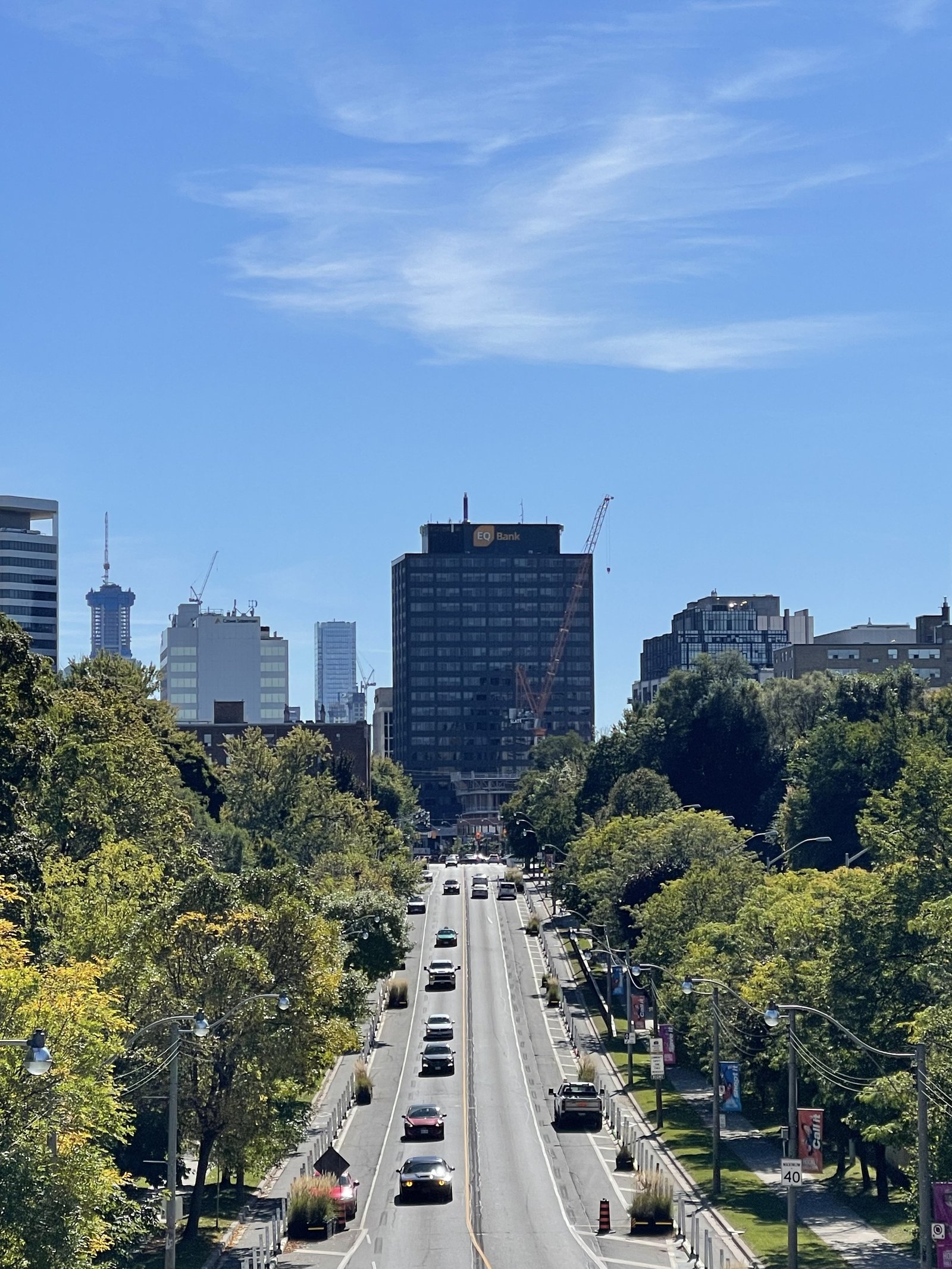
    As we were going along the waterfront, we passed the new Aqualuna building that is under construction on Queens Quay East, near Parliament Street. Being the architecture nerd that I am, I immediately noticed that as you pass by — at the speed of a bike — the balconies create this really nice cinematic effect.

    So I stopped to take these photos (I probably should have taken a video now that I think of it):
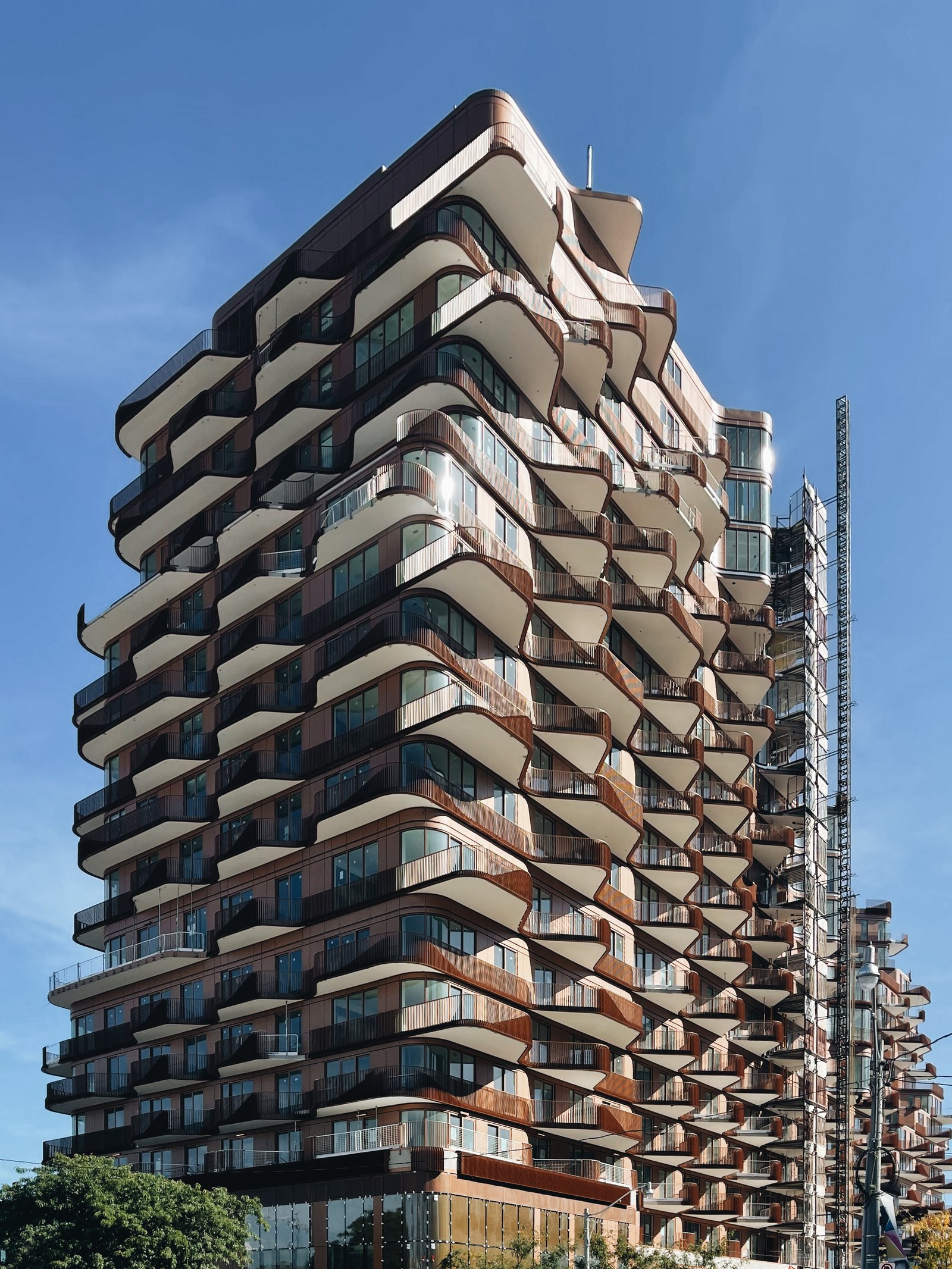
    I then tweeted a tweet calling it one of the most beautiful buildings going up in Toronto today. Judging from the responses, most people seem to be in agreement, but a few people questioned the practicality of balconies like this. Namely how private and usable they will be. I don’t disagree, but I still think it’s fine looking building.

    What do you think?

  • The Boxing Day move

    We moved into our new apartment today, so I don’t have a lot to say other than that moving is a good way to remind yourself that you have too much stuff. I was in my last place accumulating for over a decade.

    I try my best to live minimally and there is certainly something liberating about this mindset. But there is also a part of me that is a collector at heart. (A great number of our boxes are filled with things like books.)

    It also turns out that Boxing Day, or some other time over the holidays, can be an excellent time to move. Streets are calm. Buildings are quiet. The email firehose is off. And nobody else wants to move at this time.

    Most importantly, though, it affords you some time to get your life back together. And that’s exactly what I’ll be doing for the rest of this week.

  • 1970s New York, through the lens of a taxi driver

    Even if you never experienced it yourself, we have all heard the lore of 1970s New York City. It was a raw, dangerous, and unpolished city that was simultaneously teetering on the edge of bankruptcy and providing fertile ground for artists and many other forms of expression (some suspect and some not).

    Jane Jacobs is famous for saying that “new ideas often require old buildings.” And the New York of this era was exactly that kind of city. Artist Donald Judd (a favorite of mine) bought his five-storey cast-iron building in Soho (on Spring Street) around this time (1968). He paid just under $70,000.

    So it is perhaps easy to romanticize this more accessible (and equitable?) version of New York. But there were many other things going on the city at this time beyond minimalist art in Soho loft buildings.

    This photo essay by Joseph Rodriguez does a great job at telling some of those other stories in a decidedly humanistic way. Joseph was a New York cab driver from 1977 to 1985. And his final years, he had taken up photography and had started documenting the people and the city through his windows.

    His incredible photos are also available in this book called, TAXI: Journey Through My Windows 1977-1987.

    Photo: Joseph Rodriguez

  • 🏊‍♂️ Le Plongeoir

    This beach area was closed because of high winds and choppy waters. But that didn’t stop these kids from doing some very impressive dives off of this ledge. It also happens to be right beside a wonderful restaurant / diving facility called Le Plongeoir.

  • ✈️ Off to France and trying something new

    Neat B and I are off to France for the next two weeks. We optimistically booked this trip at the beginning of the year and assumed that the world would be fairly normal and well-vaccinated by now. While there remains uncertainty, things are at least better than they were last winter when we were all caved at home.

    Regular readers of this blog will know that I aim to post 365 days a year, regardless of what may be going on in my life. And that will remain the case for the next two weeks. But I have decided to challenge myself and try something new.

    I’m going to exercise my photography passion a little and instead post a single photo each day. On some days it may have a caption or a short description, but on other days there may be no accompanying text at all. The plan is to shoot entirely on my Fujifilm X-T3. Or at least that’s the thinking right now.

    I’m sure that there will end up being some great content for those of you who are interested in the built environment (architecture, design, planning, real estate). But if travel and beautiful photos aren’t your thing, feel free to check back in two weeks for our regularly scheduled programming.

  • NFTs, luxury brands, and reclaiming ownership

    Here is an interesting interview discussion about NFTs (non-fungible tokens) and the world of luxury brands. It’s a conversation between Benoit Pagotto, cofounder of the NFT brand RTFKT Studios, and Ian Rogers, who is Chief Experience Officer at the blockchain startup Ledger (he was previously the Chief Digital Officer at LVMH). Below is an excerpt that stood out to me. It starts to speak to the potential of NFTs for fashion/luxury brands. Rogers also makes an interesting comparison to the music industry in that things are playing out very differently today compared to what happened back in the late 90s.

    Benoit is proving that he can basically sell a $4,900 digital good alongside a $100 physical good. Now imagine when the lightbulb goes off in Adidas’s head, that the item on adidas.com comes with a digital collectible and the item at “retailer dot com” does not. It fits with their focus way more than the internet did. The internet didn’t fit in any incumbent’s focus. It was the opposite. It was like, “Oh my God, this threatens our monopoly in some way,” right? For the music business, it was, “Wait a minute, we want to sell a $17 compact disc, not a $1 digital file.” They got dragged into that world. 

    On a related note, it was recently announced that model Emily Ratajkowski has made an NFT containing a photograph of herself standing in front of a Richard Prince print that had previously appropriated one of her photos. (Richard Prince’s artwork is known for appropriation.) So this is an exceptionally neat idea. Here she is using an NFT to try and take back some control. Basically: You took my photo and then profited from it. So now I’m going to stand in front of that image, take a new photo, and then reclaim some ownership using the blockchain. Is this the future?

  • First personal holographic display

    I really like photography and I really like cool light things. And so this Kickstarter project — called the Looking Glass Portrait — caught my eye today. I haven’t backed it (yet), but it strikes me that three-dimensional image capture and creation is going to be something pretty important going forward. I can’t wait for that to happen.

  • The Palace of Purification

    Constructed throughout the 1930s, the R.C Harris Water Treatment Plant (pictured above) is the largest water treatment plant in the City of Toronto. It produces over 120,000 million liters of water each year, which represents about 30% of Toronto’s drinking water.

    Designed by Scottish architect Thomas Canfield Pomphrey, it is also the city’s largest collection of Art Deco buildings. This makes the complex pretty unique. Because it was designed to be both a critical piece of municipal infrastructure and an architectural icon.

    If you’ve ever visited the grounds, you’ll know that the plant is the furthest thing from utilitarian. There’s an opulence to the buildings and an incredible attention to detail, both of which are characteristics of the Art Deco movement. And if you’ve never been, I would encourage you to go.

    The above photo was taken on Sunday afternoon.

  • Project Profile: Hinterhouse by Ménard Dworkind Architecture & Design

    I recently discovered a company called Hinter (a colleague, who clearly knows me very well, sent it to me). It’s exactly the kind of the company that I would love to start, if only there were 30 hours in a day. They’re a non-traditional hotel in that they work with “iconic architects” to build unique spaces that are distributed and hidden in nature. (They also have a policy of planting 10 new trees for every booking.)

    Today’s post is a profile of their Hinterhouse (hh1) by Montréal-based Ménard Dworkind Architecture & Design. The space is located in La Conception, Québec, which is about 15 minutes from Mont-Tremblant. It’s 980 square feet (which is all you really need) and has 2 bedrooms. There’s also a private sauna and outdoor shower in a separate outbuilding. As soon as I saw it, I felt inspired and immediately opened up Realtor.ca to look for available land. Maybe it will do the same for you.

    All photography by David Dworkind.

  • Views from the Junction

    Shot on DJI Mavic Mini