
Daily insights for city builders, delivered every morning at 6 AM ET. I’m Brandon Donnelly — a Toronto-based real estate developer and founder of Globizen. I’ve been writing here since 2013.

Tag: phoenix

  • Field Guide to Indoor Urbanism

    A few months ago, one of my old professors from architecture school — Phu Hoang — reached out to me through this blog. That’s one of the benefits of writing publicly — it becomes your calling card. In this case, it had been at least 16 years since I was in his design studio.

    We connected over a call. He told me about his and Rachely’s firm, MODU Architecture. And he let me know that he’s no longer teaching at Penn. He is now the Head of Architecture of the Knowlton School at Ohio State University.

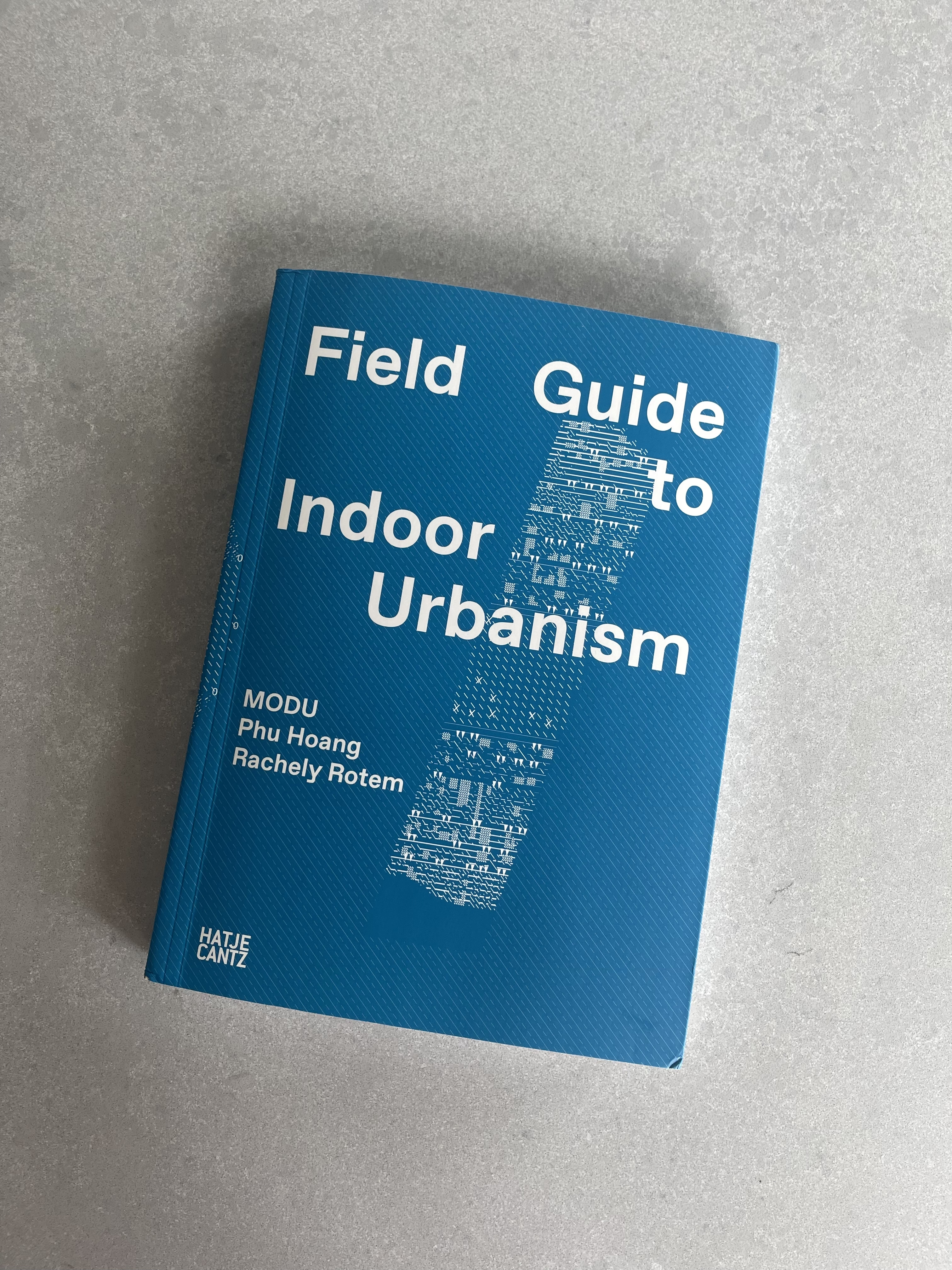
    Then, following the call, he was kind enough to send me a copy of his new book, Field Guide to Indoor Urbanism:
    The typical approach to modern building design is to have clearly defined boundaries between interior and exterior spaces. The outside is the outside. And the inside is a climate-controlled space that is, for the most part, sealed to the outside.

    Most of us spend the vast majority of our lives in these latter spaces. In fact, since the advent of modernism and the International Style over a century ago, the general idea has been that these spaces can and should be mostly the same.

    HVAC systems make it so that you don’t really need to worry about context or the environment. What works in Toronto can work in Phoenix. You just need to dial up your cooling loads.

    This is so much the case that whenever I’m in a city with a fairly benign climate, such as somewhere in California, I always find myself fascinated by the fluidity between interior and exterior spaces. It’s such a foreign concept to me that it stands out: “Wait, how is this not sealed?

    Indoor urbanism, on the other hand, makes the argument that this binary approach is the wrong way to think about spaces. Here’s an excerpt from a recent Metropolis article about MODU:

    They call this approach “indoor urbanism,” which privileges the blurred boundary between what has traditionally been considered interior space and exterior space. This in-between space–straddling open and closed, artificial and natural–deserves architects’ keen attention, especially as the planet warms. “Indoor urbanism recognizes that architecture and cities are situated on an environmental continuum, as a matter of degrees rather than absolutes,” write Hoang and Rotem in Field Guide.

    Examples of this thinking can be found throughout their work. This project in Jackson, Wyoming is one of my favorites both because I love Jackson and because it’s a cold and snowy place. And yet, even in this climate zone, their design includes for several “semi-exterior areas” that serve to connect you to nature.

    This is a decidedly different way to think about architecture and urbanism. But as our climate crisis intensifies, it’s only going to become more relevant.

  • Waymo’s robotaxis now make 50,000 paid trips every week

    A few days ago, Waymo announced (on X) that its robotaxis are now doing more than 50,000 paid trips every week across Phoenix, San Francisco, and Los Angeles.

    This means that the company is getting an average of 300 bookings every hour or five bookings every minute. And if you add in Austin, where it’s currently offering a limited number of rides, the company has completed a total of over one million rider-only trips.

    In the announcement, Waymo also went on to say that “fully autonomous ride-hailing is a reality and a preferred mobility option for people navigating their cities every day.” All of this is something.

    But perhaps the most important takeaway, right now, is that the company continues to claim — by way of a study from Swiss Re — that its robotaxis are already significantly safer than human-driven vehicles.

    I don’t personally know if this is true, but it’s not hard to believe. I mean, human drivers suck. And assuming it is true, we should all want more robotaxis on the road, because statistically, we would be significantly safer.

    The problem, though, is that autonomous vehicles suffer from a perception bias. We’re all looking for them to fail. If a robotaxi gets into an accident, it’s news. But if a human driver gets into an accident, it’s standard operating procedure. It’ll be interesting to see how and when this flips.

  • Wuhan is right now a driverless car capital

    Remember Wuhan? Well, it turns out that it is emerging as an important hub for driverless vehicles. Right now it is home to the largest fleet in the world:

    In Wuhan, 500 robotaxis, mostly run by Baidu, China’s rival to Google, recorded more than 730,000 ride-hailing trips last year. That compares with combined orders of more than 700,000 last year in Phoenix, San Francisco and Los Angeles, according to Waymo, the self-driving car developer of Google’s parent company Alphabet. Waymo told the Financial Times that it had “a couple of hundred cars” in each of the three fully autonomous zones.

    One of the things that is allegedly helping Chinese companies is that they have access to more data. The networks of cameras and other infrastructure that make Chinese cities the most surveilled in the world are, coincidentally, also good for training machine learning models.

    This has some industry experts speculating that China could reach an autonomous vehicle “tipping point” sometime around 2027. Meaning, the technologies will be significantly safer than human drivers (at least 10x) and ready for mass adoption.

    I don’t know if this is the right timeline. There have been many forecasts made over the years. But I do know that competition is good for progress and that having a rival can be an important motivator. And right now, this is yet another example of the US vs. China.

  • Waymo and Uber announce autonomous vehicle partnership, starting in Phoenix

    Last month, Waymo (Alphabet) and Uber announced a new multi-year partnership that will bring Waymo’s autonomous vehicles to Uber in the Phoenix area later this year. Already, Waymo operates across 180 square miles of the city, making it the largest fully autonomous service area in the world. But now, or I guess later this year, people will be able to order a Waymo AV through the Uber app.

    Not a lot of people seem to care about autonomous vehicles anymore. For a while, every conference had people talking about how they were going to reshape our cities. But then the technology didn’t arrive quite as quickly as people were hoping, and so everyone lost interest and move on to other more exciting things. But clearly things are still happening. And this announcement strikes me as being an important one.

  • Cruise expands autonomous taxi service in San Francisco

    Cruise, which I wrote about earlier this year, has just announced that its autonomous taxi service will soon be available to the general public 24 hours a day, across all of San Francisco. Initially the service was only available between 11PM and 5AM (when traffic volumes are lower), and in certain parts of the city. It was also free to use. In total, the company now has about 300 AVs operating across San Francisco, Austin, and Phoenix. And it has been charging for rides since June of this year.

    If you’re curious about what it’s like to ride in one of these, check out the above video.

  • Sticking close to home — two-thirds of young Americans live near where they grew up

    Here in Canada, there is often a belief that Americans tend to be more mobile than Canadians. Don’t like the cold weather? Just move south. Taxes too high? Just move south. Housing too expensive? Just move south.

    But just how mobile is mobile? A new study by the US Census Bureau and Harvard University found that by age 26, more than 2/3 of young adults in the US actually just live where they grew up, with 80% living within 100 miles, and 90% living within 500 miles.

    Migration distances were also found to be impacted by both race and parental income (though these two things likely exhibit a relationship on their own). If you are a young white or Asian adult, the “radius of economic opportunity” tends to grow and you’re more likely to live further away from where you grew up.

    The most popular destinations overall are New York, Los Angeles, Washington, and Denver (in this order). And while New York and Los Angeles remain at the top regardless of who you are, San Antonio and Phoenix are top destinations for Hispanics, and San Francisco is a top destination for Asians.

    Regardless, home appears to be a pretty sticky place.

    But what about Canadians? Are we less mobile? Looking at net domestic migration rates, Canada saw 254,143 interprovincial migrants between 2018-2019, whereas the US saw just over a million between 2020-2021. So on a per capita basis, Canada’s rate is actually higher.

    Statistics Canada also estimated earlier this year that as of July 1, 2016, somewhere around 4 million Canadians were living abroad — or about 11% of citizens. This is a much higher percentage compared to Americans.

    Of those living abroad, roughly half are believed to have received their citizenship through descent, meaning they were born abroad to Canadian parents. About 1/3 are Canadian citizens by birth. And about 15% are naturalized citizens.

    So it turns out that Canadians are in fact pretty mobile. We also seem to like going further afield.

  • Phoenix’s cool pavement pilot program

    When I was in Phoenix this past spring I noticed a number of people carrying their big dogs around. At first I wasn’t sure what was going on. I thought maybe the dogs were injured and couldn’t walk. But then it dawned on me that maybe the ground was too hot for the dogs to walk on it. Phoenix is kind of hot sometimes and so this appears to be a thing.

    In response to this kind of hot problem, the city has a pilot program underway where they’re testing out something that they are calling “cool pavement”, which is essentially a highly reflective coating that gets layered on top of your traditional asphalt streets. Here’s a video showing some of it getting applied:

    The idea here is, of course, to lower the surface temperature during the day and also reduce the overall urban heat island. And after the first year of the pilot program, the results have been encouraging. Cool pavement had an average surface temperature that was 10.5 to 12 degrees Fahrenheit lower than traditional asphalt during the middle of the day.

    But there have been some tradeoffs. Because of its higher reflectivity, mean radiant temperatures increased by about 5.5 degrees Fahrenheit during the day, which means that these streets feel warmer to humans when they’re around them. That’s obviously not ideal, but it could be a necessary trade-off to reduce surface temperatures across the city.

    For more information on Phoenix’s cool pavement pilot program, click here.

  • New York City is back

    So here’s the headline: More people are moving to Manhattan than before the pandemic. This is true. But an even more accurate description might be that New York City was losing people before the pandemic and it is still losing people. But things have rebounded since the lows of the pandemic and it is now losing less people. Here are two charts from Bloomberg:

    This is generally good news since the increased exodus (to places like Miami) led some to believe that one of the most important global cities in the world was now dying. I never thought that was the case. But there’s no arguing against the fact that the fastest growing cities in the US are the ones with more affordable housing and fewer constraints on new development.

  • Water supply and air conditioning

    This past weekend I was reminded that Phoenix is largely what it is today — the 5th biggest city in the US — because of two very important things.

    Firstly, the city had to figure out water supply.

    About 50% of the city’s water supply comes from surface and groundwater, specifically the Verde River and the Salt River watersheds that are to the north and east of the city. And about 40% comes from the Central Arizona Project, which is a 541 km diversion canal that pulls water from the Colorado River and brings it through the state (terminating in Tucson). From what I have read, the CAP canal serves about 80% of the state’s population.

    Secondly, Phoenix needed A/C.

    Air conditioning was first invented at the beginning of the 1900s, but it really didn’t become ubiquitous until the second half of the century. And not surprisingly, it made the southwest of the US far more appealing. In 1950, Phoenix had just over 100,000 people. By 1960, the city had grown by about 311% to reach nearly 440,000 people. Apparently there was more construction in 1959 alone than from 1914 to 1945 combined. Air conditioning made Phoenix’s summers bearable.

    Air conditioning is such an interesting topic because it’s one of those things that many of us take for granted. When you walk into a store or an office building in the summer, you expect it to be cool. But it hasn’t really been around all that long and its invention has, in many ways, been instrumental in defining the modern city. Even something as common and banal as a glass office tower with large floor plates would not be possible/practical without air conditioning.

    We can certainly debate how sustainable it is to urbanize and air condition desert climates like Phoenix, but there’s no denying that air conditioning has had a profound impact on our urban landscapes. Diversion canals are pretty important too.

  • The Zillow postmortem

    The postmortems surrounding Zillow’s exit from the algorithmic home-flipping business are starting to surface. Here’s an article from the WSJ and here’s Matt Levine’s take on it. The latter piece is very Levine-like and is called, “Zillow tried to make less money.”

    The obvious story is that Zillow’s algorithms were not valuing homes correctly. But the story is more nuanced than this. In Q1 of this year, Zillow’s home flipping business was actually more profitable than it had initially expected. And that’s because its algorithms were consistently undervaluing homes. So when it did transact, it was doing so at favorable / low cost bases.

    The problem was that the company was not transacting enough and there was a fear of losing ground to competitors like Opendoor. Apparently only about 10% of people who requested an offer from Zillow actually ended up accepting it. Margins were good, but volumes were too low.

    So what Zillow did was tweak its algorithm to be more aggressive (see above chart from the WSJ). But this created the opposite problem: low/negative margins, higher volumes.

    Once again, it shows you some of the challenges with bringing real estate online. The supply of homes is largely heterogenous and there are a lot of qualitative factors that play into what someone is willing to pay.