Daily insights for city builders, delivered every morning at 6 AM ET. I’m Brandon Donnelly — a Toronto-based real estate developer and founder of Globizen. I’ve been writing here since 2013.

Tag: philly

  • State of Center City, Philadelphia

    The Center City District and Central Philadelphia Development Corporation recently published a report called: State of Center City 2016. The objective was to measure the progress being made in Philadelphia’s downtown. 

    I moved out of Center City (Rittenhouse Square) in 2009, but I still like to follow what’s happening. I really enjoyed my time in Philly. In fact, I remember missing its immensely walkable downtown after I returned to Toronto and touched down in the suburbs briefly before moving back downtown.

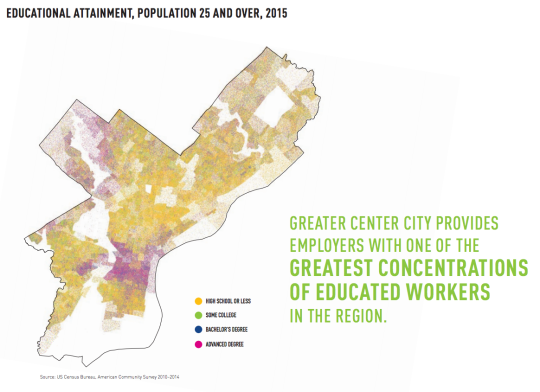
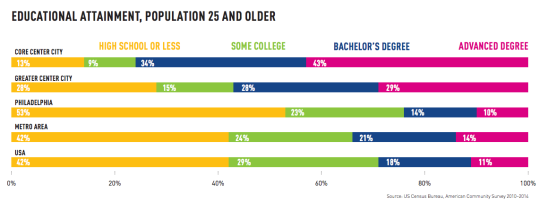
    If you take a look at the report, one of the first things you’ll probably notice is the concentration of jobs and the concentration of knowledge works (with advanced degrees) in the Center City area. We are seeing this shift in so many cities around the world.

    Here are a few graphics (all of which are from the report):

    imageimage

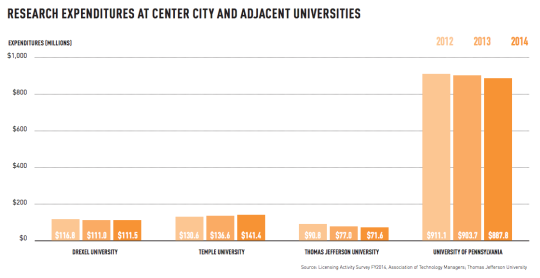
    Part of the reason for this is that Center City is anchored by a number of fantastic Universities. This is critical for cities, today.

    image

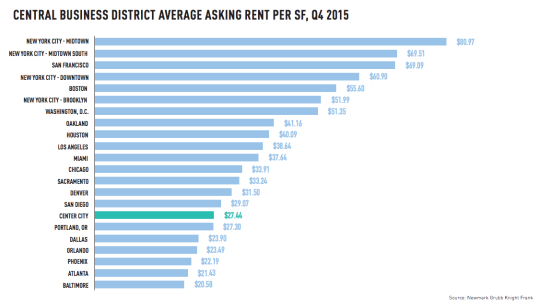
    To end this post, I thought I would post the below comparison of average office rents in major CBDs across the US. I always find these charts interesting, even though the usual suspects are up at the top.

    image

    I hope you’re all having a great holiday weekend.

  • Enemies of the High Line

    Despite not being the first example of infrastructural adaptive reuse, the High Line in New York has certainly kickstarted an urban trend. Cities all around the world now want their own “version of the High Line.”

    Philly is working on a new “rail park.” I toured the space last summer and it’s very similar to the High Line in terms of existing infrastructure. Rome and Toronto are both working on “under” spaces, which are beneath an old viaduct and elevated expressway, respectively. And the list goes on.

    But I think it’s worth remembering just how contentious the High Line was before it was built. For some people it was just an eyesore and a public safety hazard. Here’s a excerpt from a New York Times article dated 2002:

    “This is a terrific win for us,” said Michael Lefkowitz, a lawyer for Edison Properties, one of 19 businesses that own land beneath the High Line.

    Janel Patterson, a spokeswoman for the city’s Economic Development Corporation, said an agreement to share the $11 million cost of dismantling the High Line was being circulated among the property owners and the rail bed’s owner, CSX, of Richmond, Va. “It’s about eliminating a public safety hazard,” Ms. Patterson said, “but it’s also about enabling the city to move forward and better develop the area.”

    It’s also worth mentioning that former Mayor Giuliani supposedly favored demolition of the High Line. Former Mayor Bloomberg, however, did not:

    …Mr. Bloomberg said: "Today, on the West Side of Manhattan, we have an opportunity to create a great new public promenade on top of an out-of-use elevated rail viaduct called the High Line. This would provide much-needed green space for residents and visitors, and it would attract new businesses and residents, strengthening our economy. We know it can work … . I look forward to working with Friends of the High Line and other interested parties to develop a feasible reuse scenario.”

    The challenge with these sorts of things – that is, new ideas – is that we live in a world of proof and precedents. We want to see that it has been successfully done before, because, otherwise, we might be wrong. So now that New York has shown what is possible, it has cleared the way for other cities.

    Rethinking old infrastructure is a sound urban strategy. But we also shouldn’t forget that it’s less valuable to be right about something that every other city already believes to be true. The real value is created when you’re right about something that most other cities don’t yet believe.

  • A short history of redlining

    In 1933, the United States Congress created the Home Owners’ Loan Corporation (HOLC). With foreclosures rising as a result of The Great Depression, the task of the agency was to provide new low-interest mortgages to both homeowners and private mortgage lenders. Between 1993 and 1936, the agency served about one million households.

    By 1935, the parent company of the agency (the Federal Home Loan Bank Board) decided to initiate something called the “City Survey Program.” The idea was to look at local real estate trends – including the racial and ethnic composition of the country’s largest cities – in order to get a better understanding of how to manage all of these outstanding loans.

    One outcome of this program was the creation of the HOLC’s infamous “residential security maps.” (Philadelphia’s is shown at the top of this post.)

    These were maps that categorized city neighborhoods according to 4 grades. Grade A neighborhoods (green) were the best ones. They were ethnically homogenous and had room to be further developed. Grade B neighborhoods (blue) were the second-best ones. They were already completely developed, but were still considered desirable. Grade C neighborhoods (yellow) were starting to decline and showed an “infiltration of a lower grade population.” And finally, grade D neighborhoods were considered “hazardous” and colored in red. These neighborhoods had low homeownership rates, old crappy housing, and an “undesirable population”, which, at the time, largely referred to Jews and African Americans.

    Some have argued that the HOLC and their “residential security maps” are what kicked off systematic mortgage discrimination in America’s inner city neighborhoods – later referred to as “redlining.” This was the practice of denying credit to people who lived in these undesirable neighborhoods (and even to real estate developers who wanted to build in these undesirable neighborhoods).

    But University of Pennsylvania professor Amy Hillier has argued that these maps simply reflected the ethos of the time period. Using a sampling of HOLC mortgages, she found that 62% of them were issued to grade D (red) neighborhoods. The agency, itself, was not actually redlining in practice.

    Furthermore, she also looked at private mortgages issued in Philadelphia between 1937 and 1950 and found that security grade rating actually had no impact on the total number of loans issued. She did, however, discover slightly higher interest rates for properties located near and in the bottom security grades.

    All of this is to say that “redlining” is likely not the only culprit for inner city decay. There are other factors at play.

    To that end, the National Bureau of Economic Research recently published a working paper, which I discovered through CityLab, called, “Racial Sorting and the Emergence of Segregation in American Cities.” The key finding here is as follows:

    “Our preferred estimates suggest that white flight was responsible for 34 percent of the increase in segregation over the 1910s and 50 percent over the 1920s. Our analysis suggests that segregation would likely have arisen in American cities even without the presence of discriminatory institutions as a direct consequence of the widespread and decentralized relocation decisions of white urban residents.”

    In other words, it wasn’t just mortgage discrimination; it was also just general discrimination. That actually makes a lot of sense, because, if you think about it, the former couldn’t have occurred without the latter being present.

    Here’s how the research paper puts it (via CityLab):

    “Policies that reduce barriers faced by blacks in the housing market may thus not prevent or reverse segregation as long as white households have the ability and desire to avoid black neighbors.”

    (Note: Most of the information and data used in this post was sourced from the work and research of Amy Hillier.)

  • A year in review — 2015 on Architect This City

    Thanks to this blog, it’s pretty easy for me to go back and look at what I was doing and thinking throughout the year. That’s one of the benefits of writing a daily blog/journal. And as is usually the case, 2015 was a year of ups and downs.

    For my annual ski and snowboard trip with the guys, we went to Banff (Alberta) and Revelstoke (BC). But we got stuck with unseasonably warm weather in the west (the opposite of what’s happening this winter) and I got injured on day 3. That put me in the emergency room and knocked me out of snowboarding for the rest of the season – as well as from the gym for a number of months.

    Shortly after that I also got struck with some family health issues. That was pretty scary for a good solid month, but in the end, everything seems to have worked out. What a relief.

    Towards the end of March, I did a brand partnership between Architect This City and Porter Escapes, which brought me to Quebec City for a weekend. That was a lot of fun and gave me the opportunity to be a real flâneur in one of the most interesting cities in Canada.

    In April, I left my real estate development job at TAS and shortly after I joined CAPREIT (TSE: CAR.UN) to help build out their (real estate) development platform. Previously their/our focus had just been on acquiring existing rental assets. But now it is time to build.

    Later this month I also participated in the Toronto filming of a documentary called Waterfront Cities of the World. That was a lot of fun. But come to think of it, I don’t think I ever watched the final video.

    In May, I started lobbying hard for the removal/replacement of the eastern portion of the Gardiner Expressway East here in Toronto. If you’ve been reading this blog since the summer, I am sure you remember this period. With the help of a colleague of mine, I even started a petition that ended up getting presented at City Council.

    But in June, Toronto City Council voted to demolish and then rebuild the elevated expressway along our waterfront. I am still surprised by that. What a shame.

    In July, we (CAPREIT) announced our first joint venture development project. A mixed-use project – 506 rental apartments on top of about 160,000 square feet of retail – in Toronto’s Liberty Village. 

    In August, I went back to Philly to relive my Penn days. I do that every couple of years just to make sure that Bob and Barbara’s is still offering up “The Special.” The Special is a can of PBR and a shot of Jim Bean for $3. It’s famous in Philly, but it always sounds like a far better idea the night before, as opposed to the morning after.

    In this same month I also hit the 2 year mark here on Architect This City. That’s 2 years of getting up every single day and staring at a blank blog post screen and thinking of something insightful to say. 

    The following month on September 11 (I’ll never forget this date), I got laser eye surgery. More specifically, I got custom wavefront LASIK. And today it’s pretty hard to imagine that I used to have to reach for my coke bottle glasses as soon as I woke up every morning.

    Later in September, I also gave a talk at my alma mater, the Rotman School of Management, to a delegation of about 70 urbanists from Portland. It was an honor to be invited alongside rockstars such as Richard Florida and Jennifer Keesmaat.

    In October, I featured a guest post from the former mayor of Toronto, John Sewell. I don’t often do guest posts on my blog, but John had just published a new book and I thought it would be a good way to change things up here. John and I aren’t necessarily on the same page with many urban issues, but we did agree on the Gardiner East.

    For the remainder of October, it was basically just the Jays.

    In November, I spoke at a Product Hunt event focused on real estate + tech. It was incredibly encouraging to see so many entrepreneurs here in Toronto focused on the intersection of real estate and tech. There are lots of opportunities in this space and I am sure that there are many success stories in the making right now. Toronto is the perfect place for real estate + tech innovation.

    And finally, in December, I crossed something off my bucket list and attended Art Basel Miami Beach. I have wanted to go for well over a decade; pretty much since I started studying art history in undergrad. I don’t know what took me so long.

    Oh, I also announced that I was writing a book on becoming a real estate developer

    What a year. I can’t wait for 2016. 

    What do you have on your to-do list for next year?

  • The Philadelphia (real estate) story

    Real estate is a local business. And this weekend in Philadelphia really reminded me of that.

    Here’s what I mean.

    The real estate story in Toronto is condos. We’re buildings lots and lots of condos. When my friend from Chicago recently visited Toronto for the first time, he told me that it feels very similar to Chicago, except that we have modern glass condo towers going up everywhere and they don’t. That’s our story right now.

    Low-rise housing in Toronto is becoming increasingly unaffordable (the average price of a detached home is well north of $1M) and so high-rise condos are now what many people can afford. When young people in Toronto talk about buying their first place, that now usually means a condo.

    But that’s not the story in Philadelphia.

    In Philadelphia, you can buy a 1,600 square foot, 2 storey, 2 bedroom rowhouse in a respectable neighborhood for sub US$400,000. And in speaking with my friends in Philly this weekend, that’s what young people are buying.

    This doesn’t mean that Philadelphia isn’t building new high-rise condos and apartments. It is. Obviously nowhere near as many as Toronto. But it is building. Far more than when I lived there before the Great Recession.

    However, the condo market is typically more upmarket. The target market isn’t so much first time buyers and the mass market; it’s more people who want full floor apartments in Rittenhouse Square. (I’m exaggerating only slightly.)

    Philadelphia is also building more rental towers than condo towers. (Rental has only recently become fashionable again in Toronto.)

    I’m guessing that a lot of this has to do with the fact that Philadelphia draws in a lot of transient students and academics each year. In fact, the most noticeably changed area from when I lived in Philly was University City. That’s the area that houses the University of Pennsylvania and Drexel University.

    So there seems to be strong demand for new rental housing in the city. I’m told vacancies are very low. But when it comes time to buy, young people don’t look to condos like they do in Toronto. They are looking mostly to rowhouses.

    This is interesting to me because it’s the exact opposite of Toronto. In Toronto, low-rise is expensive and so lots more people are buying high-rise. In Philadelphia, high-rise is expensive and so people are buying low-rise.

    I guess that’s why they say real estate is a local business. What works in one city may not work in another.

  • A culture of beer gardens

    It’s great to be back in Philly. I have a real sense of nostalgia around this city.

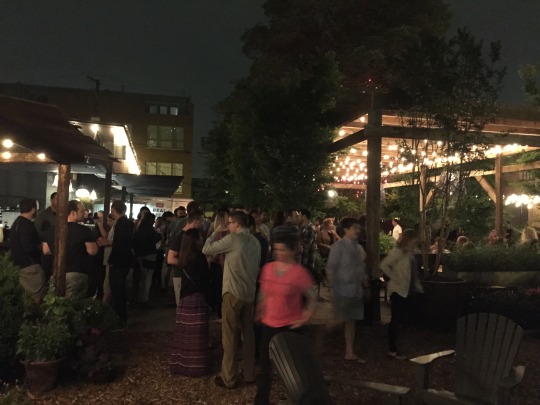
    Last night my friends took me to a popup beer garden on South Street put on by the Pennsylvania Horticultural Society. Before the popup garden, it was just an abandoned lot.

    There seems to be a real culture of beer gardens in Philly, which is something I don’t think we have in Toronto. Why is that?

    Part of the reason, I think, is that there’s a greater spread between desirable and undesirable neighborhoods in Philly than in Toronto. And in the undesirable ones, urbanists have to work really hard to figure out ways to activate them.

    So really these popup beer gardens are a lean urbanist intervention. It’s a way to draw people to an area and create awareness. And I’m told that often these popup gardens end up becoming development sites.

    Because of this, these popup gardens are sometimes controversial within communities. They’re seen as a catalyst and precursor to gentrification. But that’s a whole other debate.

    What I find interesting is this grassroots approach to city building. Great spaces don’t have to be expensive. Sometimes seating, lighting, and beer are all you need to bring people together.

  • 10 reasons to visit Philadelphia right now

    image

    Today’s ATC post – which happens to be a guest post – is coming to you live from on board the UP Express train that runs from Union Station in downtown Toronto to Pearson Airport. (Everywhere should have free wifi.)

    I’m on my way to Philadelphia and I’ve been wanting to try this train since it opened earlier this summer. It feels great to finally ride it. It’s everything I could have hoped for. It even has that new car smell 🙂

    Last month I wrote a post called, 10 reasons to visit Toronto right now. It was in honor of my good friend Alex Feldman’s visit. Well now it’s my turn to visit Philadelphia and he has decided to return the favor and do a Philly version of that same post. 

    Alex is to Philadelphia what I am to Toronto. He grew up in Philly. He was educated in Philly (we went to Penn together). And he’s super passionate about the future of Philly. And I think that’s how everyone should be about their city.

    So I hope you enjoy his list of 10 reasons to visit Philadelphia right now. It’s basically my to-do list for this weekend.

    ———————————————

    10. World Heritage City: Philadelphia is on track to become the first World Heritage City in the United States. This UNESCO designation will underscore the city’s historic importance as the birthplace of American Democracy as well as the historic urban fabric which gives the city it’s walkable, urbane character.

    9. Shopping: Philadelphia has come a long way as a shopping destination. Conde Nast Traveler recently ranked the city as number 2 out of the best shopping destinations in the world. 3rd Street in Old City has become a hotbed for independent boutiques while Rittenhouse Square has attracted new chains such as Uniqlo, Theory, and Vince. More is on the way with a complete re-make of the Gallery shopping mall slated to start soon and the new East Market complex under construction. 

    8. The Pope is Coming:  In case you haven’t heard, Pope Francis will make his first visit to the United States – with a 3 day visit to Philadelphia in late September. The visit will coincide with the World Meeting of Families gathering. A crazy number of visitors (2 million?) are expected to descend on the city – causing Philadelphians to panic, complain, and attempt to rent their houses for ridiculous amounts of money. But this important visit will help raise the profile of the city on the international stage.

    7. Building Boom: There is probably more development happening in Philadelphia right now then any other time in recent history. The skyline is growing with additions by Norman Foster, Cesar Pelli , and Kohn Pedersen Fox. New apartment buildings, condos, and rowhouses are under construction across the city (rental vacancy rates are less than 2%). In addition the Barnes Foundation and the new Singh Center for Nanotechnology mark impressive additions to the city’s architectural landscape.

    6. Public Spaces: Philly’s public realm has seen massive investment over the last several years. A complete remake of the landscape outside of City Hall has become the new Dilworth Park. The designers of NYC’s highline have added two public spaces to the city (Race Street Pier and the new Central Green in the Navy Yard). And Schulkill Banks recently added a new boardwalk which the New York Times raved about when they ranked Philly as the number 3 city to visit in 2015. More is on the way with the first phase of the Reading Viaduct Rail Park expected to start soon.

    5. Waterfront: Philadelphia’s Delaware River waterfront has long been cut off from the city by interstate 95. Things have started to change recently, with new trails and pier parks recently added to the working waterfront. Even Penn’s Landing, the city’s much maligned waterfront attraction is seeing improvements – including the tremendously popular Spruce Street Harbor Park – a pop-up park featuring floating beer barges, shipping container food stands, and tons of hammocks.

    4. Food: Philly is one of the best food cities in the United States. So much is happening right now in the city’s dining scene, it’s hard to keep track of the latest restaurant openings. Neighborhoods such as Fishtown and East Passyunk have emerged as hot dining districts with BYOB chef driven restaurants. More can be gleaned from the Washington Post which recently summarized the dining scene better than I can.

    3. Pop-up Gardens: One of the best reasons to visit Philly in the summer is the opening of the Pennsylvania Horticultural Society Pop-Up gardens. The wildly popular beer gardens, began several years ago as an initiative to remake underused or vacant lots into useful public spaces. This summer, 2 gardens – one on 15th and South and one at 9th and Wharton have been transformed into vibrant spaces for eating, drinking, and hanging out.

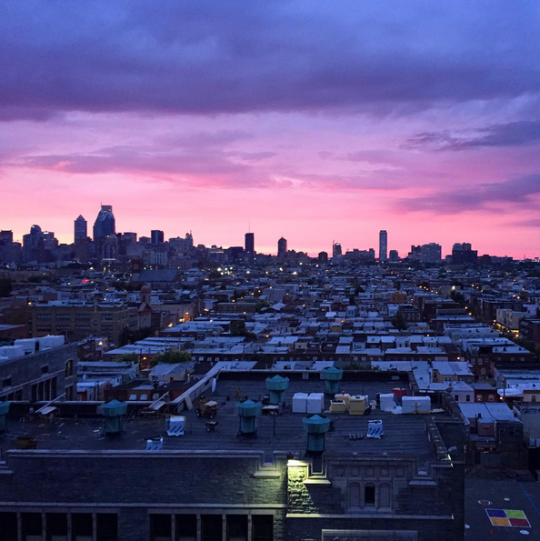
    2. Le Bok Fin: Speaking of temporary uses, the most recent addition to Philly’s pop-up (or iterative placemaking) scene is a rooftop bar called Le Bok Fin. Situated on the 8th floor of an old vocational high school in South Philly (and named after the school’s restaurant – which in turn is a play on one of Philly’s most famous French restaurants). This is the first iteration of development at what is planned to become an amazing new center for creatives inside the old school – being led by Lindsey Scannapieco and her team at Scout LTD. Check out Le Bok Fin for incredible views of the city skyline (especially at sunset).

    1. Bike Share: While a little late to the party, Philly recently launched it’s own bike share program – which is proving to be a huge success. Dubbed Indego, the new bike share is easy to use, has 60 stations, more than 600 bikes and is becoming one of the best ways to hop around town. Check one out and go explore Philly!

    Image: Alex Feldman

  • What food is your city famous for?

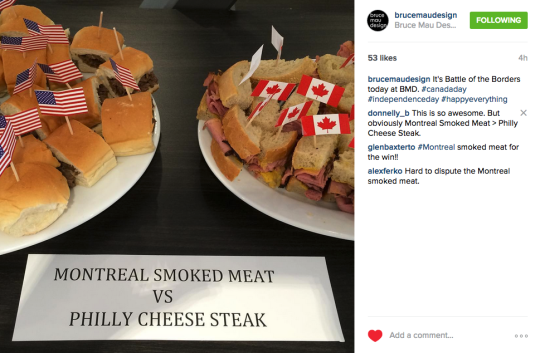
    Yesterday I came across the above Instagram post by Bruce Mau Design, which pitted the Philadelphia Cheese Steak sandwich against the Montreal Smoked Meat sandwich in a “battle of borders.” It was to celebrate both Canada Day and American Independence Day.

    I thought this was an awesome idea, so I tweeted out the photo. Then Daniel Kay Hertz – who is a Senior Fellow at City Observatory and from Chicago – asked me: “Is there a Toronto equivalent?

    And that got me thinking. 

    Montreal has smoked meat, bagels, and poutine. Philly has the cheese steak. Chicago has deep dish pizza. Quebec City has maple sugar and tourtiere (a kind of meat pie). New Orleans has po’boy sandwiches. Boston has clam chowder. Austin has tacos. Seattle has crab. And the list goes on.

    But what is the quintessentially Toronto dish? Asian fusion food? Peameal bacon sandwiches from the St. Lawrence Market? I really don’t know. So I think we should decide on one right now. Think of it as an exercise in city branding.

    Leave your suggestion in the comments below and we’ll have a vote.

  • Skateboarding and the city

    Yesterday during lunch with a colleague, the topic of skateboarding came up. And I was reminded of how much I used to love it. There was a time when I used to skateboard everyday. If I missed a day or two, I felt rusty.

    What I loved about it was how incredibly challenging it was to learn and perfect new tricks. And there were always ways to continually push yourself to the next level, whether it was the number of boards you could ollie (jump) or the number of steps you could ollie down. You’d start with 3 stairs. Then it was 4. Then 5. Then 2 sets of 5. And so on. Once you mastered those, you could then introduce a kickflip to make it even more challenging. The possibilities were endless. And so—to borrow Daniel Pink’s terminology—it was all about mastery for me.

    Here are a few of my old skate decks (they’re on the wall in my apartment):

    But in addition to teaching me that there’s no substitute for discipline and practice, skateboarding also helped shape my love of cities (either that, or I was a born urbanist and skateboarding was a symptom). 

    Street skating is an inherently urban activity. There’s no defined field or rink. The entire city is at your disposal. And so as a skateboarder, you’re always on the look out for interesting things “to skate.” You want steps, ledges, edges, and changes in grade. You also look for sequences. What tricks can I string together across this urban landscape? You wouldn’t believe how exciting these features can be to a skateboarder.

    In fact, I’d even go so far as to say that skateboarders are probably some of the finest surveyors of public space around. How many people do you know go around counting stairs, examining railings and measuring ledge heights? Skateboarders do.

    But as much as street skating is all about the city, that relationship is often an acrimonious one. Skateboarding is viewed as a property destroyer, an annoyance and, in some cases, a criminal activity.

    A perfect example of this is the story of LOVE Park in Philadelphia (it was a public plaza, not a park). LOVE Park was a legendary space in the skateboarding community. It put Philadelphia skateboarding on the map. It was iconic. If you skated during that era, you knew about LOVE Park.

    However, on April 25th, 2002, the Mayor of Philadelphia ordered that the park be closed off and remodelled to remove all the elements that skateboarders loved about it. It was decided that skateboarding was not an acceptable behaviour in an urban public plaza.

    That act made a huge dent in the Philadelphia skate community. And the park became essentially a homeless shelter. 

    As a former skateboarder, urbanist and ex-resident of Philadelphia, this always baffled me. Cities all around the world spend a great deal of time and money trying to create spaces that people will actually use. And here you not only had an intensely used one, but one that spurred a grassroots global phenomenon. It’s precisely what makes cities so great.

    Thankfully, many cities have woken up to the benefits of street skating by building purpose built skate parks. But in my view, those spaces lack something that places like LOVE Park had. LOVE Park was authentic. It was about a serendipitous repurposing. It had a sense of place.