


This is my first time seeing a device like this.
Also, it’s solar powered.
Daily insights for city builders, delivered every morning at 6 AM ET. I’m Brandon Donnelly — a Toronto-based real estate developer and founder of Globizen. I’ve been writing here since 2013.
This is my first time seeing a device like this.
Also, it’s solar powered.
This is an oversimplification that won’t apply to all markets, but typically the decision tree for urban parking looks something like this:
What I’m getting at with this is that above-grade parking is generally frowned upon. It is done in lots of places, like in Miami where you can’t go underground, but if you ask your average urbanist they will probably tell you that above-grade parking is ugly and that said ugliness should be mitigated to the fullest extent possible.

But here’s a counter argument. Let’s assume that we believe any one of the following:
In this case, the ideal solution is actually “unwrapped” above-grade parking. It’s less intensive to build, and both below-grade parking and wrapped above-grade parking result in large windowless spaces with very little utility other than for storing inanimate objects. Your options are parking, self-storage, and maybe a large gym for people who don’t like natural light.

Judging by the above poll, which was still in progress at the time of writing this post, this is not how most people think about urban parking. But I think it’s time we start changing the discussion.
We knew it was coming. But it’s important and worth mentioning again. This week, Toronto City Council adopted new Zoning Bylaw Amendments that will remove most parking minimums across the city. We now join many other cities across North America who have done similar things in order to try and encourage more sustainable forms of mobility.
If you’d like to take a spin through the draft amendments, you’ll find them linked here. I haven’t gone through them in detail, but I did do a word search for “maximum” given that this week’s adoption represents a pretty clear change in perspective. Here’s an excerpt from the staff recommendation report that speaks to what I’m talking about:
Recognizing these challenges, this review of the parking standards in the city-wide
Zoning By-law 569-2013 was guided by the principle that parking standards should
allow only the maximum amount of automobile parking reasonably required for a given
use and minimums should be avoided except where necessary to ensure equitable
access. The previous review, which began in 2005, was guided by the principle that the
zoning standards should require the minimum responsible amount of parking for a given
land use. This is inconsistent with Official Plan policies which discourage auto
dependence.
One other thing I found in the documents that went to Council was this map of parking spot selling prices in active high-rise developments across the city. Not surprisingly, downtown and midtown are showing the highest prices per parking space. I can’t vouch for the accuracy of all of these dots, but it looks directionally right and I can tell you that at least one of them is correct.

All of us in the industry know how much parking drives decision making. There’s a joke (half-joke) that when you’re designing a building, first you lay out the parking and then you design all of the residential suites around that structural grid. That’s not the way things should be done. The future of this city should not and cannot be centered around the car. This week’s adoption is in service of that.

Building new buildings takes a really long time. It is not uncommon for development timelines to to span 5-10 years, and sometimes even longer. It is particularly frustrating when you see unnecessary roadblocks and delays throughout the process. But that’s a topic for another post.
Perhaps one of the positives of these timelines is that they force you to think well into the future. Take for example electric vehicles. Most car manufacturers have already announced aggressive electrification targets for the year 2030.
What that means is that if you’re starting a new project today, you have to assume that it will be completed into a world where many more people will be coming home and plugging in their car. Perhaps it will be the majority of people. So you probably need to plan for that.
Another way to think about development is that it is a leading indicator for what’s coming. If we stick with the example of cars and parking, I think it’s pretty clear that parking is becoming increasingly scarce in our biggest cities. The pressures are simply too great.
In all of our Toronto projects, we are currently building no more than about 0.4 parking spaces per suite. And there’s pressure to bring this number down even further. There are lots of examples of zero parking. The biggest reason is costs, but we also know that big cities don’t function well when everyone is driving around.
This is also not a new trend.
If you look at the multi-family buildings that Toronto completed in and around the 60s and 70s, many will have parking ratios in the range of 1-2 parking spaces per suite. This is totally untenable in today’s environment (except for a small subset of the market) and I bet you that a lot of this parking is now sitting vacant.
Things change. Development can sometimes tell you what those changes might be.
Photo by Michael Fousert on Unsplash
I can think of at least a dozen buildings in Toronto that use some form of a parking stacker system. And I am seeing firsthand how they are becoming more popular and more commonplace as a result of space constraints, rising costs, and a bunch of other factors. Below is an example of a system that allows you to (almost) triple the number of cars that can be accommodated on a given footprint. However, it does require higher floor-to-ceiling heights and a pit. If you can’t see the video below, click here.
Brent Toderian likes to start Twitter hashtags that revolve around city building. One of his most recent is #LookWhatFitsInAParkingLot. For this one, he asked the Twittersphere to consider the things we love in cities that might fit inside a parking lot.
Here is one of the best responses — Dodger Stadium edition:
Venice, Amsterdam, and Shibuya (Tokyo) were all overlaid — at the same scale — on the surface parking surrounding Dodger Stadium. There are about 16,000 parking spaces, which actually take up more land than the stadium itself.
To be fair, I bet if you overlaid parts of Los Angeles on this same parking, it would look similarly astounding. But that shouldn’t change what you take away from this post: parking is very land consumptive.

This recent Economist article makes the argument that, despite the recent (and sometimes annoying) proliferation of electric scooters across Europe, we probably shouldn’t be that grouchy about them. And that’s, “because the rise of the electric scooter is part of a broader and welcome phenomenon: the gradual retreat of the car from the European city.” By way of one example, by next year, Paris will have grown its bike lane network by 50% in five years.
The article ends with the point that, while this may seem like a “revolution,” it’s actually a “reversion.” European cities such as Paris and Antwerp (examples from the article) were both built before the advent of the car and were never really designed for it, although Haussmann’s wide avenues certainly helped. All of this gets back to a point I tried to make over the weekend with this post about driving and parking, and the relevance of urban form.
Reversion is a lot easier than a revolution. And for most North American cities, a revolution is what’s needed if we are in fact serious about a post-car future.

Adrian Cook’s recent blog post about parking got me thinking about a few driving-related issues. Adrian points out that most condo buildings only allow owners to rent out their parking spots to people who already live in the building. But oftentimes, that’s not the customer. The people in the market for a downtown spot are the ones who commute into the city. And so what we are seeing in many downtowns is an oversupply of parking. Municipalities need to adjust their requirements.
What I have found is that most, but not all, cities are now fairly flexible when it comes to urban parking requirements. They recognize the hypocrisy in trying to encourage alternative forms of mobility while at the same time mandating a certain number of parking spots. And so the driver is more typically the market. Empty nesters and families who buy larger suites — at least here in Toronto — still almost always want parking. And it’s a deal breaker for them. Sometimes they want 2 spots.
Of course, there are also many instances where the location and unit mix of a project can support building absolutely no parking. There are lots of examples of the market excepting this, and so my view on parking is that there needs to be flexibility. Parking is typically a loss leader. The incentives are in place to build a hell of a lot less of it. But developers build it because they have to.
Lastly, I find that discussions around car dependency tend to ignore that we have designed vast swaths of our cities to be positively inhospitable to people who aren’t driving. Adrian is right in that if you look at the modal splits for people who live in downtown Vancouver and downtown Toronto, you will find a lot less drivers. And that’s because the environment is much better suited to other forms of mobility. The solution starts with urban form.
Photo by Claudio Schwarz | @purzlbaum on Unsplash
I was on two panel discussions over the last week and, as is the case with all real estate panels, the topic of parking invariably came up, as did the impact of autonomous vehicles.
There seems to be a general consensus that the advent of driverless cars will result in less demand for parking. Every developer I know is trying to build as little parking as possible and is thinking about how – when the time comes – they might convert their parking into something more productive. I have yet to speak to anyone who is building excess parking in order to prepare for autonomy.
Where there’s a split, however, is whether autonomous vehicles will represent a decentralizing or a centralizing force for our cities. Historically, new technologies have lowered transportation costs and encouraged decentralization. Before the advent of rail, the US population hugged the coasts, because it was cheaper to navigate across the Atlantic than it was to move inland.
A similar phenomenon also played out with our streetcar suburbs and with our car-oriented suburbs. These new technologies made it possible for people to travel further distances in order to get to work and other places. So it is not at all surprising that many people today are inferring that autonomous vehicles will produce this same outcome.
But there is a counterargument.
We know that the demand for transportation services is highly elastic. Uber and other ride sharing apps have demonstrated this to us. Lower fares translate into dramatic increases in demand. So the opposing argument is that as the cost per kilometer drops – autonomous electric vehicles are going to be much more cost effective to operate – we’re going to see boatloads of induced demand.
This induced demand will then force us to look toward road pricing and other demand management tools in order to cope, which then begs the question: How much cheaper and more convenient will autonomous vehicles really be?
At the same time, it is important to acknowledge that autonomous vehicles should correct many of the inefficiencies currently caused by humans acting like humans. There is also the opportunity to operate these autonomous vehicles more like public transit than as personal vehicles. And that will have a profound impact on urban mobility.
Still, it is not yet clear, at least for me, that autonomous vehicles will be the decentralizing force that many assume they will be.
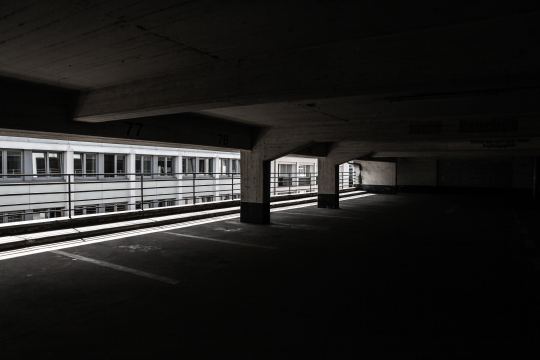
There’s a significant amount of downward pressure on parking supply in most major cities. Part of this has to do with the push toward more sustainable forms of transport, which is, of course, a good thing. But it also has to do with rising construction costs, the fear of obsolescence in the wake of autonomous vehicles, and probably many other factors.
Developers, ourselves included, have responded by being cautious about the amount of parking being provided and by considering alternative future uses for the parking that is being built. I think it is also obvious that we will continue to see more, rather than less, parking stackers and other more efficient parking solutions.
So far the cost of parking in dense urban centers has continued to rise. A new parking spot in the core of Toronto priced at $100,000 would not surprise me. And Hong Kong recently set a record for what is allegedly the most expensive parking spot in the world: USD 765,000 or CAD 1 million.
But what is going to happen going forward?
Researchers at the Singapore – MIT Alliance for Research and Technology and MIT Senseable City Lab, along with Allianz, have recently tried to quantify what the impact of autonomous vehicles will mean on required parking, and on traffic, in Singapore. The study is called Unparking.
Today, they estimate the total number of parking spots in Singapore to be around 1,370,000. This is based on minimum parking requirements from the Housing Development Board and on the idea that home-work commuting consumes two parking spots: one at home and one at the office.
They model four different scenarios, but the last one is based on fully autonomous vehicles and on shared parking spaces. Holding current mobility demands and traffic volumes constant, the demand for parking in this scenario drops by 70%.
It is possible to reduce the number of parking spaces even further to 85%, but this has a negative impact on traffic congestion in their model. Fewer parking spaces means the autonomous vehicles have to drive around more picking people up.
I also don’t know if there was any consideration given to induced demand as a result of the more affordable autonomous vehicles. Demand for transportation services is generally thought to be fairly elastic.
Whatever the case may be, numbers are made to be questioned. And Singapore is a unique city-state. But ¼ the amount of parking does not seem that far fetched to me.
Photo by Tobias Jussen on Unsplash