Daily insights for city builders, delivered every morning at 6 AM ET. I’m Brandon Donnelly — a Toronto-based real estate developer and founder of Globizen. I’ve been writing here since 2013.

Tag: paris

  • Toronto-Montréal should be a 2 hour high-speed train ride

    The Quebec City-Windsor corridor is the most densely populated region in Canada. The last time I checked Wikipedia, it was reported to house about 18 million people, or about half of Canada’s entire population.

    So it is not surprising that there have been numerous high-speed rail studies for this corridor over the decades, as well as studies for other important links in Alberta (Edmonton-Calgary) and other parts of the country.

    And yet, Canada remains the only G7 country without any high-speed rail. Though to be fair, the US doesn’t have all that much either; certainly with respect to the size of its population.

    However, there is some good news. In March of this year, the Government of Canada announced a Request for Expression of Interest related to high frequency rail service between Quebec City and Toronto. More information, over here.

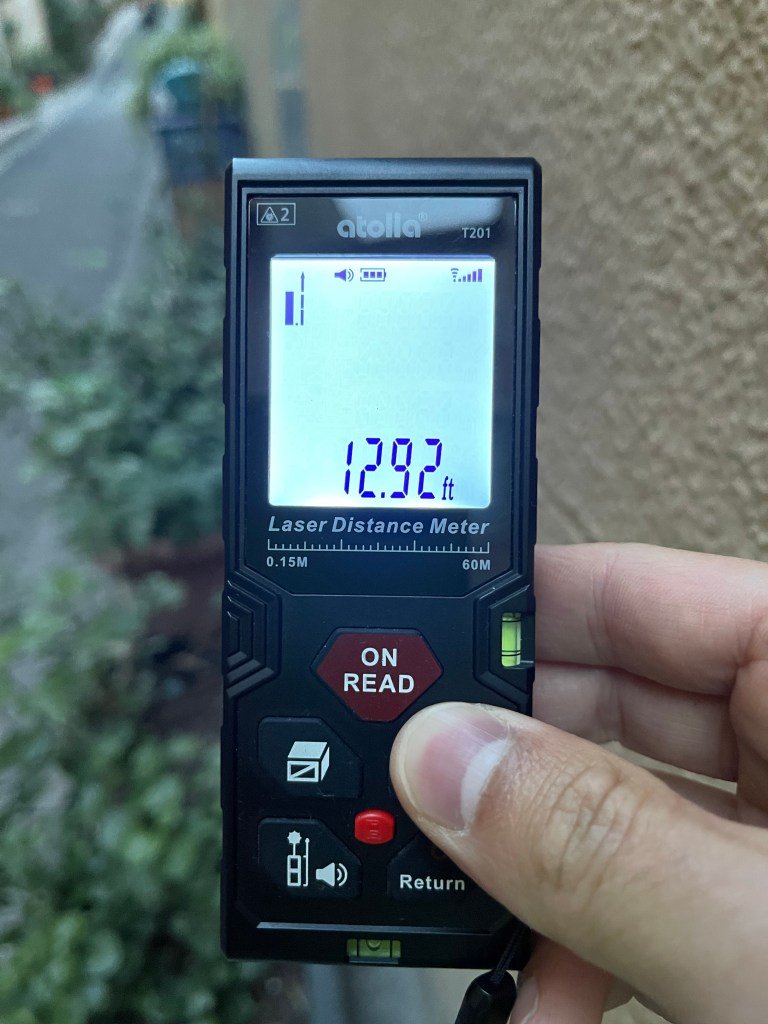
    But from what I have read, it’ll be a faster upgraded service (~200 km/h), but not true high-speed rail (~250-300 km/h). I took the TGV from Marseille to Paris last summer, and this is how fast we were going:

    If we’re going to do this, let’s be the absolute best in the world and not settle for mediocrity.

  • New KYIV city collection t-shirt

    At the beginning of this year, Globizen announced a new collection of city t-shirts. They have been very popular and we only have a few left from our original batch (which included some of the greatest places in the world: Toronto, Paris, and Park City). But we recently added a new city: Kyiv. This is obviously a really important one, and 100% of the proceeds from the sale of this shirt are going be used to support Ukraine. The plan is to allocate 50% to the Toronto Ukrainian Foundation, which has been helping displaced Ukrainians settle in Canada, and the balance to Ukraine directly (via cryptocurrencies).

    If this sounds good to you, click here.

  • Why traffic fatalities are lower in Canada than in the US

    We’ve talked about this before. If you live in New York City, you’re probably about a third as likely to die from a transportation-related accident as compared to the average American. And if you live in Paris, you’re probably about a third as likely to die from a transportation-related accident as compared to the average New Yorker.

    These stats might feel a bit intuitive to you. Both New York and Paris are big and dense metros with high public transit ridership. And that usually translates into less car accidents. As for the divide between these two cities, Paris is in Europe. It’s old. Most of its streets were built before the car had been invented. And all of these things are generally good for pedestrians. Makes sense.

    But David Zipper asked a good question today: So what’s going on with Canada? Canada is not in Europe (though some might argue that it sits culturally somewhere between the US and Europe). It’s not that old. And it generally has a car-oriented landscape just like the US. So why is it that in 2020, Americans were 2.5x more likely than Canadians to die in a car crash? The trend lines are also diverging between these two countries. Between 2010 to 2020, US road deaths increased 19% on a per capita basis, whereas Canada’s rate declined by about the same rate, according to David.

    Ultimately, we are probably going to need Malcolm Gladwell to write a book about this so that we can really figure out what’s going on. But in the interim, David does propose a few possible explanations ranging from Canadians buying slightly smaller vehicles to Canadians being slightly more law-abiding than Americans and so less likely to run people over. But one of the most persuasive explanations for me is that maybe our urban landscapes aren’t actually the same.

    More than a third of Canadians live in our three biggest cities: Toronto, Montreal, and Vancouver. And this number would be even higher if you looked at the full urban catchment areas of each. Either way, this is a significantly higher concentration than in the US, where about 13% of Americans live in the metro areas of New York City, Los Angeles, and Chicago.

    Part of this difference is because the US has almost 9x more people and has many more big cities to choose from. But it doesn’t change the fact that, despite our reputed love for things like forests and beavers, Canadians are actually quite urban. And as we have discovered, that’s a good thing for pedestrians.

    Photo by Jamshed Khedri on Unsplash

  • The story behind those pixelated video game mosaics in Paris

    If you’ve ever been to Paris, you’ve probably noticed the small pixelated art pieces that are scattered all around the city on buildings and various other hard surfaces.

    Or maybe you haven’t seen or noticed them in Paris, but you’ve seen similarly pixelated mosaics in one of the other 79 cities around the world where they can be found.

    Or maybe you have no idea what I’m talking about right now. Huh? Here’s an example from Bolivia (click here if you can’t see the embedded post below):

    These pixelated urban art pieces are the work of French artist Invader. Modeled after 8-bit video games from the 1970s and 1980s, Invader has been installing these mosaics since 1998 as part of his broader “Space Invaders” project. The first one was installed in Paris.

    No two pieces are alike and they’re all made out of ceramic tiles so that they last. Invader also meticulously researches and then records each install location. He is basically trying to take over the world with his “invasions”. As of today, there are 4056 invaders in 80 cities.

    Here’s a map. Sadly there are none in Toronto.

    The goal of the project is to liberate art from what Invader calls “its usual alienators”, that being museums and other institutions. It is about bringing art out and into the public realm so that everyone can enjoy it. And this is precisely what makes his mosaics so wonderful — it is their playful integration into the urban landscape.

    But these aren’t exactly sanctioned pieces of art. If he started out by asking, the answer probably would have been no.

    Invader thinks of himself as a kind of hacker of public realms. He keeps his identity concealed. He installs these mosaics during the night (from what I have read). And sometimes he gets in a lot of trouble.

    Sometimes they also get removed by the building owner, though at this point his mosaics are pretty well known, so I can’t imagine many owners not wanting to be “invaded.”

    But let me ask all of you this: If you owned a building in a major city and woke up tomorrow morning to a Space Invader on the front of it, would you celebrate it, apathetically leave it, or would you remove it immediately?

  • Turns out big cities are pretty safe

    Conventional wisdom suggests that cities are pretty dangerous. There’s crime, the chance of getting killed, and there are lots of cars, some of which have a tendency to fly off the road and do bad things on occasion. And in some ways, this is true. Here is a chart from Bloomberg showing homicides per 100k people:

    What this tells us is that if you live in a large metropolitan area in the US, you have a higher chance of being killed by someone else than if you were to live in a rural non-metro area. However, based on this data, one of the safest places you could actually live is in New York City. This might surprise some of you.

    On top of this, if you layer on the chance of dying from a transportation-related accident, the absolute safest place you could live in America is in fact New York City:

    This is because New Yorkers are only about a third as likely to die from a transportation-related accident as compared to the average American. Oddly enough, when you have a city where the vast majority of residents don’t drive their own car around, people seem to die a lot less from traffic accidents.

    But how does this compare to other cities around the world? Let’s take Paris, which is another big and important global city. According to Bloomberg, the risk that Parisians face from possible killing and transportation accidents is about one-third that of New Yorkers. So it’s even safer over there.

    Turns out that some big cities aren’t as dangerous as people might think. For the full Bloomberg article, click here.

  • Our cities are full

    One of the most common objections to new housing is that the place is already too crowded and potentially even full. But Jerusalem Demsas’ recently article in The Atlantic about how much people seem to hate other people is a good reminder that the topic of overpopulation can be a complicated one.

    Because what are we really saying when we say a place is too crowded or full? Is it just that this particular neighborhood is full, or are we talking about entire cities being full?

    Moreover, who determines when a place is full? Berkeley, California is, for example, a hell of a lot less dense than a city like Paris. So if a place like Berkeley can be considered full by some people, what does that mean for Paris? Presumably it’s entirely unliveable.

    Or could it be that the entire world is simply full and we should be looking at more drastic measures to curb population growth (in the places that are actually reaching replacement-level fertility rates)?

    It’s all very complicated. Thankfully Demsas offers up some possible solutions in her article:

    We have, of course, discovered an elusive technology to allow more people to live on less land: It’s called an apartment building. And if people would like fewer neighbors competing for parking spaces, then they should rest assured that buses, trains, protected bike lanes, and maintained sidewalks are effective, cutting-edge inventions available to all.

    The rest of the article is just as good.

  • Over 60% of global luxury spending now happens in Asia

    The global luxury goods market is somewhere around US$300 billion if you exclude fancy cars. And in just 4 years, global luxury spending has flipped from over 60% of it being in Europe and the Americas, to now over 60% of it being in Asia — with over 40% of it being in mainland China alone. See above chart from the Financial Times.

    But I think what really happened is that when global travel shutdown in 2020, Chinese buyers just started spending all of their luxury goods money at home instead of flying to Paris for the week. Because if you look at Chinese luxury goods spending in 2018, somewhere around 1/4 of it was done in mainland China, whereas today it’s close to 100%.

    So the Chinese have been moving this market for quite sometime. But now that the consumption has moved entirely home, what does that mean for cities around the world? Hong Kong used to be one of the most important places for luxury consumption in Asia (no sales tax), but that has changed and it probably won’t return. This is for reasons that go far beyond luxury goods.

    But I think we’ll see spending in Europe bounce back along with Asian travel. Because buying a luxury good is about much more than just the good itself. It’s about the experience. It’s about how it makes you feel when you buy it. And it’s about signalling to others who you are as an individual. This may sound vacuous, but we all do it, with or without expensive luxury goods.

    There are also new opportunities emerging by way of NFTs. I am sure that some brands are already doing this, but if I were in charge, I would issue a unique NFT with each luxury goods purchase that records, among other things, where it was purchased. Is a bag purchased on the Champs-Élysées worth more if there is a record of it that is etched in stone permanently? Maybe.

  • The Eiffel Tower and the awful tower

    It was explained to me this week that Paris has two principal towers: The Eiffel Tower and the awful tower. The awful tower is, of course, the Tour Montparnasse. Completed in 1973, the Tour Montparnasse is tall, brown, monolithic, and seemingly out of place with the rest of Paris’ urban context. At the time of its completion it was the tallest building in Paris and it remains the tallest building outside of La Defense (business district).

    But the Eiffel Tower is also tall. In fact, it’s taller. So how is it that the Eiffel Tower became such a symbol for Paris and the Tour Montparnasse became the “awful tower?” Both were intended to represent modernity (at their respective times) and both were controversial at the time of their construction.

    Today people respond to these two towers very differently. Is it because the Eiffel Tower is set in a beautiful park and more separated from its urban context? Or is it because the Eiffel Tower has had almost another 100 years to settle in. It’s not exactly clear. But we do know that as humans we have a bias toward the status quo. And so I like to think of change in the following way:

    – There’s change that people immediately like

    – There’s change that people hate and will always hate

    – And there’s change that people initially hate but will eventually like

    The Eiffel Tower, you could argue, falls into category number three. It was big, modern, and alarmingly different when it was built at the end of the 19th century. But now people seem to like it. I know this based on the number of street vendors selling little replicas. For the record, I have yet to see little replicas of the Tour Montparnasse sitting on blankets on the street. I’m a buyer if I do come across one though.

    But is it really right to place Montparnasse into category number two? Could it be that it just needs more time to settle in and then it will ultimately move into number three? Maybe. In 2017, an international design competition was held to find an architect for the redesign of the tower. Studio Gang submitted an entry. But Nouvelle AOM was ultimately selected.

    I wasn’t part of the selections committee, but I think a good way to evaluate the success of this project will be whether or not it moves the tower into category three. That is, people start to like it. Then maybe Paris will become known as a city of two towers, as opposed to a city with one nice one and one awful one.

  • Les banlieues of Paris

    One of the things that I notice about people from Paris is that they’re always very clear on whether they live in Paris or outside of Paris in the banlieues (the suburbs). They’ll say things like, “No I don’t live in Paris. It’s too expensive. I live in such and such a place in the banlieues.”

    I suppose this isn’t entirely different than saying you don’t live in New York, you live on Long Island, or you don’t live in Toronto, you live in Burlington. Except that there seems to be a greater sense of division when they say it here in Paris (although it’s entirely possible that it could be my rusty French that is leading me to believe this).

    There is a sense that you’re either inside the Boulevard Périphérique, or you’re really not. And this seems like a shame. Cities regions care less about administrative borders and more about the movement of people, ideas, and goods.

    And as much as I love Paris (the central part), it is, from what I can tell, far more static than some of its surrounding areas in terms of new people (immigration), new buildings, and probably new ideas.

    Paris can sometimes feel like a perfectly curated museum. It’s beautiful and precious and should not be touched — please stand behind the ropes mesdames et messieurs. But perhaps it’s time to equally celebrate les banlieues and recognize what they have to offer.

  • Shoes follow built form

    I have remarked this before, but I’ll say it again anyways: sneakers are very popular in Paris. Everybody seems to be wearing cool and colorful sneakers, regardless of what the rest of their outfit happens to look like.

    Full business suit? Why yes, you should be wearing cool sneakers.

    But why is that?

    Paris is a famously walkable city. At any given time, you’re on average just about 500m from the closest subway station. So my entirely unproven sneaker theory is this: shoes follow built form.

    If you build a city around people walking everywhere, one will ultimately choose the most appropriate kind of footwear.

    Photo: Rosa Bonheur sur Seine