Daily insights for city builders, delivered every morning at 6 AM ET. I’m Brandon Donnelly — a Toronto-based real estate developer and founder of Globizen. I’ve been writing here since 2013.

Tag: ottawa

  • Blogging as city building

    This past week I received 2 separate invitations to talk at events about blogging as a form of city building.

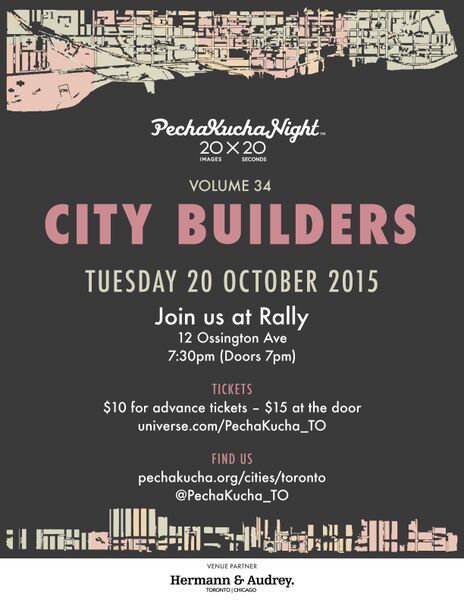
    The first is a Pecha Kucha talk being held here in Toronto on Tuesday, October 20th, 2015. If you’ve never heard of the Pecha Kucha movement, it’s basically all about rapid fire presentations. Each person gets 20 slides and 20 seconds for each one. 

    Here are the details for the upcoming Toronto event:
    image

    The second event is being held in Ottawa in the new year. I’ll write more on that closer to the date when I have more information to share.

    I haven’t yet figured out exactly what I’m going to talk about at each event, but I am starting to think about a few things.

    When I started writing this blog, it was intended simply as an outlet for my own city-related – and also personal – thoughts. Ultimately, the blog evolved into having its own mission, which is to promote the building of beautiful, sustainable, and globally competitive cities. And so clearly in my mind blogging was and is in fact a form of city building.

    But writing is vastly different than the kind of city building I do for a living. During the day I worry about things like rental rates, building setbacks, bulkhead locations, parking counts, and a bunch of other fun stuff.

    The two are certainly related, but the latter feels a lot more tangible. The result is spaces that people will occupy and buildings that will have some sort of impact on the overall built environment.

    But as you all know, city building is a lot more than just bricks-and-mortar. It is political. It is emotional. It is subjective. It is ego-driven. And it is so many other things. Because of this, words do have a role to play in shaping the cities we live in. And hopefully my words are having some kind of positive impact.

    At the same time, I see myself as simply part of a larger set of trends that are happening in both city building, as well as in many other sectors. Trends around transparency, decentralization, and the democratization of information.

    Technology today allows us to connect at zero marginal cost. And that is empowering people like me to self-publish, people to crowdfund real estate development projects, people to crowdsource community feedback for projects, and to do many other exciting things that weren’t possible before. Without this blog, most of you reading this right now would have absolutely no idea who I am.

    So I guess I kind of do know what I’m going to talk about.

  • It’s too cold for that

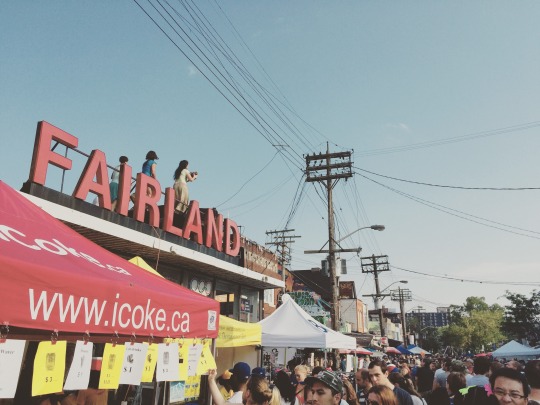
    This past Sunday I spent part of the afternoon in Kensington Market (Toronto) for Pedestrian Sundays. 

    If you’ve never been to a Pedestrian Sunday, you’re missing out. The entire neighborhood – which happens to be a National Historic Site of Canada – gets closed to cars, and filled with street vendors, musicians, bands playing on roofs (see above), and so on. It’s pretty wild. And it feels very Toronto to me.

    It happens the last Sunday of the month from May to October. But every time I go I wonder why the area isn’t this way more often or even all the time. It’s a natural candidate. But after 12 seasons of Pedestrian Sundays, it still hasn’t happened. It’s only 6 days throughout the year. 

    I remember being in a meeting early on in my career when I brought up the idea of a pedestrian mall in Toronto for a project I was working on. And I got completely shut down. I was told they don’t work here in our climate and that we should just forget about it. I was told to look at the failure of Ottawa’s Spark Street Mall.

    But I’m still not convinced that’s the case. In fact, I feel even stronger at this point that it could and would work in Toronto. I’ve been to the Distillery District in the dead of winter for the Toronto Christmas Market and I could barely move because of all of the people. 

    Acknowledging climate is important. But it shouldn’t become an excuse for not doing things.

  • 4 design strategies for your cold-climate waterfront

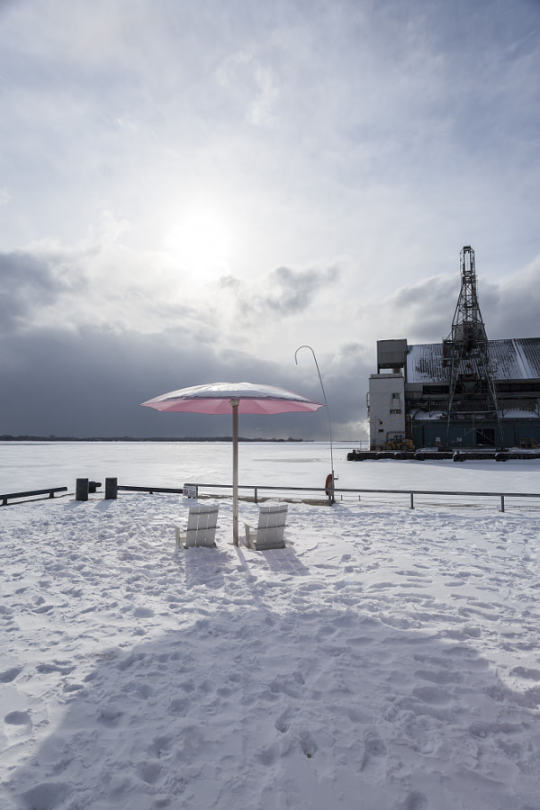
    Photograph Sugar Beach in Toronto by christophmarten on 500px

    Sugar Beach in Toronto by christophmarten on 500px

    Since we’ve been discussing waterfronts lately, I thought I would share this post from ArchDaily talking about 4 ways that cold-climate cities can make the most of their waterfronts.

    They are:

    1. Plan for winter sun
    2. Create plazas that block wind
    3. Break up outdoor spaces with comfort stations (not sure why they just have to be stations)
    4. Design for active winter programming

    These, of course, aren’t new design strategies. Cities have been built around their climates since, probably, the beginning of cities. It wasn’t until more recently that we started basically ignoring local climates and focusing more on what mechanical systems can do to make us feel comfortable.

    But I think that was a mistake. I don’t think that mechanical systems are bad though. I just think that there’s a lot that we can do first – without mechanical systems – to address local climates.

    If you’ve ever sat on a patio during a swing season (i.e. right now) where the wind was blocked and you were in the direct sun, you already know that there’s a lot that can be done without relying on active systems.

    But the other thing I like about this post is that it acknowledges the fact that winter waterfronts require just as much, if not more, design attention than a warm-climate waterfront.

    Saying that we’ll (insert cold-climate city name here) never be Miami or Barcelona or Sydney is just giving up.

  • A Third Coast Megaregion

    The distance between Chicago and Quebec City is roughly 1,000 miles (or 1,609 km). There are 6 major cities and a population of over 25 million people. You have the 4th and 5th largest cities in North America (Chicago and Toronto); the largest city in Canada; the capital of Canada; 2 different languages; 2 different countries; and 5 different states/provinces.

    image

    Now imagine if all of these 6 cities—Chicago, Detroit, Toronto, Ottawa, Montreal and Quebec City—were effortlessly connected through a high speed rail network, allowing you to travel from one end to the other in just over 5 hours. How would that impact the movement of people, goods and services across the region? How would it change our economies if you could wake up in Detroit and, without any lead time, travel 1 hour and 15 minutes to Toronto for a meeting?

  • Performance Court at 150 Elgin rising against the Ottawa skyline.

  • Performance Court – 150 Elgin, Ottawa