Daily insights for city builders, delivered every morning at 6 AM ET. I’m Brandon Donnelly — a Toronto-based real estate developer and founder of Globizen. I’ve been writing here since 2013.

Tag: ottawa

  • Fees on homes

    A colleague of mine sent me this Bloomberg article today and said, “Here’s an article about things you already know.” The article cites a recent report by Altus Group that compared government-related fees on new housing across Canada and the U.S. What they discovered will not surprise any of you who are in the industry: Toronto has some of the highest government-imposed charges on new homes.

    For new condo apartments, the report found that government charges can add up to as much as C$124,582 per unit. That’s about 50% higher than the average unit in the U.S. and about 30% higher than the average unit in Canada (see above chart for the list of cities). While all of us in the industry can appreciate this, I don’t think most homeowners and tenants understand this. Hopefully they’re reading this post.

    Chart: Bloomberg

  • The Château Laurier battle in Ottawa

    As I was going through this Twitter thread by Alex Bozikovic on the “Château Laurier battle,” I came across a great line by Robert Wright: “We cannot recreate the past only parody it.” I told him I was going to steal it, but here I am giving him credit.

    The controversy in Ottawa stems from the fact that a number of people believe that a modern addition to the Fairmont Château Laurier (which was constructed between 1909 and 1912) amounts to heresy.

    Instead, the addition should be designed to match the “Château style” that already exists. There should be no change. As Alex put it, “people want Disneyland.”

    We’ve had this very same debate come up on some of our projects, where people — but notably, not the city — have asked us to replicate something that was constructed in the 1800’s using labor and material techniques that no longer exist.

    This is where Robert’s line comes in.

    Architecture is a reflection of the cultural milieu in which it was designed and built, which is one of the reasons why we sometimes preserve old buildings. They communicate to us a particular moment in time.

    The reason architects, designers, and planners so often respond — negatively that is — to Disneyland-type architecture, is that it lacks that same authenticity. It’s only a simulacra.

    It’s for this reason that one of Ontario’s “eight guiding principles in the conservation of built heritage properties” is, in fact, legibility:

    New work should be distinguishable from old. Buildings or structures should be recognized as products of their own time, and new additions should not blur the distinction between old and new.”

    This is not to say that we shouldn’t be respectful of the past. Five of the eight guiding principles include the word “respect” in the title. There should be lots of that.

    But we would be fooling, and cheating, ourselves if we believed we could mimic the past with any justice. We cannot recreate the past only parody it.

  • A subway network at the scale of a country

    The Hyperloop space has a number of competing companies that are all trying to figure out how to move people (between cities) in low-pressure tubes at nearly the speed of sound (1,234.8 km/h). For what it’s worth, Virgin Hyperloop One, which was founded in 2014, has supposedly completed the most testing and raised the most money ($295 million as of December 2017).

    This morning I was reading up on the Toronto-based TransPod, which was founded in 2015 by Sebastien Gendron and Dr. Ryan Janzen. They raised a $15 million seed round from an Italian tech group in 2016 and are close on another $50 million round right now. Following this, they’ll look be looking for a few hundred million. They seem encouraged by where Canada’s Strategic Innovation Fund has been placing money.

    Supposedly, their biggest competitive advantage is cost. The company estimates their cost per kilometer to be about $25 million, which would put the cost of a Toronto-Montreal link at around $15 billion. This is not cheap, but it is allegedly cheaper. The travel time between these two cities could then be as short as 40 minutes.

    Virgin Hyperloop One has been similarly looking at a Toronto-Ottawa-Montreal line, as it would stitch together about 25% of Canada’s population. But apparently the federal government recommended that TransPod instead look at a line that sits entirely within one province — at least at the start.

    So the company has gone ahead and secured a 10-kilometer parcel of land in Alberta that will eventually form part of a future connection between Calgary and Edmonton. TransPod hopes to have this test track operational by 2022.

    However, their focus right now is on France. (Being in Europe is another differentiator for the company. Europe gets transport.) With the help of a few partners, the company has started work on a 3-kilometer test track in Limoges, France. Permits were received at the end of last year and they hope to begin testing by the end of this year.

    There’s no question that this technology has the potential to be transformational, which is why so many companies are competing in the space right now. But it’s obviously going to take a whole lot of moxie. Gendron is on the record talking about the risk-adverse nature of both Canadian regulators and investors when it comes to these sorts of large-scale innovations. That’s a problem that we need to address.

    The title of this post is a quote by Gendron taken from this TechVibes article.

    Image: TransPod

  • How are condos in Canada used?

    Jens von Bergmann (data analyst and mathematician); Nathanael Lauster (sociologist); and Douglas Harris (law professor) have been working since 2018 on a study of how condominiums are used and occupied across Canada. The goal is to use the results to better inform public and academic debate.

    They recently presented some of their early findings at the National Housing Conference in Ottawa and have since made that information public. It is still a work in progress, but already there are some interesting takeaways. To start, here is a chart showing occupied housing units in Canada and in select CMAs:

    Not surprisingly, Canada is broadly speaking a nation of single-detached houses. But in our three largest cities — Toronto, Montreal, and Vancouver — apartments/condominiums are doing a lot of the heavy lifting.

    Vancouver has the highest proportion of condominiums. It is a geographically constrained metro area and it is one of the first cities in the country to adopt condominiums as a housing tenure. And in Montreal, there are more apartments under 5 storeys than there are single-detached houses. Not surprising. There’s no “missing middle” in this city.

    But the really interesting question is, how are these condominiums being used and occupied? It’s a challenging question to answer, which is why it’s so often debated, but here’s what the researchers have found so far:

    The owner and renter categories are self-explanatory. Temporary, which is the least common type of tenure, is where the owner has declared their principal residence as being somewhere else. In other words, the condominium is a second home.

    The vacant category is effectively that city’s condominium rental vacancy rate. These are condominium units which are empty, but that are at the same time listed for rent. There are relatively few of these. In Toronto and Vancouver they’re virtually non-existent in this dataset (2016).

    Finally, we get to unoccupied units. This one is tricky and the researchers aren’t exactly clear on what is driving this number. They chalk it up, at least partially, to the flexible nature of condominiums. For example, it could be empty because the unit is switching from owner-occupied to rental, or vice versa.

    That said, it is very interesting to note that Toronto and Vancouver actually have the lowest percentage of unoccupied condominium units. This may be surprising to some of you given the public discourse around investor units in these two cities.

    Generally, they found that in Canada’s three largest metro areas, the following rule of thumb seems to apply: For every 10 condominium units built, 6 will become owner-occupied, 3 will enter the rental stock, and 1 will go unoccupied. Does that seem right to you?

    If you’d like to dig into the methodology that the researchers used, you can do that over here at Mountain Doodles. All of the charts and data used in this post were taken from there.

  • Archival street life footage

    Guy Jones is a videographer who specializes in archival footage, or at least that is what his YouTube account suggests. He edits old videos and makes them more watchable by doing things like adding sound and slowing them down to a natural rate. 

    (Older films often appear sped up because they were recorded at less than 24 frames per second and then later played at 24 or more frames per second.)

    I’ve blogged about one of his videos before. This one of New York City in 1911. But he has so many other fascinating films on his channel – including a frozen Ottawa from 1942 – that I figured I would share it in its entirety today

    For the city builders in the room, here are some street life videos of Paris in la Belle Époque (1896-1900), New York City in 1927, and London in 1967. Among other things, it is fascinating to see how quickly the car crept its way into our cities.

    The video of Paris is all horses and moving walkways. The video of New York City (1927) is all cars. And if you look at the other video of New York from 1911, you’ll see a city in the midst of that transition.

  • The most popular building amenities (according to a small subset of people)

    Here are the results from my primitive multi-unit building amenities survey:

    Gym is number 1. No surprise there. 46% of respondents said it was in their top 3. 

    Rooftop outdoor space at number 2 was perhaps a bit surprising. But then again, who doesn’t love a good rooftop patio?

    As for concierge service, I tend to think this was driven by package delivery. That’s certainly the biggest value add for me.

    One standout near the top, for me at least, is co-working space. Andrew LeFleur made mention of this on Twitter and I think he’s right: The changing nature of work is making these spaces more valuable in multi-family dwellings.

    And now some color on the above results.

    436 amenity selections were made as part of this survey. 

    About half of the respondents were from the Greater Toronto Area, followed by Calgary, San Francisco, Ottawa, Boston, New York City, Denver, Los Angeles, Paris, Miami, and many other cities. Shoutout to whoever responded from Kuala Lumpur and Porto Alegre.

    In terms of “Other” amenities, there were suggestions for a band rehearsal space, a vending machine, a grassy area for sports, and programming the helps you meet your neighbors.

    In terms of this one last, it can be tricky for condo buildings. Developers only provide the space. It’s then up to management. But I’ve seen it done very well in rental buildings.

    Are you surprised by any of the results from this survey?

  • BARED: David Wex, Urban Capital Property Group

    image

    David Wex started his career working for one of the big Seven Sister law firms in Toronto. But right from the outset, it was clear that he wasn’t in it for the long run.

    In fact, only a few days after he started, David had the clever idea of turning his desk around so that it faced the window, instead of the hall. That way, he could avoid eye contact with partners as they walked by his office, and reduce his chances of being assigned a file.

    Of course he couldn’t avoid being tracked down all the time. But whenever someone would try to assign him work, he would simply say: “I’m sorry, but I’m really busy working on something right now.” His nickname quickly became “One File Wex” and it was clear that he was headed towards the departure lounge and not a corner office.

    But already, David had his mind set on doing something related to cities. So while still working as a lawyer he decided to complete his Graduate Record Examination (GRE) in preparation for going to planning school. Ultimately, he decided not to go back to school, but instead leave the firm and just figure things out. He left in 1992.

    After leaving, he did in his words, “nothing” for a few years. He lived off his savings, spent some time working with a bunch of guys cleaning up the Don River, and tried to figure out a way to put together a development project.

    Eventually he met a friend of the Goodman family and this led to an introduction to the Dundee Corporation.

    It was the early 90’s and nothing was happening by way of development in Toronto. The real estate industry was in a deep recession. Ask anyone who was “active” during this time. It was a painful time to be in the business. But the Goodmans told David that he if could find a suitable site to develop, they would invest. Lesson: Developers are constantly leveraging other people’s money.

    So David went out and found a site on a sleepy street named Camden in Toronto’s Fashion District. This is not the Camden Street of today, which has an Ace Hotel currently in the works. It was a dead zone. By this point we are in 1995 and few people believed that anyone would want to live on a downtown street like Camden.

    Given the perceived undesirability of the site and the continued lull in the market, David tied up 29 Camden for C$700,000 with a 2 year option. What this means is that he had 2 years to figure out if he actually wanted to close on it. He could put very little money down and get the project going before having to worry about carrying the land. It wasn’t until midway through sales that he actually went firm.

    It’s hard to imagine being able to do this in today’s competitive real estate market, but that was the market at the time.

    Of course, the flip side to all of this is that it also took him 2 years to sell about 20 condominium units (out of a total of 55), at an average price per square foot of $195. Today you could sell those units in 2 hours at $800 psf.

    Brad Lamb – who was just starting out at the time – was the broker on the project. And activity at the sales office was so scant that everyone would get excited even when a car would drive down Camden Street. That’s how dead it was in the Fashion District.

    Eventually Dundee got impatient. Sales were slow. A lot of money had been spent on marketing. And the partners didn’t believe that “the bump and grind of Queen Street” (original marketing pitch) was the right way to position the product. David was also in the midst of rebranding his company from Red Rocket (named after our transit commission) to Scrappy Dog Real Estate Investments. By that point Dundee came in and said: “You’ve fucked up this project. You’re out.”

    David had felt like he had made it and become a developer with Camden Lofts. But just like that – before construction had even started – he was off the project.

    The deal that David struck with his partners was that he didn’t want any money out of the project (it didn’t end up making much money anyways). But he wanted to stay involved and be able to call Camden Lofts his project. And so to this day, Camden Lofts remains the first development project of his very successful real estate career.

    But Camden Lofts didn’t solidify David as a real estate developer. After the fumble, David took on the role of managing a loft conversion for what turned out to be some pretty dodgy landowners. The total management fee was a princely $5,000, but David wanted to complete his own project from beginning to end. And so he did just that with Century Lofts at 365 Dundas Street East. He also spent a great deal of time learning Illustrator, Photoshop, and other design tools so that he could do all of the marketing himself. This is an experience that would later manifest itself in his company’s business model.

    After tuning his craft for a couple of years, David met his current business partner, Mark Reeve. Mark was a corporate real estate developer and planner, and they talked about doing something together. So they did, and the result was Urban Capital Property Group. Mark was also able to planning consult on the side and that helped fund their fledgling business as they worked on breaking into the development game.

    The first project to come out of this relationship was The Sylvia, which was also on Camden Street (#50). However, you won’t find this project on their website because it was done in partnership with developer Intracorp. The relationship ended up not being a productive one and both David and Mark vowed never again to be involved in a project that they weren’t actively managing themselves. That vow continues to this day.

    The first project that Urban Capital did on their own was the 66-unit Charlotte Lofts. It’s the first project they completed from A to Z. They sourced the site, secured the financing, worked on the design, marketed it, and constructed it. It was a success.

    The partners did well but the learning curve remained so steep that neither felt that they had really “made it” with this project. Indeed, my interviews have uncovered that this is a common experience amongst new developers. It can take a few projects before they really hit their stride and, in some cases, even make any money.

    But who ever remembers the stumbles?

    Today, Urban Capital has completed over 4,000 urban condominiums and has another 2,500 in the works. They have developed over $2 billion worth of real estate to become one of Canada’s most influential urban infill developers.

    Unlike other Toronto-based condo developers, they have branched out beyond Toronto: east to Montreal, Ottawa and Halifax; and west to Winnipeg and Saskatoon, with other cities on the horizon. Their mission is to act as an urban regenerator by bringing high design urban living to new markets across the country.

    They have come a long way since the days of Scrappy Dog Real Estate Investments. Clearly David is the furthest thing from “One File Wex.”

    You can follow Urban Capital on Twitter and on Facebook.

    Image: River City 2, Toronto

    ———————————————————

    This is the first post in my new blog series called BARED (Becoming A Real Estate Developer). More posts to come in the following weeks. Subscribe to stay in the loop.

  • Share your big idea for Canada’s #Capital2067

    Parliament Hill by Maryus Bio on 500px.com

    https://500px.com/embed.js

    On Thursday night I spoke at an Urbanism Lab event in Ottawa put on by the National Capital Commission.

    The event was all about the interconnection between the online world of blogging and social media, and the offline world of tangible city building.

    More specifically, one of the goals was to help inspire institutions, such as the National Capital Commission, to better leverage these new channels in order to get their message out.

    Social media and blogging may be ubiquitous, but lots of organizations are still getting their heads around it.

    So today I thought I would do my part and share something with all of you that, truthfully, I didn’t know was underway until I visited Ottawa.

    But first, how many of you (Canadians) are exactly aware of what the National Capital Commission does?

    The NCC is a federal Crown corporation that is focused on 3 specific mandates:

    1. They are the long-term urban planner of federal lands in Canada’s Capital Region. They are also the largest landowner in the region.
    2. They are the principal steward of nationally significant public spaces and buildings, including the Capital’s six “official residences.” Residences such as 24 Sussex Drive.
    3. And they are a “creative partner” on initiatives that tie into both development and conservation.

    To this end, the NCC is now working on a Plan for Canada’s Capital, 2017-2067. This is a 50-year plan that will outline what they do with federal lands, buildings, parks and other symbolic spaces in the Capital. And it will identity which projects would best craft and represent our national identity, as well as strengthen Canada’s influence in the world.

    This is all pretty important and interesting stuff. But unfortunately I didn’t know it was underway. And I also didn’t know what they were looking for “big ideas” from Canadians. These are ideas that will directly shape the 50-year plan.

    So if you have an idea – big or small – for the National Capital Commission, I would encourage you to click here and share it with them. Not only is this city building in the Capital, it’s also nation building.

    Please also feel free to copy and paste your idea(s) in the comment section of this post. These ideas definitely deserve a fulsome discussion. I will post mine once I write it.

  • Brébeuf

    I woke up this morning at 5:30 am in a hotel in Ottawa.

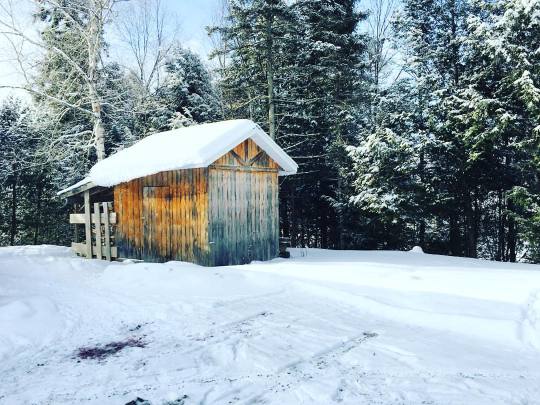
    I then drove to Brébeuf, Quebec to meet some friends for a ski and snowboard weekend. (It’s beautiful here.)

    Upon arriving I was faced with a large hill that my rear-wheel car with all season tires was absolutely not prepared for. So that sucked up about an hour of time.

    After we unstuck my car, we then spent the day skiing and snowboarding at Mont-Tremblant. (First day of the season for me.)

    At this point all I can think about is a good night’s sleep, so I’m afraid that there won’t be much of a post today on Architect This City.

    But please feel free to hijack the comment section and talk about whatever you would like. Maybe we can get some action started there.

    I would actually be really curious to see what topics interest all of you.

  • Urbanism Online: #capital

    image

    For those
    of you from Ottawa, I’m going to be in town this Thursday evening talking
    at an event put on by the National Capital Commission called Urbanism
    Online
    . It’s all about how blogging, social media, and online discussions can
    and are contributing to the betterment of cities.

    The other
    bloggers include:

    – Marc-André Carignan, Montreal, Kollectif.net

    – Jillian Glover, Vancouver, This City Life

    – Robert Smythe, Ottawa, UrbSite

    The event is
    now full, but email them or tweet me if you’d really like to come
    and I’ll certainly ask about space availability. I’m sure it’s going to be a great discussion.

    I have a bit of a soft spot for Ottawa. I used to spend a lot of time there when I was working on an office building at 150 Elgin Street. (Key tenants include The Canada Council for the Arts, KPMG, and Shopify.)

    I haven’t been back since the building was completed, so I’m excited to see how it turned out.

    Update: The event will also be streamed on Periscope, here.