Daily insights for city builders, delivered every morning at 6 AM ET. I’m Brandon Donnelly — a Toronto-based real estate developer and founder of Globizen. I’ve been writing here since 2013.

Tag: ontario

  • Returning to photography

    I used to be more into photography. In architecture school, I had an old Canon Rebel and a photoblog where I posted one photo every day. Clearly I have a thing for daily routines.

    But that was the pre-social media era and before mobile phones had cameras. With the rise of those two things I eventually moved over to just taking photos on my phone and posting them to my Instagram. Today we are all photographers.

    However this week I decided that I want to start taking that creative outlet a bit more seriously again. So I asked my talented photography buddy (founder of DSCBRD) if he could recommend a reasonably priced camera for my purposes. 

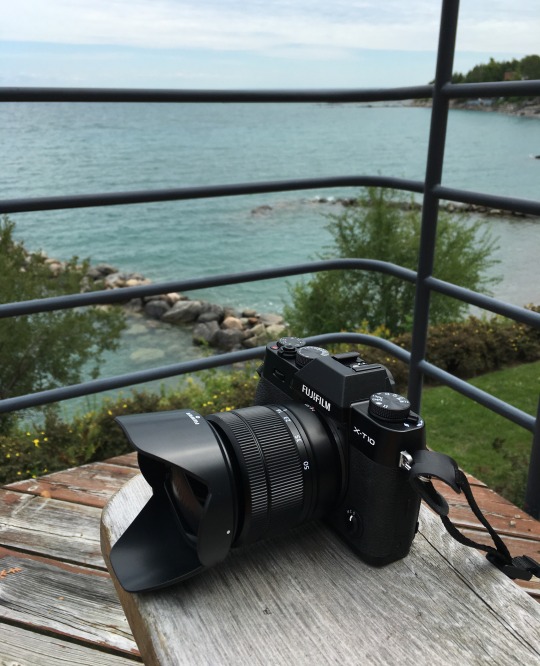
    I then sifted through all of the reviews – because that’s what I do – and decided on the mirrorless Fuji X-T10. I love the retro design. It’s also compact enough that it’s easy to carry around. The best camera is the one you have on you.

    image

    So I’m spending this afternoon at a cottage playing around with it. It’s a fun place to experiment. I hope you’re all having a great weekend. Talk to you tomorrow.

  • We’re eliminating parking minimums

    I’ve been writing about the hypocrisy of parking minimums for years now. Some posts here, here, and here. 

    To me, it doesn’t make sense to try and promote more sustainable forms of urban mobility while at the same time mandating a minimum number of parking stalls in every new development. 

    Do you want people driving or not driving? Pick one.

    That’s why I was happy to see the following action item in the province of Ontario’s five year plan to transition to a low-carbon economy and fight climate change (thank you Ken Wilcox for bringing it to my attention):

    image

    I haven’t gone through the entire action plan and so this post is not a commentary on that. It is, however, a commentary on subsection 1.4. I believe it is the right thing to do and I’m stoked to see it in the plan.

  • Thoughts on inclusionary zoning

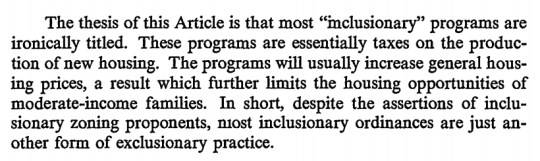
    Ontario is looking to pass legislation that would allow municipalities in the province to implement something known as inclusionary zoning. If passed and should municipalities decide to use this tool (Toronto almost certainly would), developers would then be required and/or incentivized to include some percentage of affordable housing in their new market rate developments. 

    Politically, inclusionary zoning tends to be popular. It’s believed to be a way for governments to create new affordable housing using relatively small public subsidies. Not surprisingly though, the development industry generally hates IZ. It’s another cost that needs to be added to the development pro forma – though some municipalities rightly offset these additional costs with additional density, breaks on levies, and so on.

    What I always think about when this topic comes up is the broader economic impact of the land use policy. Because I’m suspect that it’s as simple as: mandate affordable housing; get more affordable housing for free. Generally there are always trade-offs.

    So here’s some reading material for you all this morning.

    In a classic paper (1981) by Yale Professor Robert C. Ellickson – called The Irony of Inclusionary Zoning – he argues that these practices can actually increase general house prices:

    image

    As a counterargument Owen Pickford over at The Urbanist argues that IZ simply reduces land prices as a result of the new tax. Land, after all, is the residual claimant. Therefore, he believes it’s an effective affordable housing policy. (I’m not so sure I believe that land prices would decrease in practice.)

    There’s also debate about the effectiveness of inclusionary zoning to actually deliver affordable housing at a meaningful scale. City Observatory wrote a post that looked at the total number of units produced (through IZ) across a number of American cities and the results were spotty. It should, however, be noted that not all inclusionary zoning policies are mandatory.

    Finally, the Furman Center for Real Estate & Urban Policy at New York University published a housing policy brief back in 2008 that looked at this exact topic. While they admit that the data is scarce, they come to the conclusion that IZ had no meaningful impact on the prices and production of single-family housing in San Francisco, but that IZ seems to have slightly decreased production and slightly increased pricing in the suburbs of Boston.

    What this last point suggests is that inclusionary zoning policies are not all created equal. So like all difficult questions, the answer to this one is likely: it depends. If anyone can point me to better data on inclusionary zoning, I would love to see it.

  • Art is the new steel — a photo essay of Hamilton, Ontario

    Today, myself and a few others spent the afternoon urban exploring Hamilton, Ontario with Thomas Allen of the blog, Rebuild Hamilton. If you don’t read his blog, you should. Since he started writing about 3 years ago, he has really emerged as the online voice of Hamilton’s urban resurgence.

    If you’re from Toronto, you’ve probably been hearing rumblings about good things happening west of the city. Rumblings about people leaving overpriced Toronto for greener and more affordable pastures in Hamilton, and even that it was destined to become the Brooklyn of Toronto. That basically means Millennials, trendy coffee shops, and beards. (For the record, Thomas’s beard is very nice.)

    With all this talk of affordable housing and beards, I decided that it was time to make a pilgrimage. Below is a short photo essay of what we saw.

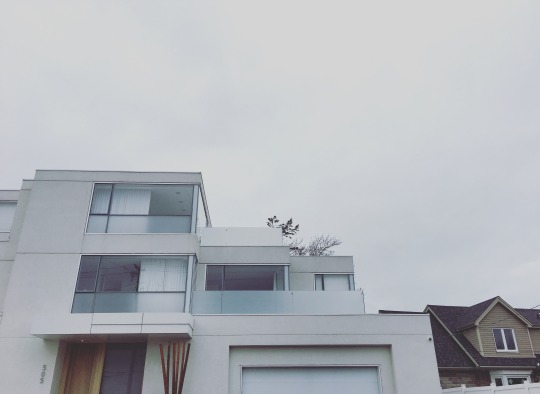
    We started the day east of Hamilton where we found this beauty along the waterfront. I don’t know who designed it, but it’s called the Cube House and it was construction managed by Toms + McNally Design. You’re going to want to click through to their website to see the interior photos. 

    image

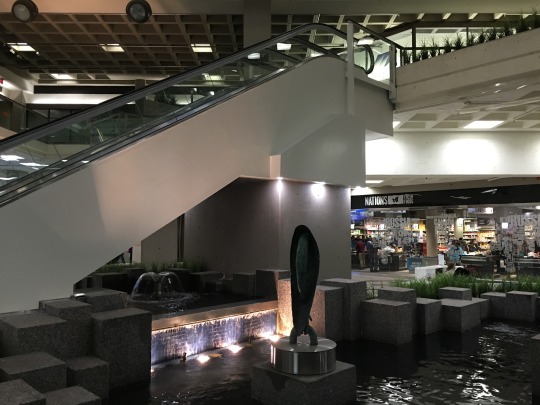
    We then made our way downtown to Jackson Square. Jackson Square is one of two downtown malls (the other is the post-modern City Centre Mall). It has seen a lot of investment in recent years and I was impressed to find a thriving grocery store. 

    image

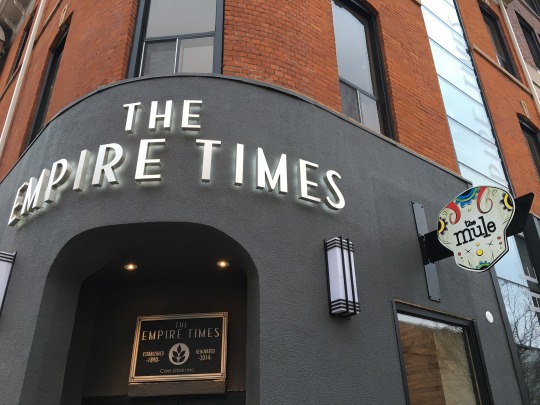
    Then came a taco and craft beer pit stop at The Mule. I would definitely recommend this spot if you happen to find yourself in the area.

    imageimage

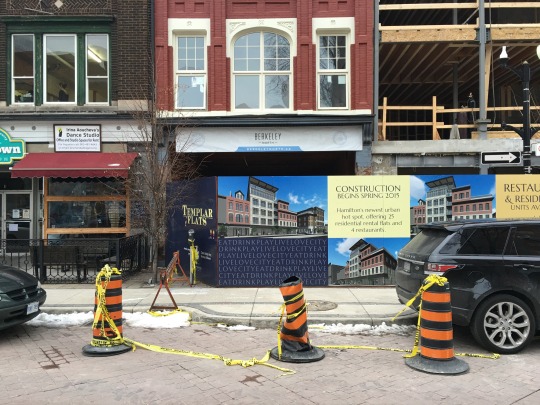
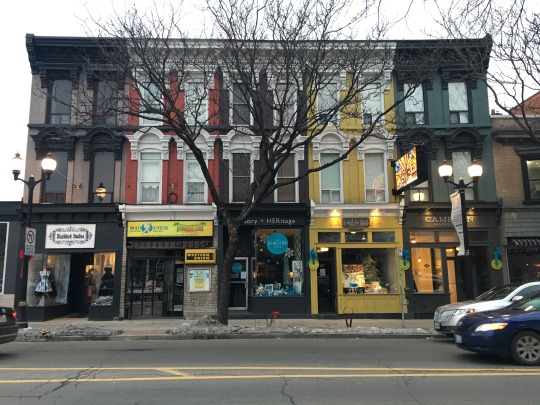
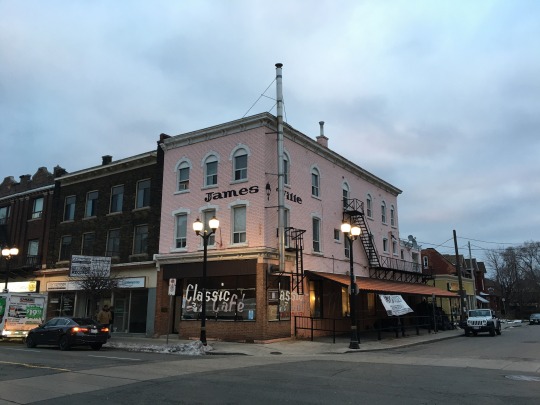
    Following this, we walked James Street North, which we were told has only really come up in the past 5 years or so. And alongside with this resurgence has come the slogan: Art is the new steel. This, of course, is responding to the fact that Hamilton is the steel capital of Canada, but that the industry is facing many challenges. I think it’s a neat slogan.

    imageimage

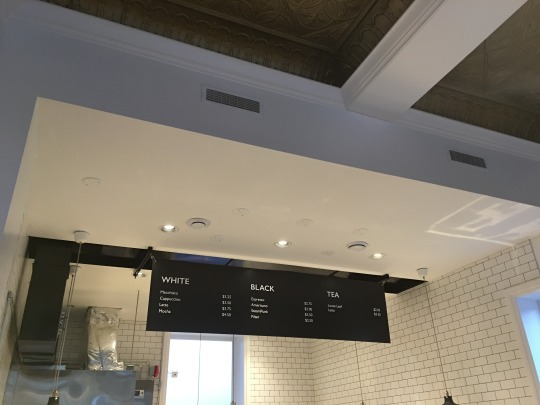
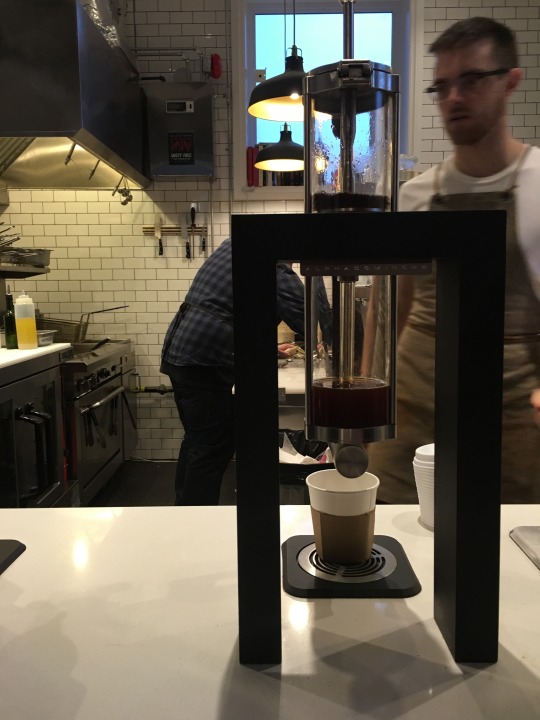
    On James Street we stopped in at Saint James Espresso Bar & Eatery, and it was everything we had hoped for and more. It was more because not only was it a cool space with great coffee, but they had some fancy thing called steam punk coffee.

    imageimage

    After James Street, we then drove around checking out some of the other areas in the city such as Kirkendall and neighboring Dundas.

    All in all, this afternoon was a great reminder that we are truly living in an urban century. It’s not just the Toronto’s, Berlin’s and Shanghai’s of the of the world that are laying down bike lanes, investing in art and culture, and generally reimagining their city centers. It’s also happening in smaller and mid-sized cities such as Hamilton. And that’s really exciting.

  • City-to-country colonization

    Lately I’ve been feeling that we’ve been having some pretty serious conversations here on Architect This City. Everything from condominium reserve funds to housing/tax policy. So today I thought we could change it up and talk about something a bit more fun: farmhouses.

    Last weekend when I was in Prince Edward County, one of the places that I visited was the Drake Devonshire Inn. It’s been on my list for awhile, so I’m glad I finally got to experience it. It’s an outpost of the Toronto-based Drake Hotel (no relationship to Hotline Bling Drake) and they refer to it as their “contemporary farmhouse.” 

    It was stunning.

    As soon as I walked on the grounds, I couldn’t stop looking around, taking pictures, and examining all the art that they have sprinkled around the inn. Those are the sorts of things I do when I get excited by a building or place. I’m like a kid in a candy store.

    I was so impressed that after I left I had to message my friend – who worked on the project and who I went to architecture school with – to tell her that she did an amazing job. Want to see for yourself? Click here for photos of the farmhouse. And click here for information on the design firm behind the farmhouse (+tongtong).

    But beyond just a great space, the Drake Devonshire is also symbolic of something greater than seems to be taking place. Almost everybody I met in PEC seemed to be a Toronto transplant. They were done with life in the city and decided take off for the country. But along with them is coming pieces of the city. (The Hayloft Dancehall is another example.)

    I used to think that this kind of city-to-country colonization was bound to happen in Niagara-on-the-Lake, which is only about an hour west of the city. But it turns out I was wrong. It seems to be happening to the east of the city in Prince Edward County.

  • What tax policy could be doing to home sizes in Ontario

    Golden City (of Toronto) by Evgeny Tchebotarev on 500px.com

    https://500px.com/embed.js

    In yesterday’s post I made a remark that we have antiquated tax policies here in Ontario that encourage the building of smaller new construction condominiums. There seemed to be a lot of interest in that comment, and so I’d like to talk about that today.

    Some people thought I was referring to development charges, but I was actually thinking of the GST/HST New Housing Rebate in Ontario. 

    The way it typically works in Ontario is that when buy a new construction home, the price you pay is inclusive of HST (harmonized sales tax) and net of any applicable rebates, such as the rebate program mentioned above. 

    This means that the price you see on your agreement is usually the price you pay. I say usually only because there are ways that you could disqualify yourself from the New Housing Rebate program. But that’s a different post.

    So what does this mean in practice?

    Let’s say you went out and bought a new construction condo for $368,200 (there is a reason I’m picking what seems like an arbitrary number). If there was no such thing as the New Housing Rebate program, then the sales tax owing on this home would be the full 13%. And that would mean that the price paid before any taxes is actually $325,841 (x 13% = $368,200). This is an important number because it represents revenue to the developer.

    But since there is a New Housing Rebate program, the effective tax rate actually works out to be 5.20% for this particular sale price, which means that the price paid before any taxes is now $350,000 (a nice whole number). And so because of rebates and because they are now paying less HST, the developer’s revenue number has increased. It has gone from $325,841 to $350,000.

    The way this logistically works is that purchasers usually assign the New Housing Rebate benefits to the developer who then processes all the paperwork. This is what I mean when I say that the “sticker price” is inclusive of HST and net of any rebates – it already factors in the possible deductions.

    So far things are looking good. And I want to be clear that I don’t have concerns with the New Housing Rebate program in its entirety. In fact, it’s a hugely important part of the new home industry. Without it, many projects would simply not be feasible to build.

    However, as the price of the new home increases (which typically happens as the home gets bigger), the rebates start to fall off. The federal portion of the rebate maxes out at a base purchase price of $350,000 (which is why I chose that number) and the Ontario portion maxes out at a base purchase price of $400,000.

    What all this means is that as the unit sizes get bigger and more expensive, the effective tax rate is no longer at 5.20%, as was the case in the example I gave above. It increases. And if you hold prices constant for the purchaser, it means that the developer’s revenues now start to drop.

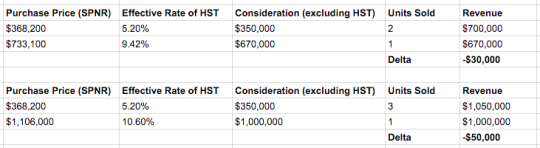
    To illustrate why this matters, consider the following chart:
    image

    In the first scenario, the developer builds and sells 2 units for a price of $368,2000. This translates into revenue of $700,000. However, if the developer instead decides to combine those 2 units and sell the larger single unit for $733,100 (roughly double the price) then the effective rate of HST goes up and revenue drops by $30,000.

    The second scenario is similar to the first one except that instead of 2 units, it’s 3 units which then get combined into one. Here revenue drops even further – by $50,000.

    Now, you could argue that there are some cost savings associated with building fewer suites, but I don’t think it would offset the differentials shown above, especially if you multiply those revenue numbers across an entire project. So what this all means is that it can be more profitable for developers to build smaller units priced below the thresholds mentioned above, as opposed to a smaller number of larger units. 

    Again, I’m not saying that HST rebates are bad. They’re critical to the industry. I love them. But I do believe we should be thinking about the possible implications that the current set up could be having on what we’re building and in particular on unit sizes.

    If you’d like to learn more about how the rebates work, check out this PDF from the Canada Revenue Agency. I tried to keep things simple in this post.

  • Cottage weekend

    I just got home from a weekend up at a friend’s cottage. It’s an annual birthday tradition and it’s always a great time. A good cottage weekend can do wonders to reinvigorate yourself. I am ready for the week.

    But since the Pan Am Games closing ceremony fireworks are about to kick-off and I want to go watch them from my sun deck, I don’t have a lot of time to write a post. So instead, I thought I would share a few of my photos from the weekend.

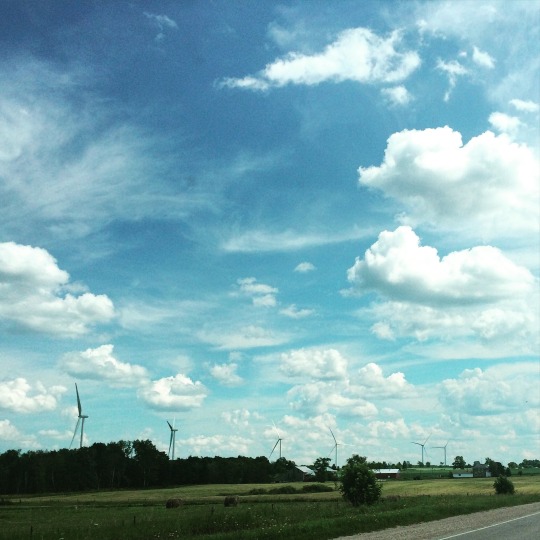
    The first photo is near Shelburne, Ontario. The wind turbines are from the Amaranth Wind Farm, which is the largest wind energy installation in Canada.

    image

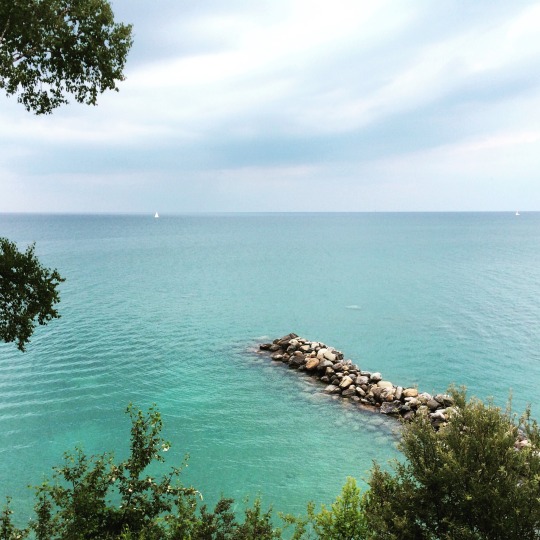
    This is the Georgian Bay. I love swimming in this water.

    image

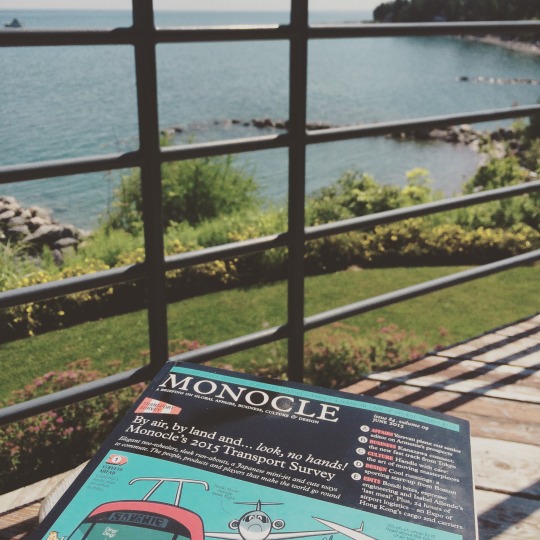
    Cottage reading: Monocle.

    image

    The wood shop. There’s a lot of creative talent at this particular cottage.

    image

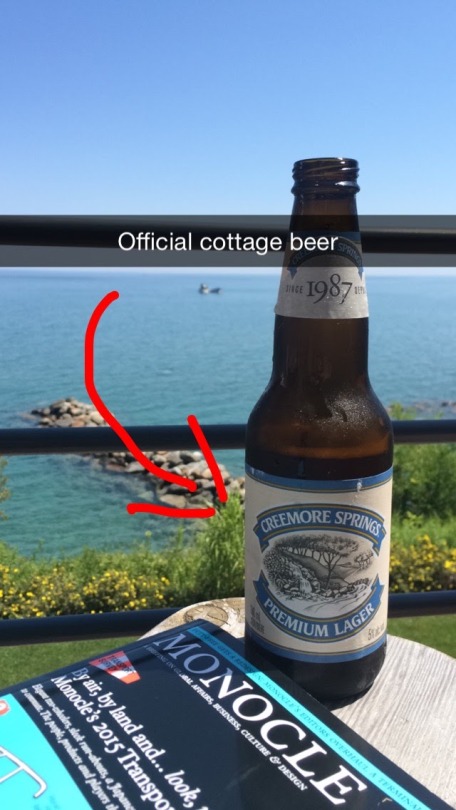
    Creemore = cottage.

    image

    All of these photos were also posted to my Instagram if you’d like to follow me there. The last photo was from Snapchat (donnelly_b).

    Regular scheduled programming will resume tomorrow. I have a great guest post queued up on road pricing. I can’t wait to share it.

  • “Am I supposed to like this?”

    image

    Today I had lunch at Webers Hamburgers so that I could see what all the fuss is about. Here’s my check-in.

    For those of you who don’t know Webers, it’s a burger place on the side of the highway in Orillia, Ontario. It opened in 1963 with the goal of targeting cottage goers and has since become an “institution” in the region.

    I don’t think I’ve ever been, so I figured I had to give it a try.

    Before going, I decided to ask around to see what people thought of the burgers. And in almost all of the cases, I got the same response: “You can get better burgers in the city. But you have to go. It’s an institution. It’s tradition.”

    And that ended up being a very accurate description.

    Were the burger goods? Yes. Were they mind blowing? No. In fact, they’re pretty basic burgers. You have a choice of 3 different toppings and 2 different condiments. That’s it. Want mayo? Sorry, they don’t do that.

    But in the end, it’s not really about the burgers.

    While there, I was reminded of a blog post by Seth Godin called, “Am I supposed to like this?” His opening line is the following: “If we think we are, we probably will.” And it’s all about how we make judgments well before we think we do (and how marketers invest in that).

    What matters a great deal is how we’re “supposed to” feel about something. If a wine is expensive, we’re “supposed to” to think it tastes better and our mind usually makes that a self-fulfilling prophecy.

    And in this case, Webers has become symbolic of summer and good times at the cottage. You’re “supposed to” stop there whenever you go to the cottage. It’s tradition.

  • The 5 objectives of Rejection Therapy

    In the business world – particularly in the startup world these days – there’s a lot of emphasis on the importance of failure. The mantra is: “fail early and fail often.” Because if you’re not failing, then you’re likely not pushing yourself hard enough and getting out of your comfort zone. 

    Some people think we’ve gone too far in our celebration of failure, but I think there’s a lot of value in not being afraid of making mistakes. I try and adopt the same mentality when I snowboard. If I’m not physically falling, then I’m likely not trying things I’ve never done before. (I may have taken that philosophy too far this winter.)

    Here’s a video from Gary Vaynerchuk’s #AskGaryVee show where Jack and Suzy Welch are guests and the first question has to do with this exact topic: the importance of failure.

    Given all of this, I was fascinated to learn about something new this week called Rejection Therapy. I was out for beers with some good friends of mine earlier in the week and one of them – who is an educator here in the city – started telling me the story of Jason Comely.

    Jason was a freelance IT guy from Cambridge, Ontario. His wife had recently left him for someone “better” and he went into a deep slump. Eventually, he realized that he had become terrified of rejection. His wife had rejected him and he never wanted that to ever happen again.

    Initially he withdrew from life. 

    But eventually he decided that he was going to experiment with the exact opposite approach. He decided that he was going to force himself to get rejected by someone every, single, day.

    It didn’t matter how it happened, but he had to get rejected. He would walk up to strangers and ask for a ride home. He would ask for a discount before buying something. The list goes on. 

    Eventually he thought it would be a good idea to start documenting all of his rejections: this is what I did today and this how I got rejected. It became a game for him. When he would get his rejection for the day, he would celebrate it. Then he thought to himself: why not turn this into an actual game that other people could purchase? And that’s what he did.

    He calls it Rejection Therapy and here are the five objectives that he lays out:

    1. To be more aware of how irrational social fears control and restrict our lives
    2. Smash the tyranny of fear and reap the treasures (treasures include wealth, relationships and self-confidence)
    3. Learn from, and even enjoy rejection
    4. To not be attached to outcomes, especially when it involves the free agency of other people
    5. Permit yourself to fail

    Playing Rejection Therapy may not be for everyone. But I think the lessons are universally applicable. There’s value in trying. There’s value in asking. There’s value in making mistakes. And there’s value in not being afraid of someone saying no.

  • What’s your complete neighborhood?

    Photograph Toronto - St Lawrence Market by Chris Dufresne on 500px

    Toronto – St Lawrence Market by Chris Dufresne on 500px

    This past Saturday night I was out with a few friends in my neighborhood (St. Lawrence Market area). And I was delighted to see how busy it was. Virtually every bar or club we walked by had a line down the street.

    Being the city geek that I am, I started thinking about two things: (1) how often I get localized to my neighborhood (I have data to back this up) and (2) what makes a “complete neighborhood”, such that you’re even able to be localized?

    In some ways the idea of a “complete neighborhood” is universal. Everybody needs a grocery store and access to food, for example. But in other ways, a “complete neighborhood” is very much a personal thing – you want goods and services that are important to you.

    So today I thought I would do a quick breakdown of the goods, services, and amenities that I really value in my neighborhood and that I think make it more or less “complete.” This list is a combination of universal and personal choices in no particular order. At the end, I summarize some of the things I wish I had.

    What I have:

    • A 5-10 minute walk to subway and streetcar
    • A 24/7 grocery store
    • A world famous food market (St. Lawrence Market)
    • Staple coffee shops (Starbucks and Balzacs)
    • Lots of restaurant and food choices (including decent Mexican, one of my favorite foods, and Pho, for when I feel a cold coming on)
    • 2 drugstores (Shopper’s Drug Mart and a new Rexall)
    • A great gym that’s less than a 10 minute walk away
    • An outdoor/athletic store that also fixes bikes
    • Cool local bar (AAA) where I can watch the Raptors (because I don’t own a TV)
    • After work bar with a good Happy Hour (Pravda)
    • Patios for the summer (all along the Esplanade)
    • All the major banks
    • Nearby recreational amenities (bike trails, waterfront, etc.)
    • Local employment base (Wattpad, BNOTIONS, etc.)
    • Great architecture (from Daniel Libeskind to the classics)
    • High walkability

    What I wish I had:

    • Less chains and a few more independent businesses
    • A hip indie coffee shop where the (male) staff have waxed moustaches
    • A good takeout sushi place
    • A pool that I could walk to (I ride my bike to Regent Park)
    • A liquor store with longer hours (but alas this is Ontario)

    Those are my working lists. What would create a complete neighborhood for you? And how does your current neighborhood hold up?