Daily insights for city builders, delivered every morning at 6 AM ET. I’m Brandon Donnelly — a Toronto-based real estate developer and founder of Globizen. I’ve been writing here since 2013.

Tag: ontario

  • Increasing housing supply in Ontario

    The Government of Ontario is currently working on a Housing Supply Action Plan that they hope will address “the barriers getting in the way of new ownership and rental housing.”

    Through initial consultations, they have already identified 5 key themes (my words below):

    1. The approvals/entitlement process for new housing is too slow
    2. There are too many restrictions on what is allowed to be built (that is, we should be encouraging more “gentle density” and “missing middle” type infill)
    3. Development costs are too high
    4. Tenants need protection; regulation is making it increasingly difficult to be a small landlord
    5. Overall housing innovation

    The province is also looking for public input and is currently running this online survey. It is open until January 25, 2019. And I would encourage all of you to complete it and help shape the action plan.

    My understanding is that the plan should be ready by Q2-2019.

  • The Future of Hamilton

    image

    As many of you know, we have a development project in Hamilton, Ontario – more specifically in the Corktown neighborhood. We filed our development application earlier this summer.

    Because of this I was invited to participate in a Bisnow event on The Future of Hamilton. It takes place the morning of Wednesday, September 12, 2018 in The Alley by Core Urban. I walked this space last summer while it was under construction and so I’m excited to see it finished.

    For those of you who aren’t familiar with Core Urban, they are doing some really great work in Hamilton and have established themselves as a responsible city builder with a focus on adaptive reuse projects.

    Steve Kulakowsky, who is co-owner of Core Urban, will be speaking at the event along with the mayor, some guy who has pretentiously included his middle name, and many other smart people. To see the full list of speakers and to buy a ticket, click here.

    Photo of Hamilton by Vivek Trivedi on Unsplash

  • Tropical Tobermory

    image

    I am in Tobermory at the tip of the Bruce Peninsula right now. 

    Above is a photo of the shoreline along Little Dunks Bay that I took with my Fuji. The water looks positively tropical, but it’s probably about 4 degrees celsius. It was perfect for chilling our ciders after a 2 hour hike through the woods.

    Sadly, I forgot the charger for my MacBook Pro back in the city, and so this – some photography – is all you’re going to get from me until I am back at my desk on Sunday evening.

  • True North by Alain Carle Architecte

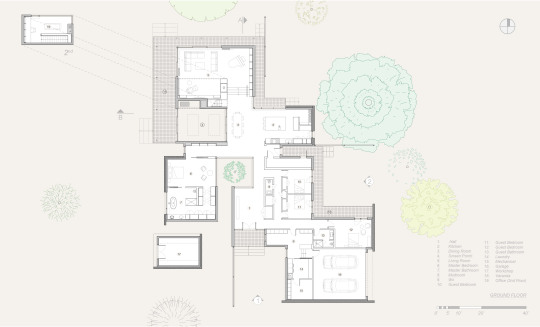
    I just recently discovered the work of Montréal-based firm, Alain Carle Architecte. If you aren’t familiar with their work, do yourself a favor and check it out here. They are apparently known for their secondary homes across the country.

    The project that caught my attention was their True North home in Cornwall, Ontario. Here are two photos by renowned architecture and design photographer Adrien Williams (also of Montréal).

    imageimage

    And here is a plan via Dezeen.

    image

    The concrete and black metal cladding against the snow is pure magic. I also love the way they employed black screens to create a gradient across the landscape and frame some of the outdoor spaces. You really see that in the plan.

    The shadows these screens cast on the concrete are also quite beautiful.

  • You can now buy a new home, online

    My friend Matthew Slutsky runs a company called BuzzBuzzHome that allows you to search for new construction homes. This week they launched a feature that allows you to put down a deposit on a new home – online – with your credit card. It’s live right now for the Barra on Queen in Kitchener, Ontario.

    I know that Matthew and his team have been working on this for years (I saw earlier demos), and so I wanted to publicly congratulate them on the blog. I’m not sure who their competitors are right now, but this feels to me like one of the first online real estate marketplaces where you can actually just hit “buy now.” Huge accomplishment.

    I am sure many of you will have objections that we will hear about in the comment section below. But I have little doubt that this is the future. People used to say that the masses aren’t going to buy clothes online because of the need to try things on. I own suits that I have purchased online. People will buy real estate online.

    The more important question: When will it go mainstream?

  • The impact of inclusionary zoning on development feasibility

    image

    After my recent post on inclusionary zoning in Ontario, I was asked to provide my comments on the draft regulation and on how inclusionary zoning could and will impact development feasibility. So I will endeavor to do that today.

    It’s important to first understand the costs and inputs that go into a development pro forma and how overall project feasibility is determined. For simplicity, let’s breakdown the costs as follows:

    – Land

    – Soft Costs

    – Financing Costs

    – Municipal Fees/Charges

    – Hard Costs

    All of these costs buckets are significant. For a project to be feasible, you obviously need the revenues of the project to be greater than the above costs. There also needs to be a remaining profit margin that is commensurate with the risk profile of the project and that meets your investor’s return expectations. Most developers rely on outside equity and debt to finance their projects.

    One of the misconceptions that I often hear is that people seem to think that the profit margin on projects is so great that developers could simply build affordable housing (or do many other things) if they weren’t so greedy. The reality is that development happens on the margin. It’s not easy to find sites and projects that make any sort of financial sense. More often than not they don’t.

    The other reality is that in a growing market all of the above costs are also continually increasing. If revenue (i.e. rents and condo prices) is also growing, as has been the case here in Toronto for many many years, then developers can generally absorb reasonable increases and continue building. But if revenue stops growing, grows at a slower pace or, worse, shrinks, then feasibility could disappear and development would stop.

    Now let’s talk specifically about inclusionary zoning. IZ is typically an incentivized or mandated requirement to provide a certain number of below-market housing units as part of new developments. Affordable housing is important. That’s why a number of cities already have inclusionary zoning policies – though it remains a fairly controversial tool.

    From a development feasibility standpoint, a mandatory inclusionary zoning requirement represents a decrease in revenue. There’s now a percentage of the units that can no longer be rented or sold at market prices. And so to maintain the project’s feasibility – because remember development happens on the margin – something has got to change.

    There are a few options.

    Option One: You could simply try and pay less for the land. As we have talked about many times on this blog, land is supposed to be the residual claimant. Work backwards from revenues and your other costs to determine what can be paid for the land. The problem with this option is that land prices tend to be sticky.

    Many or most landowners don’t give a shit about your development pro forma. They often have a number in mind and if you try and tell them that development charges just went up and you can’t pay as much for their land, they’ll simply sit on it and wait for someone else – even if that means waiting for the market to catch up (i.e. waiting for rents to go up).

    Option Two: Charge more for the remaining market units. If the market is sufficiently robust, perhaps this is an option. This is one of the reasons why inclusionary zoning often produces more units in markets where there’s already strong demand for new housing.

    But it’s also one of the reasons why IZ is controversial. You’re asking the other renters/buyers in the project to effectively subsidize the below market units. And there is research out there (previously posted on this blog) suggesting that in some instances IZ policies have created additional upward pressure on market rents and home prices.

    Option Three: Incentives are provided by the municipality to offset some or all of the additional burden placed on the project. This could come in the form of a density bonus, financial contribution, a waiving of other municipal charges/fees, and so on.

    Though I have questions about the details, this is something that was proposed in Ontario’s draft regulation (albeit not to the extent that the industry wanted). Now you know why I said and why I believe that these offsets are important to the industry and to overall housing affordability.

    My hope with this post was to provide the developer’s perspective, but also take a very matter of fact approach to inclusionary zoning. Most people recognize the importance of affordable and accessible housing. The question is how best to execute.

    Photo by Toa Heftiba on Unsplash

  • Inclusionary zoning is coming to Ontario

    On Monday the province of Ontario posted a draft regulation intended to establish a framework for inclusionary zoning. It builds on a bill that passed last year allowing municipalities – should they choose – to require affordable housing in new developments and redevelopments.

    Below are some, but not all, of the things that are being considered in the draft regulation. Some of these items were recommendations made by the development industry through the Ontario Home Builders’ Association (OHBA) and the Building Industry and Land Development Association (BILD).

    – The total number of affordable units or gross floor area dedicated to affordable housing units would not exceed 5% of the total units or 5% of the total gross floor area (excluding common areas). This number increase to 10% in high density transit station areas.

    – The affordable period would be a minimum of 20 years but no greater than 30 years.

    – There may be opportunities to provide the inclusionary zoning units off-site.

    – The policies would only apply to developments / redevelopments with 20 or more units.

    – The affordable component could not be used to determine community benefits under Section 37. Section 37 would also not apply if the proposed development (with IZ) is in a location where a development / community planning permit is used.

    – Municipalities would be required to offer incentives to help offset the IZ cost burden, but only if the development is not subject to a development / community planning permit. The incentives could include a waiver or reduction in application fees, parkland dedication fees, development charges, and so on. These offsets are very important to the industry and the affordability of the market rate units. But interestingly enough, increases in height and/or density are not being contemplated as a possible incentive or financial contribution.

    – The financial contribution would be based on the following formula: (A – B) x 0.4. A is the total sum of the average market price for all of the affordable housing units and B is the total sum of the affordable price for all of the IZ housing units. In other words, the intent is that municipalities would be required to offset 40% of the costs associated with providing the affordable units.

    Click here for the rest of the draft regulation. The OHBA also published this media release following the draft. They like the “partnership model” but were advocating for a 50/50 public/private cost share on all government-mandated units.

    If you’re looking for more reading on inclusionary zoning, check here, here, and here.

    Photo by Omair Khan on Unsplash

  • 16 new housing measures

    The big news today in Toronto real estate is that the province of Ontario introduced 16 new measures intended to rein in the housing market. 

    Some of the most notable measures, which many of you will have seen in the headlines, include a 15% tax on home purchases by non-residents and expanded rent control for buildings completed after 1991. Previously it only applied to older buildings. The maximum annual rent increase for existing tenants will now be capped at the rate of inflation, up to a maximum of 2.5%.

    Here’s some more information from the Globe and Mail and CBC.

    I’ve had a few people ask me to blog / comment on the above, but I haven’t yet had time to do a deep dive into the details. I would like to do that first rather than provide a knee-jerk reaction. In the meantime, I would love to hear your thoughts in the comment section below.

  • Province rejects Toronto’s proposed road toll plan

    Earlier this week I was in an Uber heading up to Charles Street and the driver made a comment to me. He said that since he moved to Toronto in the 90′s, traffic has gotten progressively worse every single year. He continued on to say: and yet we continue to build, build, build.

    My response won’t surprise anyone who reads this blog. I said that Toronto has become a far more exciting city since the 90′s because of intensification (though 1992 and 1993 were pretty awesome) and that the problem is our mental model. We haven’t moved beyond the car as the perceived solution to urban mobility.

    A perfect example of this is what just happened with the province vetoing Toronto’s proposed road toll plan. 

    Firstly, I fully agree with Marcus Gee of the Globe and Mail that this is both an act of cowardice (the province gave every indication that they initially supported the plan) and an act of arrogance (we are talking about roads owned by the city, not the province).

    I also find it incredibly frustrating that Toronto cannot control its own destiny. This is a mistake and it needs to change if we – and the rest of the cities in this great country – are to continue competing at a high level in this urban century.

    But to my initial point, the problem with this move is that it signals a status quo mental model. It is a clear reluctance to make any sort of bold moves to move Toronto in a new direction. I guess we are happy with the current trend line. More traffic.

    We shouldn’t be.

  • Last lake swim of the year

    I’m in Muskoka right now, with very little time to write. 

    I had about an hour before dinner, but I decided that a far more responsible thing to do would be to jump in the lake for what will likely be the last lake swim of the year. It might be the end of September, but it still feels like summer.

    Here’s what that looked like:

    If you’re searching for something more city related, check out these high resolution maps of Canada according to our trails, roads, streets, and highways. My good friend Peter just sent them over to me. Thanks Peter.

    Regular scheduled programming will resume tomorrow.