Daily insights for city builders, delivered every morning at 6 AM ET. I’m Brandon Donnelly — a Toronto-based real estate developer and founder of Globizen. I’ve been writing here since 2013.

Tag: norway

  • Let there be light

    My condo has an east exposure. That means I get direct sun in the morning and no direct sun in the afternoon, once the sun has crossed over onto the other side of my tower.

    But a funny thing happens in the late afternoon and early evening. The sun reaches just the right angle and begins to reflect off the apartment across from me. That apartment is about 11m away.

    Once this happens, it then feels like I’m getting direct sun again. It floods my apartment. This may seem like a small thing, but I love it when this happens. It’s happening right now as I write this post.

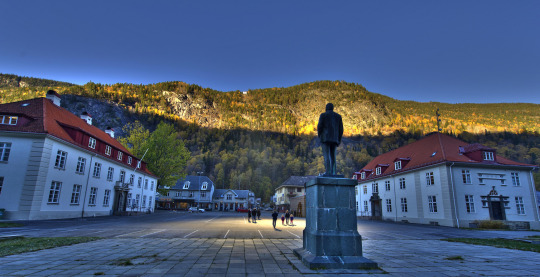
    So I can only imagine what it must have felt like for the residents of Rjukan, Norway when they got their first taste of winter sun back in 2013.

    Rjukan is a small town of approximately 3,400 residents. It’s located about 2.5 hours west of Oslo and is situated within a deep east-west valley. 

    As a result of its geography, the town is cast in shadow for about half of the year, from September to March. The elevation of the sun is simply too low for direct light to reach down and into the valley.

    So what the town did was install a set of solar powered mirrors on top of the mountains. The mirrors – also called heliostats – track the sun and reflect it down into the town’s main square. Now the town gets winter sun.

    Interestingly enough, many residents opposed the mirrors before they were built. They viewed it as a frivolous expenditure. Petitions and Facebook pages were created. But now that the mirrors have been installed, most of the naysayers seem to have changed their tune.

    I think it goes to show just how important light is, but also how difficult change, of many varietals, can be.

    Image: Flickr

  • The city is the brand

    Oslo Barcode I by Michel Krämer on 500px.com

    https://500px.com/embed.js

    I was reading the internet this morning and I stumbled upon an interesting urban blogger from Oslo named Erling Fossen. Most of his writing is in Norwegian, but he does have a section called “City Notes” that is in English.

    I enjoyed this paragraph titled, "The city is brand.” It is taken from a post called, “7 lessons from Oslo Urban Arena.”

    As cities compete to attract talents, companies and investment, many cities have branded themselves as either the most creative city in the world, the smartest or the most liveable. In many occasions cities develop slogans to go with the message. But as brand expert Martin Boisen said: No one has ever moved to a city due to a logo. Action speaks louder than logos. Branding cities can actually be helpful. The world is a stage, and your city has a role to play. The first message is to avoid being a copy cat and focus on your own uniqueness. It is also just as important to involve a larger community to make branding work. It takes a village to brand a place. Equally important is to have strong leadership communicating the message. Strong leaders can rock the boat.

    I’ve written about city branding quite a bit here and this has always been my message. An excellent city brand must stem from some form of reality. If you want to be the most creative or the greenest city in the world, then you have to live and breathe that philosophy.

    I also feel strongly about not copying other cities. You might think that having (insert thing here), which was pioneered in (insert city here), will make you world-class. But that’s a pretty banal way of going about things.

    Instead, to reiterate Fossen, focus on your own uniqueness. Then market the hell out of it.

  • #LoveWins in the United States

    https://500px.com/embed.js

    By now, I am sure that all of you know that the U.S. Supreme Court made a landmark ruling yesterday (Friday, June 25, 2015). In a 5-to-4 vote, it was decided that the U.S. Constitution guarantees the right to same-sex marriage.

    Here is Justice Anthony Kennedy’s closing paragraph. What a great read.

    image

    With this decision, the United States joins the Netherlands, Belgium, Spain, Canada, Norway, Sweden, and many other countries who already allow same-sex marriages nationwide. And I am delighted to see that happen with Canada’s neighbor.

    I am also proud to say that it has already been a decade (2005) since Canada became the 4th country in the world – and the 1st country outside of Europe – to allow same-sex marriages. Not because it had a direct impact on my life, but because it is the right thing to do.

    It is the right thing to do because it creates “equal dignity” among all men and women (as Justice Kennedy states above) and because it’s the right thing to do for our economies.

    I believe that the strongest economies are the ones that can remain open and tolerant to new ideas and all kinds of people. 

    Cities like Toronto and New York (as I’ve argued before) became successful precisely because they opened themselves up to new ideas and new people (immigrants).

    But many studies show that as people age, “openness” declines. We become less intellectually curious and our preference for variety wanes. Perhaps this is where the expression “set in your ways” comes from and why political orientation often correlates with age.

    Thankfully the U.S. wasn’t so set in its ways that it couldn’t provide equal dignity to its citizens.

  • Right answer to the wrong question

    Yesterday I wrote a post on why Norway loves Tesla Motors. The lesson was that if you want people to adopt sustainability, just make it cheaper. But here’s something to ponder: Are electric vehicles the right answer to the wrong question? (Jeff Speck in Walkable City)

    Now, don’t get me wrong, I think electric vehicles are great. They’re certainly better than gas vehicles from a sustainability standpoint. But is the ideal city of the future one where everyone is driving around in electric vehicles? Or is it one where the majority of people walk, bike and take transit? It’ll likely be a mixture of both scenarios, but I think it’s important for cities to know where they want to go.

    Switching from gas to electric solves some problems, but it doesn’t solve all of them. Traffic congestion and lost productivity, for example, don’t go away. So I would say that electric vehicles are part of the right answer—but there’s still lots of other work to be done.

  • Why Norway loves Tesla Motors

    Norway imposes big levies on the sale of fuel burning vehicles. They can amount to more than 100% of the sale price—effectively doubling the price of a vehicle. It’s a supertax.

    Exempt from these taxes, however, are electric vehicles. This has not surprisingly made Elon Musk’s Tesla Motors an incredibly popular choice. In fact, Norway has become Tesla’s best overseas market with the highest per capita sales.

    And it’s because it makes economic sense, at least for some. Here’s how a Norwegian would save by buying the Tesla Model S

    “EV drivers enjoy breaks on levies the government imposes on vehicle purchases to the tune of about $135,000 for the Model S, which has a local starting base price of about $112,000. In other words, if the Model S had a gas engine, like comparable luxury cars, it would cost nearly $250,000 to own one in Norway.”

    But this approach has been criticized as a subsidy for the wealthy. People are buying a Tesla S instead of a Porsche. However, you could argue that the intent of the supertax is being fulfilled: more people are buying electric vehicles. Which is why the per capita fleet of plug-in electric vehicles as a whole in Norway is the largest in the world.

    So the lesson here is that if you want people to adopt sustainability, just make it cheaper.

    Credit to Evgeny of 500px for giving me the idea for this post.

  • Who is worried about Canada’s housing market?

    Atlantic Cities just posted an article on the world’s 5 largest housing bubbles. In descending order of real growth, they are:

    1. Israel
    2. Norway
    3. Switzerland
    4. Canada
    5. Germany

    Not surprisingly, Canada is on the list. There is, of course, lots of talk both locally and abroad about the stability and sustainability of our housing market. Here’s what the article had to say about Canada:

    “With real home price appreciation near 20 percent, Canada’s home price growth has been raising eyebrows. Bank of Canada governor Stephen Poloz doesn’t see a bubble, but others aren’t so sure. Climbing alongside housing prices have been levels of household debt, which surmounted 165 percent of income in the second quarter of 2013. (That’s not too far from where they were in the U.S. before it suffered its housing crisis.) And the Bank of Canada itself has even warned about risks posed by frothy condo sectors in big cities like Toronto. A few hedge funds, such as San Francisco-based Hyphen Partners, have even made high-profile bets on a Canadian housing bust. They haven’t paid off, yet.”

    And here’s the full list of countries:

    image

    Overall, it’s not surprising to see that Canadian home prices have risen so dramatically since Q1-2009. As the US sank into deep recession (2008-2009), Canadian credit became cheap in order to stave off a recession of our own. This fuelled the housing market, which is an asset class that’s inextricably linked to financing costs.

    The same thing happened in Ireland, which today sits at the bottom of the above list. It has seen real prices drop roughly 40% since Q1-2009. By adopting the euro currency, Ireland no longer had control over its own monetary policy (this is one of the downfalls of a centralized currency). So when the economies of the larger continental countries stuttered, interest rates were dropped. For the strong Irish economy, it ended up creating a housing bubble.

    I worked in Ireland in the summer of 2007 and I remember people telling me about this. Already at this point there was concern that the market had become overheated. There are obvious parallels to what has happened in Canada, even though we don’t share a common currency. The Canadian and US economies are inextricably linked.

    So will the same thing that happened to Ireland happen here in Canada? Nobody knows for sure, but I think we can take comfort in the actions taken by the feds to tighten up lending. They’re acutely aware of what easy credit has done to the housing market and they’re trying to temper it. And it’s certainly had an impact.

    Early this week when I was on the panel about investing in condominiums, I asked a lot of the realtors about what they were seeing in the residential marketplace. A great number of them told me that their clients were struggling to obtain financing. A lot of deals were falling through because of it.

    If you’re worried about our housing market, this should be taken as great news. Choke off credit and you choke off real estate.