Daily insights for city builders, delivered every morning at 6 AM ET. I’m Brandon Donnelly — a Toronto-based real estate developer and founder of Globizen. I’ve been writing here since 2013.

Tag: new yorker

  • Internal locus of control

    Before bed last night, I came across this New Yorker article from 2016 that I thought was fascinating and broadly useful for both life and business. In it, Maria Konnikova talks about how people learn to become resilient. And she starts by citing the work of a developmental psychologist and clinician who spent decades studying why some people seem to manage stress and trauma far better than others. Here is an excerpt talking about why that might be the case:

    From a young age, resilient children tended to “meet the world on their own terms.” They were autonomous and independent, would seek out new experiences, and had a “positive social orientation.” “Though not especially gifted, these children used whatever skills they had effectively,” Werner wrote. Perhaps most importantly, the resilient children had what psychologists call an “internal locus of control”: they believed that they, and not their circumstances, affected their achievements. The resilient children saw themselves as the orchestrators of their own fates. In fact, on a scale that measured locus of control, they scored more than two standard deviations away from the standardization group.

    It immediately reminded me of something that Steve Jobs once said in an interview back when more people wore buttoned up jean shirts. His comment was that one of the most powerful things you can learn in life is that much of what surrounds us was created by people who are no smarter than us. His point being that everything can be altered. We all have that ability. We are “orchestrators of our own fate.”

    The article goes on to argue that one of the ways we can exhibit a strong internal locus of control is by learning to view and respond to situations in a productive way. Put differently, whether or not we are subjected to shitty experiences matters less than how we ultimately react to and view those shitty experiences. If you can reframe and place in positive terms, then you can reduce any perceived stresses and become more resilient.

    The good news is that, supposedly, these are skills that can be learned. So if this topic is at all interesting, I would encourage you to check out the full article. It certainly caught my attention before bed last night.

  • Pandemic-era hand sanitizer

    I have been trying (albeit not very hard) to come up with the best way to describe the stinky hand sanitizer that is going around these days. Then today somebody in the office described it as bad tequila and I immediately thought, “yup, that’s exactly it. It’s bad tequila.” See above tweet.

    Turns out, there’s some science behind this stink. Here is an article by Gregory Han from the New York Times that was shared in response to my tweet. And here is the excerpt that explains where this stink comes from:

    “That off-putting smell—sometimes described as rotten garbage or tequila-like—is the natural byproduct of ethanol being made from corn, sugar cane, beets, and other organic sources,” explained Zlotnik. “[Ethyl alcohol] production is highly regulated. It stinks because these new brands—many made by distillers who’ve pivoted from producing drinking alcohol to meet public demand for hand sanitizer—are making and using denatured ethanol. This ethanol costs significantly less than ethanol filtered using activated carbon filtration, which would typically remove almost all contaminants and the malodor with it.”

    Those organic contaminants aren’t the only reason unfiltered and denatured ethanol smells downright foul. According to Zlotnik, denatured ethanol is also intentionally tainted with an unpalatable cocktail of chemicals (denaturants) such as methanol, acetone, methyl ethyl ketone, and denatonium to make it undrinkable. In other words: The base material is intentionally stinky.

    So now you can judge accordingly after you’ve cleansed your hands with rotten garbage tequila.

    On a somewhat related note, Jill Lepore has an interesting piece in this week’s New Yorker about the great indoors, and how quarantine has forced us to spend even more of our time indoors. (Though, that hasn’t been the case for me this summer.) Here’s a snippet:

    The Great Confinement varies by place and by wealth, and, historically, it’s new. “Over several millennia, humans have evolved from an outdoor species into an indoor one,” Allen and Macomber write. Citing E. O. Wilson, they explain, “We evolved in the African savannah’s wide-open expanses, intimate with nature and seeking protection under tree canopies,” and so “our genetic hardwiring, built over millennia, still craves that connection to nature.” To satisfy this craving, photographs of redwoods adorn hospital waiting rooms; you can pop into the Grand Canyon via Zoom. I used to think these dodges were better than nothing, but I’ve changed my mind. Zoom is usually not better than nothing.

  • New Yorkers are actually pretty healthy

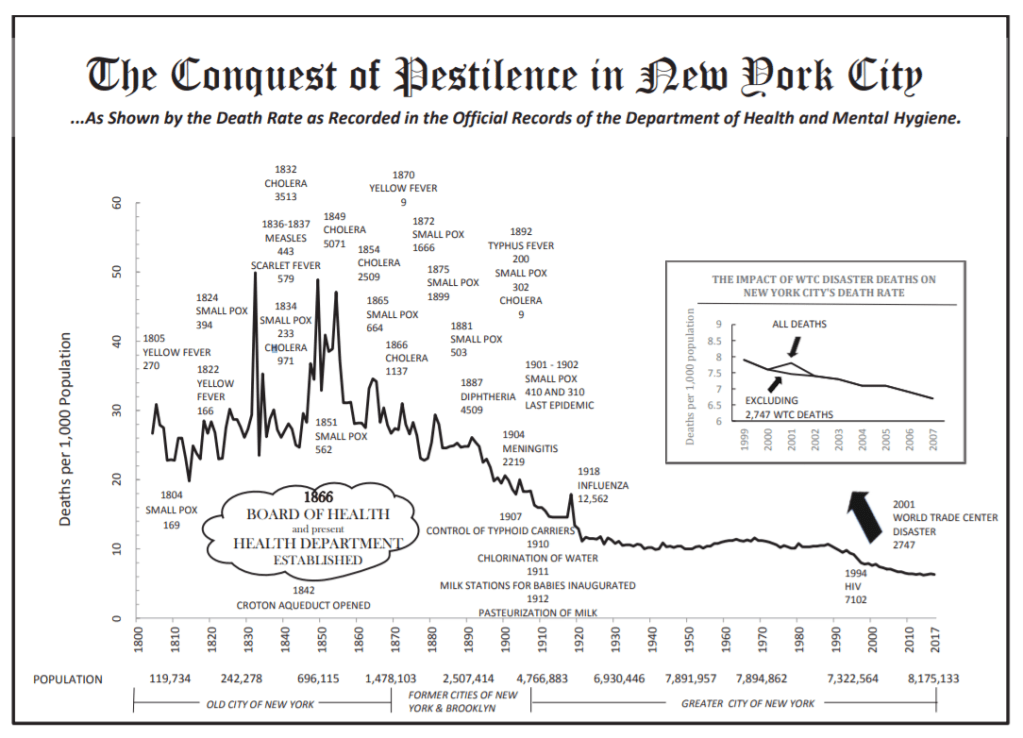
    Nicole Gelinas’ recent piece in CityLab is a good reminder that — despite all of the debates around COVID-19 and urban density — New York City is actually a really healthy place to live. Part of this obviously has to do with the city’s investments in public health. But the biggest factor, Nicole argues, is the city’s transit network. Six million people move around New York City each day without a car. That translates into a meaningfully lower traffic fatality rate. New York State’s rate is about 4.8 per 100,000, whereas Florida’s is 14.7 deaths per 100,000. Taking transit (and having an urban morphology that supports taking transit) also brings along with it other benefits, such as increased walking. And I have to believe that is an important factor. The obesity rate in New York City is thought to be about 22%, compared to a shocking 42% for the country. All of this rolls up into a life expectancy of about 81.2 years for New Yorkers, as of 2017. This is compared to 78.6 years for the US as a whole.

    For more on the health of New Yorkers, check out this 2017 Summary of Vital Statistics. (It’s the source of the above chart.)

  • Only the rich can afford this much nothing

    Joshua Levine’s recent (WSJ Magazine) piece on John Pawson, — the architect who “elevated nothingness to an art” — is a good read.

    It’s mostly about the country retreat that he recently completed for himself and his wife in the English countryside, but there’s also lots about his minimalist architecture, his career, his work with hotelier/developer Ian Schrager, and his passion for photography.

    I like this bit about architectural simplicity. The great irony of minimalism, and the reason why brands such as Calvin Klein and Jil Sander began working with John Pawson to leverage his aesthetic, is that it’s often more difficult to do less. Getting the details right costs money. Hence this great line from the New Yorker:

    As the New Yorker cartoon put it, “Only the rich can afford this much nothing.” Don’t expect a rebuttal from Pawson. “It is big, and it is expensive, you know. It’s sophisticated architectural simplicity. This isn’t a religious thing, and it isn’t as simple as you can go. You can go a lot simpler than this.”

    I also like what the following says about labels and what it means to be defined as something:

    Slowing down for Pawson isn’t all that slow. He takes photos constantly and has always used the camera as his third eye. In 2017, Phaidon published Spectrum, a book of his photos, many of them first posted on his Instagram (“I said, ‘Well, I’m not a photographer,’ and they said, ‘You are a photographer,’ so now I’m a photographer”).

    Click here for the rest of the article from WSJ Magazine. And if you aren’t familiar with John Pawson, here is his minimal website.

    Photo: Max Gleeson (Armonia Apartments designed by John Pawson)

  • San Francisco’s tax for the homeless

    Proposition C will be on San Francisco’s ballots this November 6th, 2018. 

    If approved by voters, the following additional taxes would be levied on businesses in order to create a dedicated fund to both support and prevent homelessness in the city:

    For businesses that pay a gross receipts tax, an additional tax of 0.175 percent to 0.690 percent on those gross revenues in San Francisco over $50 million;

    For businesses that pay the administrative office tax, an additional tax of 1.5 percent of their payroll expense in San Francisco.

    Marc Benioff – the founder of Salesforce (which happens to be the city’s largest employer) – has emerged as the lead supporter of Prop C. Between personal and corporate funds, he has contributed almost $8 million to getting this passed.

    But other billionaires in the Bay Area, such as Jack Dorsey of Twitter, have taken a different position, instead siding with Mayor London Breed, who does not support Prop C. 

    If you’re interested in this topic, the New Yorker has a piece called, The Battle of the Big-Tech Titans Over San Francisco’s Tax for the Homeless

  • The Hess triangle

    A friend of mine recently shared this Twitter thread with me. It is by Chaz Hutton. I didn’t know who Chaz was before I read the thread. But I now know that he draws things, sometimes for the New Yorker.

    Chaz’s Twitter thread covers the history behind what was once believed to be the smallest plot of land in New York City. He also positions the story as the “perfect embodiment of New York’s attitude.” Guess what the means.

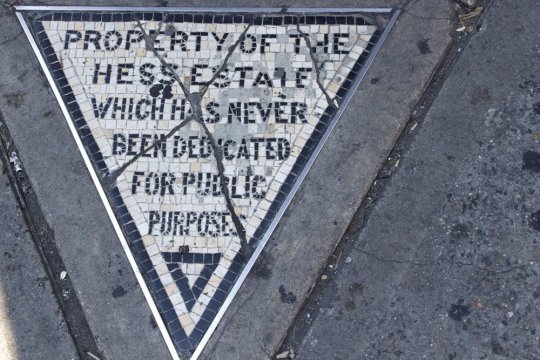
    The story is about the isosceles triangle pictured above, measuring 25-1/2″ at its base and 27-1/2″ along its sides. It is known as the Hess triangle and it reads: “Property of the Hess Estate which has never been dedicated for public purposes.“

    Click here for the full story.

    Image: Chaz Hutton

  • How ecommerce is growing in rural China

    This piece in the New Yorker about how e-commerce, and in particular JD.com, is transforming rural China is worth a read.

    In typical New Yorker fashion, it’s a good long-form read, but one that you can also listen to if that’s your thing.

    What’s immediately fascinating are how important trust is to JD’s rural expansion strategy and how locals from these rural communities are used to penetrate the social networks.

    Today, Xia oversees deliveries to more than two hundred villages around the Wuling Mountains, including his birthplace. But, in line with JD’s growth strategy, an equally important aspect of Xia’s job is to be a promoter for the company, getting the word out about its services. His income depends in part on the number of orders that come from his region. Across China, JD has made a policy of recruiting local representatives who can exploit the thick social ties of traditional communities to drum up business.

    This is important because:

    “Chinese people don’t easily believe the good will of strangers,” Liu told me. “Why do you think Chinese fight tooth and nail to get on the bus and subway?” He shook his head and laughed. “It doesn’t matter that it’s less efficient or unnecessary. It’s a complete reflex for them, because it’s what they’ve been taught since they were young.”

    When you have some time, here is the full article

    According to the New Yorker, JD.com is the third largest tech company in the world in terms of revenue. They also have the largest drone delivery platform in the world.

  • Sidewalk Labs, Amazon HQ2, and the Milanese Leonardo

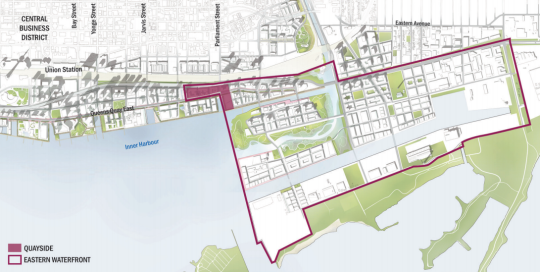
    Earlier this week the WSJ announced that Sidewalk Labs (Alphabet Inc.’s urban innovation organization) is close to a deal with Waterfront Toronto to develop a new 12-acre section of the eastern waterfront. Sidewalk Labs would be their innovation and funding partner. It’s not final yet and it’s still subject to board approval, but the sentiment is that it should go.

    There aren’t a lot of details about the project – other than the fact that it will be fairly big, up to 3 million square feet – but the overall intent is digital city building. It’s about imagining what a city could be if you built it today “from the internet up.” More info about Sidewalk Labs, here.

    I thought of this project as I read Seth Godin’s daily blog post this morning in bed. Here are two snippets from that post:

    When a new technology arrives, it’s often the nerds and the neophiliacs who embrace it. People who see themselves as busy and important often dismiss the new medium or tool as a bit of a gimmick and then “go back to work.”

    There’s never a guarantee that the next technology is going to be the one that moves to the center of the conversation. But it’s certain that a new technology will. It always has.

    Openness matters.

    I’m anxious to learn more details about the project, but this is obviously very exciting. It also creates momentum and strengthens the case for Amazon HQ2 in Toronto. The above 12-acre Quayside area is only the tip of the iceberg. There’s the rest of the eastern waterfront and also East Harbour.
    image

    Some people have been critical of this city’s push for Amazon HQ2. Anthony Lacavera, chairman of Globalive Capital, called this “the biggest Trojan Horse of all time.” His view is that Amazon would simply use HQ2 Toronto as a mechanism for cheaper labor (USD > CAD) and to siphon the best and brightest down to the US.

    Now, I agree that it would be more impactful to create the next Amazon then to simply lure in its second headquarters. Big entrepreneurial successes are what fuel the darwinian evolution of startup hubs. The founders, early employees and investors make boatloads of money and then they start reinvesting that back into the ecosystem by, among other things, backing the next generation of entrepreneurs.

    But does this necessarily mean that an Amazon HQ2 would be detrimental to Toronto by acting as a conduit to the US? Will it discourage entrepreneurship? Should we eschew all US firms out of fear that this may in fact happen? I don’t think so.

    There’s tremendous value in concentrating smart people in one place – ideas build on ideas. And I don’t think technology has been able to disrupt that, at least not yet. One example of this is a theory that Paul Graham calls the Milanese Leonardo:

    You can see how powerful cities are from something I wrote about earlier: the case of the Milanese Leonardo. Practically every fifteenth century Italian painter you’ve heard of was from Florence, even though Milan was just as big. People in Florence weren’t genetically different, so you have to assume there was someone born in Milan with as much natural ability as Leonardo. What happened to him?

    And his reasoning is as follows:

    Nothing is more powerful than a community of talented people working on related problems. Genes count for little by comparison: being a genetic Leonardo was not enough to compensate for having been born near Milan instead of Florence. Today we move around more, but great work still comes disproportionately from a few hotspots: the Bauhaus, the Manhattan Project, the New Yorker, Lockheed’s Skunk Works, Xerox Parc.

    Xerox Parc (Palo Alto Research Company) is a great example of the kind of positive externalities that can happen as a result of smart people being in close proximity to each other while they wrestle with similar problems. It has been well documented that it was Steve Jobs’ visit to Xerox Parc that inspired many of Apple’s early innovations.

    So my view: let’s increase Toronto’s urban metabolism and make it the Florence of 1450.

    Ed Clark – who is leading the charge for HQ2 in Toronto – has been clear that large taxpayer subsidies are not on the table for Amazon. That would not be fair to the existing companies in this city. If that is what it is going to take, then we are not going to win. We will win based on our city, our human capital, and our openness to the rest of the world. That feels right.

    Welcome Sidewalk Labs. Welcome Amazon. This city is open for business and to new ideas. 

    Image: Waterfront Toronto

  • How avocado toast became the poster child for Millennial self-indulgence

    I am a big fan of avocados, as I’m sure many of you are as well. But why the obsession these days? Consumption is very clearly up. Sure they’re healthy, but what else is driving their celebrity status?

    Here’s an excerpt from a recent New Yorker essay called, A Grand Unified Theory of Avocado Toast:

    Today, nine out of ten imported avocados in the U.S. are from Mexico.

    The change resulted from the North American Free Trade Agreement. Their effects on the consumer avocado market were profound: from the mid-nineties through 2014, the United States’ avocado consumption nearly quadrupled. Average consumption rose from less than two pounds per person per year to about seven. In the nineties, the United States was producing more than eighty per cent of the avocados that it ate. More recently, it has grown fewer than twenty per cent. The twenty-first-century explosion of avocado smoothies, avocado ice cream, avocado life, in other words, is not in your imagination. It reflects a foreign influx of the fruit, mostly made possible by NAFTA.

    If you also love avocados and you’re curious as to why avocado toast has become the poster child for Millennial self-indulgence, you may want to read the full article.

  • Am I being too subtle?

    Billionaire Sam Zell has a (relatively) new book out called, Am I Being Too Subtle?: Straight Talk From a Business Rebel.

    I haven’t read it yet, but I’ve added it to my queue. I can, however, tell you that I always enjoyed listening to Zell speak candidly about business and real estate when I was in graduate school and he would come in. He was never one to mince his words.

    He’s making the rounds right now to promote this new book and he recently sat down with William D. Cohan of the New Yorker. Not surprisingly, the Chicago Tribute debacle formed a large part of the conversation – up until Zell got tired of talking about it.

    “That is the L.B.O. that drove this company into bankruptcy.” Zell said, of the Tribune experience, “I made a bet. I thought the bet was reasonable. I underwrote it appropriately. I was wrong.” He lost his entire investment.

    But this misstep did nothing to phase Zell’s contrarian approach to business and life:

    Zell attributes his wealth to a prescription articulated by any number of successful business people: zigging when everyone else is zagging. It’s a replicable formula, he says, and he has little patience for people who complain that it was somehow easier in the good old days, or that the moment for such opportunities has passed. (His earliest successes came from investing in real-estate assets that others shunned.)

    He refuses to listen when he’s told he can’t do something. “I spent my whole life listening to people explain to me that I don’t get it,” he says. “I look at the Forbes 400 list, and if I eliminate the people who inherited the money, everybody else went left when conventional wisdom said to go right. How did I do what I did? By not listening to anybody else.”

    It’s the Sam Zell way.