Daily insights for city builders, delivered every morning at 6 AM ET. I’m Brandon Donnelly — a Toronto-based real estate developer and founder of Globizen. I’ve been writing here since 2013.

Tag: new york

  • When the crowd builds a city

    I’ve been following and checking out Kickstarter pretty much since the beginning. But it wasn’t until last night that I backed my first project. 

    After doing that, I immediately started thinking about urban projects that might be able to also get crowdfunded using Kickstarter. How could it be used for city building? A Kickstarter project, after all, just has to be something with a defined scope and a clear end goal.

    Not surprisingly, this has already been happening for many years now.

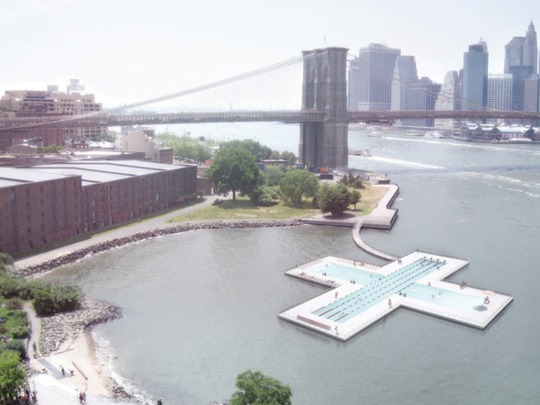
    A great example is +Pool in New York, which is an initiative to build a publicly accessible floating pool that also filters river water. The project launched in June 2011 and by July 2011 they had raised $41,648 USD to build and test different filtration techniques.
    image

    Today, the project is still moving ahead and they are now offering up the opportunity to buy and have your name engraved on tiles within the pool. If I lived in New York, I would be all over this.

    But what’s powerful here is the ability for crowd-based platforms (like Kickstarter) to both get radical new ideas off the ground and to empower local communities to affect change. Here’s a quote from PSFK:

    It’s very difficult to get funding for these ‘out there’ ideas that regular systems might not support. Creators have to take risks and be imaginative, as well as put their ideas out there and let the public decide. There are no traditional guidelines on crowd-sourced platforms—they’re much more meritocratic. You can think in big scope and that changes what gets made and who can access it. Anybody with a couple of doubles can voice what they want to be built, and in that way we see the entire community having a huge say in the design world.

    And when I see projects and platforms like this, I can’t help but wonder if (when) city building is going to become even more decentralized. 

    Last night I was also at an event – being put on by Ryerson University’s City Building Institute – called Bridging Divides: What Can Cities Do? And one of the suggestions that came up was that Toronto needs more local and granular community councils (there are currently 4) in order to bridge some of the divides that are happening in our city.

    But in a world where it’s possible for each and every person in a city to not only have a say but to quickly say it from their smartphones, why can’t we go even more local? Instead of 4, 10, or 90 community councils, why can’t we have everyone more engaged?

    I think we’re headed in that direction.
  • Ace Hotel coming to Toronto’s Fashion District

    https://500px.com/embed.js

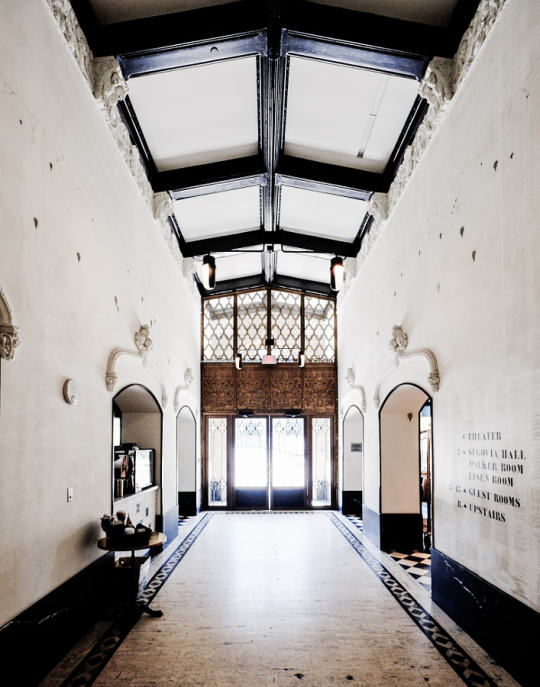
    The word on the street right now is that Ace Hotel will be opening up a location in Toronto’s Fashion District at 51 Camden Street

    Unlike its other outposts around the world, which entailed the renovation of a historic building, this one will be a new build. And according to HotelChatter, Shim-Sutcliffe Architects have been retained for the project.

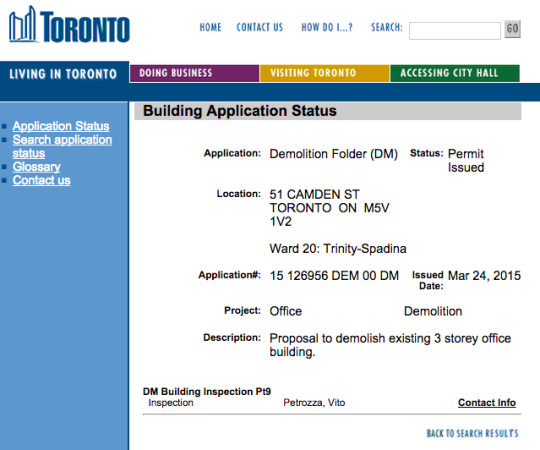
    Already a demolition permit has been issued for the existing 3 storey office building:

    image

    For those of you who may not be familiar with the Ace Hotel brand, the first hotel opened in Portland in 1999 when 3 friends transformed a halfway house into an affordable hotel for creative types. 

    Since then, the hotel has expanded to New York, Los Angeles, Seattle, Palm Springs, as well as many other cities, and has become a kind of cultural institution for the creative class.

    I’m excited that they have (allegedly) picked Toronto for their next property and I’m excited that Shim-Sutcliffe will be (supposedly) designing it.

  • Art and apartments

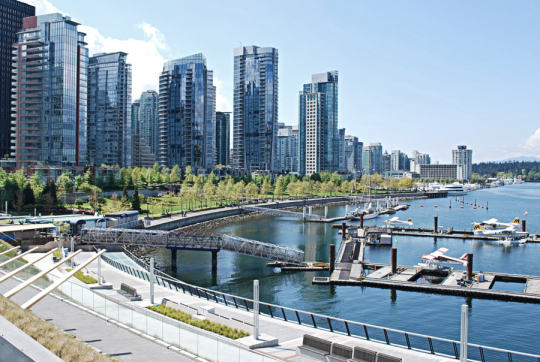
    Photograph Vancouver by Marc M on 500px

    Image Source: Vancouver by Marc M on 500px

    According to a recent Bloomberg article, this is where the rich are putting their money today:

    “The two greatest stores of wealth internationally today is contemporary art….. and I don’t mean that as a joke, I mean that as a serious asset class,” said Fink. “And two, the other store of wealth today is apartments in Manhattan, apartments in Vancouver, in London.”

    In case you wondering, Laurence Fink is the founder and CEO of BlackRock Inc., which today is the largest asset manager in the world. They have over $4.77 trillion in assets under management according to their website. That’s a mind boggling number.

    And if you read the Bloomberg article cited above, you’ll see that this interest in both art and apartments represents a shift away from gold as the de facto safe haven.

    “Historically gold was a great instrument for storing of wealth,” the chairman of BlackRock Inc. said at a conference in Singapore on Tuesday. “Gold has lost its luster and there’s other mechanisms in which you can store wealth that are inflation-adjusted.”

    What’s interesting and probably most relevant to the Architect This City community though is this investment focus on apartments.

    When people talk about a possible housing bubble in Canada they often cite house prices to median household income as a key ratio. The question then becomes: How can house prices be such a high multiple relative to local incomes?

    That’s relevant, but it’s not the entire story for cities like New York, London, and Vancouver. That ratio alone assumes that real estate isn’t a global investment vehicle. And for some people people it is exactly that.

  • Condo or rental apartment — does it matter?

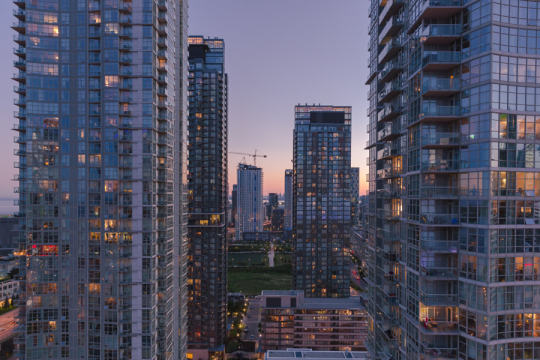
    Photograph Community by Evgeny Tchebotarev on 500px

    Community by Evgeny Tchebotarev on 500px

    Toronto is the condo capital of North America. For a number of years now, there have been more condos under construction in this city compared to any other in North America, including New York.

    But recently the real estate community has become incredibly interested in building multi-family apartments (also known as purpose-built rental buildings). Which is why about 7 months ago I wrote a post called, Rise of rental.

    It has been decades since Toronto built rental apartment buildings at any sort of scale. That means that our existing stock is generally pretty old and that condominiums – rented out by individual investors – have been almost exclusively fulfilling the need for rental apartments in this city.

    But given that purpose-built rental apartments are on the rise, I’ve been thinking a lot lately about them and about the consumer perspective. 

    And so here’s my question to you:

    If you were looking for a place to rent, would it make a difference whether it was a condominium (rented out by an individual investor) or whether it was a professionally managed apartment building? You can assume that the suite itself is identical.

    There are obviously many differences between both forms of tenure, but I’m curious to what extent that factors into the decision making process for consumers. It hasn’t really been an option in recent years, but that seems destined to change.

    I hope we can have a discussion in the comment section below.

  • The high cost of poor land use

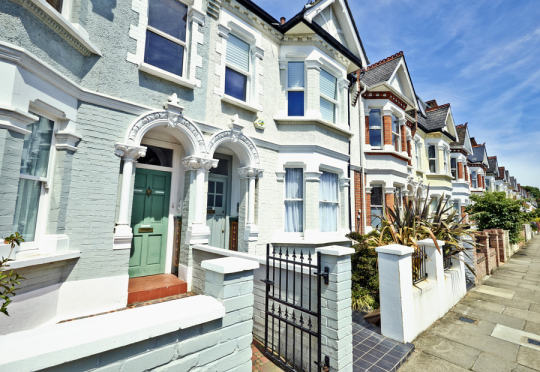
    Photograph London street of early 20th century Edwardian terraced houses by Bombaert Patrick on 500px

    London street of early 20th century Edwardian terraced houses by Bombaert Patrick on 500px

    Over the weekend The Economist published an interesting article called, Space and the city: Poor land use in the world’s greatest cities carries a huge cost. The argument is that land isn’t scarce. It’s the land use policies we have created that are artificially limiting supply and driving up real estate values.

    In fact, land is not really scarce: the entire population of America could fit into Texas with more than an acre for each household to enjoy. What drives prices skyward is a collision between rampant demand and limited supply in the great metropolises like London, Mumbai and New York. In the past ten years real prices in Hong Kong have risen by 150%. Residential property in Mayfair, in central London, can go for as much as £55,000 ($82,000) per square metre. A square mile of Manhattan residential property costs $16.5 billion.

    And part of the reason this has become so prevalent is because of the shifts we’ve seen in our economy and the great return back to cities.

    In the 20th century, tumbling transport costs weakened the gravitational pull of the city; in the 21st, the digital revolution has restored it. Knowledge-intensive industries such as technology and finance thrive on the clustering of workers who share ideas and expertise. The economies and populations of metropolises like London, New York and San Francisco have rebounded as a result.

    So how do we get better at meeting real estate demand in our cities? The Economist has two suggestions.

    One:

    First, they should ensure that city-planning decisions are made from the top down. When decisions are taken at local level, land-use rules tend to be stricter. Individual districts receive fewer of the benefits of a larger metropolitan population (jobs and taxes) than their costs (blocked views and congested streets). Moving housing-supply decisions to city level should mean that due weight is put on the benefits of growth. Any restrictions on building won by one district should be offset by increases elsewhere, so the city as a whole keeps to its development budget.

    Two:

    Second, governments should impose higher taxes on the value of land. In most rich countries, land-value taxes account for a small share of total revenues. Land taxes are efficient. They are difficult to dodge; you cannot stuff land into a bank-vault in Luxembourg. Whereas a high tax on property can discourage investment, a high tax on land creates an incentive to develop unused sites. Land-value taxes can also help cater for newcomers. New infrastructure raises the value of nearby land, automatically feeding through into revenues—which helps to pay for the improvements.

    These recommendations will probably be unsettling for a number of people. 

    I would imagine that many communities would prefer to have planning and growth decisions happen bottom up, as opposed to top down. But I think there’s some truth to this recommendation and I don’t think it has to mean completely excluding bottom up feedback. Communities and individuals are naturally going to look out for their own self-interests. And so I think many would agree that there’s value in having a holistic urban strategy in place.

    Recommendation number two pertaining to land value taxes is a loaded one. So I’m going to save my specific comments for a dedicated post on LVTs. 

    But I will say that I don’t think trying to squeeze landowners into development via taxes is the most efficient and immediate way to address supply shortages. In advance of this, we should be examining the current barriers to development. Because we’re talking about hyper competitive global cities with perpetual supply deficits. And I don’t believe the problem is incentive-based. The problem is finding sites. The problem is finding ways to build.

    What do you all think? This is an interesting topic of discussion.

  • Cities without people

    Some people believe that cities are all about bricks and mortar. While other people believe that they are first and foremost about people. Though I wholeheartedly believe that our built environment has a profound affect on our lives, I am in the latter camp. 

    Real estate to me is an outcome. It is the result of people needing space. A new condominium is built because people need a place to live. A new office building is built because somebody built a great company and it needs to house its growing workforce. So at the end of the day, what is a city without people?

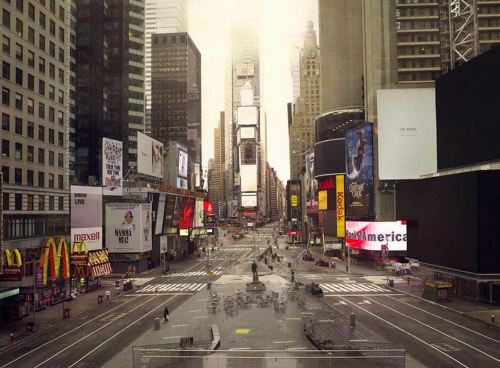
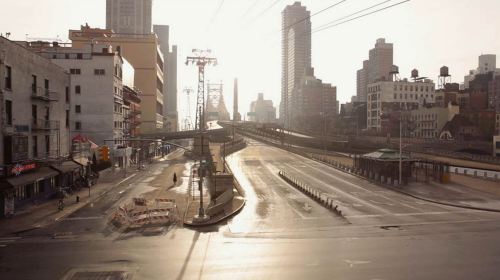
    Perhaps the best way to demonstrate this point is to show you what cities look like without them. This morning I stumbled upon an interesting series of city photographs where almost all of the people have been removed. They are by artists Lucie & Simon and the project is called Silent world.

    The top image is Times Square and the bottom image is Queensbridge in New York.

    Images: Lucie & Simon

  • A self-fulfilling prophecy in the 6

    [soundcloud url=”https://api.soundcloud.com/tracks/190951409″ params=”auto_play=false&hide_related=false&show_comments=true&show_user=true&show_reposts=false&visual=true” width=”100%” height=”450″ iframe=”true” /]

    More so than any other genre of music, there seems to be a longstanding tradition in hip hop of promoting the city in which you’re from. From Los Angeles to Atlanta to New York, I’ve always admired the way that hip hop artists promote and showcase their cities.

    For a long time in Toronto we didn’t have that. Our hip hop scene was too embryonic and we just didn’t have artists who were both big enough and willing to take the lead. Or at least, that’s what I was lead to believe as an outsider who candidly doesn’t really follow the scene.

    But all that has changed.

    Earlier this month, Pitchfork published an interesting article by Jamieson Cox called: Views From The 6 – Inside Drake’s Toronto. It talks all about Drake’s love affair with this city and it even has a map of all the areas of Toronto that have been featured in his videos.

    But at one point in the article Jamieson argues that – like many hip hop cities – Drake’s depiction of Toronto is more fantasy than reality:

    His mythological Toronto is a metropolis where everyone knows your name and exes are always lurking around the corner, a forest of penthouses with a panoramic view, a park-studded playground where the skies are free of ambient light and the highways are always clear. Like many hip-hop locales, it’s a city closer to the realm of theory—and fantasy—than reality. 

    However, at the end of the day, I don’t think that matters. Similar to how your mind actually believes that wine tastes better out of an expensive glass, I think a big part of city branding has to do simply with how you’re supposed to feel. What is Toronto supposed to be like? How am I supposed to experience this?

    I love what Drake is doing. Because if everyone thinks it’s supposed to be a certain way, eventually that becomes a self-fulfilling prophecy.

  • Incubating new ideas in cities

    A couple of days ago I wrote about a documentary series called Real Scenes. It’s a fascinating series that examines the electronic music scene in a bunch of different cities from New York to Berlin to Tokyo. 

    What’s fascinating about these films is the inside look it gives you into how these “scenes” develop. Berlin, for example, is absolutely on fire right now. It has a thriving startup scene and a reputation for being a major force in the world of electronic music.

    How did that happen?

    The documentary leads you to believe that Berlin was able to establish itself as, arguably, the techno music capital of the world by having lots of empty buildings and nobody cracking down on squatters after the Berlin Wall fell. Quite literally, the scene appears to have started as a result of illegal techno parties being thrown in abandoned buildings. 

    It’s a perfect and perhaps extreme example of Jane Jacobs’ famous line that new ideas require old buildings. The rents are simply too high in new buildings for anything experimental. Landlords naturally prefer to rent to triple-A tenants who will pay the highest rents. And who can blame them. 

    But just like there’s tremendous value in incubating new startups before they’re even close to turning a profit, there’s obviously value in empowering new ideas, new concepts, new retailers, and new businesses to flourish within cities. 

    I’m not exactly sure how that could be done in the context of new developments, but it’s on my mind right now as a result of some discussions I’ve been having with some incredibly smart and ambitious people in this city.

    So today I’d like to turn it over to you. How could we make it so that new ideas flourish even in new buildings? Since investment naturally drives up rents, does that mean it will always put pressure on those crazy instigators who just need cheap space?

  • 3 architects operating as developers

    image

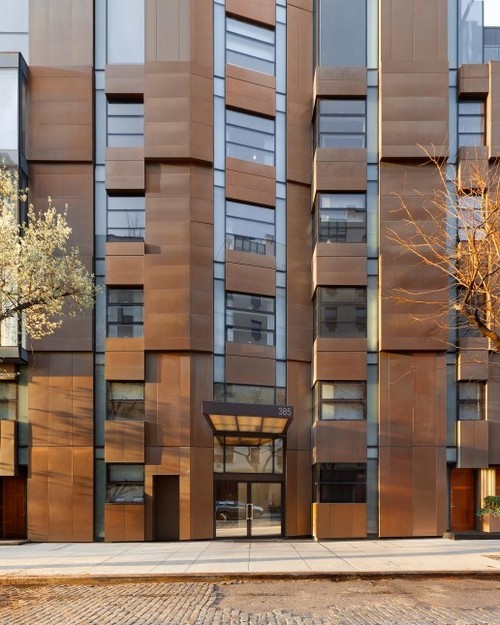
    A reader recently shared with me an interesting article from Crain’s New York (2013) profiling three “architects as developers.” The three firms are DDG Partners (which I’ve mentioned before here on ATC), FLAnk, and Alloy.

    I’ve written a lot about these emerging business models and I continue to think that we’re going to see more of them in the coming years.  As evidence for that claim, I thought it was really interesting to read in the article that Vishaan Chakrabarti – who is director of the real estate program at Columbia University – made specific mention that there’s growing interest among his students to wear multiple hats. In other words, they don’t want to be just an architect or just a developer. They want do it all.

    In a lot of cases, these firms are made up of partners who have those diverse skill sets. There’s only so much that one person can do. But that doesn’t negate the fact that vertically integrated companies are being formed that handle everything from design and construction to property management and development.

    And if an increasing number of students today are interested and thinking about those models, then I think it’s a pretty safe bet that many of them will get out into the workforce and eventually create those companies in the future.

    Ultimately, I think that’s a great thing for cities. Developers tend to have a bad reputation for thinking only about money. But when you bring design and other disciplines in-house, you create tensions in the process. And tension can be a great thing for innovation and creativity.

    Image: 385 West 12th by Flank

  • Real Scenes Documentary — a look at New York’s electronic music scene [Video]

    image

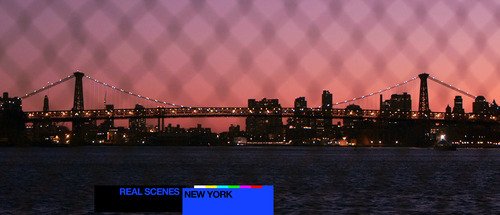
    I just stumbled upon a fascinating documentary series called Real Scenes. Each film explores “the musical, cultural and creative climate” within a particular city. 

    Below is Real Scenes: New York (click here if you can’t see it below). It’s an inside look at the underground music scene that has developed in Brooklyn, but that is at the same time being threatened by development and rising rents. Disclaimer: There’s a lot of f-bombs and a lot of hating on gentrification.

    [youtube https://www.youtube.com/watch?v=LDtf0uIUPuE?rel=0&w=560&h=315]

    I’ve only watched the New York video from this series, but I plan to watch each and every one of them. The other cities are Tokyo, Johannesburg, Paris, Berlin, Detroit, and Bristol.

    What’s fascinating about these short documentaries is that they give you a glimpse into a particular undertone within each city – one that would otherwise be hard to get if you weren’t living there and engrossed in the scene.

    It’s also interesting to see how some people view change within cities. 

    To some, transforming a neighborhood from one that looks like a “bomb went off” to something more pristine, is a good thing. But to others, it’s the worst possible outcome. It all depends on your frame of reference.

    Now, how do I get them to make a Real Scenes: Toronto? 🙂

    Image: Resident Advisor