Daily insights for city builders, delivered every morning at 6 AM ET. I’m Brandon Donnelly — a Toronto-based real estate developer and founder of Globizen. I’ve been writing here since 2013.

Tag: new york city

  • VIA 57WEST in New York starts renting apartments

    image

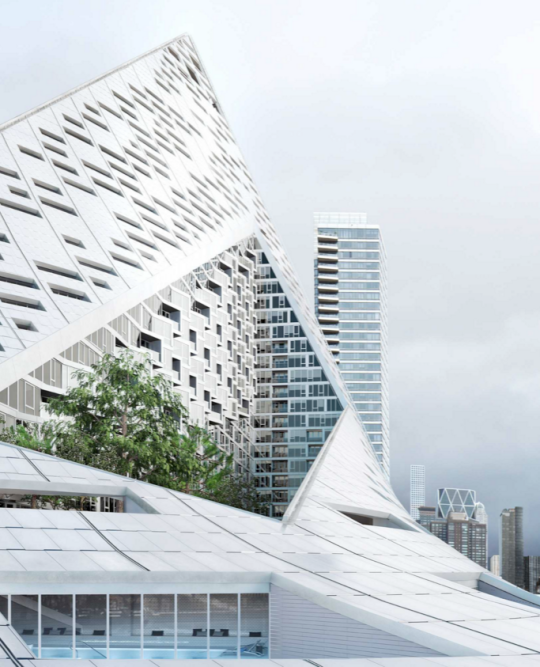
    Bjarke Ingels’ West 57th Street project in New York (developed by The Durst Organization) has just started renting apartments (March 1). 

    Since I’m in the rental business, I thought it would be worthwhile to take a look at the rents – though I tend to obsess over all buildings and not just rental ones.

    Firstly, the project has a total of 709 apartments and 178 different unit types because of the architectural variations in the building. Of these units, 142 of them (20%) have been designated as affordable and were offered up via a lottery to people who fall within certain incomes ranges. 

    Here are the affordable rents via 6sqft.com:

    image

    I don’t know the exact numbers, but Curbed New York speculated – based on what was seen at other buildings on the west side – that the total number of applicants for these 142 units may have reached over 100,000!

    For the market-rate units, the average monthly rents are as follows (via Curbed NY):

    • Studio: $2,770
    • One-bedroom: $3,880
    • Two-bedroom: $6,500
    • Three-bedroom: $11,000
    • Four-bedroom: $16,500

    I wasn’t able to find average unit sizes (to calculate per square foot rents), but I estimate the overall average unit size to be around 1,000 square feet. 

    940,000 sf (total gross floor area)45,000 sf of retail x 0.80 efficiency (lower than average because of the shape of the building) / 709 units = approximately 1,000 sf of rentable area per unit. That’s just my rough guess based on what I could find online.

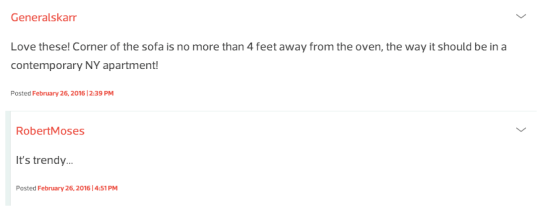
    Based on the Curbed comment section though, there are certainly some smaller units:

    image

    If anyone has any additional figures, please share them in the comments below. I think there are a few subscribers to this blog who are involved in the project.

    Image from via57west.com

  • 50% of New York City’s population is estimated to be single. Here’s what that means for housing.

    Here in Toronto there’s a push for more family-sized apartments. That’s what the planners want to hear.

    Because the city has been trying to encourage developers to build more of them for years, but the challenge has always been that they didn’t sell or that they took a long time to sell. The market wasn’t ready.

    But as I discussed earlier this week, that is starting to change. I think Toronto is reaching a tipping point where low-rise housing has simply become too expensive and people are starting to look to alternatives, mostly at the mid-rise scale.

    It’s interesting though that something of the opposite appears to be happening in New York. I don’t know enough about the New York new construction market to really comment on overall unit mixes and sizes, but there definitely seems to be a push to create more affordable micro-units.

    Curbed published this last October:

    “…a report currently under public review, called Zoning for Quality and Affordability, recommends relaxing density caps and eliminating the 400-square-foot minimum for studio apartments, thereby creating more housing for single people. Almost 50 percent of the city’s population is estimated to be single, but only seven percent of the housing stock is studios.”

    And just recently, New York completed its first all-micro-unit apartment building called Carmel Place. Rents start at $2,650 per month for a 265 square foot apartment. 

    As a point of reference, that works out to be $10 per square foot per month and more than 3x the highest rents you could reasonably achieve in the more desirable areas of Toronto, today.

    The model suite is 302 square feet and looks like this:

    All of the above photos are via Curbed.

  • The crisis of success

    I’m back and it feels great. I missed blogging the past 2 days. Though, there was something nice about not touching a computer all weekend.

    This morning I got up extra early and listened to a brief conversation between Aaron M. Renn of The Urbanophile and urbanist Richard Florida. The topic is New York’s “Great Reset”, and the impetus was a recent report (of the same name) that was put out by New York University.

    The conversation starts by talking about the resilience of New York City and its ability to accept and then reinvent itself in the wake of “creative destruction.” Destruction such as the financial crisis of 2008/2009. 

    But they then go on to talk about the challenges that New York, as well as many other cities, are now facing. Challenges brought about, not by failure, but by their tremendous success. Challenges such as income inequality and the dwindling middle class.

    The overarching premise is that we are still in the early stages of a new urban and creative economy. And that there’s lots of work to be done in order to figure out how to make it an inclusive one.

    There’s even mention of former Toronto mayor, Rob Ford.

    You can listen to the talk below. If you can’t see the embedded play button, click here.

    [soundcloud url=”https://api.soundcloud.com/tracks/221338706″ params=”color=ff5500″ width=”100%” height=”166″ iframe=”true” /]

  • What should Mayor de Blasio do with Times Square?

    Under the Bloomberg administration, public space in New York went through a dramatic transformation. A transformation that I believe was for the better. Here’s a quick video showcasing the changes:

    [vimeo 83173191 w=500 h=281]

    But now Times Square is filled with topless women in body paint (as well as other characters) looking to get paid for a photo with them. Here’s what that looks like (photo source):

    And this is making some people very grouchy (including the current mayor, Bill de Blasio). Though to me it doesn’t feel all that different than the Naked Cowboy, who has long been a fixture in Times Square.

    In any event, Mayor de Blasio is now floating the idea of reversing one of Bloomberg’s biggest legacies and removing the pedestrian plazas in Times Square. Not surprisingly, lots of people, including myself, think this is a terrible idea. Here’s a snippet from NY Magazine:

    I understand that the mayor doesn’t care for the carnival atmosphere at Times Square — neither do I. But eradicating a pedestrian plaza because you don’t like who’s walking there is like blasting away a beach because you object to bikinis or paving a park because you hate squirrels. It represents such a profound misunderstanding of public space that it makes me question the mayor’s perception of what counts as progressive.

    Well said. 

    But what are your thoughts? Out of the following 3 options, which do you think the mayor should go with?

    1. Remove the pedestrian plazas.
    2. Find an alternate solution to curb “undesirable” behaviour in Times Square.
    3. Do nothing and maintain the status quo.

    I’d be curious to hear your thoughts in the comment section below.

  • 10 reasons to visit Philadelphia right now

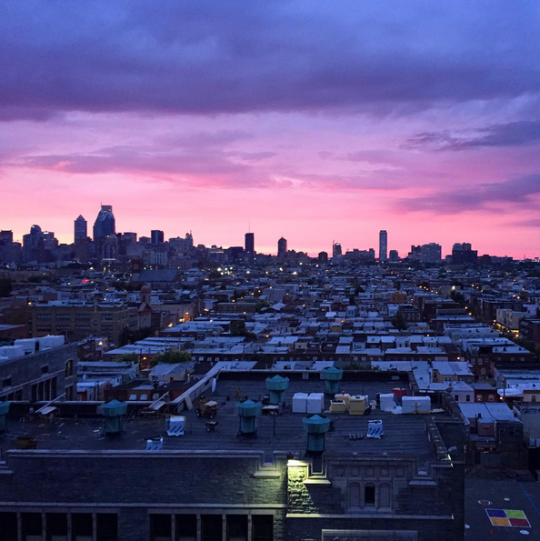
    image

    Today’s ATC post – which happens to be a guest post – is coming to you live from on board the UP Express train that runs from Union Station in downtown Toronto to Pearson Airport. (Everywhere should have free wifi.)

    I’m on my way to Philadelphia and I’ve been wanting to try this train since it opened earlier this summer. It feels great to finally ride it. It’s everything I could have hoped for. It even has that new car smell 🙂

    Last month I wrote a post called, 10 reasons to visit Toronto right now. It was in honor of my good friend Alex Feldman’s visit. Well now it’s my turn to visit Philadelphia and he has decided to return the favor and do a Philly version of that same post. 

    Alex is to Philadelphia what I am to Toronto. He grew up in Philly. He was educated in Philly (we went to Penn together). And he’s super passionate about the future of Philly. And I think that’s how everyone should be about their city.

    So I hope you enjoy his list of 10 reasons to visit Philadelphia right now. It’s basically my to-do list for this weekend.

    ———————————————

    10. World Heritage City: Philadelphia is on track to become the first World Heritage City in the United States. This UNESCO designation will underscore the city’s historic importance as the birthplace of American Democracy as well as the historic urban fabric which gives the city it’s walkable, urbane character.

    9. Shopping: Philadelphia has come a long way as a shopping destination. Conde Nast Traveler recently ranked the city as number 2 out of the best shopping destinations in the world. 3rd Street in Old City has become a hotbed for independent boutiques while Rittenhouse Square has attracted new chains such as Uniqlo, Theory, and Vince. More is on the way with a complete re-make of the Gallery shopping mall slated to start soon and the new East Market complex under construction. 

    8. The Pope is Coming:  In case you haven’t heard, Pope Francis will make his first visit to the United States – with a 3 day visit to Philadelphia in late September. The visit will coincide with the World Meeting of Families gathering. A crazy number of visitors (2 million?) are expected to descend on the city – causing Philadelphians to panic, complain, and attempt to rent their houses for ridiculous amounts of money. But this important visit will help raise the profile of the city on the international stage.

    7. Building Boom: There is probably more development happening in Philadelphia right now then any other time in recent history. The skyline is growing with additions by Norman Foster, Cesar Pelli , and Kohn Pedersen Fox. New apartment buildings, condos, and rowhouses are under construction across the city (rental vacancy rates are less than 2%). In addition the Barnes Foundation and the new Singh Center for Nanotechnology mark impressive additions to the city’s architectural landscape.

    6. Public Spaces: Philly’s public realm has seen massive investment over the last several years. A complete remake of the landscape outside of City Hall has become the new Dilworth Park. The designers of NYC’s highline have added two public spaces to the city (Race Street Pier and the new Central Green in the Navy Yard). And Schulkill Banks recently added a new boardwalk which the New York Times raved about when they ranked Philly as the number 3 city to visit in 2015. More is on the way with the first phase of the Reading Viaduct Rail Park expected to start soon.

    5. Waterfront: Philadelphia’s Delaware River waterfront has long been cut off from the city by interstate 95. Things have started to change recently, with new trails and pier parks recently added to the working waterfront. Even Penn’s Landing, the city’s much maligned waterfront attraction is seeing improvements – including the tremendously popular Spruce Street Harbor Park – a pop-up park featuring floating beer barges, shipping container food stands, and tons of hammocks.

    4. Food: Philly is one of the best food cities in the United States. So much is happening right now in the city’s dining scene, it’s hard to keep track of the latest restaurant openings. Neighborhoods such as Fishtown and East Passyunk have emerged as hot dining districts with BYOB chef driven restaurants. More can be gleaned from the Washington Post which recently summarized the dining scene better than I can.

    3. Pop-up Gardens: One of the best reasons to visit Philly in the summer is the opening of the Pennsylvania Horticultural Society Pop-Up gardens. The wildly popular beer gardens, began several years ago as an initiative to remake underused or vacant lots into useful public spaces. This summer, 2 gardens – one on 15th and South and one at 9th and Wharton have been transformed into vibrant spaces for eating, drinking, and hanging out.

    2. Le Bok Fin: Speaking of temporary uses, the most recent addition to Philly’s pop-up (or iterative placemaking) scene is a rooftop bar called Le Bok Fin. Situated on the 8th floor of an old vocational high school in South Philly (and named after the school’s restaurant – which in turn is a play on one of Philly’s most famous French restaurants). This is the first iteration of development at what is planned to become an amazing new center for creatives inside the old school – being led by Lindsey Scannapieco and her team at Scout LTD. Check out Le Bok Fin for incredible views of the city skyline (especially at sunset).

    1. Bike Share: While a little late to the party, Philly recently launched it’s own bike share program – which is proving to be a huge success. Dubbed Indego, the new bike share is easy to use, has 60 stations, more than 600 bikes and is becoming one of the best ways to hop around town. Check one out and go explore Philly!

    Image: Alex Feldman

  • New York’s 8-figure apartments

    Whenever you’re starting to feel like real estate prices in your city are getting out of hand, just turn your attention to New York. It’ll make you feel better.

    The New York Times published an interactive overview of the Manhattan real estate market today. It was spurred on by the fact that the average residential sale price in Manhattan just hit $1.7 million (a new record) and that there’s a growing number of 8-figure apartments being bought up.

    Last year half a dozen apartments sold for more than $50 million in the One57 tower at 157 West 57th Street. (The New York Times calls this building the “undisputed center of Manhattan residential extravagance.”)

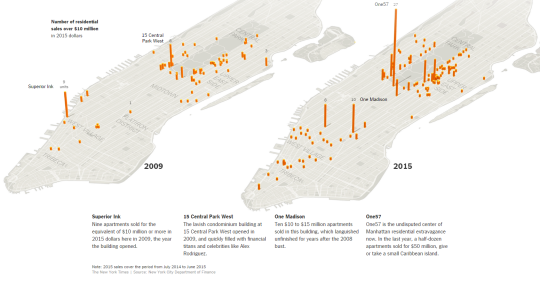
    Here’s one of their diagrams showing the number of residential sales over $10 million in 2009 and then in 2015:

    image

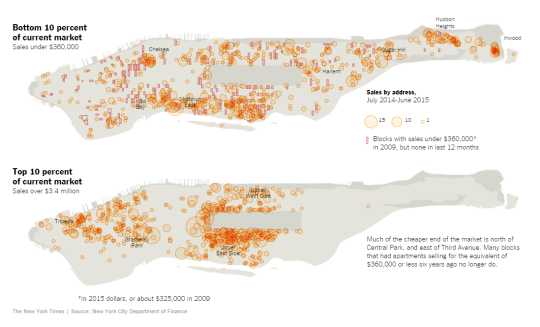
    And here’s another one of their diagrams showing the bottom and top 10% of the current market:

    image

    It’s interesting to see the clustering in certain areas and also the lack of clustering at the high end around the top of Central Park.

  • 80% of New York’s 150 million taxi trips could be shared

    I’ve been a big fan of MIT’s Senseable City Lab since I was a grad student at Penn. Their work sits at the intersection of cities and technology, and so I’ve always found it incredibly fascinating.

    Recently, the lab examined data from all of New York’s 13,586 registered cabs and looked for ways that technology and mobile tech could potentially optimize the way the system works today. In particular, they were interested in examining instances where people were heading to the same place at the same time, and were within no more than a 3 minute walk of each at the start of the trip.

    What they found was that, of the 150 million taxi rides taken in New York City during 2011, almost 80% of them could have been shared.

    That is, 80% of the time, there was an overlap in both time and route. That’s an hugely interesting stat because it starts to show just how much waste and inefficiency there currently is in the system. Think about all the trips and carbon emissions that could be potentially eliminated through optimization.

    Here’s a video they produced on the project. Click here if you can’t see it below.

    [youtube https://www.youtube.com/watch?v=Gyq_Zr96uzs?rel=0]

    It’s a great example of how technology is and will continue to creep into every segment of the economy. It’s exactly what I was talking about in my post, “Disrupting everything.”

  • Walking, biking and taking transit

    Almost 70% of commutes in New York City are done by walking, biking or taking transit. That’s the highest of any American city according to Atlantic Cities:

    Probably the biggest driver of this is urban density. That’s because walking, biking and taking transit becomes impractical when you live in a sprawling city. If you want to get people out of their cars, pay attention to the urban fabric of your city.

    As someone who used to drive to work (out of necessity), but now relies predominately on public transit, I see one of the big advantages as time. If you’re like me, you probably feel time poor. Taking transit gives me a block of time in which to respond to emails, catch up on reading and generally just think.

    In fact, this blog post was written on the subway.

  • Balancing progress

    Some buildings should be torn down. And others should not be. The challenge, sometimes, is figuring out which is which. But when a great building is torn down, I get upset. 

    I get upset because good architecture should represent the place and era in which it was built. This means that, in a lot of cases, it’ll never be replicated. When it’s gone, it’s gone.

    Take for example the old Penn Station in New York City. Designed by renowned architectural firm McKim, Mead, and White, the station opened in 1910 and was an iconic Beaux-Arts structure. Here’s an historic photo:

    In 1963 the building was demolished. It was eventually replaced with a building that, I think most people today would agree, is quite awful. And while it did teach New York City a lesson about historic preservation, the loss still sucks.

    Ultimately I think that preservation is about balance. I’m obviously pro-development but, at the same time, I don’t believe in erasing our history.

  • Airbnb subpoenaed for information on its 15,000 New York City “landlords”

    Last Monday, the Office of the New York Attorney General subpoenaed Airbnb for information about all of its 15,000 “landlords” who rent out spaces in New York through their service. Airbnb has since refused to provide the information.

    This is an interesting case. Airbnb is one of those startups that seemed initially like an idea too crazy to work, but has since grown to become a serious disruption to the hotel industry. However, the problem is that many jurisdictions have laws pertaining to illegal hotels. In the case of New York, the law prohibits short-term rentals under 30 days unless the permanent resident is present alongside the guest(s).

    What this means is that renting out your apartment while you’re away for the weekend-which from my experience here in Toronto is how a lot of people use the service-is technically illegal in New York. State senator, Liz Krueger, believes that apartment building residents shouldn’t have to worry that their neighbouring apartment could turn into a de facto hotel room.

    While I do sympathize with this concern, I think there’s a gradient of use here. Not every Airbnb user is operating a de facto hotel. Many, whatever that percentage might be, simply use it to earn extra income while their place sits idle. And to do this, the permanent resident is trusting their home to a stranger.

    So in a way, there’s a filter in place that isn’t there when the unit is being operated strictly as a hotel suite. Therefore, maybe we just need to expand the definition of having a “permanent resident present” to include having their belongings and life in the place.

    It’ll be interesting to see how this all pans out. But whatever the result, it’s clear that Airbnb is definitely shaking up the status quo. Do you think residents should be freely allowed to rent out their places on any term?