Daily insights for city builders, delivered every morning at 6 AM ET. I’m Brandon Donnelly — a Toronto-based real estate developer and founder of Globizen. I’ve been writing here since 2013.

Tag: new york city

  • Saying no to “Mountain Modern”

    Jackson, Wyoming is one of my favorite places on the planet. (Here is a ski/snowboard video that my friends and I made a few years ago in Jackson.)

    Earlier this year, Eagle Point Hotel Partners and the Brooklyn-based design firm Studio Tack completed a renovation of the Anvil Motel in Jackson – it’s now the 49-room Anvil Hotel

    Apparently reclaimed motels are the new hospitality trend.

    What I appreciate about their approach, is the emphasis on creating something that feels local and contextual. Here are a couple of snippets from Surface Magazine:

    The designers wanted to avoid a rustic feel, or what Ruben Caldwell, one of Studio Tack’s four partners and an avid backcountry skier, calls “Mountain Modern,” referring to architecture, common in places like Vail, Colorado, and Lake Tahoe, California, that excessively uses reclaimed wood and Cor-Ten steel. “We knew we didn’t want to steer anywhere near that,” says Chou, a long-time snowboarder who more recently got into skiing. “It takes a bit of familiarity with ski towns to know what you don’t want to do.”

    The vibrancy of Jackson’s local culture impressed the design team—and Caldwell so much so that he moved there full-time last year. “As a design team,” Caldwell says, “we’re hyper-aware of the need for projects to be deeply embedded into the local scene.”

    It’s easier to copy and paste. But the results are always better when you take a bit of time to understand a place. 

    Image: Anvil Hotel

  • Video: Brooklyn Navy Yard

    image

    Monocle recently published a short 4 minute video tour of the Brooklyn Navy Yard. It covers a bit of the area’s history and the kind of businesses that are flocking to the area today.

    One of the reoccurring themes in the video is a feeling of stability. The local businesses feel secure in their space and some even believe that the area is somehow immune to gentrification.

    Monocle doesn’t allow embedded videos, so you’ll have to click here to watch.

  • Video: New York 1911

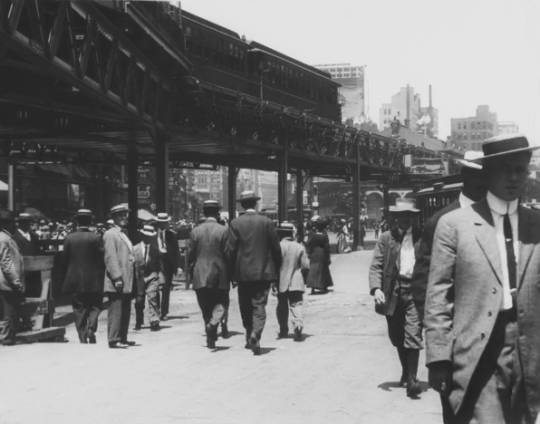
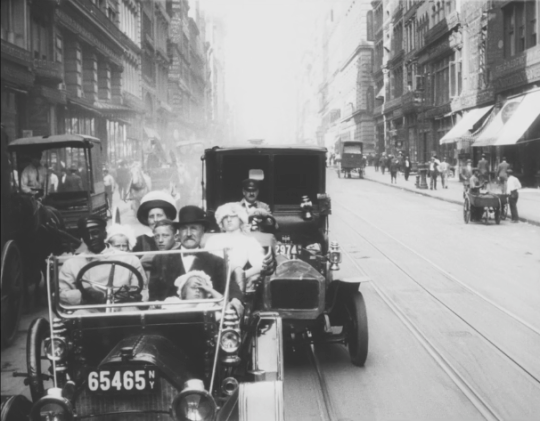
    The Museum of Modern Art (MoMA) recently restored and published a “documentary travelogue” of New York City from 1911. 

    It was originally filmed by a Swedish company, called Svenska Biografteatern, that went around the world filming noteworthy places such as Niagara Falls, Paris, Monte Carlo, and Venice.

    Not surprisingly, New York City is a vibrant and bustling place at the beginning of the 20th century. But it somehow feels serene. Maybe it’s the soundtrack. It’s also interesting to think that this was filmed only 3 years before World War I broke out.

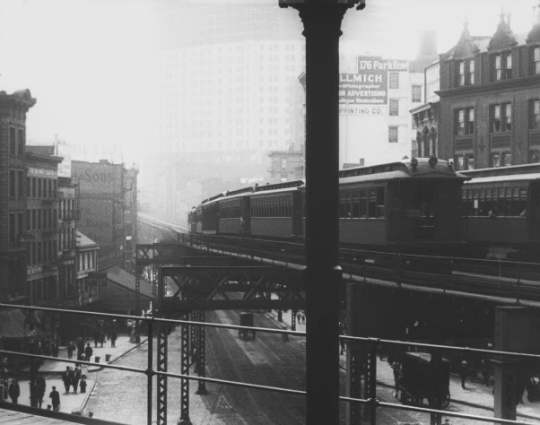
    I particularly enjoyed seeing all of the streetcars (trams) and elevated rail running through the streets.

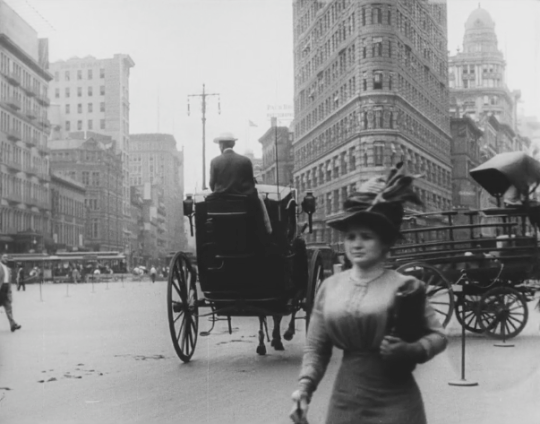
    Below is a screenshot of a young girl – clearly bored and/or disinterested – being chauffeured down Fifth Avenue in what was almost certainly a fancy convertible at the time.

    MoMA doesn’t allow you to embed the video, but you can watch it here through July 14. It’s 9 minutes and, if you’re a city nerd like me, I think you’ll really enjoy it. The street life footage kicks in around the 3 minute mark.

    Screenshot Images: MoMA

  • Late-stage gentrification on Bleecker Street

    The New York Times ran an interesting piece this past week about the rise and fall of Bleecker Street in the West Village. 

    The synopsis of the story is as follows: 

    Bleecker was once a quaint West Village street. Then the yuppy cupcake shop and big brands (Marc Jacobs) came in to cater to the “Black Card-wielding 1-percenters”. But eventually rents got so out of hand that even the big brands started closing up shop. Now the street is filled with empty storefronts.

    Here’s an excerpt from the article:

    Bleecker Street, Mr. Moss said, is a prime example of high-rent blight, a symptom of late-stage gentrification. “These stores open as billboards for the brand,” he said. “Then they leave because the rents become untenable. Landlords hold out. And you’re left with storefronts that will sit vacant for a year, two years, three years.”

    Nobody likes vacant storefronts. But it is a perfect example of the kind of cycles that neighborhoods and cities can and will continue to go through. Understandably though, there is a real concern that New York could be losing its soul. And really that’s a question and challenge for all global cities.

    What happened to the New York where the artist Donald Judd was able to buy a five-story cast-iron building in Soho for under $70,000 (1968)? It’s gone. 

  • Top 10 city regions by GDP (and comparable countries)

    Below is a mapping (by Taylor Blake of the Martin Prosperity Institute) of the top 10 metro economies in the world by GDP at purchasing power parity. In brackets, is a country with a comparable GDP.

    Tokyo is the world’s largest metro economy with ~$1.6 trillion in GDP. This is greater than the GDP of all of Canada. New York City is number 2 with ~$1.5 trillion in GDP, which is only slightly less than Canada.

    The point of all of this – which Richard Florida argues here – is that the global economy is, today, powered by metropolitan areas. And yet our governance structures do not reflect this new reality.

    Here’s an excerpt from Florida’s article:

    “Cities really are the new power centers of the global economy—the platforms for innovation, entrepreneurship, and economic growth. But when it comes to fiscal and political power, they remain beholden to increasingly anachronistic and backward-looking nation-states, which has become distressingly obvious with the rise of Trumpism in the United States and populism around the world.”

    Florida has been arguing this for years and I’ve really gotten behind it. The above chart is a good reminder just how big and wealthy some cities have become in today’s economy. 

  • Shareable cities

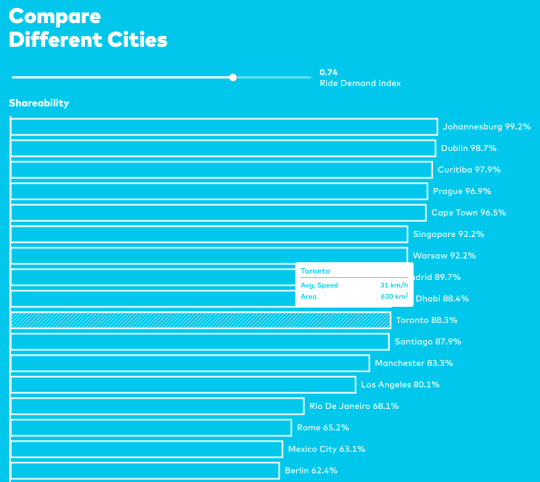
    The MIT Senseable City Lab recently looked at which cities are the most “shareable” when it comes to ride sharing services such as UberPOOL. Their goal was determine what fraction of individual trips (inefficient) could be shared or pooled (more efficient). To do this, they developed a single “shareability curve.” Full research paper, here.

    Not surprisingly, New York City does very well in this analysis. Its shareability is well above 95% for a delta of 5 minutes. That’s because the city has a large population, a small geographic area, enormous density, and lots of taxi traffic. (They used taxi data in their research.)

    But New York City also does very well when it comes to transit ridership. Highest in North America. So it strikes me that the characteristics that make a city “shareable” also apply to transit – which is effectively another form of ride sharing. Might we see the distinction between these 2 forms of mobility blur in the future? I think so.

  • 121 E 22nd

    My friends in New York tell me that if you want to sell a luxury residential building, you need a name brand architect. People care about architecture and it’s part of the buying process: “Oh, it’s a Herzog building.”

    To that end, Toll Brothers City Living just released the following video for their 121 E 22nd project in New York. If you can’t see it below, click here. What’s notable, is that it is OMA’s first full building in New York. So the story is: star architect + first building in the city.

    [youtube https://www.youtube.com/watch?v=dSQq8W8od9g?rel=0&w=560&h=315]

    But there’s more. It’s almost unbelievable that, until now, OMA hadn’t designed and constructed a full building in New York. I reread this Dezeen article 5 times just to make sure I wasn’t missing something.

    So much of Rem Koolhaas’ career (founding partner of OMA) is centered around New York City. In 1978, he published Delirious New York, where he both dissected and celebrated the city’s “culture of congestion.” Oysters at the downtown athletic club, anyone?

    This book was so influential that I bet you’d be hard pressed to find an architect that doesn’t have it in their collection. I have his approximation of New York hanging on my wall. So this was clearly overdue. Kudos Toll Brothers City Living.

    Note: OMA’s New York office is led by Shohei Shigematsu.

  • And the award for the tallest building of the year goes to…

    The Guardian recently published an article on vanity height in skyscrapers. What this is referring to is the unoccupied portions of tall buildings which are built purely for vanity reasons – that is, to increase the face height of the building and claim some superlative title.

    Example: 

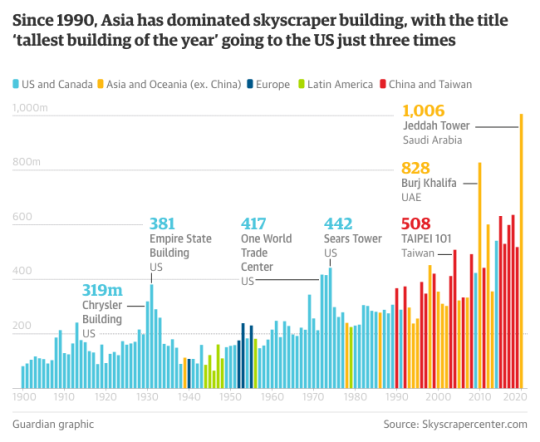
    The tallest building in the world is currently the Burj Khalifa in Dubai. It’s 828m tall. To put that into perspective, the CN Tower in Toronto is 553m. But according to the Council on Tall Buildings and Urban Habitat, 29% of the Burj Khalifa’s height is actually unoccupied or “vanity space.” In other buildings, such as the Burj al Arab (also in Dubai), the amount of unusable space is as high as 39%. 

    For the purists out there, this of course raises the question of what should should be counted when assessing building height. Should it only be spaces where humans typically inhabit? The CN Tower has a lot of unoccupied space, which is why it is frequently excluded from these sorts of ego rankings. 

    But semantics aside, this is obviously not a new phenomenon and it’s interesting to think about this race to the sky as a proxy for what’s going on in the world. Below is a chart showing which regions have been able to lay claim to the “tallest building of the year” since 1900. 

    Since 1990, it has been all about Asia and Oceania and China and Taiwan…

  • Form follows parking

    “Form follows function” is a famous axiom of 20th century Modern architecture. It is based on the rational notion that architecture and its associated shapes, geometries, and spaces should be a direct result of their function. 

    It was a way of trying to eliminate the arbitrary ornament that had adorned previous architectural movements. In this case, if it had no function, then it should be stripped away.

    There have been many bastardizations of this pithy statement over time, but one of my favorites is: “form follows parking.” Obviously derogatory, it is this idea that much of the built environment is a result of parking requirements, rather than of more human factors.

    We see this in suburban building typologies (large surface parking lots), but also in urban infill projects where the below grade parking begins to dictate the structural grid and layout of the upper floors. It is, of course, necessary in many cases, but there’s also something subversive about parking having such a lasting impact on the spaces we occupy.

    That said, we know where the trend line is headed when it comes to parking. Streetblogs recently posted an article about the scarcity of parking in Manhattan and cited number of interesting stats.

    Because of the city’s bike-share program (introduced in 2013) and because of all of the bike lanes that have been added in recent years, the city has (rightly) removed approximately 2,330 on-street parking spaces in Manhattan south of 125th Street.

    Here’s another set of stats: 

    In 1998, New York City had about 810 parking lots and garages south of 60th street. Together, they accounted for approximately 112,826 parking spaces. As of last year (2016), the number of lots and garages had dropped to about 643 and the number of parking spaces to approximately 95,000. That’s a decline of about 16%, during a period of when the population of Manhattan grew by more than 100,000 people.

    I would also imagine that these pressures are increasing. So it is quite possible that “form follows parking” could be on its way toward obsolescence. I certainly feel it waning.

  • Harry Macklowe, 80

    For those of you interested in real estate development (and architecture), the New York Times recently published an article about New York developer Harry Macklowe

    At 80 years old, he has been in the business for almost 60 years and he has what some might describe as the typical developer story. He has seen ups. And he has seen downs. As a result of the 2008 economic crisis, he was forced to give up seven landmark properties in New York.

    The article doesn’t paint a particularly nice picture about developers. It talks about how he demolished several single room occupancy hotels in midtown Manhattan (hours before a new moratorium was set to go into effect) and how he recently filed a lawsuit against his son, William Macklowe. After their relationship went south, William went off and started his own real estate company and presumably that is causing some problems.

    There’a also mention of a book called The Liar’s Ball, which I am pretty sure would be a good read:

    Real estate “is not an industry full of camaraderie and good will,” said Vicky Ward, the author of “The Liar’s Ball” (Wiley, 2014), a book about Mr. Macklowe and the G.M. building. Developers “are set up to dislike each other, yet occasionally they do come together to partner.”

    If the real estate business has anything, it has characters. Click here for “Harry Macklowe on New York Real Estate.”