Daily insights for city builders, delivered every morning at 6 AM ET. I’m Brandon Donnelly — a Toronto-based real estate developer and founder of Globizen. I’ve been writing here since 2013.
For those of you who are regular readers of this blog, you’ll know that I love to snowboard and that I leave Ontario every winter in search of fresh lines. It is an annual tradition that has been going on for over a decade.
One of the things I wish I had been more diligent about is collecting all of the trail maps. I am sure I have a number of old ratty ones in some of my snowboard bags and snow pants, but none of them are probably worth keeping.
That’s why I think this is a terrific Kickstarter campaign by James Niehues. Over the last 30 years, James has researched, photographed, and painted almost every ski map in use across North America. Yes, these maps are all painted by hand.
If you would like to back James’ project – a hardcover coffee table book of his work – you can do that here.
I know it’s only August, but I am already thinking of snowboarding.
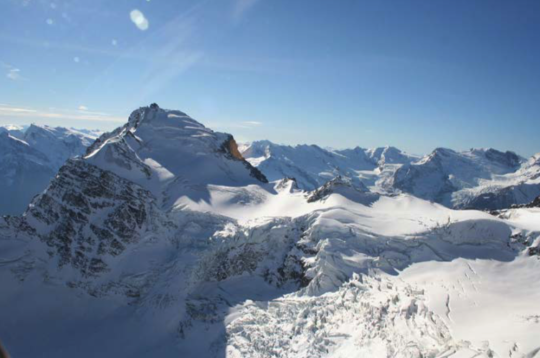
And I just recently learned that the British Columbia government has given the go ahead for a new multi-peak and year-round ski destination near Valemount, BC. The summits will include Mount Pierre Elliot Trudeau, Twilight Glacier, Glacier Ridge, and Mount Arthur Meighen.
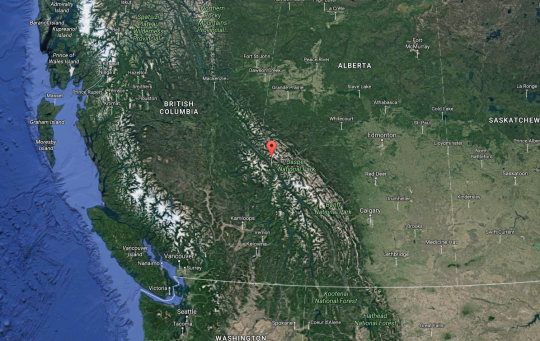
Here is where Valemount is situated. It’s a 7 hour drive from Vancouver and a 5.5 hour drive from Edmonton.
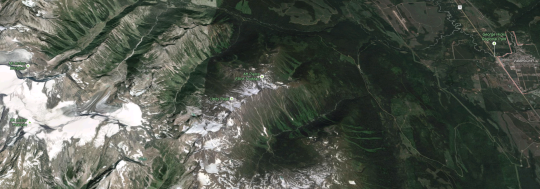
Here is the mountain range in relation to Valemount. Right hand side of the image. Sorry, I know it’s small.
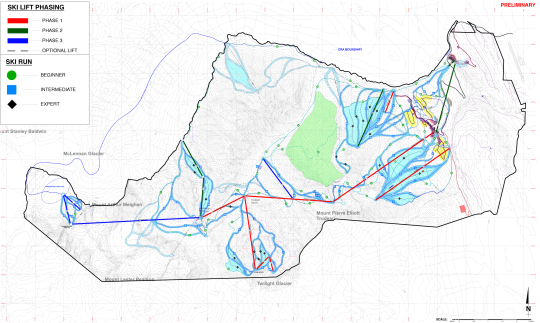
Here is the master plan that just got approved. Valemount is once again on the right / east.
And here is why this is a big deal (at least in my world):
– Valemount has the potential to be “the third largest lift-serviced non-contiguous vertical” in the world at 2,260m (7,415 feet). Zermatt, Switzerland and Chamonix, France are number 1 and 2. Of course, it would still get the title of the largest vertical drop in North America.
– There are a number of glaciers that would allow for summer / year-long snowboarding.
– They want to create a multi-valley snowboarding experience, similar to the European Alps.
– The mountain range has one of the highest average snowfalls in Canada. Valemount gets 5.36m (211 inches) per year and at an elevation of 1,800m it’s 14m (551 inches) of snowfall per year. This is more than Whistler. Because of this, they are not planning any snowmaking.
– There’s an airport nearby.
– One of their guiding principles is to minimize the environmental impact.
Construction is expected to begin in the spring of 2017 and the plan is to open to the public by December 2017. The first phase will include Twilight Glacier at an elevation of 2,530m (8,301 feet). So right from the outset, there will be summer skiing.
If you’re curious what the master plan for a ski resort looks like, you can download the entire report here. It’s only 324 pages.
My condo has an east exposure. That means I get direct sun in the morning and no direct sun in the afternoon, once the sun has crossed over onto the other side of my tower.
But a funny thing happens in the late afternoon and early evening. The sun reaches just the right angle and begins to reflect off the apartment across from me. That apartment is about 11m away.
Once this happens, it then feels like I’m getting direct sun again. It floods my apartment. This may seem like a small thing, but I love it when this happens. It’s happening right now as I write this post.
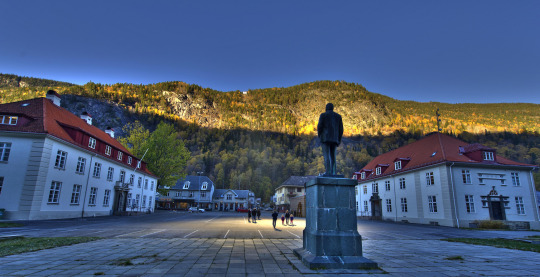
So I can only imagine what it must have felt like for the residents of Rjukan, Norway when they got their first taste of winter sun back in 2013.
Rjukan is a small town of approximately 3,400 residents. It’s located about 2.5 hours west of Oslo and is situated within a deep east-west valley.
As a result of its geography, the town is cast in shadow for about half of the year, from September to March. The elevation of the sun is simply too low for direct light to reach down and into the valley.
Interestingly enough, many residents opposed the mirrors before they were built. They viewed it as a frivolous expenditure. Petitions and Facebook pages were created. But now that the mirrors have been installed, most of the naysayers seem to have changed their tune.
I think it goes to show just how important light is, but also how difficult change, of many varietals, can be.
When I was in Revelstoke, BC last year I met a number of people who had made the move out there from Toronto. When I asked if they missed living in a big city, pretty much everyone gave me the same answer: “No, I love it here.”
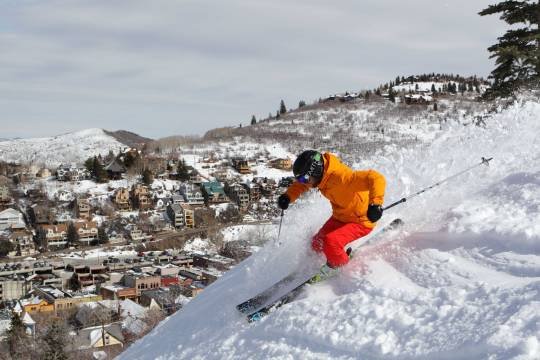
This past week when I was in Park City, Utah, I similarly met a number of people who had made the move from New York and other large cities. And when I asked them the same question, I heard statements like: “I used to live in New York, but then I got a life and moved out here."
In these two examples, the obvious draw is the mountains. But it’s not like everyone just moved and became a ski bum. In fact, Inc Magazine recently published an article talking about Park City’s robust startup scene. People are figuring out how to combine hard work with the lifestyle they want.
What I find interesting about this is that it runs counter to the trend of young people preferring big cities. Here’s a quote from NPR:
“But affordable real estate and waterfront views don’t have millennials biting. They continue "a multigenerational pattern of young adults preferring more expensive urban areas over lower-cost rural ones because the lifestyles and opportunities in such places make the extra burden of cost worth it,” says Robert Lang, professor of urban growth and population dynamics at the University of Nevada, Las Vegas.”
However, some small towns clearly have a unique lifestyle advantage: mountains. And that seems to be a strong enough draw that some people are simply figuring out how to create the economic opportunities for themselves.
For me, this is yet another reminder that if you’re trying to attract the best human capital to your city or town, you need to think about lifestyle. And since young adults aged 18-34 are far more likely to move around than any other generation, you should also be thinking specifically about what this generation wants.
Here’s a chart from CityLab that shows how precipitously migration falls off (in the U.S.) once people finish school and get settled in a job:
Obviously, not every town or small city is blessed with mountains. But there are many lifestyle advantages that can be created. It’s for this reason that I keep talking about nightlife and Toronto’s laughable 2AM last call. Those are lifestyle things and we can do better.
I am leaving this morning for my annual retreat to the mountains. This year we are going to Park City, Utah, which we decided to do about a year ago.
The reason we chose this particular place is because Vail Resorts spent $50 million over the offseason to merge Park City Mountain Resort with the neighboring Canyons Resort.
There’s now a mountain-to-mountain gondola and 7,300 acres of skiable area across the two resorts, which makes it the largest ski resort in the United States. And that’s why, this month, the New York Times named it one of the 52 places you need to visit in 2016.
But it’s not all puppy dogs and ice cream. What kickstarted this transformation was that the previous operator of Park City, Powdr Corporation, actually forgot to renew its sweetheart land lease.
So if you’re at all interested in skiing, snowboarding, real estate, and/or lawsuits, you might be interested in what happened here. Curbed did a summary of the battle last year. It was big news in the ski world.
I have a soft spot for Jackson Hole, Wyoming. It’s a beautiful town and, out of all the places I’ve snowboarded, it’s easily my favorite.
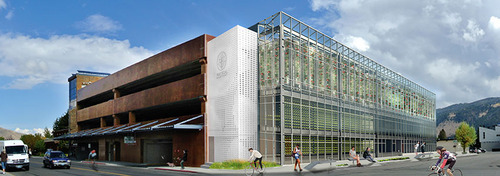
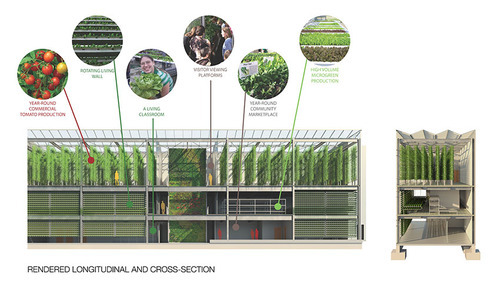
That’s why I was excited to learn that Jackson is currently building one of the first vertical farms in the world (and in a cold ski town at that). Using a vacant site in the middle of town, a new venture called Vertical Harvest is building a three storey, 13,500 square foot hydroponic greenhouse. It’s being done as a public/private partnership.
The business will operate year round and supply fresh produce to the local community – replacing food that was previously being shipped in from Mexico and California.
The site itself is 1/10 of an acre, but it’s expected to have the same output as a 5 acre piece of land using conventional agriculture methods. 95% of their product is already committed through pre-purchase agreements.
Here are some of the businesses that have jumped onboard:
Rendezvous Bistro
Il Villaggio Osteria
Q Roadhouse
The Kitchen
Jackson Hole Mountain Resort’s five restaurants
Snake River Brewery
St. John’s Medical Center’s Refuge Grill
What makes this project even more exciting is their commitment to employing members of the local community with disabilities. This is apparently a growing concern in Jackson, and so Vertical Harvest will be doing their part to address that.
If you’d like to learn about the design of the facility, check out this article by Fast Company. The team was was very methodical in ensuring that this facility would consume less energy than the status quo of shipping in food from out of state.
The go-live date is this fall (2015). I should probably plan another trip to Jackson.
Despite being rainy and unusually warm, I had a great time in Revelstoke, BC. I first heard about the city a few years ago when I told a close friend of mine (who is an avid snowboarder) that I was going to Whistler. He told me: “Forget Whistler. Go to Revelstoke.”
Revelstoke has been on the map for skiers and snowboarders for decades. Some consider it to be the helicopter skiing capital of the world. But there are only so many people who can afford $1,000+ per day skiing, so it wasn’t until 2007 when the first gondola opened up on Mount Mackenzie that people started calling Revelstoke the next Whistler, the next Jackson Hole, the next Zermatt, and so on.
As both a snowboarder and a real estate developer, this is of course exciting. Everybody wants to be a part of the next big thing and they want to call it before anyone else. That’s how you make money – by being right about things before the masses catch on and/or when everyone else thinks you’re wrong.
But 2007 happens to come before 2008. And 2008 wasn’t a kind year to the real estate community. Revelstoke was no exception.
The condos at the base of the mountain weren’t selling (about half of the ones that did sell were sold to Canadians I was told). Expansion plans to become the largest ski resort in the world were scaled back. And the resort teetered on the brink of bankruptcy. But since then, new ownership has taken over the resort and the sentiment on the ground seems to be that Revelstoke – as a real estate play – is somewhere near the bottom.
But something even more interesting is happening in Revelstoke, beyond just luxury condos at the base of a mountain. And since I was on the disabled list for the second half of my vacation, I had time to explore.
I was fortunate enough to meet a local entrepreneur (who happened to also be from Toronto) and his message to me was clear: Ontario is moving in. Both talent and capital from Ontario are starting to flock to this small mountain town of almost 8,000 full-time residents (it’s technically classified as a city). And from my experience at the bars and restaurants in town, he appears to be right.
Now, you might be thinking these people are just ski bums looking for an excuse to live in a mountain town. But is that such a unique and bad thing? Today’s up and coming generation is looking for lifestyle + career. And so if your city or community can offer both, you have a competitive advantage when it comes to attracting talent.
Revelstoke knows they have the outdoor amenities and the “epic pow”, so now all they need to do is bring the businesses. And that’s exactly what Revelstoke wants to do. If you’re an entrepreneur or business owner, Revelstoke wants you to move there. I’m serious. The vision is to create a sustainable live, work, and play mountain community in the BC interior.
I hope that happens.
Drop me a line if you want to talk mountains and business.
Post Update: The beautiful photo of Revelstoke at the top of this post was taken by Ian Houghton out of BC. This is his business website and this is his Facebook page.
I’m sitting in Calgary International Airport right now waiting for my flight back to Toronto. This marks the end of the 6th Penn Annual (our annual ski and snowboard trip). We all had an amazing time and I can’t wait until next year’s annual. We’ve already (pretty much) decided that it’s going to be in Park City, Utah.
As you can probably tell, I like traditions and routines. As boring as that might sound, I think there’s a lot of value in doing the same thing over and over again.
It’s why I do an annual ski and snowboard trip every February with some of my closest friends (to a mountain we’ve never been to before). It’s why I write something – no matter how short it might be – every day here on Architect This City. It’s why I lift weights 3-4 times every week. It’s why I’m interested in brand building (creating equity takes consistency and time). It’s why I love the permanence of real estate. And it’s also why I like dollar cost averaging when it comes to investing.
I guess you could say I like the long game. I enjoy having “disciplines.”
And that’s because I think there are very few substitutes for hard work and sustained efforts. We all love to talk about those overnight success stories, but in reality they’re often the farthest thing from overnight. I know that it takes time to get great at something. And I also know that I’m not always going to be right. But the simple act of not stopping can take you pretty far.
In any event, I hope you enjoyed all the mountain town talk (I have a few more ideas I want to write about) and my Snapchat stories (if you followed along). I got really into Snapchat on this trip. And that’s because I think the platform is at a tipping point where brands are going to start thinking of it as a legitimate marketing channel – and not just an app for teens.
Do you have any routines or disciplines? If so, feel free share them in the comment section below. Or if you hate routines, tell us why.
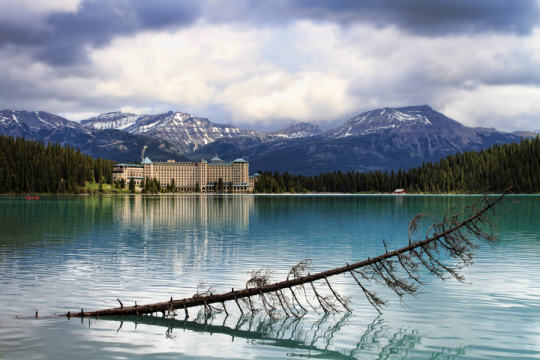
I’m writing this post from the Lakeview Lounge at the Fairmont Chateau Lake Louise. The view of the (frozen) lake and mountains is absolutely stunning (see above). I can totally see why people move to the Rockies and never leave. Frankly, I’m not sure how I’m going to ever go home 😉
This Chateau was first built up in the late 19th century by the Canadian Pacific Railway. Developed as a way to encourage ridership and fund railway expansion, its position on the eastern edge of Lake Louise was probably a fairly obvious choice (although only when accompanied by rail). It’s designed to take full advantage of the views of the lake and the mountains.
The interesting thing about Dovercourt Village – and specifically Geary Avenue – is that they seem like unlikely places for new investment. Many of the buildings aren’t particularly beautiful. And there’s a rail line and a set of power lines running through the middle of it.
But if the buzz around Dovercourt Village proves to be true, then it could very well end up as a new yuppy enclave in the city. I’m not going to debate the merits of gentrification today, but I think it’s interesting how change can seemingly emerge out of nowhere.
If you rewind 10 years to before Ossington Avenue became the hotspot that it is today, many of you would have probably classified it as an unlikely place for gentrification. Located beside the Centre for Addiction and Mental Health (CAMH), the area wasn’t considered desirable at the time. (CAMH has since undergone a lot of change.)
But oftentimes change can come out of nowhere. It just takes few enterprising pioneers who see something that nobody else does.
Having just spent the weekend in Calgary and Banff, I’ve been thinking a lot about importance of picking the right city in which to live. I’m not saying that I don’t love Toronto. Because I do. But I am incredibly envious of cities – like Calgary, Vancouver, and Denver – that have such easy access to incredible mountains.
Now, this might not matter to a lot of people, but it does to me. It’s a personal thing. There’s something really nice about landing in a city and seeing people leaving the airport with skis and snowboards in hand. And there’s something really nice about a city where so many people are active, outdoorsy, and fit.