Daily insights for city builders, delivered every morning at 6 AM ET. I’m Brandon Donnelly — a Toronto-based real estate developer and founder of Globizen. I’ve been writing here since 2013.

Tag: monocle

  • The value in small retail spaces

    image

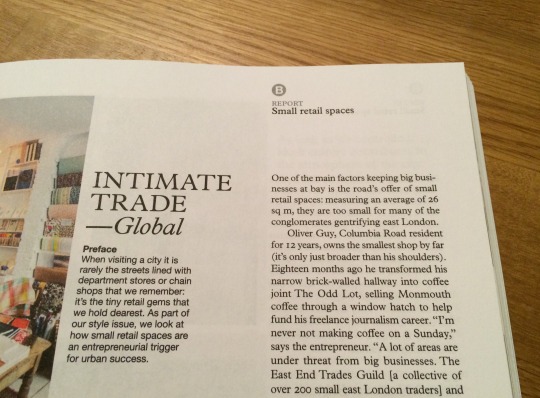
    This month’s issue of Monocle is centered around fashion, style, and retail. And one of the most interesting pieces is a report on small retail spaces. 

    The argument (which you can read in the preface shown above) is that micro retail spaces are incredibly important for entrepreneurship and urban vitality. Because if all a city has is large retail spaces, then you’re creating impossible barriers for new retail startups. The rents simply become too high.

    It’s on page 79 in case you have this month’s issue or want to go pick it up.

    After reading the article, I immediately thought of 2 posts that I recently wrote on related topics. The first is “Incubating new ideas in cities” and the second is “The hard things about retail.”

    In the first post, I questioned how cities might be able to encourage and incubate new ideas alongside new development and buck the Jane Jacobian truism that new ideas require old buildings. And in the second post, I expressed my concern for a micro retail condo complex here in Toronto that appears to be struggling.

    But maybe that micro retail complex is on to something (just with the wrong tenure: condo instead of rental). Maybe it’s as simple as starting with great urban design and small (affordable) retail spaces. 

    It seems to be working for Columbia Road in London, Knez Mihailova in Belgrade, and Tower Theater in Los Angeles (the 3 examples that Monocle gives).
  • Architect and developer partner to build affordable prefab housing in Sweden

    image

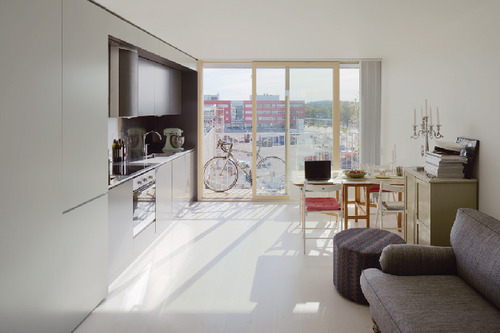
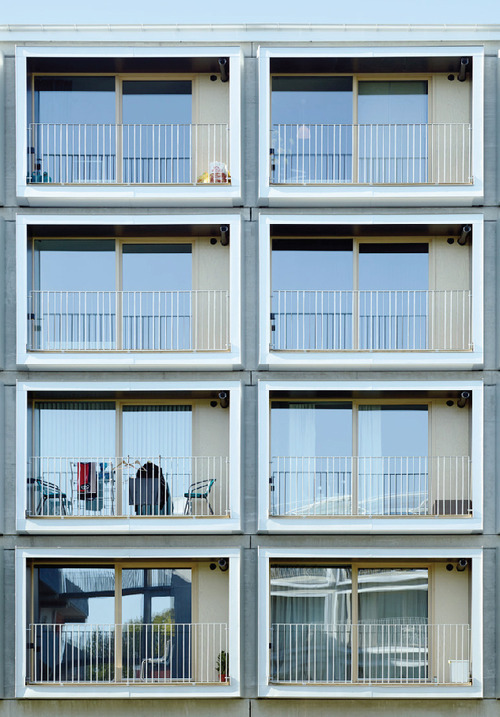
    In this month’s issue of Monocle magazine (#80) they profile an interesting prefabricated and affordable housing project in Knivsta, Sweden.

    A collaboration between architect Andreas Martin-Löf and developer Junior Living, the project contains 124 single occupancy units, each of which has 32 square meters of interior space (that’s about 344 square feet).

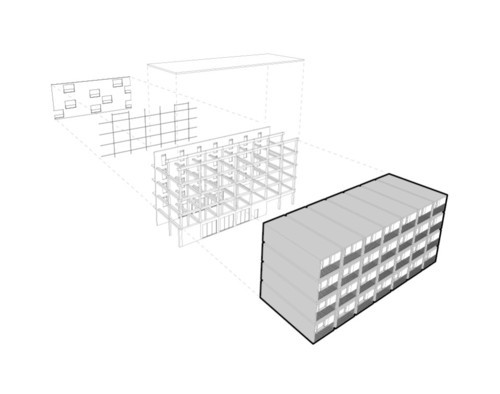
    The way it was built is quite simple. The modular housing units were fabricated off-site and then inserted on-site into a prefabricated concrete frame. Think bottles going into a wine rack. Here’s a diagram showing how it works:

    image

    What’s truly amazing about this project though is how quickly it was built and how cost effective it actually was for end users. Construction started in January 2014 and residents started moving in about 3 months later. The sale prices ranged from €50,000 to €87,000 per unit. That’s roughly $62,000 to $98,000 in US dollars.

    Finally, here’s a shot of one of the interiors:

    image

    What do you all think of this project?

    Photography by Åke E:son Lindman via Andreas Martin-Löf Arkitekter

  • The Monocle Quality of Life Conference

    image

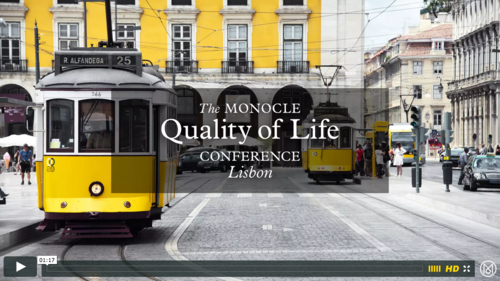
    Monocle magazine is launching their first ever conference this spring in Lisbon and it’s dedicated to quality life in the world’s greatest cities. It’s going to take place Friday, April 17th to Saturday, April 18th, 2015.

    You can click the image above for a video synopsis (there’s great urban eye candy), but if you don’t feel like doing that, here’s the text version:

    MONOCLE invites you to a weekend of peerless hospitality, great debates and in-depth conversations about the forces shaping the world’s great cities. Join our editors, correspondents and key thinkers in discussing topics ranging from architecture to independent retail, city planning to national branding.

    It sounds like a wonderful event and very much inline with some of the topics discussed here on Architect This City. If I had a conference budget that needed to get spent, I would be the first to sign up. If you’re interested, you can “register your interest” by clicking here. Tickets are €1,500.

  • The impression you are leaving

    image

    “Toronto is a city that has long struggled to make any sort of impression on the imagination.”

    That is how Monocle correspondent Christopher Frey started his recent architectural feature on Toronto’s iconic City Hall. To watch the video click here. It’s about 5 minutes long.

    As a born and raised Torontonian who loves this city, I absolutely hate that sort of introduction. But at the same time, it doesn’t surprise me. Growing up in this city, there were always the haters. However, I think it’s important to keep 2 things in mind.

    Firstly, Toronto has gone through a dramatic transformation over the last decade or so. In fact, I recently had a friend say to me: “Brandon, 10 years ago you told me that Toronto was going to be a super cool global city. I didn’t believe you then. But you were right.” This is what I was getting at in my Guardian Cities piece when I talked about how people are becoming noticeably more passionate about this city. (I actually wrote about what my friend said but they edited that part out.)

    Secondly, if you’ve ever read Seth Godin’s book All Marketers Are Liars, you might remember this line:

    To illustrate what he means by this, Godin uses the example–among many others–of Riedel wine glasses. Riedel is a high end glassware company founded on the belief that every type of wine needs its own unique glass shape. And indeed, their customers believe that the right glass makes all the difference in terms of how their wine will taste. That’s why they buy them.

    However, when you blindfold those same people, they are no longer able to tell the difference between a Riedel wine glass and some cheap alternative. The wine all of a sudden tastes the same. What that tells us is that when we believe something is supposed to be better, we actually experience it differently. You could say that we’re actually lying to ourself.

    And I’ve thought about this same phenomenon when it comes to cities. When people visit a place like New York they’re supposed to like it. That’s what everybody tells them. New York is great. You’ll love it. But ultimately, that “supposed to” changes how people experience the city.

    Which is why when Toronto gets introduced as being bland and banal I get upset. Not only because I disagree, but because I know it’s creating a “supposed to” in somebody’s mind. And that’s not the story we should be telling as a city.

    Image: Wikipedia

  • What makes a city great? [Video]

    Each year Monocle publishes a ranking of the top 25 cities around the world in terms of quality of life. Different than most city rankings, the survey goes beyond the more typical metrics around crime, education and so on, and also looks at some of the softer aspects of quality of life. Metrics such as: Can I get a good glass of wine at 1am? What they’re after is a more truthful ranking of the cities that people actually want to live in.

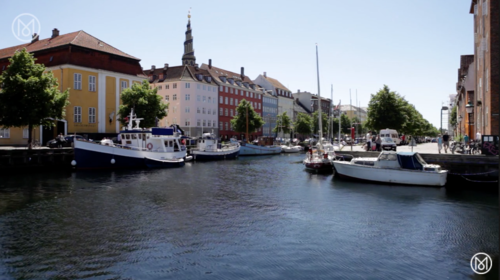
    This year Copenhagen took the number one spot. Vancouver took first in North America. And Tokyo took first in Asia. All 3 cities have scored well since they began the survey. Monocle also released a short video that looks at these 3 cities and explains a bit about their ranking methodology. Click here to watch the video. It’s only about 7 minutes long, but it’ll probably make you want to visit all 3 cities. I’ve never been to Copenhagen, but it’s certainly on my list.