Daily insights for city builders, delivered every morning at 6 AM ET. I’m Brandon Donnelly — a Toronto-based real estate developer and founder of Globizen. I’ve been writing here since 2013.

Tag: mobility

  • End of the automotive era

    Bob Lutz is a former vice chairman and head of product development at General Motors. Recently, he had this to say about the future of the auto industry. 

    Here are a couple of powerful snippets:

    It saddens me to say it, but we are approaching the end of the automotive era.

    The auto industry is on an accelerating change curve. For hundreds of years, the horse was the prime mover of humans and for the past 120 years it has been the automobile.

    Now we are approaching the end of the line for the automobile because travel will be in standardized modules.

    Everyone will have five years to get their car off the road or sell it for scrap or trade it on a module.

    Bob is 85 years old. This is somebody who spent his entire life in the auto industry telling us that the old model is now done. 

    It reinforces something that I wrote about here, where the “end of the automotive era” was pegged at around 2021. 

    And it is part of the mental model that I have started relying on today for decision making.

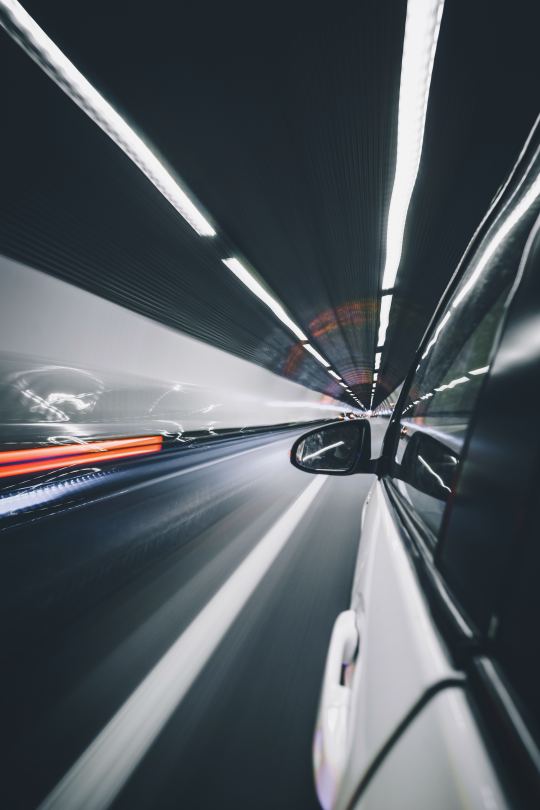
    Photo by Alessio Lin on Unsplash

  • Clean disruption of energy and transportation

    I just came across the below talk by Tony Seba about the coming “clean disruption” of energy and transportation. The talk follows his book of the same name. Click here if you can’t see it below. It runs about an hour, but I would encourage you to give it a watch. 

    [youtube https://www.youtube.com/watch?v=2b3ttqYDwF0?rel=0&w=560&h=315]

    The first few minutes will be things I’m sure many of you have heard before, such as the failure of Kodak to embrace digital cameras (film business considered too valuable), Moore’s Law, and so on. But he then moves on to cost curves, battery storage, solar power, and autonomous electric vehicles (A-EVs).

    You all know that I am fascinated by these topics, so here’s one piece that stood out for me: 2021 is his prediction for the year in which A-EVs become real and disrupt both internal combustion engine (ICE) vehicles and individual car ownership.

    Obviously this won’t happen overnight, but Tony’s belief is that 2021 will be the year that the economics of A-EVs become so compelling (10x) that it will crush our current business models.

    The argument is that on-demand ride hailing/sharing and A-EVs will converge and that Transportation as a Service (TaaS) will provide our mobility needs at a fraction of today’s costs. We’ve talked about this prediction before on the blog, but never has a timeline been attached to it.

    All of this reinforces two thoughts that I’ve been having over the past few years. One, I will probably never buy another combustion engine vehicle. And two, I should probably avoid buying another vehicle, period, until the next wave of business models becomes clearer. Leasing likely makes more sense at this stage if you need a car.

    In fact, Tony believes that with the collapse of individual car ownership, the resale value of cars could become negative. That is, you’d have to pay people to take a car off of your hands, because everyone will recognize the cost advantage of just using TaaS.

    We are doing everything we can to future proof our development projects so that they are ready for electric vehicles. But if A-EVs and TaaS completely erase individual car ownership within the next 5 years, then all of us in the industry are going to need to do much more to ready our buildings and cities.

  • Technology and the city

    Embedded at the bottom of this post is a great rapid-fire talk by Edward Glaeser about technology and the city. 

    Technology has always been a fundamental driver of change within our cities and I like how Glaeser starts by referring to these forces as either centripetal and centrifugal. The car was an example of the latter. It spread us out.

    At the same time, Glaeser points out that the car was really the first time that urban mobility patterns shifted from hub-and-spoke to point-to-point. Transit systems rely on hubs and some walking, which in a world of cars has led to something we call the last mile problem.

    Also worth noting is the fact that Glaeser is terrified about what autonomous vehicles will do to our cities. His point is that the fundamental law of highway traffic has shown that vehicle miles traveled increases basically 1:1 with highway miles built.

    So if all of a sudden AVs are able to decrease the cost of mobility, provide capacity benefits, and increase rider enjoyment (because you’re no longer a driver), vehicle miles traveled are going to go through the roof. This makes a strong case for some form of road pricing.

    But it also means that unlike traditional cars, which were a centrifugal force, AVs could in fact turn out to be a force that further centralizes us within dense urban centers.

    When you listen to Glaeser’s talk, you will quickly understand why so much attention (this blog included) is being paid to autonomous vehicles. They are one of – if not the – next great technology bound to reshape our cities.

    If you can’t see the video below, click here.

    [youtube https://www.youtube.com/watch?v=lbGwhWbuhfg?rel=0&w=560&h=315]

  • We’re still on road pricing

    The New York Times recently argued that self-driving cars can’t cure traffic, but that economics can. Here is the key soundbite:

    “Maybe autonomous cars will be different from other capacity expansions,” Mr. Turner said. “But of the things we have observed so far, the only thing that really drives down travel times is pricing.”

    The argument here is that capacity expansions – such as additional lanes – never solve the problem of gridlock. Yes lane widening projects increase capacity, but the latent demand is so strong that the problem never gets solved. Even in places like Houston.

    We talked a lot about this phenomenon on the blog a few years ago when Toronto was embroiled in debate over the Gardiner Expressway East. But it’s interesting to think about self-driving cars as simply another incremental capacity expansion.

    I have no doubt that this technology will make more efficient use of our roads. Carpooling will be a lot easier – as is already the case. Cars will be able to drive closer together. We’ll be able to stop abrupt breaking and swift land changes, which actually create systemic traffic problems for everybody else.  And the list goes on.

    But there will still be limits to how many people can be efficiently moved on a particular strip of road. Exactly how there are limits to how many people can be efficiently moved via a particular subway tunnel, streetcar line, and so on.

    So if latent demand continues to outstrip available capacity, which has historically been the case, then we are once again back to the politically unpopular idea of pricing away congestion. As much as people criticize it as regressive, I believe that’s where we’re headed.

  • Blaze Laserlights

    This is a great idea:

    It is a bicycle light – by a London-based company called Blaze – that forward projects a bicycle symbol 6m in front of you as you ride. It also has a really bright white light.

    They will be (or have been) installed on London’s entire bike-share fleet and they are currently being piloted in New York City. Here is a video of it in action.

    One of the things I always watch for when I’m cycling is being in a car’s blindspot. Signalling seems to be a dying art, so you never know when someone might turn into you. If this light is able to project in front of the car and signal to the driver that a cyclist is nearby, then I could see this being a big safety improvement. Of course, this is just one scenario where a light like this might be helpful.

    Have any of you tried it?

    Image: Blaze

  • BOOK by Cadillac

    Cadillac is just about to launch a new subscription-based car service in New York City. It’s called “BOOK by Cadillac” and the inspiration for the idea is as follows (taken from this Cool Hunting interview):

    “We believe there is an as-yet untapped space between traditional ownership (leasing, financing, buying) and the rental, ride or car sharing options available today (Car2Go, rental, Zipcar, Uber) — a space where experience is more important than ownership, but a luxury experience is paramount.”

    The way it works is that you pay a flat fee of $1,500 per month, which includes repairs & maintenance, insurance, taxes, unlimited mileage, and the ability to swap out your Cadillac vehicle 18 times per year. The idea here is that you can have one car in the city, one car when you drive to the mountains, and one car when you land in LA and are just feeling something a little different. It’s also commitment-free. Cancel any time.

    It’s all done through their app and there’s a concierge to take care of every little detail, including moving your stuff (sunglasses, phone charger, and so on) to whatever new car you’re swapping to. My understanding is that you can also make the swapping as carefree as you’d like. Meaning: “Oh look, there’s a new Escalade in my parking spot.”

    Here’s their marketing video (click here if you can’t see it below):

    [youtube https://www.youtube.com/watch?v=m-2c6BsqRYU?rel=0&w=560&h=315]

    Now, $1,500 is not cheap. But the value prop here is effortless luxury. I think it’s interesting to see car companies experimenting with new and different business models. 

    My view has always been that the most cost effective way to have a car is to buy a 2-year old model, pay it off, and then drive it for as long as it remains respectable. I am currently in that camp. But even that approach is starting to feel antiquated to me. 

    So much is changing in this space. Pretty soon, I don’t believe we’ll be thinking about car ownership in the same way.

  • Toronto mayor proposes road tolls, finally

    When I wrote yesterday’s post about road tolls, it hadn’t been announced that Toronto Mayor John Tory was going to call for road tolls on both of the highways coming into downtown. That didn’t leak until late in the evening. So I was just writing another post on a topic that I care about.

    Today, however, that announcement was made and the proposal is a flat $2 toll on both the Gardiner Expressway and the Don Valley Parkway. It is expected that this could bring in close to $200 million a year in new revenue for the city – all of which would be dedicated towards transit and roads. Good.

    First, I want to applaud the mayor for coming out in support of road pricing. I didn’t agree with him on the Gardiner East, but I agree with him on this – mostly. It is a bold move.

    The reason I say mostly is because I hope that we don’t simply default to a fixed and blunt road toll. There are more sophisticated options out there, such as variable pricing models that change based on demand/congestion levels.

    Here’s a post that explains how that works and why I think it’s a good model.

    With this approach, it becomes more of a congestion charge rather than a toll. It also gives commuters the option of driving during off-peak times to save money. And if we implemented something like this, I am sure that we would see employers and office hours adapt. More on this in the above post.

    Still, I absolutely believe that it’s a step in the right direction for this great city. So thank you Mayor Tory.

  • Uberpooling your way to cheap rides

    This morning on my way into the office I ran into a friend who lives in my building (downtown). She works in midtown and so I asked her how she gets into the office. She told me that she either takes the subway or an Uber, but that increasingly she has been taking Uber, particularly on the way home.

    We then started talking costs and she told me that what she does is carpool with a friend from work using UberPOOL. They live nearby and so what they do is leave from the same place at night (the office) and then select a midpoint location between their homes for the drop-off. After splitting their portion of the fare, the ride costs her about $3.25.

    As she was telling me this, I couldn’t help but think to myself: Wow, this is massively disruptive to transit. That is the same cost as taking the subway. So why take transit? With the subway, there may be a speed argument in certain instances, but that certainly wouldn’t be the case with some of Toronto’s streetcar lines (such as the King line). It’s faster to walk.

    However, there are obviously geographic limits to how far you can go in an UberPOOL before your costs greatly exceed taking transit. But as Uber and other similar services continue to bring down the price of a ride (eventually the labor cost component will disappear), how big does that area get?

    All of this – including my own mobility patterns – has got me thinking yet again about the role of transit in the city of tomorrow. 

    One segment that continues to be underserved is the regional scale. Here in the Greater Toronto Area, we are working on that by transforming our commuter rail service into a two-way all-day Regional Express Rail service. Today that strikes me as being hugely valuable. And unless driverless vehicles somehow solve our traffic problem, it will likely remain that way.

    I would love to get your thoughts in the comments below.

  • Politics and bike lanes

    image

    Recently a good friend of mine told me that I had conflicting views in the world of politics.

    She more or less said to me: I know you’re a real estate developer and obviously a capitalist (read: right of center), but you also support what are often considered to be left of center issues. Issues like tearing down the Gardiner Expressway and building more bike lanes.

    I thought this was an interesting comment because, regardless of whether or not you agree with the categorization she was making, the unfortunate reality is that sometimes (oftentimes?) city building issues do become about left vs. right. Bike vs. cars. Urban vs. suburban. And the list goes on.

    My response to her was that I don’t care about what side of the political spectrum an issue supposedly falls on. That’s a distraction. When I think about something, I try and apply rationale thought and facts to the best that I can. 

    For instance, in the case of bike lanes, I have asked myself: would cities be better off if we had more, or less, people cycling? Simple question. And when I think about this and look at some of the numbers, I see a lot of benefits (this is a non-exhaustive list):

    – More people cycling means we’re moving people more efficiently, which you could argue improves urban productivity and overall quality of life. 

    – More people cycling means we will naturally start prioritizing more compact types of urban form, which in itself has a myriad of socioeconomic benefits. 

    – More people cycling means we’re actually taking action to try and fight climate change.

    – And more people cycling means we’re improving health outcomes. Given that public spending on health care is one of the largest government expenditures in OECD countries, I bet you could find measurable financial savings.

    With all of this, I am not naively suggesting that all cars should disappear from our cities and that everyone should only cycle. I think electric vehicles and self-driving vehicles are going to be an important part of the mobility equation in the future. But I am saying that more, not less, cycling strikes me as an obviously positive thing for our cities. 

    On that note…

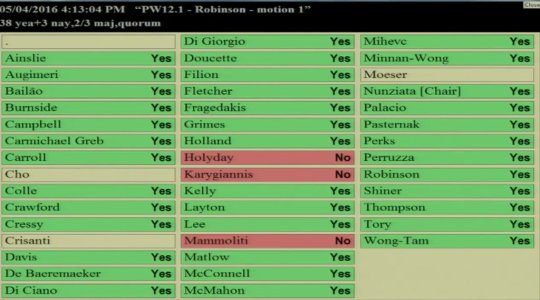
    Toronto City Council voted today in favor (38-3) of a pilot project that will bring separated bike lanes to Bloor Street. The image at the top of this post is how each Councillor voted. So today, we appear to have not fallen into the divide that my friend was talking about. And that makes me, as well as many others, quite happy.

    //platform.twitter.com/widgets.js

    I would be curious how all of you feel about this particular issue. And I would also be curious if you find yourself being more issued based rather than aligned across the political spectrum. That’s certainly how I feel these days.

    I bet we could have a great discussion on this topic in the comment section below 🙂

  • The ROI of cycling infrastructure

    Toronto can’t make up its mind right now as to whether it would like to invest in additional cycling infrastructure. 

    Of course, we have a history of vacillating on topics like this. And I think it’s because we’re at a tricky inflection point. We are weaning ourselves off of the car, but most parts of the city remain underserved by transit and heavily dependent on the car.

    So today I thought I would share some numbers from a research study that was published last year by Stefan Gössling of Lund University and Andy S. Choi of the University of Queensland. It’s called, Transport transitions in Copenhagen: Comparing the cost of cars and bicycles.

    Much of the focus of the paper is on the cost-benefit analysis that the City of Copenhagen uses to make its cycling investment decisions. Here is an excerpt from ScienceDaily:

    “If the costs to society and the costs to private individuals are added together, the impact of the car is EUR 0.50 per kilometre and the impact of the bicycle is EUR 0.08 per kilometre.

    The study by Stefan Gössling and his colleague also shows that if we only look at costs/benefits for society, one kilometre by car costs EUR 0.15, whereas society earns EUR 0.16 on every kilometre cycled.

    “The cost-benefit analysis in Copenhagen shows that investments in cycling infrastructure and bike-friendly policies are economically sustainable and give high returns,” says Stefan Gössling.”

    So there you have it. Now I thought we could debate this in the comment section. Your thoughts?

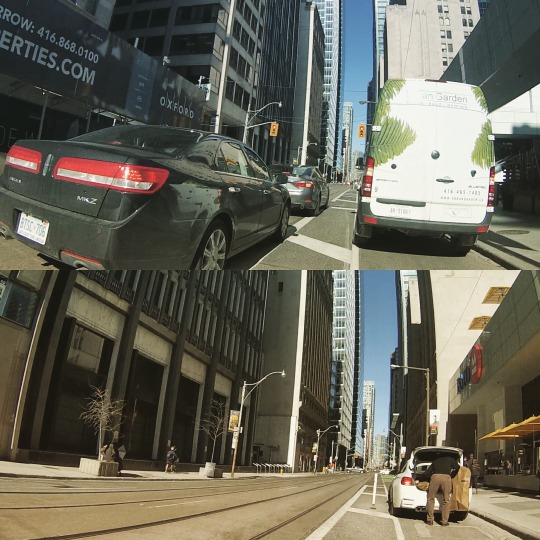
    P.S. The images at the top of this post were taken by me using my new GoPro bicycle handlebar mount.