Daily insights for city builders, delivered every morning at 6 AM ET. I’m Brandon Donnelly — a Toronto-based real estate developer and founder of Globizen. I’ve been writing here since 2013.

Tag: minimalism

  • E20_Private Residence

    The private residence below is located on a quiet street in the village of Pliezhausen – about 30 km south of Stuttgart. Designed by Steimle Architekten, the house is 376 square meters and sits on a 658 square meter property. Its insulated concrete shell is 50 cm thick. All photos by Brigida González.

  • Peach skin

    I am fascinated by the way the Japanese think about housing. It is very different than the way we think about housing here in North America. Below is a small house tour that reinforces that. If you can’t see it below, click here.

    [youtube https://www.youtube.com/watch?v=4fEeh-8OFT8?rel=0&w=560&h=315]

  • Important things

    image

    Last weekend I watched Minimalism: A Documentary About The Important Things. I’ve been reading the blog for awhile now (I blogged about it) and so the movie has been on my to-do list since it came out.

    Now, I am not a minimalist to the same extent as Joshua and Ryan, and some of the people featured in the film. I have not reduced all of my personal belongings to 51 things and I have not renounced any sort of permanent residency. I own some stuff.

    But I am very much attracted to the philosophy that less can be more. That less can make us happier. That quality is more important than quantity. And that we actually need far less stuff than we think we do, especially in a consumerist society like ours.

    One word that comes up a lot in the documentary is: deliberate. In other words, we should be more deliberate about the choices we make, the things we buy, and so on. Will it create value in my life?

    And that’s one of the reasons I like this notion of minimalism: It’s a challenge. You have to think. Because if you don’t, you will be told what to do and what to buy, and you will accumulate things without even knowing. It’s essentially a constant battle against excess.

    Perhaps the biggest potential for excess happens with our choice of housing, which is why small homes feature so prominently in the film. A tiny house isn’t going to be for everyone, but many people have certainly come to the realization that square footage alone does not equate to more happiness.

  • Going paperless

    Last week I picked up an Epson document scanner with the hope of going paperless in my home office. I know I’m late to this party, but just hadn’t gotten around to researching and selecting the right machine. Manually filing papers is passé, time consuming, and impractical in smaller living spaces.

    Let me tell you: I am so impressed by how quickly I was able to clear off my desk and throw everything directly into Google Drive and Evernote. Now I have an empty desk and I can access any of these files from my phone. Decluttering is a great feeling.

    I am sure that many of you are already doing this, but if you aren’t, consider investing in a quality scanner with a good automatic document feeder that does double sided scans. If the process is quick and painless, you’ll be more likely to do it on a regular basis. That was my rationale at least.

    One of the things I like about living in a smaller space is that it forces you to live more minimally, which is something I am constantly aspiring to do. For me, going paperless is a step in that direction.

  • Forest

    I just backed the following project on Kickstarter:

    https://www.kickstarter.com/projects/991195979/n-o-r-t-h-simple-timeless-and-refined-watches/widget/card.html?v=2

    It is a new watch line from two Montreal designers. The brand is called Forest Time Co. There’s so much creative talent in that city.

    I was immediately drawn to the focus on minimalism and on high quality materials. That’s a philosophy I can get behind. I plan to go for the black band with copper case.

    I know nothing about watch movements, but it’s a “Japanese Miyota.” I assume that’s pretty basic.

    I love finding interesting projects on Kickstarter. There’s something about backing a team and their new creation. We should all aspire to make and create more.

    At the time of writing this post, they’re about $1,000 shy of their funding goal of $24,000. I hope they reach it by this Sunday. I’m sure they will.

  • Weekend architecture roundup

    image

    Things have been far too serious around here this week with talk of interest rates, unrealized gains, flooding, and the EU referendum. So let’s change that and do a bit of an architecture roundup. It has been on my agenda for a few weeks now to move toward some sort of regular post about architecture and design.

    1.

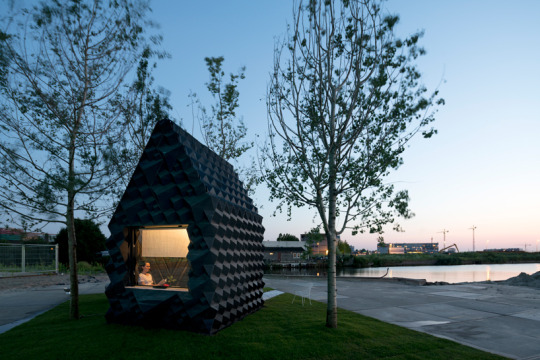
    DUS architects of Amsterdam recently completed a fully 3D printed urban cabin (pictured above). It totals 8 square meters and was printed using “bio-plastic,” which means the entire structure could be shredded and reprinted into something else. The Urban Cabin is a research experiment, but the thinking is that 3D printed homes could serve as an “on-demand housing solution” in rapidly urbanizing cities, in disaster areas, and so on. That said, the niche use case can quickly become the mainstream use case.

    2.

    REX has just released their design for a Performing Arts Center on the World Trade Center site. The design is a minimalist “mystery box” that provides an infinitely customizable interior canvas for directors. I have long been interested in the work of REX because of the hyper-rationale approach they quite often bring to architecture. It’s about allowing architecture to emerge from the project’s constraints, programmatic requirements, and so on. Here’s a video of the project.

    3.

    Finally, this Swiss chalet (not the restuarant) in the town of Anzère has got me pretty excited about the upcoming snowboard season. It was designed by the Amsterdam-based firm SeARCH. And I love the dichotomy between the raw exposed concrete and the softer wood details. Also note how the garage, situated beneath the house, is built into the mountain. It is connected to the house above via an elevator that is also carved into the mountain. Sadly, my ski retreats don’t typically involve James Bond-style lairs.

    Image: Copyright Ossip

  • Living minimally

    “The wisdom of life consists in the elimination of non-essentials.”
    – Lin Yutang

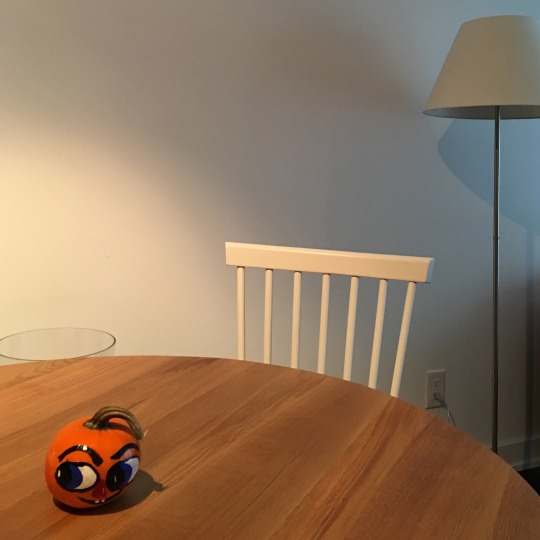
    Yesterday I posted the above photo on social media with the caption: 

    “This year I decided to go ALL OUT for Halloween.” 

    A friend then responded and said: 

    “A minimalist does Halloween. Love it.”

    I’ve been called a minimalist many times before. And it is certainly something that I think about. Oftentimes I feel like life is a constant battle against physical and mental clutter. But that the more you can rid yourself of that clutter, the happier and freer you will feel.

    It’s why I scan most of my paperwork into Evernote and then throw out the hard copies. It’s why I tend to wear a lot of white dress shirts and black t-shirts – it keeps life simple and reduces decision making. And it’s one of the reasons I’m so attracted to laneway houses and small spaces. I don’t think most of us need as much home as we think we do.

    If this is something that also interests you, I recommend checking out a blog called The Minimalists. I just recently subscribed to them.

  • How small is too small?

    I was up early on Sunday morning and I tweeted this out:

    //platform.twitter.com/widgets.js

    It’s a link to a Dwell article about a New York family of four that lives in a 620 square foot apartment. It’s technically a one-bedroom apartment but the way they have it set up is that the two kids share the bedroom and the parents sleep in the living room similar to as if it were a studio apartment.

    And my question in the tweet was, could you do it?

    Part of the reason the article caught my attention was because I currently live in a 640 square foot apartment – but as a family of one. And not surprisingly it’s more than enough space for me. Would I still feel the same way if it were a family of two? I believe so. But what about if it were a family of 3 or 4? I suspect it wouldn’t be as effortless, though certainly not impossible.

    I love the idea of distilling one’s life down to only what is absolutely necessary. And if you happen to live in a city, like New York, where the median price of a one-bedroom apartment is somewhere around $3,400 per month, there can certainly be lifestyle advantages to doing more with less.

    So I’d like to re-ask the question here to the Architect This City community: Could you do it? How minimalist could you go?

  • Selective decision making

    Consistency is what builds brands.

    Whether you’re a city, company, or a person, doing the same thing over and over again is what reinforces your identity. That’s why Steve Jobs always wore a black mock turtleneck, why Mark Zuckerberg always wears a gray t-shirt and hoodie, and why Tom Ford always wears a white shirt and a black jacket. They are continually building their own distinctive brand.

    I’ve always found this concept really appealing.

    Maybe it’s because I had to wear a uniform every day of my life until I went to University, or maybe I just like the concept of personal branding. Either way, there are a bunch of things that I have stuck with for a long time. For example, I’ve worn the same cologne since I was 19. I bought it in Italy one summer and I really liked it. And it now always reminds me of Europe. So I keep wearing it.

    But the other reason why consistency can be good for you is that it reduces the number of decisions that you need to make on a regular basis. That’s why President Obama also wears more or less the same thing every day:

    You also need to remove from your life the day-to-day problems that absorb most people for meaningful parts of their day. “You’ll see I wear only gray or blue suits,” [Obama] said. “I’m trying to pare down decisions. I don’t want to make decisions about what I’m eating or wearing. Because I have too many other decisions to make.” He mentioned research that shows the simple act of making decisions degrades one’s ability to make further decisions.

    The research he’s talking about comes from people like Kathleen Vohs, professor at the University of Minnesota, and Barry Schwartz, professor at Swarthmore College, who concluded that the more decisions we make – even pleasant and enjoyable ones – the quicker we get to what’s called “decision fatigue." We simply exhaust our ability to make effective decisions.

    This, to me, is a really important lesson. Because the way I look at it, we live in a world of constant noise. Our phones are always chirping. There are 132 different types of toothpaste at the store. And everywhere we turn, somebody is trying to sell us something. So maintaining a certain level of simplicity and minimalism in your life can actually be an incredibly difficult task.

    More and more I’m finding this to be the case. So maybe it’s time I start wearing the same thing every day. Do you have any tips for living life, simply?