Daily insights for city builders, delivered every morning at 6 AM ET. I’m Brandon Donnelly — a Toronto-based real estate developer and founder of Globizen. I’ve been writing here since 2013.

Tag: medellin

  • Utah just chose an urban gondola for Little Cottonwood Canyon

    Every now and then somebody comes forward and proposes an urban gondola. The most recent one that I have heard about here in Toronto was this one from 2016 called the “Don Valley Cable Car.” But like many gondola proposals, it sort of just disappeared. Probably because it wasn’t entirely necessary. (I just checked their website and it is now down.)

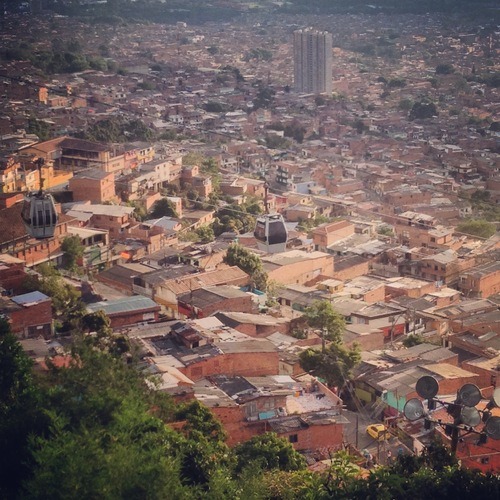
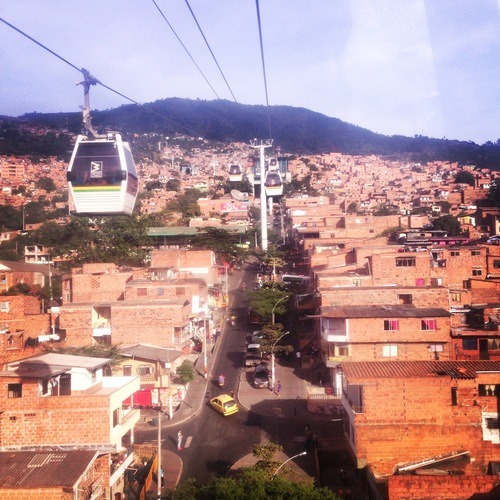
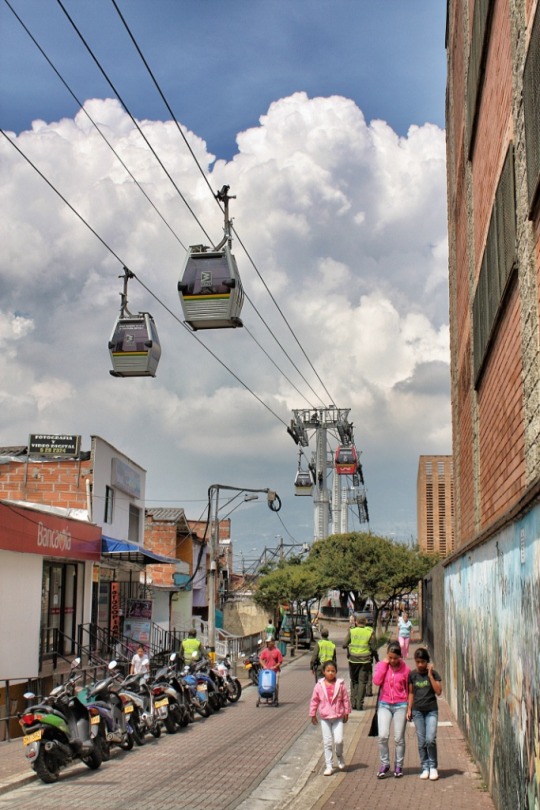
    However, there are rare instances where a gondola makes a lot of sense. Medellin, for example, has a very successful urban gondola system that my friend Alex Feldman wrote about, here on the blog, after a visit to the city back in 2014. In this case, the gondola was instrumental in connecting hill-side communities that were previously disconnected from the rest of the city.

    Another less urbanized example is the one that Utah (Salt Lake County) is planning to build in Little Cottonwood Canyon. I wrote about this project back in March when I was there and, today, the Utah Department of Transportation announced their preferred mobility option. It is called Gondola Alternative B and, as far as I can tell, it is still the longest and most expensive urban gondola ever proposed.

    Here are the details in graphic form:

    To summarize, though:

    • The system is being designed to carry 1,050 passengers per hour, with cabins departing every 2 minutes.
    • The gondola itself is expected to cost $370 million, but when you add in a new parking garage for 2,500 cars, tolling infrastructure on the existing State Route, and other improvements, the total all-in capital cost is projected to be $729 million. The route itself is somewhere around 10 miles, so let’s call it $73 million per mile.
    • At the same time, the projected operating costs are relatively low at $8 million per year, so this option actually has the lowest 30-year lifecycle cost out of all the ones that were studied. The other alternatives included widening the existing roadway, enhancing the bus service, and adding rail. There was also one other gondola option, which was presumably called Gondola Alternative A.

    If you’re wondering why this is likely a good idea, check out my post from this past winter.
  • The Life-Sized City

    I just discovered a new video series by TVO called, The Life-Sized City. It’s all about the “anatomy of the modern metropolis.” The first episode – which was released on Sep 13 – is on Medellin and is just under an hour long. I have a feeling that many of you will like this video series.

    Whenever I watch videos like this, it makes me think that I should be starting a city building-focused vlog. I am a big fan of this format. I follow a handful of vloggers. And I think it could be a lot of fun. But sometimes you just have to say no.

    For those of you who aren’t longtime readers, I would also like to point out that my good friend Alex Feldman wrote a guest post on this blog over 3 years ago following a trip to Medellin. It’s about what cities could learn from Medellin’s extraordinary turnaround. If you missed it, click here.

  • Medellín wins 2016 Lee Kuan Yew World City Prize

    image

    Thanks to my friend Darren Davis, I just recently learned about something called The Lee Kuan Yew World City Prize.

    Named after Singapore’s first Prime Minister, the prize is a biennial award that honors cities who have made, “outstanding achievements and contributions to the creation of liveable, vibrant and sustainable urban communities around the world.” Along with the prize comes $300,000 (Singapore Dollars), which is about $287,000 Canadian as of today.

    The 2016 Prize Laureate is Medellín, Colombia.

    Over the past two decades, the city has transformed itself from one of the most dangerous cities in the world to one that has become a model for social inclusion and urban innovation. Here is a video that talks about the transformation. It’s a bit cheesy, but it does provide a high-level overview of their urban initiatives. A lot of them will serve as a reminder about the importance of urban connectivity.

    If you’re a regular reader of this blog, you may also remember that my good friend Alex Feldman (VP at U3 Advisors) wrote a guest post about Medellín after he visited the city for the World Urban Forum almost two years ago. That post was called, What cities could learn from Medellín.

    It’s worth mentioning that the runners-up for this year’s World City Prize were Auckland, Sydney, Toronto, and Vienna. In the case of Toronto, our “far-from-ideal transit” was specifically called out as a negative. Thankfully we are now working on road pricing, which will provide additional funding for transit. 😉

    Image by Jorge Gobbi

  • What cities could learn from Medellin

    I’ve been talking with my good friend Alex Feldman for a few months now about him doing a guest post on Architect This City. Alex and I went to Penn together and he’s now VP at a real estate advisory firm called U3 Advisors. The firm is based in Philadelphia, but they do work in many other cities including Detroit. I hope you enjoy his post. Happy Monday everyone.

    image

    Guest post by Alex Feldman

    Two weeks ago, I had the privilege of traveling to Medellin, Colombia to attend the World Urban Forum – a non-legislative UN Habitat led gathering that is widely regarded as the premier conference on Cities. Over 10,000 people attended the bi-annual gathering, which felt like a cross between a World’s Fair, a Trade-Show, and a political summit. While the conference proved to be a melting pot of topics, ideas, and people, I came away from my 3 days in Colombia more captivated by the city itself.

    For those of you familiar with Medellin, you may be aware of its infamous past as the center of Pablo Escobar’s drug cartel. The city was once considered one of the most dangerous in the world with 6,300 homicides in 1991. Escobar was killed in 1993 and the city has been dramatically transformed over the last 20 years. Today, Medellin is much safer, very clean, and incredibly friendly (as someone who speaks very little Spanish, I met complete strangers who went out of their way to help me get around the city).

    Medellin’s resilience has not gone unnoticed and the city has been recognized as one of the most innovative in the world. Part of Medellin’s transformation has been its focus on inclusion and equitable development. I spent Sunday traveling on the city’s modern Metro system to visit Santo Domingo – a hillside neighborhood that was once the center of Escobar’s drug cartel. The steep topography of the neighborhood makes it difficult for cars or buses to reach the low-income residents – and requires a long walk up-hill for anyone returning from a long day of work or school in the central city. As part of Medellin’s Social Urbanism platform, a public-private partnership constructed Line K of the Medellin Metro – a 1.8km gondola or Metrocable that provides seamless connections to the city’s Metro.

    image

    I rode the Metrocable to the top of the hill – the Santo Domingo stop. I was worried that the ride up the hill would feel like a tourist attraction, with hundreds of visitors staring down at the low-income neighborhoods below. Instead, the Metrocable proved to be both a useful public transport system and a point of pride for local residents – offering some of the best views in the city from the compact, glass enclosed cars. 

    At Santo Domingo, I wandered through a vibrant street fair to the Biblioteca Espana – a modern library designed by Colombian Architect Giancarlo Mazzanti that represents another aspect of urbanismo social: placing the city’s “most beautiful buildings” in the city’s poorest areas – a declaration of former Mayor Segio Fajardo. Despite the fact that the building’s exterior is temporarily covered in scaffolding due to leaks, it represents a significant investment in a neighborhood that was once the most dangerous in the city.

    On the ride back down the mountain, I couldn’t help but reflect on how a city could be transformed in such a short period of time. The lessons of Medellin’s urban makeover are relevant to many cities (including my hometown of Philadelphia which despite a recent transformation still suffers from a poor global reputation). Visionary leadership, innovative transportation models, and progressive urbanism have re-made Medellin’s reputation. In turn, this has benefited Medellin’s citizens both in quality of life and local pride. When citizens begin to love their city again, the ripple effect can be exponential. More cities should take-note of this Latin American comeback kid.