Daily insights for city builders, delivered every morning at 6 AM ET. I’m Brandon Donnelly — a Toronto-based real estate developer and founder of Globizen. I’ve been writing here since 2013.

Tag: laneway

  • The laneway love continues

    The momentum around wanting mixed-use laneways in Toronto continues, or the algorithms just know what gets me going. Either way, I continue to be both impressed and surprised by the number of “hidden” laneway-based businesses that exist in this city and that keep surfacing online.

    Here are some further examples:

    I honestly think that someone should create a directory/mapping of these businesses. If anyone wants to do this or help do this, I own lanewaylove.com and I’ve been reserving it for projects just like this.

    I also think that this has the potential to become a hallmark of Toronto urbanism. It’s already somewhat endemic, it would seem. So imagine what will happen once we actually allow and encourage these uses to their fullest extent. Yes, once.

    If you know of any other laneway-based businesses, whether here in Toronto or in your city, please share them in the comment section below.

  • I love narrow streets

    If you’re a regular reader of this blog, you’ll know that I’m a fan of narrow streets. It’s one of the reasons I have been such a supporter of laneway housing here in Toronto, and why I think they should ultimately allow for some non-residential uses.

    If you have narrow streets and reasonably decent buildings that frame them, you have a base condition that has worked remarkably well since the creation of cities. Almost by default, and even if you don’t have proper sidewalks, it is going to feel pedestrian-oriented.

    The challenge, however, is that it’s usually difficult to create these after the fact. Street networks are powerfully sticky; they generally don’t change unless you have someone like Haussmann rebuilding your city. So if you have these in your city, try and take advantage of them. You’re fortunate to have them.

    The above two photos/measurements are from Milan. Both streets are around 20 feet wide (or 6 meters), which happens to be the required width of a standard two-way drive aisle here in Toronto. It’s a good example of how differently cities can view and allocate space.

    You can do a lot with 6 meters.

  • It’s okay to put buildings close together

    This morning I came across this beautiful photo by @callicles of the 11th in Paris. After admiring it for a few moments, I then immediately tweeted it out with the above caption: “It’s okay to put buildings close together.” Because here’s the thing about this photo: It represents one of the great paradoxes of city building. When most people look at this photo, I suspect that they will find it beautiful. They will like the mid-rise architecture and they will like the quaint European-scaled streets. But despite its fairly universal appeal, very few cities are able to build this way today. It’s often not allowed. So instead what people do is travel to Europe in the summer, sit in cafes, admire the architecture and urban design, and then lament the fact that we don’t build cities like we used to.

    What is it that makes this intersection so inviting? Well, the buildings are tight up against each other. I’m guessing that the right-of-ways (ROWs) in this picture are maybe 6-9 m wide. There are no building setbacks or stepbacks to speak of, save and except for the penthouse floors which taper back slightly. And so all of the spaces in these buildings would likely have some sort of direct facing condition with their opposing neighbors (but partially mitigated by the fact that these aren’t all glass buildings). The ratio of ROW to building height is, I’m guessing, something like 1:4, which, at the end of the day, is a large part of the reason why these streets feel so intimate and inviting. The buildings frame the streets and public realm.

    What I just described breaks many of the guidelines that I suspect many of you in the industry are accustomed to following. In our world, the streets should be wider to allow for adequate fire and service vehicle access. The buildings should stepback to allow light to reach the sidewalks, to mitigate impacts on any surrounding single-family homes, and to provision for sky views. Here in Toronto, the midrise guidelines also stipulate that buildings should have a ROW to building height ratio that is closer to 1:1. Though to be fair this guidance is often rightly broken. But the truth remains, we generally don’t build like this anymore. Why is that?

    It’s not because we can’t do it. We certainly could. We are, for whatever reasons, choosing not to. Is it because we’re bad at understanding what we actually like and what makes for great cities? Is it because what we end up liking is a bit counterintuitive? My unproven and untested theory is that it is at least partially the result of an approach to planning that is defensive — instead of offensive — in nature. We plan around and bow completely to existing contexts. We plan to mitigate impacts. We plan to satisfy some very individualistic concerns about how cities and neighborhoods should be built. For better or for worse, we plan to piss off the least amount of people. Politics also play an outsized role.

    What is far less common to think about is how to plan offensively. The fact of the matter is that the Paris we all love today pissed off a lot of people when it was being constructed. The approach was top-down and hugely disruptive. It ignored and completely erased much of the city’s previous urban context. Artists at the time, and probably many others, despised the new regularity of Paris’ street wall buildings. They longed for the old hodgepodge of medieval blocks and the visual variety that they created. But today, it’s hard not to think of this offensive move as anything but visionary. Of course, there are also countless examples of top-down offenses turning out terribly bad for cities.

    Perhaps the right approach, then, is to simply start being more deliberate about introducing elements of planning offense. My friend David Wex of Urban Capital likes to remind me that Montreal is a city with grandeur and that Toronto, for the most part, is a city without it. So as I have argued before, over here, I think it’s time we rethink our approach. Instead of just worrying about things like shadow impacts and angular planes (defensive), we should also be asking ourselves offensive questions. How refreshing would it be to sit down in a project meeting and have someone ask: “Okay, but does this design contribute to the overall grandeur and beauty of our city?”

    And maybe once we take this new perspective, we’ll come to the conclusion that sometimes it’s okay to put buildings close together.

  • Mackay Laneway House is now under construction

    Well, it only took 11 years.

    I still remember the first time I walked into Etobicoke Civic Centre and showed the lady at the counter my design for a laneway house. She didn’t know what a laneway house was and she couldn’t figure out where it fronted. “Wait, it’s behind the main house? It has no frontage. Where’s the street? Huh?” A lot has changed over the past decade, as I knew it would. All of the building permits are now in and Mackay Laneway House is under construction in Toronto’s Corso Italia neighborhood.

    Kilbarry Hill is overseeing the construction process. (Construction was supposed to start earlier this summer, but COVID-19 had something to say about that.) Regular updates will be posted on the Globizen blog and on the socials, with the goal of creating a kind of “how-to guide” for laneway suites. Expect detailed construction updates, a list of the individual trades that are being used, post-completion costing information, and probably a bunch more.

    The first order of business is the site servicing work, all of which has to be done via the existing house. No connections off the mains because, remember, these are intended to be secondary suites, similar to basement apartments. This raises the question of how best to submeter the utilities. Thankfully, the good folks over at Lanescape were kind enough to share how they have done it.

    Click here to subscribe to the Globizen Bulletin.

  • A YouTube channel about simple living and small homes

    I just subscribed to Kirsten Dirksen’s YouTube channel. She makes videos about simple living, self-sufficiency, and small homes, among other things. She has nearly 1.3 million subscribers and her videos have almost 500 million views. I think many of you will really enjoy her channel.

    The above video is about an apartment in Lapa, Lisbon that was renovated by architect João Gameiro. Originally constructed in 1819, the top floor space had been pretty badly neglected. João renovated it by striking, what seems to me like, the right balance between old and new.

    Some of the other homes featured on her channel include a laneway house in Toronto, a tiny floating home in Berlin, and an off the grid cabin in Joshua Tree.

  • Tiny Tower in North Philadelphia

    ISA Architects recently completed a project in North Philadelphia called Tiny Tower.

    It is a 6-level, 1,250 square foot single family home built on a small 12′ x 29′ lot. That’s about the footprint of two parking spaces. It feels like a house you might find in Japan.

    Its siting is on a secondary street, akin to a laneway here in Toronto. As you can tell from the above picture, the adjacent parcels are largely undeveloped and/or used for parking.

    The height of the house is 38 feet and the section looks like this:

    The kitchen is in the basement (along with a light well). The living room is on the main floor (entrance to the house shown below). The third level is a workspace. And the rest of the floors are bedrooms. There’s also a rooftop patio. All of the circulation happens on one side of the house.

    I don’t consider 1,250 square feet to be a small house and so this post is not about that. “Tiny Tower” does, however, feel like an accurate name.

    I like these kinds of projects because they are about taking something with little perceived value — in this case a small parcel of land — and creating something cool.

    That’s how you create the most value. You have to discover and do things that most other people are overlooking.

    Images: ISA Architects

  • Reintroducing Junction House

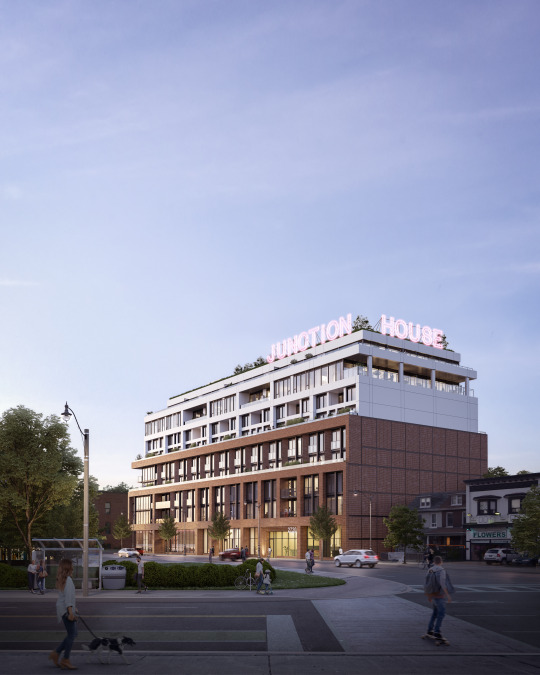
    Today we released the above rendering for Junction House and announced that sales will begin this fall.

    144 condominium homes. A mix of 1, 2 and 3 bedroom suites, including our Two-Storey House Collection and our Laneway House Collection. Prices starting in the $400s.

    One of our partners also happened to serendipitously send me this Globe & Mail article today talking about the increasing demand for and shortage of mid-rise housing:

    “The market is substantially undersupplied in mid-rise,” said Mr. Hildebrand, who notes that mid-rise projects in the GTA [Greater Toronto Area] were just 31 of 2017’s new launches, accounting for 3,833 units (12 per cent of the total).

    Stephen Price, CEO of Graywood Developments, went on to say this in the article:

    “There’s a huge appetite for medium density in Toronto. Many don’t want to live in the downtown core, this buyer is more interested in being in a community and there is a greater propensity to buy larger more livable units.”

    Given the huge influx of inquiries we received today after the above announcement was made, I would say that feels right. And our focus at Junction House is very much on “larger and more livable.”

    If you’re at all interested in a new home at Junction House, I would encourage you to get on our priority list, here.

  • Vancouver revisits laneway house program

    Vancouver is light years ahead of Toronto when it comes to laneway housing/suites. And by light years I mean that their Laneway House (LWH) Program is about a decade old now.

    Last month the City of Vancouver published this staff report which outlined recommendations for improving the program. It includes simplifying the regulations, reducing processing timelines, and improving livability in LWHs.

    This aligns with their Housing Vancouver Strategy (2018-2027), which has set a target of 4,000 new LWHs over the coming ten years. That may not seem like a lot and certainly it won’t solve everything, but I reckon that 4,000 is better than 0.

    The city also estimates that approximately 50% of these new LWHs will be two and three bedroom homes, which makes them a viable housing solution for families who want to remain in the city. (Related post: Where are all the kids?)

    There’s a lot of good stuff in the staff report if you’re so inclined, but I’ll leave you with a few facts about the current LWH program in Vancouver. 90% of LWHs are built along with a new house. And 45% of all new houses, so almost half, are now built with a LWH.

    Only 10% of LWHs are single storey, which certainly helps to support the above percentage of two and three bedroom homes. And in both 2016 and 2017 over 500 building permits for LWHs were issued each year.

    So 4,000 LWHs over the next decade may actually be a fairly conservative estimate. Thank you to Michael Geller for sending me this staff report.

    Photo by Spencer Watson on Unsplash

  • Toronto is finally ready to permit laneway suites

    Some of you might remember that last summer the city refused my laneway house/suite here in Toronto.

    Well that was last summer and this is this summer.

    On May 2, 2018 – which just so happens to be my birthday – Toronto and East York Community Council will consider a staff report for a City-initiated Official Plan Amendment and Zoning By-law Amendment that would permit laneway suites in the Toronto & East York District.

    Here are a couple of excerpts from the summary section (full report, here):

    This report recommends establishing a planning framework to permit laneway suites on lands within the Toronto and East York District that are designated as Neighbourhoods by amending both the Official Plan and City-wide Zoning By-law.

    A second unit can take many forms but is generally considered to be subordinate to the primary dwelling unit on a lot. Second units are an important part of the City’s rental housing stock. Laneway suites are one form of second unit.

    This report contains a detailed planning rationale for the introduction and regulation of laneway suites within the Toronto and East York area and discusses the policy implications and intent of proposed performance standards and criteria. 

    These performance standards and criteria intend that laneway suites will provide a new form of ground-related, rental and extended family housing that will fit appropriately within the scale of established Neighbourhoods, and limit their impact on the existing physical character, while contributing to the growth of the City’s rental housing stock.

    What a thoughtful birthday gift. Thank you.

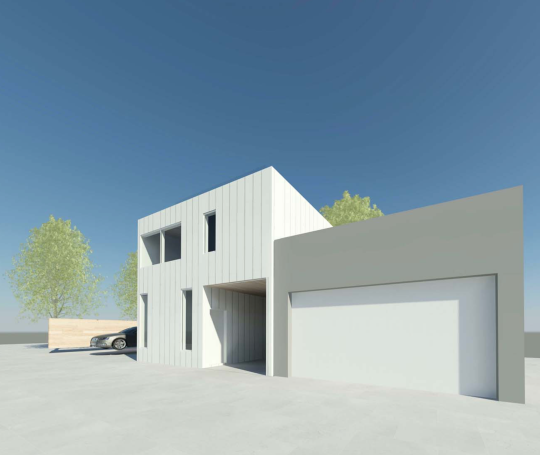
  • The city refused my laneway house

    image

    This afternoon I stood up at the Committee of Adjustment (Etobicoke York) to present the laneway house proposal that Gabriel Fain Architects and I have been working on for the past year and that I have been working on since 2009.

    But before I could start I was told that Councillor Palacio had just submitted a last minute letter to the Committee. I was given a few minutes to read it, but the big bold “REFUSE” was probably the only word I needed to read.

    I was then asked if I had read planning staff’s report. I acknowledged that I had read it and that I was aware that they were also recommending refusal of the application. I also noted that a number of my immediate neighbors sitting behind me were also opposed to the proposal.

    That’s how my presentation started. 

    At this point you might be wondering: why bother?

    I stood up today because, as most of you already know, laneway housing is something that I feel strongly about. This isn’t just about my individual project. I mean, why do all of this work for one small dwelling unit? For me, this is about city building and trying to affect positive change. (I would also love to live on a laneway.)

    I could go on here about how the proposal was shorter than other existing structures on the lane, how the FSI was in check, how we had carefully studied shadows, and how planning staff had already supported greater densities and multiple dwellings on lots of similar size in the area. 

    But that’s not what today was really about.

    Today I heard loud and clear that whether the proposal was a laneway tiki hut or a 2 storey laneway suite, the community did not want more people living in the area and they most certainly did not want more renters living in the area.

    My message to the Committee was that in my humble opinion this is inevitable. Look to Vancouver. Look to Edmonton. Look to many other cities. What we are debating today, or at least what we should be debating today, is what these laneway houses or suites or tiki huts are going to look like.

    Right or wrong, our proposal was an attempt to answer that question. We looked carefully at what others had done before us, including our friends at Lanescape and Evergreen, and we proposed something that we believed was sensitive to its context.

    We were unsuccessful.

    But here’s the silver lining. At the end of it all, and right before a motion was made to refuse the application, one of the committee members said something very impactful. He more or less said: “I agree with you. This is inevitable.”

    Sadly today was not that day.

    I would like to thank everyone who came out today and everyone who got up to speak in support of laneway housing. It meant a lot to me. Some of you are also readers of this blog and it was great to meet you in person. Thank you.