
Daily insights for city builders, delivered every morning at 6 AM ET. I’m Brandon Donnelly — a Toronto-based real estate developer and founder of Globizen. I’ve been writing here since 2013.

Tag: joe berridge

  • How immigration shaped Toronto and New York

    One of the things that Joe Berridge reminded me of in his talk yesterday, is that the story of Toronto is really the story of immigration. 

    In his words, Toronto has become the success story that it is precisely because we are good at taking in lots of immigrants and making them economically productive. 

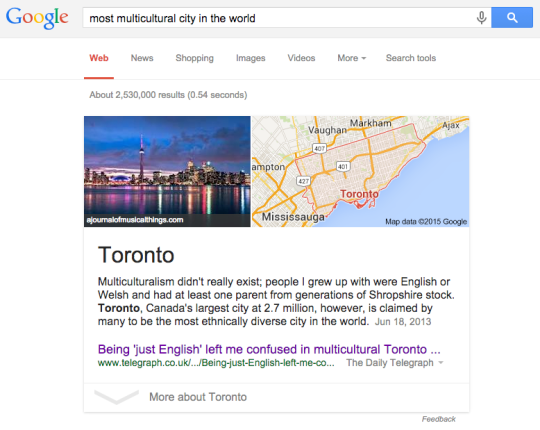
    Sure, there are many things that we could be doing better, but you don’t get to be the most multicultural city on the planet without doing a lot of things right. More than half of this city is now foreign born. The term “visible minority” is quickly expiring.
    image

    And more than anything else, this accomplishment is arguably what has allowed us to become the global city that we are. Click here for a fascinating chart from the Toronto Star that allows you to see the number and source of immigrants that have come to this city over the last half century.

    But of course, Toronto is not alone in this accomplishment.

    Urban economist Edward Glaeser wrote a great essay back in 2005 called Urban Colossus: Why is New York America’s Largest City? It’s an incredibly interesting read for those of you interested in cities and so I definitely recommend it.

    But the crux of his argument is that New York is the largest and most dominant city in America because of geography – specifically its deep harbor – and because of its success in manufacturing.

    What this meant is that New York became the center of shipping in the country and the point of entry for the majority of immigrants coming into the United States. But since transportation costs were still relatively high at the time, most immigrants arrived in New York and stayed in New York.

    Luckily, New York had a robust manufacturing economy – notably because of sugar refining, publishing and printing, and the garment industry. This allowed the waves of immigrants flooding into New York to become economically productive.

    From 1850 to 1920, the population of the New York grew about 800% from roughly 700,000 people to over 5.6 million people.

    So the moral of the story is simply that immigration has and will continue to play a pivotal role in the shaping of our cities. Canada has a sub-replacement fertility rate somewhere around 1.61 births per woman (2012). This is lower than that of United States, which is around 1.88 births per woman.

    That means that without immigration, we do not grow. We shrink. And that’s usually not a great thing for economies.

  • 7 ideas and lessons for global cities

    Today I had the pleasure of attending a really great talk by Joe Berridge (partner at the planning firm Urban Strategies) that was all about how Toronto can best maintain its position as a globally competitive city. 

    He went through 7 ideas/lessons. Though they were specifically aimed at Toronto, most of them could be applied to any city that’s concerned about its position on the global stage. They are:

    1. Invest in infrastructure, such as transit, airports, and so on. Sustainable funding and proper governance are critical. Transit planning in Toronto has become far too political and it’s crippling our city.
    2. Embrace Uber and get them using our Presto card so that it becomes a legitimate part of the city’s public transit network. Every city in the world is battling with Uber. Toronto has the opportunity to take a leadership position.
    3. Build a new convention centre and invest more in tourism and economic development. Berridge’s suggestion was something big at Ontario Place/Exhibition Place.
    4. Build new Universities to fuel the knowledge economy. See New York’s Cornell Tech campus as an example.
    5. Invest in infrastructure and institutions that turn research and development into businesses. Platforms like MaRS.
    6. Start thinking big. This was specifically geared towards Toronto, as his argument was that we do a lot of the small things right, but we’re missing out on the really big opportunities.
    7. Create Suburban Enterprise Zones to help drive employment outside of the core and along new transit corridors.

    Alongside these ideas and lessons, there was a fascinating sub-argument. And that is that Toronto is really an accidental global city. In other words, we didn’t set out to become a top 10 global city and one of the fastest growing cities in the developed world.

    But by getting a lot of things right – such as a high quality of life – and through a bit of luck – such as Montreal shooting itself in the foot – we somehow became one. But we absolutely shouldn’t take that for granted. There’s lots of work to be done.