Daily insights for city builders, delivered every morning at 6 AM ET. I’m Brandon Donnelly — a Toronto-based real estate developer and founder of Globizen. I’ve been writing here since 2013.

Tag: japan

  • How Japan increased its housing supply

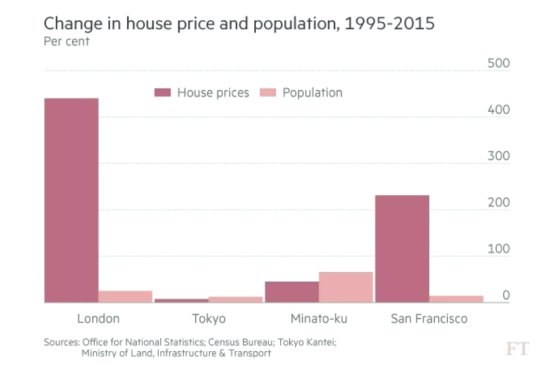
    River Davis’ recent article in the Wall Street Journal about Tokyo’s generally flat home prices had me, again, wondering about demographics. I mean, aren’t their demographics working in reverse? They have an aging population, low immigration, and a low birthrate. But Tokyo, which represents about 11% of Japan’s total population, is still growing. And their home price index looks like this compared to San Francisco and New York:

    Davis’ argument, which of course has been made by others before, is that deregulation has allowed housing supply to actually keep up with demand. Land use policies were relaxed to allow taller and denser buildings to be built and some degree of decision making (I’m not sure how much) was moved to the central government in order to counteract the NIMBY problem that invariably attaches itself to local politics.

    The result is housing numbers that look and compare like this:

    In Tokyo last year, housing starts came in around 145,000, according to Japan’s land ministry. This figure is on par with the total number of new housing units authorized last year in New York, Los Angeles, Boston and Houston combined, based on the U.S. Census Bureau data. The same feat was achieved in 2017.

    If we are to normalize against New York, it looks like this:

    And the belief seems to be that it is working:

    “A reason why housing prices in Japan are not rising as fast as in New York, for example, is the large number of housing starts,” says Masahiro Kobayashi, a director general at the Japan Housing Finance Agency, a state-run entity which supports the housing market by purchasing home loans.

    One sentence that really stood out for me in the article is this one here: “Private consultants were given permission to issue building permits to speed up construction.” If any of you have tried to pull a building permit for a large project in Toronto, you’ll know that it can take a very long time (understatement). Maybe it is the same in your city. Should we be looking at this?

    Charts: WSJ

  • Tenji blocks

    Today, Google’s daily Doodle celebrates the work of Japanese inventor Seiichi Miyake. See above screenshot. (I wonder who at Google is responsible for coming up with these. Imagine having to post something new every day.)

    I am sure that most of you have come across these tactile paving blocks before in the subway or in some other public space. But I for one wasn’t familiar with their origin.

    Invented by Seiichi Miyake on his own dime after a close friend started becoming visually impaired, they were first introduced in 1967 on a street in Okayama City (Japan) next to a school for the blind.

    Since then, these tactile blocks — or Tenji blocks — have been adopted all around the world as a way to help the visually impaired navigate our cities and public spaces.

    There are two main types of blocks: ones with bars and ones with dots (which are kind of like domes with their tops cut off). The bars indicate a safe path of travel. And the dots tell you when to stop (such as at the edge of a subway platform).

    The idea is that these different kinds of blocks can be detected with either a cane or through your feet as you walk over them. It’s a pretty simple idea, but it clearly seems to work.

    All of this reminds me of a recent community meeting I was at where I heard a lady — who was visually impaired — speak eloquently about the importance of thoughtful materiality in our public spaces. I think she may have been an architect or designer.

    One of her comments was that echoey spaces can be overwhelming for people with limited vision. That makes perfect sense to me. Unfortunately, I think it can be hard to fully appreciate some of these design subtleties unless you’re living it.

    But as Seiichi demonstrated, maybe all you need is a close friend who is living it.

  • 2019 Pritzker Architecture Prize Laureate: Arata Isozaki

    This week it was announced that Japanese architect Arata Isozaki has received the 2019 Pritzker Architecture Prize. The prize is generally viewed as architecture’s highest honor. (You also get $100,000.)

    He’s the 46th laureate and 8th Japanese architect to receive the honor. (As a side note, the only Canadian on the list is Canadian-born American architect Frank Gehry.)

    Here’s an excerpt from the announcement:

    Not only did he extend efforts to physically reconstruct his native hometown [after World War II] with buildings including Ōita Medical Hall (1959-60) and Annex (1970-1972 Ōita, Japan), and the Ōita Prefectural Library (1962-1966 Ōita, Japan, renamed Ōita Art Plaza in 1996), but also redefined mutual exchange between eastern and western societies, allowing Japanese vision to inform European and American design, particularly in the 1980s.

    His first international commission outside of Japan was the Museum of Contemporary Art in Los Angeles, which was completed in 1986. He was also one of the first Japanese architects to start working in the West at this time.

    For the full media release, click here.

  • Blue lights on train platforms

    Sadly, Japan has one of the higher suicide rates in the world. According to the World Health Organization, the rate from 2000 to 2016 was about 18.5 deaths per 100,000. The only country in Asia with a higher rate is South Korea. They are at 26.9 deaths per 100,000 (an alarming figure). For comparison, Canada and the US are at 12.5 and 15.3, respectively, which also seem rather high to me.

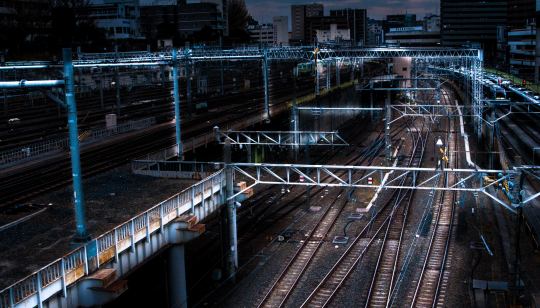
    I was intrigued to learn today that one of the ways that Japan has been trying to combat this high figure is by installing blue LED lamps on some of its railway platforms. Blue lights have been proven to have a calming effect (compared to white light). And since jumping in front of a train is unfortunately a common suicide method, blue lights were thought to maybe be a cost effective alternative to platform screen doors.

    The first blue station lights were installed on Tokyo’s Yamanote line in 2009. And according to this 2013 study – which looked at the possible impact across 71 train stations in Japan – the introduction of blue lights actually resulted in an 84% decrease in the number of suicides. Further studies also showed that there were no corresponding increases at other non-blue light stations. 

    It is an interesting example of “nudge theory”, but does it get at the root of the problem?

    Photo by Athena Lam on Unsplash

  • Leica Store Kyoto

    Yesterday I sent out this tweet about the, relatively new, Apple store in Kyoto

    It is the first in the city and I like what they did with the facade of the building. It is decidedly modern and yet there are hints of a local vernacular.

    Photographer Jonathan Castellino responded and suggested that I check out the new(ish) Leica store, which is also in Kyoto. 

    So here is that store (if you can’t see the video below, click here):

    [youtube https://www.youtube.com/watch?v=ouckkaj3XVc&w=560&h=315]

    I shoot on the Fujifilm X-T3, but Leica certainly makes some exquisite (and expensive) cameras. The Leica Store Kyoto does not deviate from that recipe.

  • A moral compass for autonomous vehicles

    One of the challenges that self-driving vehicles present is not about technology per se, it is about ethics. The typical example scenario is this one: If a pedestrian were to step out in front of an autonomous vehicle illegally, should the car be programmed to hit the pedestrian or veer off the road at the risk of potentially harming its passengers?

    I believe that self-driving vehicles will ultimately result in fewer accidents. Statistically they will be safer. But self-driving vehicles, particularly early on, are going to get a lot of attention when they do get into accidents, even if they are still safer as a whole. And that’s because they will make for good headlines.

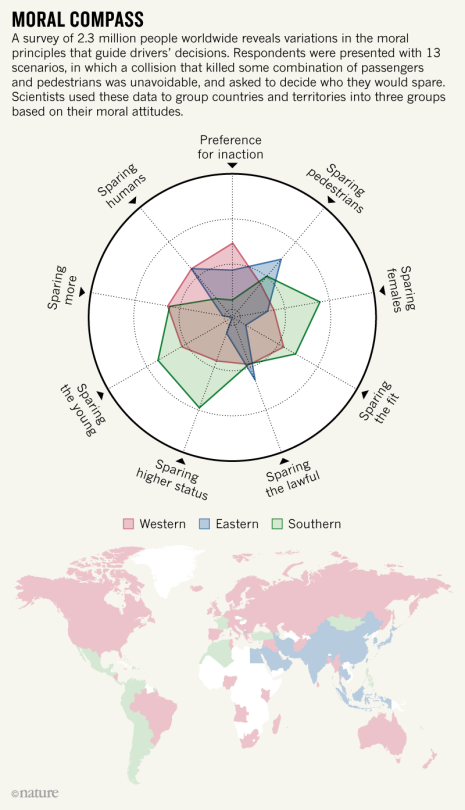
    Safety and statistics aside, in turns out that the answer to the above moral question could depend on where you’re from. Nature recently published what they are calling the largest ever survey of “machine ethics.” And out of this survey they discovered some pretty distinct regional variations across the 130 different countries that responded.

    The responses were able to be grouped into 3 main buckets: Western, Eastern, and Southern. Here is the moral compass that was published in Nature:

    And here are a few examples. In North America and in some European countries where Christianity has historically dominated, there was a preference to sacrifice older lives for younger ones. So that would guide how one might program the car for the case in which a pedestrian steps out in front.

    In countries with strong government institutions, such as Japan and Finland, people were more likely to say that the pedestrian – who, remember, stepped out onto the road illegally – should be hit. Whereas countries with a high level of income inequality, often chose to kill poorer people in order to save richer people. Colombia, for example, responded this way.

    Also interesting is the ethical paradox that this discussion raises. Throughout the survey, many people responded by saying that, in our example here, the pedestrian should be saved at the expense of the passengers. But they also responded by saying that they would never ever buy a car that would do this. Their safety comes first in the buying decision. And I can see that.

    There’s an argument that these are fairly low probability scenarios. I mean, the last time you swerved your car, you probably weren’t driving on the edge of a cliff where any deviation from the path meant you would tumble to your death. But I still think that these are infinitely interesting questions that will need to be answered. And perhaps the answer will depend on which city you’re in.

  • Japan’s solution to housing affordability

    image

    There’s a debate among urbanists as to the full impact of housing supply on overall affordability. But it should make intuitive sense that as new people move to a city and as new jobs are created, there will be a need for additional housing. Here is an excerpt from Vox citing a recent FT article talking about how Japan may have figured out the solution to rising home prices:

    The reason, argues Financial Times writer Robin Harding, is that Tokyo does a better job of allowing housing supply to keep up with housing demand. In 2014, Tokyo issued permits for 142,417 new housing units. In contrast, the entire state of California — which has three times the population of Tokyo — issued permits for only 83,657 new housing units. Little wonder that demand for housing has outstripped supply in the Bay Area.

    In the United States, local housing markets are plagued by grassroots “Not In My Back Yard” (NIMBY) activists who organize to stop efforts to build town homes and apartment buildings in their local neighborhoods. Because every construction project is located near somebody, the result tends to be that little housing gets built anywhere.

    I don’t have a copy of the FT article and I do firmly believe that supply matters a great deal, but I think there are also a number of other factors that need to be taken into consideration here. Japan has a depopulation problem. The country has lost about 1.4 million people since 2010

    They also have fairly insular views around immigration. They are over 3.5x larger than Canada in terms of population and yet they take in fewer immigrants each year. So I think it’s worth looking at this conclusion closely. (This is me trying to avoid confirmation bias.)

    Image: Vox

  • Firm Profile: APOLLO Architects & Associates

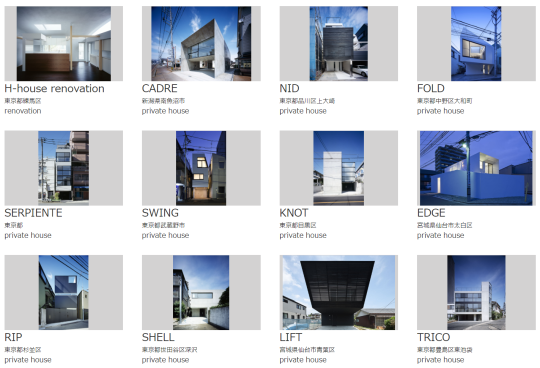
    This afternoon my friend Gabriel, of Gabriel Fain Architects, sent me the work of APOLLO Architects & Associates. They are based in Japan and South Korea. Here is a preview of some of their “private houses”:

    There is a lot that I love about these homes. 

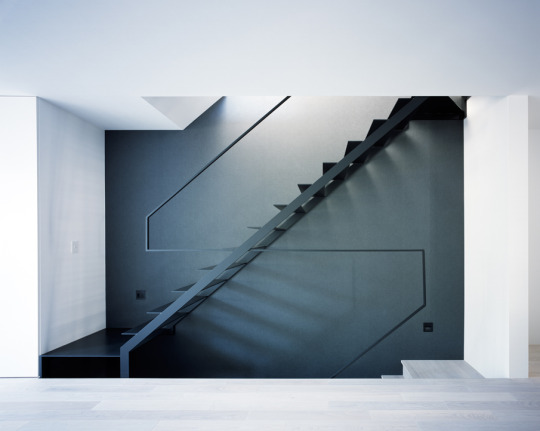
    I love their simplicity. Look at this handrail detail. Nothing more than what is absolutely necessary.

    I love their modesty. Many of the above homes hover around 150 square meters and many of them are much much smaller. 

    I love that each project’s description starts by talking about the owners and the site conditions, signaling that each home represents an individual response tailored to both the occupants and the context.

    And I love that many of these homes have been built on unthinkably small parcels of land in dense urban settings; parcels that would be dismissed as entirely useless in other parts of the world. 

    The site area for this home is 46.53 square meters and the building’s footprint is 36.93 square meters.

    Of course the Japanese housing market is a unique place. It’s worth pointing that out

    But as I browsed through what are effectively custom single family homes, I couldn’t help but be reminded that there’s a fine line between need and want.

    Small can be very beautiful. But small is also subjective.

  • DANCHI DREAMS

    Below is an interesting Kickstarter project by photographer and art director Cody Ellingham. I think many of you will appreciate it. It is a photobook of Japanese public housing apartments, which are known as Danchi. All of the photos were taken by Cory at night, hence the dream part. The book is about the promise that these projects represented in the post-war years, but it is also about their decline in the subsequent decades.

    https://www.kickstarter.com/projects/cbje/danchi-dreams-a-photobook-of-japanese-public-housi/widget/video.html

  • The 2018 Henley Passport Index

    image

    I still have every passport that I have ever owned. The older ones are far more interesting because I was younger and always looking for creative ways to travel around the world. The older I get the less interesting my passports get. Now I find it difficult to travel away from my desk at lunch.

    Passports are highly symbolic to me. It equals a particular kind of freedom. But I suppose that’s because I have a pretty good passport. 

    According to the 2018 Henley Passport Index, the Canadian passport is tied for 5th – along with Switzerland, Ireland, and the United States – in terms of the number of countries you can access without a visa. 176 countries in total.

    The highest ranking countries this year are Japan and Singapore. With those passports you have visa-free access to 180 countries. The last place country, at 105th, is Afghanistan. You get 24 countries.

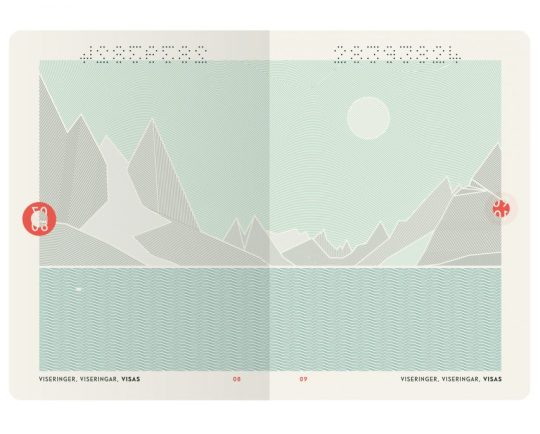
    Switching to design – because that matters – I think you would be hard-pressed to find better looking ones than the new Norwegian passport (pictured above and set to be put into circulation later this year) and the Swiss passport. The Swiss passport is allegedly the first to be professionally designed.

    How does your passport fare on the Passport Index?

    Image: Dezeen