Daily insights for city builders, delivered every morning at 6 AM ET. I’m Brandon Donnelly — a Toronto-based real estate developer and founder of Globizen. I’ve been writing here since 2013.

Tag: japan

  • Slime mold may be better than us at transportation planning

    So slime mold, which is a fungus-like single-celled organism, has a tendency to build highly optimized networks across its food sources. In other words, if you scattered a bunch of food on a surface and then dropped in some slime mold, it would naturally create an interconnected web of linked veins across this surface. And this web would be based on the shortest and most efficient paths of travel between the various food sources.

    I am mentioning this odd factoid because ten years ago researchers in Tokyo used this naturally occurring phenomenon for the purposes of trying to improve transportation planning. What they did was map out greater Tokyo. They then placed oat flakes (i.e. food) in spots that correspond to the various cities and urban centers that surround the city. Alongside this, they blocked off the areas where transportation networks do not typically run, such as through mountains and into the water. They then dropped in some slime mold, wet the surface, and watched it grow.

    What they found was that the resulting network was remarkably similar to Tokyo’s actual rail network. The slime mold had found the most efficient routes, eliminated redundancies, and generally discovered the optimal way in which to connect its food sources. And if you think about it, this is basically what transit networks are supposed to do. They should connect clusters of people in the most efficient way possible.

    It has been a decade since this slime mold transportation discovery was first publicized, and it would seem that it hasn’t really caught on as an invaluable planning tool. So I’m going to go out on a limb and suggest that we should take out a map of every major city in the world, plot its population centers, drop down some oat flakes, and then let slime mold tell us all the ways in which we are screwing up and over-politicizing our transportation planning efforts.

    Thank you to Angus Knowles for making me aware of this study. Angus writes an occasional newsletter about cities and housing, over here.

    Image: LiveScience

  • A single room with a single book, Tokyo

    This recent post by Benedict Evans talks about the firehose that is the internet. To illustrate this point, he gives the example of unread emails. If you were to look at your phone right now, how many unread emails would it show?

    My work email account is mostly read because reading and responding to emails is one of the ways that I manage to remain gainfully employed. But my personal email currently has 27,230 unread emails. Most of these are newsletters and emails from people wanting to somehow optimize this blog or help me reach 1 trillion followers on Instagram.

    Whatever the purpose, it’s almost impossible to keep up. And since having unread asymmetric emails of little consequence doesn’t bother me in the slightest, I let it go.

    This is one way to deal with the firehose — acceptance. And in Benedict’s post he makes the argument that maybe the push that we are seeing toward the metaverse is exactly that — full acceptance. “When software eats the world, it’s not software anymore.”

    But the opposite way of dealing with information overload is extreme simplification. And there is something so beautiful about minimalism in a world of too much.

    Today I learned about a bookstore in Tokyo called Morioka Shoten (shoten = bookstore). It is located in Ginza (pictured above) and the proposition is “a single room with a single book.” The bookstore consists of, you know, a single room and at any given time there is only one book for sale.

    Each book is available for six days, after which time a new book is made available. In addition to selling one book at a time, the single room shop is used for things like events and exhibitions.

    It’s a radical idea and perhaps it is best suited to Japan. But maybe we all need things that slow us down and focus our attention on only a few things or even a single thing. Maybe we need it to offset the information firehose.

    Image: Morioka Shoten

  • The Tokyo Toilet

    One of the biggest challenges with living through this pandemic has been finding a good public toilet. Drinking in the park is all fine and dandy, but at some point you’re going to need to find a place to pee. From experience, I can tell you that this can be a challenge in places like Toronto and Vancouver. But from the looks of it, the situation is a bit different in Tokyo. Japan, apparently, views its toilets as a symbol of its world-renowned hospitality culture. And so it takes great pride in the design of its public toilets. Last year, Tokyo invited 16 creators from around the world to redesign 17 of its public toilets throughout Shibuya. The list of creators includes big names like Tadao Ando, Kengo Kuma, Shigeru Ban, Toyo Ito, and many others. And the result is probably the nicest collection of public toilets that you have ever seen (somewhere around 9 of them are already operational with the balance expected to open sometime this year). The uniforms worn by the maintenance staff were even designed by Nigo (creator of the fashion brand A Bathine Ape). That’s attention to detail.

    For more about The Tokyo Toilet project and to check out the completed toilets, click here.

    Image: The Tokyo Toilet

  • Tokyo-based BALMUDA delivers one sexy toaster

    Founded in 2003, Tokyo-based BALMUDA refers to itself as a creativity and technology company that creates home appliances and other products designed to deliver “thrilling and wonderful experiences.” Last year they entered the US market with products such as The Kettle and The Toaster. A toaster is perhaps one of those things that isn’t usually described as being thrilling. But BALMUDA The Toaster is one beautiful toaster, and according to Monocle Magazine it has become a sleeper hit around the world. (The company went public last December in Tokyo and its share price is up nearly 80% at the time of writing this.) It has a special steaming technology that keeps bread moist on the inside and crispy on the outside. What you do is add 5 cc of water to the toaster before heating it up and that produces a thin layer of steam within the appliance. I never knew that my bread needed this, but clearly it does. Watching the latest movie from The Minimalists has taught me nothing. I hope these guys start shipping to Canada very soon.

    Image: BALMUDA

  • The value of boredom

    I took a class during my undergraduate degree about the material culture of the Victorian era. I took it mostly for fun and because I found the lessons relevant to architecture. But it also allowed me to write papers about things like gin (though I remember not doing very well on that one).

    My big takeaway from that class, which continues to stick with me to this day, is about how difficult it was for the Victorians to process and ultimately accept new technologies and ideas. There seemed to be immense skepticism and concern for everything that was novel.

    Take, for example, the first ever escalator. An invention of the Victorian era, there were very serious concerns at the time about what such rapid changes in elevation would do to the human body. That’s why they initially gave people booze at the top of the ride. A little something to calm the nerves after such a traumatic experience.

    This, of course, seems silly today. But I always come back to it when I see us trying to process new technologies. Will posterity eventually think that we too were being silly for worrying? Will they think it’s cute that we thought social media was turning us all into narcissistic and envious creatures? Probably.

    Still, there’s no denying that material culture impacts us all. I was reminded of this while reading this WIRED article by Craig Mod called, “The Glorious, Almost-Disconnected Boredom of My Walk in Japan.” (Tim Ferriss shared it in his most recent newsletter.)

    Craig does ultra-marathon walks. And the article is about one that he did in Japan. While this may seem like a recipe for a whole lot of nothing, there are things to be learned here. In it, he talks about how he rationed his use of technology on these walks and how “boredom” became something of value.

    In the context of a walk like this, “boredom” is a goal, the antipode of mindless connectivity, constant stimulation, anger and dissatisfaction. I put “boredom” in quotes because the boredom I’m talking about fosters a heightened sense of presence. To be “bored” is to be free of distraction.

    Perhaps the biggest drawback of our phones is that they allow us to fill every second of boredom with stuff. Have 3 three seconds to spare? Pull out the phone. On the one hand it’s nice to never be bored. But on the other hand, it’s harder to be contemplative. It’s harder to go deep into things. And it’s harder to find that right kind of “bored.”

    Or maybe we’re just being fuddy-duddies who will one day be made fun of by future generations when somebody decides to teach a university course about early 21st century material culture.

  • Fashion nothingness

    Fashion, like architecture, says a lot. It is, according to Wikipedia, an “aesthetic expression at a particular time, place and in a specific context.” So it’s interesting to consider how fashion might translate, and not translate, around the world. This recent article by The Economist, called “The United Nations of Uniqlo,” offers up one comparison, albeit a generalized one, between Japanese and American clothing preferences. (It’s an article about the Japanese fashion label Uniqlo.)

    Japan:

    At first glance there seems nothing obviously Japanese about Uniqlo’s wares. But a strong strain of minimalism pervades Japanese culture. Buddhism remains an important influence on Japanese society even in an increasingly secular age, and among its core tenets are renunciation and detachment – concepts that mean being able to suppress one’s lust for the material elements of daily life. Mario Praz, an Italian critic, contrasts the Japanese style with the suffocating abundance of Victorian interiors in Europe and America which, he says, stemmed from horror vacui (fear of emptiness). More recently, young people in the West have also grown less enamoured with acquiring stuff, hence the widespread popularity of another Japanese export: Marie Kondo, a professional declutterer.

    America:

    The American market has proved harder to crack. The 56 Uniqlo stores in America fall far short of Yanai’s plan, in 2012, to open 200 there. They still operate at a loss. “When you think about the American market, you don’t always think of subtlety,” said Steve Rowen of Retail Systems Research, a consultancy. “This is a social-climber society. Even if you want to fly under the radar, there still has to be some indication that you’re fashion forward.” Once that urban millennial with a starter job begins to make real money, Rowen postulated, “they move past a brand like Uniqlo pretty quickly.” Americans are perhaps willing to embrace invisibility only until they are rich enough to want to be seen.

    You could probably also fashion a similar argument around housing preferences. The Japanese are known for their minimalist houses, as well for completely different views on housing in general. But we shouldn’t forget that good minimalism is expensive. Remember: “Only the rich can afford this much nothing.” Maybe that’s what Uniqlo needs to do in America. The problem is that its nothingness isn’t expensive enough.

  • Making giant ships

    This is an interesting New York Times photo essay about “how giant ships are built.” I wasn’t aware of some of these statistics, and maybe the same goes for you:

    • 90% of all traded goods are carried on ships
    • 90% of global shipbuilding happens in just three countries: China, South Korea, and Japan
    • There are 124 remaining and active shipyards in the United States, all supported by federal government contracts and the Jones Act, which requires that people and goods moving between American ports is done on ships that are owned/operated by US citizens and that were built domestically
    • US shipyards are believed to contribute about $37 billion in annual economic output and to support about 400,000 jobs
    • 88% of all food in the state of Hawaii is shipped in by boat — it is disproportionately reliant on trade (makes sense)
  • Small art museum (in Tokyo)

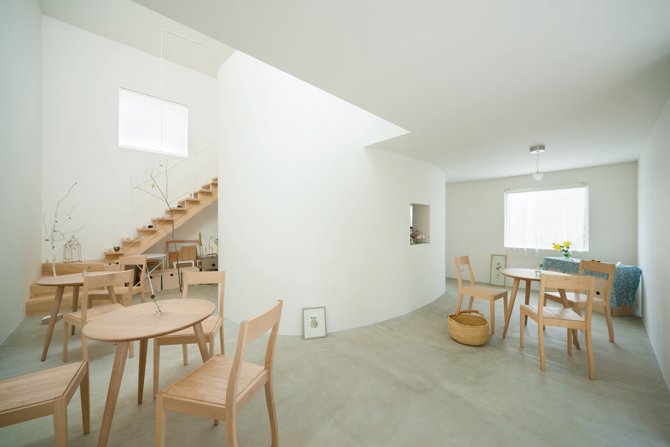
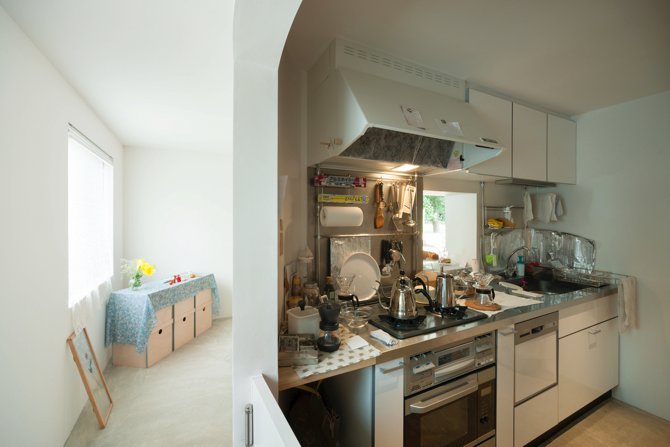
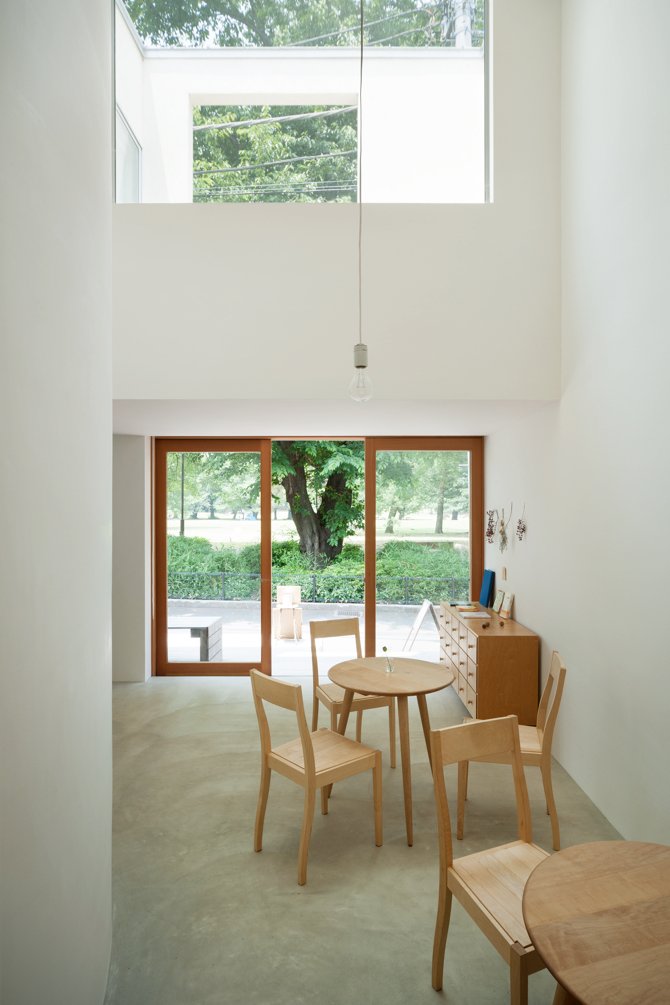
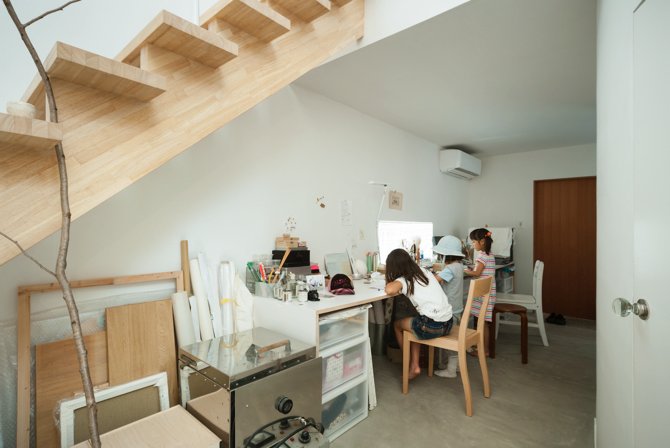
    Few are able to do “small houses” quite like the Japanese. Below is the Flat House in Tokyo by Yoshinori Sakano Architects. Completed in 2011, it was designed for a young couple in their twenties who wanted to build a home that was like a “small art museum.” Looking at these photos, I bet many of you will be surprised to know that the site area is only 100.10m2. The building footprint is only 49.00m2. And the total floor area is 79.36m2. This is the kind and scale of housing that is now permissible on many of Toronto’s laneways. And here, in Tokyo, you can see that it is serving as a family home. (The working kitchen is quite a contrast with the rest of the house.)

    Photos: Takumi Ota

  • The Japanese are renting cars but not driving them

    Lately it has been in the news that a growing number of people in Tokyo are using car-sharing services for reasons other than to drive places. It started when companies began noticing that “several percent of their rented vehicles” were not being driven at all. What they ended up discovering, largely through customer surveys, is that car-sharing services have become an affordable option for people looking to nap, work, eat, store things, charge their phone, practice rapping, and probably a bunch of other things.

    This immediately struck me as being quintessentially Japanese, partially because one of my experiences of Tokyo is that Tokyoites are often cool to sleep all throughout the city, including at the bar and on my shoulder on the metro. But I also think this finding tells you something about Tokyo’s urban fabric and, in particular, how much of a precious commodity that space is within the capital. This guy once rented a car because he couldn’t find a place to sit down and eat his boxed lunch.

    This may also be a case of mispriced private space. Cities should, of course, have well-designed public spaces that accommodate people wanting to eat their boxed lunches. But for those looking for a little quiet time, a few hundred yen for 30 minutes has proven to be a competitive, and in some cases a more affordable, offering compared to, say, internet cafes. From the sounds of it, none of the car share companies ever anticipated this use case. Pricing is interesting.

    Photo by Louie Martinez on Unsplash

  • Tokyo’s kitchen cars (or food trucks)

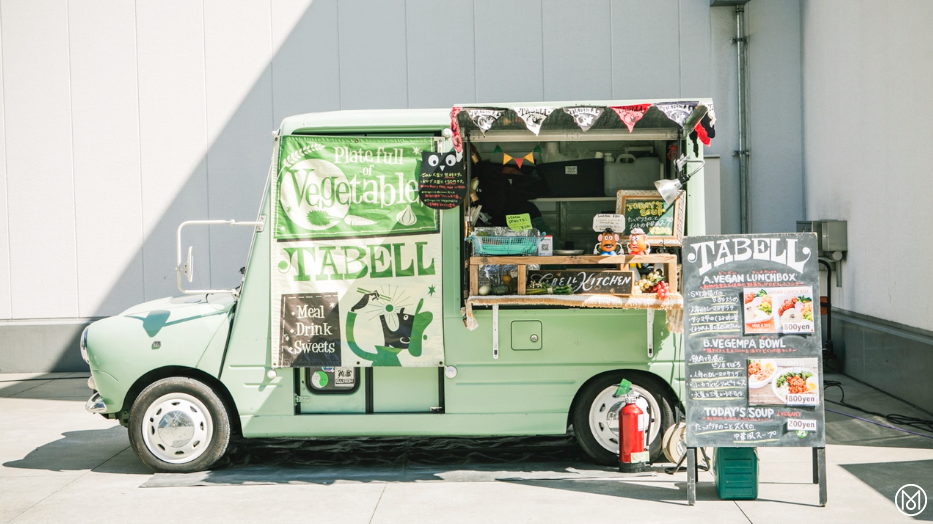
    Click here for a short video (by Monocle) about Tokyo’s nascent “kitchen car”, or food truck, scene. (The soundtrack is fun.) Historically, street food stands, or “yatai,” have had a questionable reputation in Japan. They proliferated across the country following World War II when times were tough and food was being rationed. But as Tokyo prepared to host the 1964 Olympics, local governments began to clamp down on yatai. They were seen as unhygienic and a place for drunks to hang out. There may have also been a sense of shame around the country’s post-war struggles. Whatever the case may be, these new food trucks have — aided by technology — changed the way people eat on the street.