Daily insights for city builders, delivered every morning at 6 AM ET. I’m Brandon Donnelly — a Toronto-based real estate developer and founder of Globizen. I’ve been writing here since 2013.

Tag: innovation

  • The taxi cartel

    https://500px.com/embed.js

    Early this morning Peter Cheney of the Globe and Mail published an article called: How Uber is ending the dirty dealings behind Toronto’s cab business.

    And I highly recommend you read it. He’s been investigating this industry for decades.

    Though the article is specific to Toronto, I know that there are middle people and archaic policies governing the taxi industries in many other cities around the world.

    Here it revolves around taxi licenses issued by the city (known as “plates”), which are expensive and almost impossible to get. Last year the average price of a plate was $118,235 (2014).

    The way it works is that people – typically non-drivers – buy/inherit/get these plates and then charge rent on them to drivers who want to use them. The result is a taxi cartel:

    In fact, Toronto’s taxi plate system is anything but free enterprise. Instead, it is based on the artificial restriction of a natural market, and the granting of licences to a fixed number of participants. Even those who paid top dollar for a plate used to enjoy an annual return of more than 12 per cent. And for those who inherited plates, the return was manna from heaven.

    So it shouldn’t come as a surprise that the taxi industry is grouchy about companies like Uber. But the cost structure of the incumbents is going to need to change if they want to stay in business.

    Jeff Bezos of Amazon is famous for saying, “Your margin is my opportunity.” And that’s exactly what is happening here. A bloated legacy cost structure is being quickly supplanted by better/cheaper.

  • How Bitcoin could transform home buying

    Earlier today a friend of mine sent me this Fast Company article talking about bitcoin and the future of home buying. I’m really glad he did. Both because I wasn’t yet sure what I was going to write about today and because this is a topic that I’m deeply interested in.

    I recently heard Brad Burnham (venture capitalist at Union Square Ventures) say in a talk that if you’re thinking about Bitcoin just as a currency, then you’re thinking about it in the wrong way. If you take nothing else away from today’s post, I think you should remember that. Bitcoin, and the underlying block chain architecture, have the potential to be very transformative.

    The Fast Company article was written by Matt Weiss of IDEO (the powerhouse design and innovation firm). Here’s an introductory snippet:

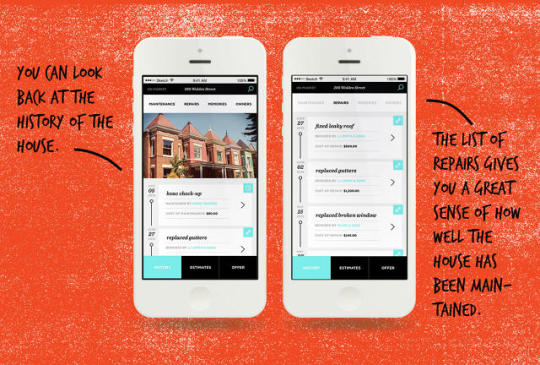
    Insert block chains: a relatively new and promising technology that could transform the way we digitally exchange value, similarly to how Internet protocols, like TCP/IP, transformed the way we exchanged information. For example, to transfer ownership of a home today, there are countless check of authenticity and intermediaries involved to insure the transfer is legitimate. By using a distributed database (a.k.a. “a block chain,” the same technology behind Bitcoin) to prove authenticity, we could legitimately transfer ownership immediately without the need of a middleman. In fact, when we think about block-chain technology and the industries it could disrupt, real estate tops the list. While Trulia, Redfin, Angie’s List and others have brought some transparency to the opaque world of home buying and home ownership, most of our experiences in this industry are fraught with incomplete, inaccurate, and asymmetric information.

    Following this, he goes on to talk about what it might be like – each step of the way – to buy a house using the block chain technology. There are even mockups of what the app could look like. I highly recommend you give it a read if you’re interested or involved in this space.

    The real estate industry hasn’t seen a lot of innovation. It remains an opaque market with lots of information asymmetries. I have no doubt that will one day change; it’s just a question of when. Perhaps it’ll be the block chain that makes that happen.

    Image: IDEO via Fast Company

  • Bloomberg Risk Takers: Elon Musk

    Elon Musk is one hell of an entrepreneur. I just finished watching this “Bloomberg Risk Takers” video. 

    [youtube https://www.youtube.com/watch?v=mh45igK4Esw?rel=0&w=560&h=315]

    It’s about 45 minutes long, but well worth it. What’s astounding is both is willingness to go all-in and his commitment to solving big, meaningful problems. Click here if you can’t see the video above.

    Once you’re done watching, you should then read this Quora answer from his first wife talking about what it takes to be that great.

  • Amazon Dash — foolish joke or disruptive innovation?

    [youtube https://www.youtube.com/watch?v=NMacTuHPWFI?rel=0&w=560&h=315]

    Earlier this week on the day before April Fools’, Amazon launched two new services. The first was called Amazon Dash (see above video) and the second was called Amazon Home Services. The entire internet seemed to think that Dash was actually an April Fool’s joke, but it turns out it’s not. In fact, it’s actually an incredibly smart product.

    The way it works is simple. Each branded Dash Button is about the size of a pack of gum. You mount it in, on, and near things that you replace on a regular basis, such as laundry detergent, coffee refills, and so on. Then all you have to do is push the button and your order gets sent to Amazon. Shortly after the product arrives at your door. I say “shortly” because you can be certain that Amazon’s goal is to make that time frame as short as physically possible.

    I don’t know about you, but I could definitely see myself using this product. There are a number of essentials – such as laundry detergent and toilet paper – that I just hate shopping for. I have to create reminder appointments in my calendar just so I don’t forget. In fact, I did that today and I still forgot to pick everything up on my way home (my phone died).

    But what’s even more interesting about Dash, I think, is that it increases the threat to brick-and-mortar retailing and, more specifically, big box stores. Because if same day and same hour delivery is a big threat to big box stores, just imagine one button and same hour delivery. And, is it only a matter of time before something like this comes to Apple Watch? It seems like the right medium for it.

    Isn’t it interesting how something that most people believe is a silly joke could actually turn out to be a huge innovation? I try to always remain open minded. Sometimes it’s hard. But it’s good practice.

  • Why brick-and-mortar stores should be scared of same hour delivery

    Venture capitalist Fred Wilson wrote a post on his blog today called, Same Day/Same Hour Delivery.

    The post is about why he believes that Walmart could get the “most disrupted by the Internet.” And it has to do with the rapid rise of same day and even same hour delivery from ecommerce companies. If you can order it online and receive it within an hour, why bother going to a brick-and-mortar store?

    His post reminded me of one I wrote towards the end of last year called, The threat to big box retailing. But since Fred is in the business of making bets on technology companies and he has accumulated a significant amount of wealth doing that, I thought you might like to also hear it from him.

  • Incubating new ideas in cities

    A couple of days ago I wrote about a documentary series called Real Scenes. It’s a fascinating series that examines the electronic music scene in a bunch of different cities from New York to Berlin to Tokyo. 

    What’s fascinating about these films is the inside look it gives you into how these “scenes” develop. Berlin, for example, is absolutely on fire right now. It has a thriving startup scene and a reputation for being a major force in the world of electronic music.

    How did that happen?

    The documentary leads you to believe that Berlin was able to establish itself as, arguably, the techno music capital of the world by having lots of empty buildings and nobody cracking down on squatters after the Berlin Wall fell. Quite literally, the scene appears to have started as a result of illegal techno parties being thrown in abandoned buildings. 

    It’s a perfect and perhaps extreme example of Jane Jacobs’ famous line that new ideas require old buildings. The rents are simply too high in new buildings for anything experimental. Landlords naturally prefer to rent to triple-A tenants who will pay the highest rents. And who can blame them. 

    But just like there’s tremendous value in incubating new startups before they’re even close to turning a profit, there’s obviously value in empowering new ideas, new concepts, new retailers, and new businesses to flourish within cities. 

    I’m not exactly sure how that could be done in the context of new developments, but it’s on my mind right now as a result of some discussions I’ve been having with some incredibly smart and ambitious people in this city.

    So today I’d like to turn it over to you. How could we make it so that new ideas flourish even in new buildings? Since investment naturally drives up rents, does that mean it will always put pressure on those crazy instigators who just need cheap space?

  • 3 architects operating as developers

    image

    A reader recently shared with me an interesting article from Crain’s New York (2013) profiling three “architects as developers.” The three firms are DDG Partners (which I’ve mentioned before here on ATC), FLAnk, and Alloy.

    I’ve written a lot about these emerging business models and I continue to think that we’re going to see more of them in the coming years.  As evidence for that claim, I thought it was really interesting to read in the article that Vishaan Chakrabarti – who is director of the real estate program at Columbia University – made specific mention that there’s growing interest among his students to wear multiple hats. In other words, they don’t want to be just an architect or just a developer. They want do it all.

    In a lot of cases, these firms are made up of partners who have those diverse skill sets. There’s only so much that one person can do. But that doesn’t negate the fact that vertically integrated companies are being formed that handle everything from design and construction to property management and development.

    And if an increasing number of students today are interested and thinking about those models, then I think it’s a pretty safe bet that many of them will get out into the workforce and eventually create those companies in the future.

    Ultimately, I think that’s a great thing for cities. Developers tend to have a bad reputation for thinking only about money. But when you bring design and other disciplines in-house, you create tensions in the process. And tension can be a great thing for innovation and creativity.

    Image: 385 West 12th by Flank

  • “Great ideas are Obvious in retrospect.”

    Photograph San Francisco Sunset by Nathan Camarillo on 500px

    San Francisco Sunset by Nathan Camarillo on 500px

    The title of this post is a line from a Medium post that Biz Stone wrote back in August 2012. For those of you who might not know, Biz Stone is one of the cofounders of Twitter, as well as the cofounder of something called The Obvious Corporation.

    Obvious is a “company” that I’ve been following on and off for a number of years – I’m fascinated by the model and how it has evolved. It was founded back in 2006 by Biz Stone and Ev Williams (another Twitter cofounder) as a kind of “product lab” for new ideas. But since then it has gone through a number of iterations.

    Though I suspect that most people haven’t heard of Obvious, it was actually the parent company of Twitter before Twitter took off and became independent.

    But even more interesting is the fact that Twitter was actually a side project for a company called Odeo (a failed podcasting startup) that in turn was owned by Obvious. So specifically, Twitter started as a side project of one of the companies within a larger “product lab.” Nobody said innovation was straightforward.

    When Twitter eventually took off, their focus naturally shifted away from Obvious to it. They had a rocket ship of a company to build and run. 

    But in 2011, Ev and Biz, along with Jason Goldman (of Twitter), decided to “reboot Obvious.” The most notable outcome of this reboot has been the creation of writing platform Medium, which I believe still technically sits within Obvious. (Click here if you don’t know what Medium is.)

    Then in December of last year (2014), Ev Williams announced the third chapter of Obvious – now called Obvious Ventures – with this post called: It’s Obvious. Again. In short, they’re a venture capital firm with an approach that they call #worldpositive:

    We’re entrepreneurs. We’ve helped a lot of companies launch, grow, and generate great financial returns. A few of these companies also deliver positive social and environmental benefits with every dollar of revenue they earn. We want to fund and build more of those. That’s what we call #worldpositive venture capital.

    Already they’ve publicly announced investments in 10 companies, one of which I’ve written about before on Architect This City (Flux.io).

    I decided to tell this story today for 3 reasons.

    It shows you how non-linear innovation and careers can be. I love the idea of #worldpositive investing. And finally, because some of the startups that Obvious Ventures has invested in – such as Flux.io and Loup – are directly related to the future of cities.

  • How open are you to experiences?

    This morning Richard Florida published an interesting CityLab article that talks about how different personality types cluster within cities. The study he references was done by a team of psychologists that surveyed 56,000 people in the London metro area.

    Here is a summary of what they found (darker red indicates higher concentration of each personality trait):

    image

    Probably the most interesting personality trait is the “openness to experience” one, as there appears to be a clear divide between people who live in the center of London and people who live in the suburbs.

    Here’s how Florida describes it:

    The most clustered personality trait the researchers found was “openness to experience” (bottom left map), which is concentrated in the center of London. Openness to experience, according to a wide body of psychological studies, is associated with creativity, innovation and entrepreneurship. This type is concentrated in higher density neighborhoods, with higher housing prices, more ethnic and religious diversity and higher crime ratesMeanwhile, the blue concentrations at the periphery indicate that there are fewer people open to experience in metro London’s suburbs.

    It’s fascinating to think about the role of psychology in city building. It’s not something we often talk about, but it’s there.

    I live downtown and I would definitely classify myself as extraverted and open to experiences. How would you classify yourself?

    Maps via CityLab

  • Pushing and pulling

    image

    Venture capitalist Chris Dixon recently published an interesting post called, Two eras of the internet: pull and push. In it, he describes two patterns that have emerged within the internet over the past decade and a half.

    Pull (2000s):

    Pull is when you are seeking information, usually an answer to a question. You want to know the closing time of a restaurant, the description of a hotel where you are thinking about staying, the details of an historical event you heard about, etc. You go to your computer and pull the information. The killer app for pulling information was Google.

    Push (2010s):

    Push is when you are using the internet in a more passive way and content comes to you. The killer app for push is social networks, the most popular being Facebook. Information is pushed from user to user via likes, shares, tweets, etc. People tend to push things they find funny, interesting, moving, outrageous, etc.

    Now let’s think about this for a second, because it’s a pretty significant change.

    Google’s mission is to organize the world’s information. And they have certainly made it easier for us to get the information we want. Instead of physically searching for something, you just type in a few keywords and it pops up. But, it still involves us deciding we want something and then pulling the information.

    What’s fascinating to me about push is the idea that content and information comes to you. And it’s one of the reasons that I’ve always found Foursquare more interesting than Yelp – even though Yelp is far more popular as a tool to help you find somewhere to eat, drink and so on.

    When I walk into a restaurant or bar now, oftentimes I’ll see a Foursquare notification popup on my phone showing me a tip that somebody has left: “Try the meatballs – they’re to die for”. I didn’t search for that. I didn’t ask for a recommendation. But Foursquare knew where I was and presented me with that information.

    Now, there are obviously potential downsides to constant interruption, but let’s focus here on the opportunities. How could these same principles to be applied to other industries such as, say, real estate?

    I think there’s a pull and push parallel.

    Today MLS operates in a way like a search engine for homes. You decide you might be interested in buying a home and so you go online and start pulling listings.

    Of course, the vast majority of people also work with a real estate agent. And in a way they’re kind of like your push. They get to know you, they figure out what you’re looking for, and then they push relevant listings and information to you.

    And maybe that’s why nobody has killed off real estate agents – despite the numerous attempts. Everybody has been focusing on new pull platforms (listing platforms) as opposed to a new push platform.

    Who knows.

    But I think it would be naive to think that these emerging push platforms won’t reach far beyond social media.